Unknown's avatar

About B Gourley

Bernie Gourley is a writer living in Bangalore, India. His poetry collection, Poems of the Introverted Yogi is now available on Amazon. He teaches yoga, with a specialization in pranayama, and holds a RYT500 certification. For most of his adult life, he practiced martial arts, including: Kobudo, Muay Thai, Kalaripayattu, and Taiji. He is a world traveler, having visited more than 40 countries around the globe.

DAILY PHOTO: Golden Temple, Amritsar

Taken in Amritsar in April of 2016

Three Takes on a Lotus Haiku

I
lotus viewing:
still blossom, changing light;
countless sights
II
a still lotus,
a static eye, and shifting
light; boundless hues
III
view one lotus
until the changing light
makes a new bloom

BOOK REVIEW: Immunity by Jenna Macciochi

Immunity: The Science of Staying Well—The Definitive Guide to Caring for Your Immune SystemImmunity: The Science of Staying Well—The Definitive Guide to Caring for Your Immune System by Jenna Macciochi
My rating: 5 of 5 stars

Amazon.in Page

This is a book about how to keep one’s immune system firing on all cylinders, and it reports on the scientific findings about how a range of lifestyle activities (e.g. exercise, sleep, and nutrition) impact upon the robustness of one’s immune response. The book was exceedingly timely, having been put out last spring in the early days of the pandemic [though I was delinquent in getting to my review until now.]

The book consists of just seven chapters, though they are substantial in length and extent of discussion of the respective topics. The first chapter offers a primer on the immune system, its components, and how it does its crucial job. This chapter also explains how vaccinations work, what autoimmune diseases and allergies are, and what role genetics (nature) and lifestyle / environment (nurture) play in immunity.

Chapter two investigates a range of topics at the nexus of lifecycle and immunity, including: differences between male and female immune responses, pregnancy and immunity, and the effects of aging and menopause on immune system activity.

Chapter three is about our intestinal microbiomes and immunity. If this seems like a strange topic to devote an entire chapter to, you probably haven’t been following the voluminous outpouring of research findings about how our helpful microbiological lifeforms are being shown to have a profound impact on all aspects of human health and well-being from mental health to, well, immune system robustness.

Chapter four explores how immune system activity is compromised by lack of sleep or poor-quality sleep. However, it also looks more broadly at how our immune system responds to the various cycles in which it finds itself — from the daily cycle of days and nights to the yearly seasonal cycle.

Chapter five considers the nexus of mental health and immune response. As was mentioned with respect to the gut, the connections between physiological activity and mental health are becoming ever more apparent – though there remains much to be understood.

The penultimate chapter is about fitness and physical activity and what is know about why exercise is so good for one’s immune response. Of course, there seem to be diminishing marginal returns (less benefit for a given additional workout) and even diminishing returns (negative outcomes) if one goes too crazy with one’s exercise regiment and doesn’t give one’s body adequate amounts of rest.

The final chapter is about the role of nutrition in immune system activity. The approach is very much accord with my own beliefs which are that if one eats right, there is little need for supplements, and no volume of supplements will save you from a poor diet. The emphasis is upon a high-fiber diet rich in plant nutrients and balanced to provide all necessary macro- and micronutrients, while debunking fads and dietary myths. There is discussion of many of the foods that are traditionally associated with immunity (echinacea, elderberry, turmeric, etc.,) and what claims seem to hold and which are unproven.

If you don’t know a lot about the science of healthy lifestyles, this book offers an additional benefit in that it approaches the topic from a quite basic level. That is, it provides a lot of background information that would be useful for a complete neophyte to understand the points about immune activity. So, for example, the author lays out rudimentary explanations of micronutrients or sleep cycles before getting into the relevant information about how these impact on immunity. Of course, the flip side is that for those who have studied this science, it may take some skimming because there is a lot of material that will probably be elementary to those who practice healthy living.

I found this to be an extremely beneficial book. Its focus upon what one can do to improve immune robustness makes it tremendously useful for the average reader. It presents the science without getting too deep in the weeds of detailed physiological activity. I felt the author did an excellent job of walking the line to produce a book that is useful, readable, and digestible.

View all my reviews

DAILY PHOTO: Miniature Displays, National Museum of Vietnamese History

Taken in Hanoi at the National Museum of Vietnamese History in December of 2015

BOOK REVIEW: Cognitive Neuroscience: A Very Short Introduction by Richard Passingham
Cognitive Neuroscience: A Very Short IntroductionCognitive Neuroscience: A Very Short Introduction by Richard Passingham

My rating: 4 of 5 stars

Amazon.in Page

This book provides a brief overview of cognitive neuroscience, a discipline that has really only been around for the past few decades, one that uses technologies allowing scientists to see what parts of the brain are active during a given mental activity. The reader learns what parts of the brain are involved in the various activities of being human from perception through action, and what can go wrong with these processes. While that sounds simple and straightforward, the immense complexity of the brain makes it anything but, and there is a lot of medical jargon and qualifying statements to explain how a given relationship between brain location and activity isn’t as simple or well understood as we are frequently led to believe. [Any plain and direct explanation of the brain workings is likely to be at best partial truth, and more likely outright deceptive.]

I found the organization of this book to be logical and conducive to learning about this complex and technical topic. The first chapter, “A Recent Field,” describes what cognitive neuroscience is and where it fits in among the various sciences that deal with mental activity including, psychology, psychiatry, etc. This gives one an idea of both how cognitive neuroscience can contribute to our understanding of mental activity, but also where its limitations lie and why it has not displaced all the other disciplines.

Chapters two through eight make up the core of the book and present an exploration of the various aspects of mental activity and what has been learned about them through studies in this field. The progression is logical and elementary: perception (Ch. 2,) attention (Ch. 3,) memory (Ch. 4,) reasoning (Ch. 5,) decision (Ch. 6,) confirmation / checking (Ch. 7,) and finally action (Ch. 8.) In each chapter practical questions are discussed, questions that will be of interest to readers whose goal is not vocabular expansion, in addition to the discussion of what brain region is involved with what activity. What kinds of questions? How amputees “feel” pain from the missing part of the body? Why humans suck at multitasking, and under what circumstances they can do better at it? How come people who have amnesia remember how to talk and engage in physical activities? Is there free will, and – if so – in what sense? Do we think in language? Etc.

The last chapter reflects upon the future of the discipline. Over the course of the book, the reader learns the limitations of what functional Magnetic Resonance Imaging (fMRI) and Positron Emission Tomography (PET) scans can tell one about what is happening with the brain, and in this chapter one is introduced to the next generation of technologies that may take our level of understanding to another level.

This book has an excellent feature that I don’t recall seeing in other AVSI books. (That is probably, in part, because many of them don’t need it like this one because their subject matter is more readily grasped.) Said feature is a text box at the beginning of the chapter that asks some relatively rudimentary and practical questions, and then – at the end of the chapter – those questions are answered in another box. I think the author recognized that there was a high degree of risk of losing readers if the entire book was, “and when you do decide how many minutes to microwave your Hot Pocket, the temporo-parietal junction works in conjunction with the …” [not an actual quote fragment] he would produce book of limited benefit. [i.e. it would be too technical for the neophyte reader who just wants some practical insight (the AVSI target demographic,) but not technical enough for students of brain anatomy.] These text boxes help keep the reader focused on what is being conveyed while not getting too caught up in arcane terminology.

Other ancillary matter includes graphics (photographs of technology and readouts and diagrams showing where brain areas are located,) references, and a further reading section.

I found this book to have some intriguing discussions on interesting topics. That said, those discussions are interlaced with some necessarily complicated and dense subject matter (that’s the nature of the discipline.) That said, I think the author recognized his challenge and the question boxes and answer boxes that bookended the core chapters were very useful in offering focus for a non-expert reader. It you want a bare-bones overview of cognitive neuroscience, it’s worth reading this slim volume.

View all my reviews

POEM: Ghosts in the Darkness

I have walked in deep, dark places,
and crawled through darker, still --
gas-lit slums long after the dusk,
where lamplight failed to spill.

So surprised by fleeting faces
that faded in and out --
like visions from the sleep-drift, they
never loiter about. 

They come, they see, and then they pass --
these alien observers.
They pass with just a fleeting glance,
like someone else's server.

They care not what you think you need,
or who you think you are.
You're just an automaton shopper
within the grand bazaar. 

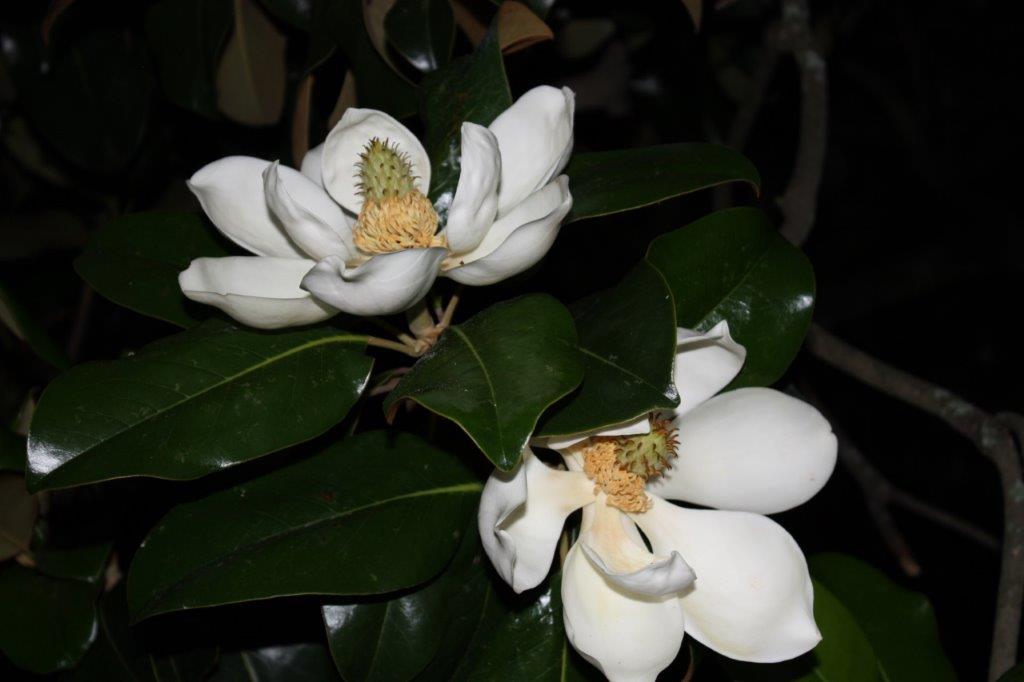
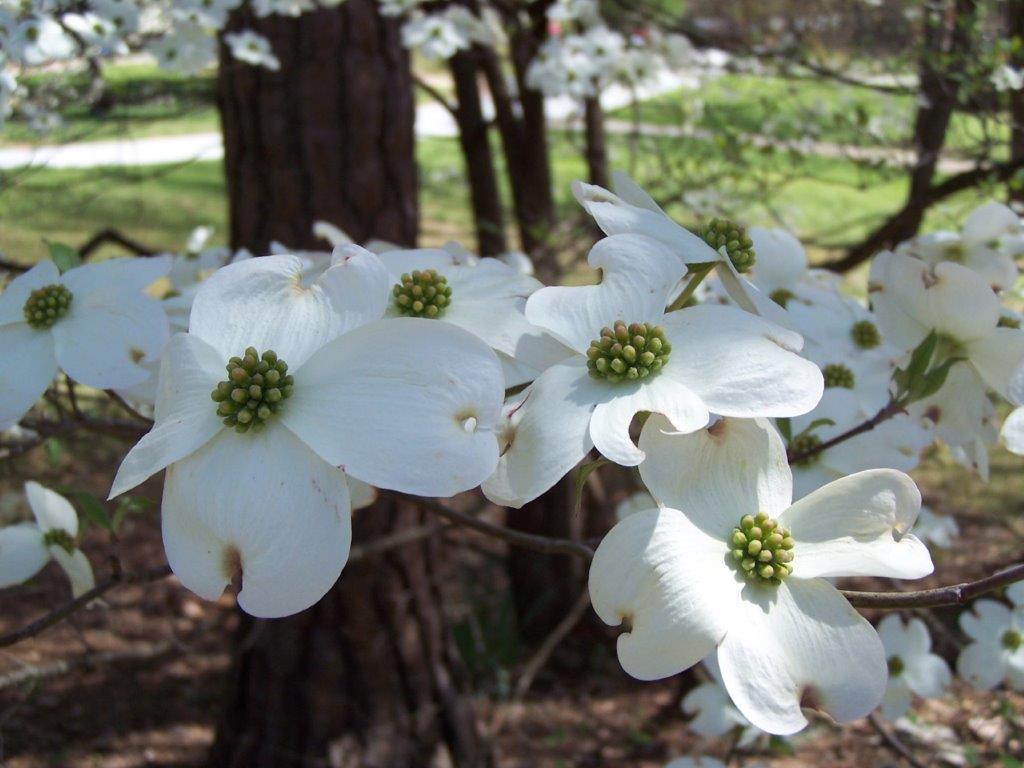
DAILY PHOTO: White Flowers

Azalea; Taken in Stone Mountain, GA; Spring 2009
Magnolia; Stone Mountain; June 2009
Dogwood; Stone Mountain; Spring 2009

POEM: A World of Loathing

a cat abhors a vacuum
vacuums abhor tangled hair
tangled hair abhors a hairbrush
hairbrushes abhor Victorian Spanking Fetishists
Victorian Spanking Fetishists abhor Victorian prudism
prudism abhors immodesty
immodesty abhors modesty
modesty abhors whores
whores abhor cheapskates
cheapskates abhor expenses
expenses abhor ledgers
ledgers abhor ink pens
ink pens abhor writers
writers abhor synonyms
synonyms abhor antonyms
antonyms abhor continuums
and so on...

it's true that Eddie Rabbitt
loves a rainy night,
but who loves Eddie Rabbitt?

[the Coalition for 
Names with Double-Letters,
that's who!] 

Montreal Limerick

There was a hungry man from Montreal
who ate Poutine 'til he could only crawl
the snack in question
gave him indigestion,
and sealed his colon like a stonewall.

DAILY PHOTO: Evergreens & Mountains, Karakol NP

Taken in Karakol National Park in 2019