Unknown's avatar

About B Gourley

Bernie Gourley is a writer living in Bangalore, India. His poetry collection, Poems of the Introverted Yogi is now available on Amazon. He teaches yoga, with a specialization in pranayama, and holds a RYT500 certification. For most of his adult life, he practiced martial arts, including: Kobudo, Muay Thai, Kalaripayattu, and Taiji. He is a world traveler, having visited more than 40 countries around the globe.

POEM: Hypnagogic Voices

I hear voices --
a cold burble of voices --

too dim and distant
to extract meaning,

too inexplicable not
to inject a rationale,

or a slate of reasons:
-madness
-conspiracy
-expectation
-the impulse 
toward void filling

minds despise quiet,
filling it with 
puzzling prattle,
and making any 
hash of sound
into cryptic natter,

until sleep descends

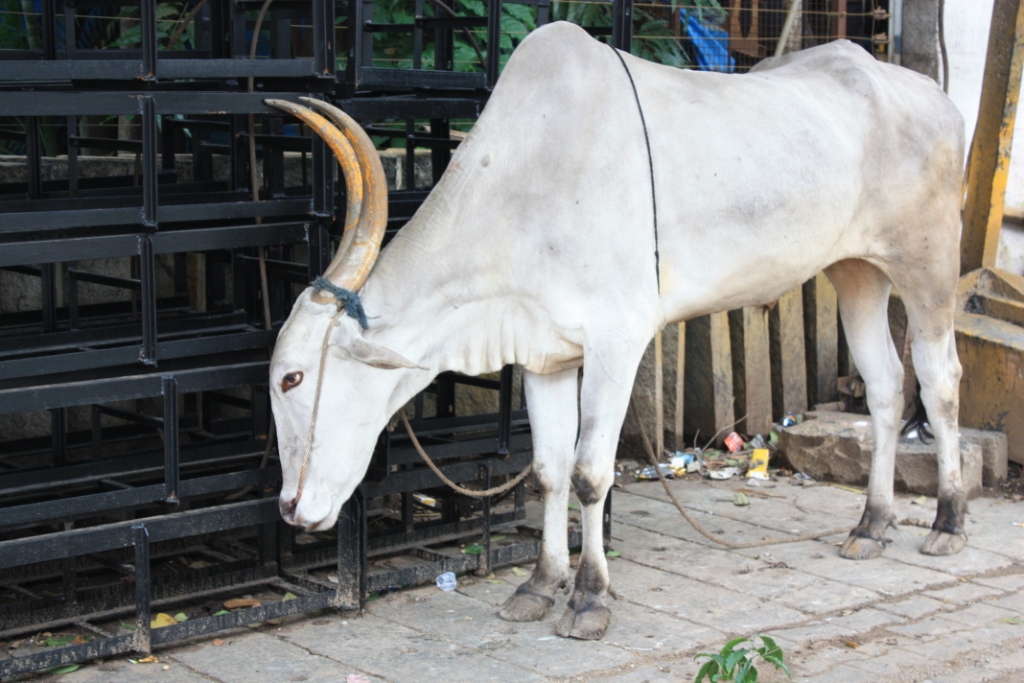
POEM: The Mind of Urban Cattle

What's a city
through the eyes
of a mid-city cow?

Growing up on a farm,
I can't say I ever questioned
how a cow perceived 
the pasture --
vast tracts of 
green, green grass
seemed like a natural habitat,
though I recognize 
that a philosophical cow 
might see nothing natural 
in its circumstance, either way.

What of the fast moving vehicles?
the horns?
the best grass fenced off?
the rush of humanity?
the bright, white lights?
the stink of human life?

Can they tune it all out
as well as they seem to?

Zen mind / cow mind?

I wonder?

DAILY PHOTO: Asiatic Building, Bangalore

Taken in September of 2013 in Bangalore (Bengaluru)

BOOK REVIEW: Henry VI, Part 1 by William Shakespeare

King Henry VI, Part 1King Henry VI, Part 1 by William Shakespeare
My rating: 5 of 5 stars

Amazon.in Page

Like some of the other histories, this one is not so much about the titular character (Henry VI) as it takes place during his reign, and, in this case, it’s the very beginning of young Henry VI’s rule. In fact, this play begins with Henry V’s funeral. Henry VI does play a role as the naïve, new ruler who has the childlike wisdom of one who can’t see why everybody is getting so upset about what seem like trifling matters (e.g. infighting) when more crucial problems are at hand (e.g. France in revolt.) This is best seen in the young King’s gentle rebuke of the aristocrats for the big deal they are making about the color of rose being worn – which includes Henry’s innocent wearing of a white rose to make a point. (The events leading up to the War of the Roses feature prominently in the story, i.e. the civil war between the House Plantagenet and the House York.)

All that being said, if one were to pick a protagonist for this play it would have to be the great military commander, Talbot (pitted against his French counterpart, Joan of Arc — referred to as Pucelle throughout the play.) Early in the play, Talbot is captured, and this throws the English into a panic because he’s considered the linchpin of their forces in France (and because England is in a fragile state with Henry VI being young and inexperienced.) Talbot’s release is negotiated (the French, perhaps, being dismissive of how crucial the English see Talbot as being.) This dismissiveness is later seen in an episode with the Countess of Auvergne. The Countess, surprised to find Talbot is not a giant – given his reputation, thinks she is about have him arrested. When asked how he obtained such an outsized reputation, Talbot calls for his men, who promptly make an overwhelming show of force, clarifying wherein his power lies and putting to rest the idea that her men can take him. Act IV sees the tragic end of Talbot and his son, who each try to get the other to leave a battlefield dominated by the French, but neither will do so and so they die together.

The reason the great Talbot gets outplayed is two-fold. First, Joan (Pucelle) convinces the Duke of Burgundy to change sides, which significantly changes the balance of forces. Second, the English infighting between Somerset and York plays out in Talbot being denied reinforcements. The tragedy of this being that Talbot is universally-beloved, and it’s through no fault of his own that he can’t get the backup he needs. He is lost due to the pissing contest of lesser men.

Act V shows us how a peace is brokered that hinges on an arranged marriage for the young Henry. This provides us a [kind of] story wrap-up, i.e. a moment of stability. However, it’s no surprise that there are more parts to come, because there is a tremendous amount of divisiveness yet to play out. There is the embryonic War of the Roses, and a related great deal of contention over the deal that was brokered to end the war in France. For one thing, at one point Henry was doubly betrothed, and there was dissention about which fiancé he should pursue. But even if there hadn’t been a second choice, there was still room for conflict over what was seen as a bad deal (no dowry to be paid from the Princess’s side and – in fact – the relinquishment of territories – a reverse dowry if you will.)

A lot of people consider this to be one of Shakespeare’s worst plays. (The insult is often not against Shakespeare as many also believe he only partially penned this play, as well as some of the other lesser-loved plays.) I must say, as Histories go, I found this one to be quite readable. (Of course, I didn’t despise “Titus Andronicus” either – though it is mega-bloody and perhaps not as nuanced a story as the later tragedies.) I think the Act IV tragedy and the political infighting made for some intense emotional resonance. In general, the histories are constrained by how interesting the events are rather than how creative the playwright can order them (though a number of the tragedies follow events – as they were known — fairly closely.)

Part of the complaint may have to do more with language than story, and from this perspective, I must say there are not a lot lines that leap out at one in the manner typical of Shakespeare.

At any rate, I wouldn’t necessarily dismiss this play based on its (relatively) diminished stature, lest one make the same mistake as the Countess.


View all my reviews

BOOK REVIEW: The Narrative Poems by William Shakespeare

The Narrative Poems (The Pelican Shakespeare)The Narrative Poems by William Shakespeare
My rating: 5 of 5 stars

Amazon.in Page

While William Shakespeare is overwhelmingly known as a playwright who also wrote a collection of sonnets, back in his day some of his poetic stories were quite well-received. This volume collects the five narrative poems that Shakespeare is believed to have authored (or partially authored.)

–Venus and Adonis: This is one of the two long-form narrative poems of Shakespeare. It tells the tale of the goddess Venus’s obsession with Adonis, her many attempts to woo the hunky lad, and the tragedy that befalls him, breaking her heart. It’s written in six-line stanzas of iambic pentameter with a quatrain of alternating line rhymes and an end couplet of a third rhyme.

–The Rape of Lucrece: This is the other long narrative poem of Shakespeare. Lucrece’s husband, Collatine, is off on campaign and brags about how perfect is his wife, Lucrece. The “gentleman” he is telling this to is Tarquin, and the high-praise of Lucrece sets the seed of obsession in Tarquin’s mind. When he then finds himself in Collatine’s neighborhood (with Collatine still off to war,) he pays Lucrece a visit and is invited to stay over. That night he breaks into her bedchambers and – after threatening to kill her and a random male servant whose corpse he’ll shove into bed with her – Tarquin rapes her. After mulling over her options, Lucrece calls for Collatine’s return and after getting the promise of Collantine and his fellow soldiers to have revenge for her, she tells them who raped her immediately before ending her own life by dagger.

It’s written in the rhyme royal seven-line stanzas of iambic pentameter made famous by Chaucer.

–The Phoenix and the Turtle: This is a very different poem from the others. In terms of format, it abandons iambic pentameter in favor of shorter, punchier lines. Stylistically, it’s a bit more obscure and allegorical than most Shakespearean poetry.

The gist of the tale is the description of a funeral for the perfect couple. [I guess that an important thing to know is that “Turtle” is used as short for turtledove, and so it’s not a tale of bestial interspecies lovin’.] Besides the lines being shorter, the entire poem is short and sweet, ending with a philosophical lament about truth and beauty.

–The Passionate Pilgrim: While we’re back to iambic pentameter (and mostly sonnets) this work is a departure other ways. First, rather than being a narrative poem proper, this is really a love poetry collection. Second, while the collection consists of twenty poems, Shakespeare is believed to have only written five of them (I, II, III, V, and XVI.) Of those, the first four are sonnets, and the last is an eighteen-line poem. Third, this is not new or exclusive material. The first two sonnets came to be included in the 154-sonnet collection of Shakespeare (138 and 144,) and the other verse is from “Love’s Labour’s Lost.”

–A Lover’s Complaint: The weeping of a maiden attracts the attention of a passerby, who she tells her tale of woe, having been wooed by a young man who got his milk and high-tailed it before he was forced to buy the cow. Besides being a woman’s tale of woe, it also shares with “The Rape of Lucrece” the fact that it is written in rhyme royal. It’s much shorter than “The Rape of Lucrece.”

I would highly recommend poetry readers dig into these lesser know Shakespearean works.


View all my reviews

DAILY PHOTO: Visegrád Castle Gate in Sepia

Taken in 1996 at Visegrád

Step Stone Senryū

a rock that looks like
the perfect stepping stone
is where danger lies

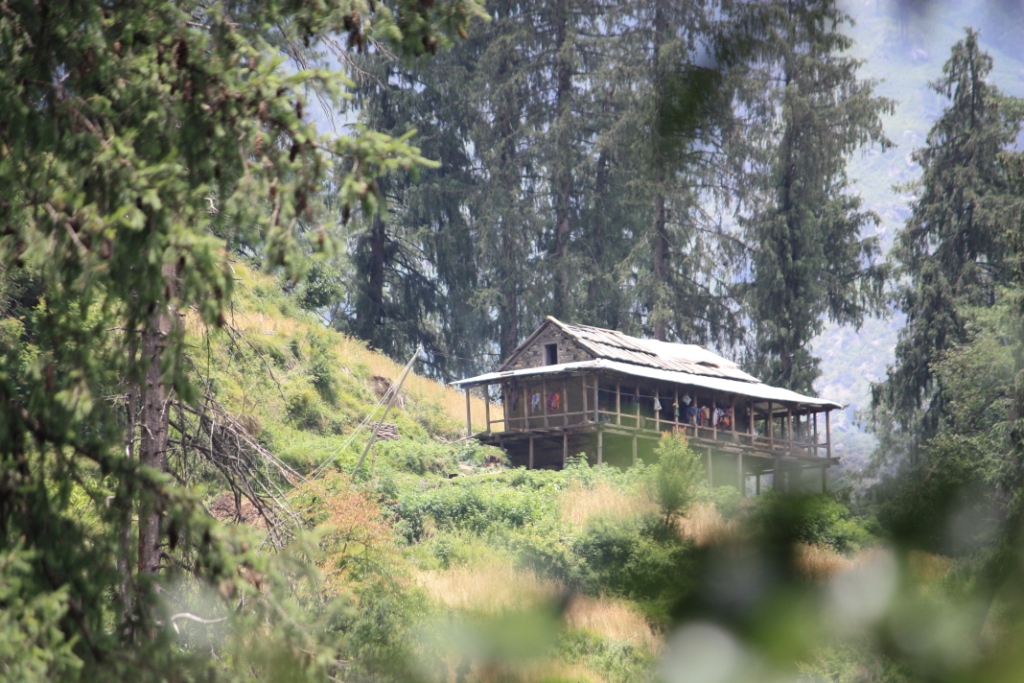
DAILY PHOTO: Mountain Creek

Taken in Himachal Pradesh in June of 2015

POEM: A Leak in the Sunny Side

Rounding through the pass,
I crossed from the cold
to the sunny side.

But while I transited
from the damp & mossy
to the dry grass
side of the mountain,
I carried the cold with me.

The ubiquitous sun 
would not warm me,
but rather I seemed
to suck the warmth 
out of the world --
as if I were a portal,
and the light landing
upon my skin was shunted
to some parallel universe.

I was the world's window
left open with the heater on,
and the temperature
differential pulled a steady
breeze in my direction,
to who knows where?