
Taken in Budapest in December of 2014.


Taken in Budapest in December of 2014.

For the purposes of this post, wisdom is neither a collection of trite adages, nor is it an accumulation of arcane or esoteric scripture. Wisdom is:
1.) the ability to quiet the mind
2.) the ability to suppress inclinations to be petty in a healthy way
3.) the ability to override instinct with conscious thought when it’s beneficial to do so
4.) the ability to know when it’s beneficial to do so (see #3)
5.) mastery of (rather than being mastered by) one’s emotions
The objective of these activities is to increase happiness, reduce strife, and exercise better and healthier decision-making.
While these are secular objectives, the pursuit of this form of wisdom has to a large extent become entwined with certain breeds of religion or spiritualism. Mystical religious traditions are the style of spiritualism that are most commonly associated with these pursuits. (Here I use mysticism in its scholarly sense, i.e. traditions that believe in a god or gods and who believe that the space in they can interact with said god is to be found inwardly. This is as opposed to the ill-defined colloquial meaning of mysticism that has a negative connotation and is infused with judgement about hippy-dippiness.) One sees the pursuit of this form of wisdom in yogic philosophy, in most branches of Buddhism, in Taoism, etc.
I’m not sure why this connection should be so entrenched. Why should agnostics and atheists forfeit the pursuit of such forms of personal improvement? Maybe the scientifically-minded think that they are knowledgeable and knowledge is wisdom, and so they think they are already on the path. I can tell you that knowledge isn’t wisdom. I base this on the experience of knowing intellectually brilliant people who couldn’t get along with anyone, who perpetually said the wrong things, and whose personal lives were a wreck. Skeptics and geeks are as subject to strained relationships, stress, and unhappiness as their pious neighbors.
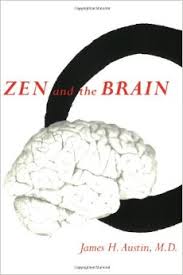
Another possible explanation is that many scientifically-minded people just don’t think that such goals are achievable because the routes to them have too often been couched in supernatural terms. However, there’s a growing literature on how these objectives can be pursued that is rooted in neuroscience and neuroplasticity, and for which the presence or absence of a deity is irrelevant. I’ve been reading a book called Zen and the Brain lately that offers an understanding of the effects of meditation that is firmly rooted in the science of the brain. I also recently purchased a book entitled Buddha’s Brain that takes a look at how neuroplasticity allows for a “rewiring” the brain to a healthier state. (Yes, I realize the irony of citing two books that have religious references in their titles in this post. I’d argue that this is how inexorably tangled these pursuits have become with religion. However, both of the scientist/authors of the aforementioned books, James H. Austin and Rick Hanson, have books with more secular titles if you’d prefer.)

I was once eating in a university cafeteria when I heard a religious man make the argument to a fellow he was trying to “educate” that went like this: “If there’s not a God, why should I be nice to my wife–why shouldn’t I kick the hell out of my dog?” My first thought was that this man desperately needed therapy. If the only reason he wasn’t being a violent asshole is because he feared the wrath of an invisible, omnipotent entity who–by they way–would have to be showing a complete indifference to what people do to each other in real-time, then he’s an accident waiting to happen. If he either: a.) loses his fear of said deity, or b.) begins to think that the deity is telling him to go another way (since whatever the deity is “telling” him is almost certainly just his mind telling him), then his wife and dog are in great peril.
My second thought was, “this is the cafeteria in an institution for higher learning, how’d this guy get in without at least the rudimentary training in logic to imagine a basis of moral behavior that’s not rooted in the supernatural smiting ability of a deity [who–I might add–sees a helluva lot of smite-worthy activity on a daily basis.]”
If you’re considering an action that seems questionable, you don’t need to ask what Jesus would do? You can start by asking the question: Would my life (or those of my loved ones) be adversely impacted by living in a world in which everybody did what I’m about to do in the manner I intend to do it? (Implied is the idea that, if the action in question involves doing something to someone, you would be subject to being on the receiving end of same action sooner or later.) If the answer is “yes,” don’t do it. If the answer is “no” there still may be reasons not to do the activity that have to do with what is good for you personally. (We’ll get into that a little further down.)
I realize that the above standard isn’t perfect, but it’s far less subject to user error than WWJD and it explains why the fellow from above shouldn’t beat his wife or his dog unless he likes rigorous and regular beatings himself. Some people might say that they don’t think they or their loved one’s would be adversely in the slightest if everyone went about walking around naked. Others might believe that they would be stressed out (or overstimulated) in such a world. However, the above approach has already gotten us to the fringe of questionable activity. Yes, some people might be traumatized if their neighbors walked around in the nude. But I suspect if everybody did it (as per the question) it would become not weird (definitely not harmful) in short order. There are those people who are so fragile that they can’t sleep knowing that a couple engaging in intercourse in privacy of a room three doors down are probably not using a missionary-approved posture. Said people need the kind of wisdom I’m talking about more than any because part of it is accepting that there may be more in heaven and earth than is dreamt of in their philosophy. Now that we know how to kill stray asteroids, if humanity ever dies out it will be at the hands of people who can’t bear anyone living by rules not those that they took for themselves.
At any rate, I think there are two reasons why the above approach is difficult for homo religiosis (religious human.) First, there are many activities that homo religiosis wants to see universally abolished because their religion considers forbidden, but which don’t adversely impact others. (e.g. Jains are pretty easy-come-easy-go, but imagine you were told you’d have to forgo onions because of that religion’s moral belief that no food should come from a plant that’s killed by harvesting. [FYI: Let me laugh now at the religious people who say “but there’s nothing crazy like that in my religion?” That just means you are so untraveled and uneducated that you can’t fathom how completely wacky some of your “moral” beliefs / practices are. e.g. How about eating salmon on Fridays as a sacrifice in lieu of eating a hamburger? That’s just nutty on all sorts of levels.])
Second, many believers really do believe that they have a special place in god’s heart and, therefore, aren’t subject to the same limitations as those poor, god unloved people. The idea that said person shouldn’t commit rape because they wouldn’t like it if someone else raped them or their sister or their mother is non-sense, because their god would never let someone else get away with shit like that with them. (Yes, there are people who’ve lived sheltered enough lives to believe that god punishes others but–at most–“tries” them.)
Most of us must accept that when it comes to being a person, we are the same as all the other people. While one may be stronger, faster, smarter, or in some dimension more talented than others, this doesn’t endow one with a different set of rights and responsibilities. On a genetic level there are no chosen people.
Earlier I mentioned that the “if everyone else did it” standard might leave one on the horns of a dilemma as to how to behave or what decision to make. Here’s where we’ve got to use our brains because the hard and fast rules go out the window. Evolution has programmed us with some guidelines that were beneficial given the constraints of the world our ancestors lived in. However, this programming of pleasure and pain may or may not be great advice given the ways in which humans have changed our own world.
Let me give some examples. Our nervous system suggests we eat foods that are sweet and fatty. We crave chocolate and bacon, and pleasure centers in the brain light up when we consume these foods. In our hunter / gatherer existence, this was excellent guidance because a.) these foods were relatively rare, b.) these foods had dense caloric content, c.) sweet foods are less likely to be poison, and d.) we worked our asses off in physical labor (i.e. high caloric demands.) However, today these high caloric foods are mass-produced, we require almost no caloric expenditure to obtain them (or to do most anything else in our cubicle-dwelling work lives), and in some cases people are literally (I don’t use “literally” lightly) killing themselves with such foods. So part of the wisdom I’m talking about is developing the capacity to exercise conscious control over decisions about whether to eat such foods, how much of such foods to consume, and what activities to do to counter act the flood of empty calories. Our biology is a harsh mistress, and it can require intense efforts to keep such impulses under control.
We are also programmed with love, a trait which has served us well over all. I know some of you are cringing about the idea of “evolutionarily programmed love”–so unromantic. It’s simple. Those who could build connections with others disproportionately survived to pass their genes on. This further fed into our species’ rise because, while we think of ourselves as the planet’s dominant species, we produce the most vulnerable 1 year olds (or 8 year olds for that matter) of any species on the planet. A human three-year-old is good for two things–learning and food. It takes a lot of love to make sure its the former and not the latter. An extremely intense experience of love is essential to our species’ ability to not just wander off and let our pain-in-the-ass children get eaten. This gives us plenty of time to teach kids more than just how to elude a saber-tooth tiger. We have time to teach kids language, social niceties, and trigonometry.
We can, therefore, use our gigantic brains to noodle out whether a given action is best for us, in addition to whether it does no harm to those around us. The complexity of our brains allows us to rewrite our rule book in unprecedented ways. Some of the religious “morality” that seems vacuous (e.g. don’t eat shellfish, but feel free to own as many people as you can afford) probably had a logic in that time (e.g. people were getting sick from eating shellfish because they didn’t yet know how to prepare it.) The problem is that one has to be ready to jettison obsolete advice, and that’s hard to do once it’s entrenched as dogma. This is where being Homo sapiens, the thinking human, comes into play.
This week’s Reading Report will be short. I didn’t complete any books this week.
Most of my reading was divided between two books that I’ve mentioned in earlier reports. The first is Zen and the Brain by James H. Austin. This is probably the most expensive book that I’ve purchased since the ridiculously overpriced textbooks of college. While I’ve been known to pan decent books for being overpriced (e.g. most recently Zen Mind, Strong Body by Al Kavadlo), I will say that I’ve found this book to be worth it. There are vast numbers of books on the fascinating findings of neuroscience research. Also, there is a vast canon on Zen, meditation, and the quieting and mastering of the mind. However, there are only a small (though growing) number of books that deal with the intersection of these two subjects, and none covers the subject in as much depth as Austin’s work–as far as I’ve seen. The chapters I’ve been reading of late deal with emotions, visceral drives, and memories–all relevant issues for one who is seeking personal development in a scientifically-minded manner. The next chapter will deal with GABA. I’m looking forward to this because I know there is scientific evidence that yoga can reduce depression through its effect on GABA levels, and I look forward to having a better understanding of how this works.
The second book that’s consumed a lot of my time over the past week is The Pyjama Game. I’m about 2/3rd of the way through this book and will finish it in the upcoming week. It is in part a micro-history of judō and in part an account of what it’s like to be a practitioner of the martial art of judō. While the micro-history chapters are chronological, they’re interspersed with chapters that are more of a personal accounting of the author’s experience (and the experience of individuals with which he interacted with first-hand–i.e. other amateurs.) The era that was covered in my reading of the past week was an interesting one. It chronicled judō’s shift from a time in which Japan completely dominated the sport to one in which Russians, Europeans, and Americans started to make headway and—in some ways–unique contributions to the art. This includes judō‘s rise to Olympic status, and how the sport has progressed since that time.

There were another couple of books that I read substantial parts of as research for the novel I’m writing. The first of these is The Taiheiki, which is–as was the style in medieval Japan–a mix of part history and part literature. It tells the story of Emperor Go-Daigo’s retention of power, largely through the efforts of valiant loyalist warriors–most notably the famous Kusunoki Masashige.

The second research work is entitled Fighting Techniques of the Oriental World: AD 1200 – 1860. As my novel takes place partly in 14th century Japan, China, and Southeast Asia, this reference comes in handy for learning about the activities of warriors across several nations.

I purchased three books this week. In a way, I was successfully (and happily) suckered. For those who haven’t realized, Amazon is very clever. If you look at a book once or twice, the price will often rise a little when you go back. This drives a few suckers to buy it at a higher price before it rises to some imagined peak price. I’ve noticed this on enough occasions to believe that it’s not just coincidence. Furthermore, as one trained as an economist, I know this is a sound pricing strategy. What I’d not yet experienced is that if one keeps periodically checking on the books–but not buying–the prices will creep back down to a new low, probably only a tiny bit under the first price you saw. I bought three books that I’ve been looking for both on Kindle and at my local bookstore, but which have stayed above my reservation price.
The first, and most expensive, was Buddha’s Brain, which is along similar lines to the aforementioned Zen and the Brain. The book is by a neuroscientist who specializes in neuroplasticity, and who examines how one can go about “rewiring” one’s brain to be happier and more well-adjusted.
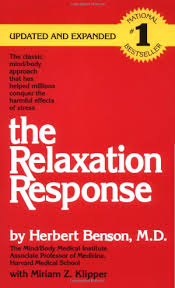
The second book is called The Relaxation Response. It was the cheapest book of the three and is much older than the book Buddha’s Brain. In it Dr. Benson (Harvard MD) describes the relaxation response as the body’s counterpoint to “fight or flight” mode. In this state of relaxation, the body–among other things–goes to work on repairing what ails it. There’s a lot of evidence that a human body can repair most of what can ail it if it gets enough rest–i.e. sufficient break from stress.
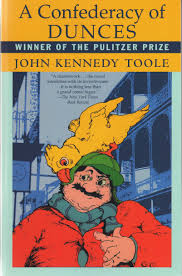
My final purchase was A Confederacy of Dunces. This book is considered to be one of the best comedic novels in American literature. It’s also a book that all depressed writers (which is to say all writers struggling to get things published) should read for the cautionary tale of the novel’s tragic back story. The author, John Kennedy Toole, committed suicide (at least in part) because he couldn’t get it published. His mother then took up the torch, shopping it around. It took her seven years, but she finally got it published after convincing the novelist Walker Percy to look at it, and having achieved his recommendation. In 1981 it won the Pulitzer Prize for fiction.

Taken in December of 2013 in Kuala Lumpur.
Roasting chestnuts was always something I associated with the dead of winter in cold places like London, Chicago, or Budapest. Little did I know it has a big following in the tropics as well. It should be noted that this is–technically–the dead of winter, but in Kuala Lumpur the dead of winter is t-shirts-and-shorts weather.

Taken in December of 2014 in Budapest in the City Park (Városliget)
I watched this little dog carry this stick across Budapest’s City Park. He set it down once, or maybe twice, to regrip it in its teeth, but otherwise it kept trotting along. The stick was about 1.5 times the dog’s length and about the diameter of a woman’s wrist.
The expression goes, “Don’t bite off more than you can chew,” but I applaud that this puppy was willing to shoot for the stars.


Taken in October of 2013 in Delhi
 The seven white, bulbous mini-domes in the top background of the bottom shot are the same as those at the top of the upper photo. Fortifications are built out in front of the gate to add a measure of security. There is no line-of-sight view of the gate from the front.

Taken in Kochi in July of 2014
Every once in a while, I see some graffiti that’s intriguing and / or evocative.
 Zen Mind, Strong Body: How To Cultivate Advanced Calisthenic Strength–Using The Power Of “Beginner’s Mind” by Al Kavadlo
My rating: 3 of 5 stars
This book discusses issues related to a calisthenics-centric approach to fitness. The first thing that one should be aware of is that the book has no such unifying theme as would be suggested by the title. Really, this is a sort of “best of” collection of Al Kavadlo’s blog posts, but—of course—that makes for a really unsalable title. The title is a take-off on Shunryu Suzuki’s Zen Mind, Beginner’s Mind, which is quoted in the front matter. Don’t expect Zen or the mind to formally enter the picture in a major way. I will say that Kavadlo has a Zen approach in that he emphasizes simplicity and paying attention to what one is doing throughout (so many people try to drown out their workouts with music or entertainment.)
I had mixed feelings about this book. On the pro side, Kavadlo is clearly knowledgeable and has a sound and pragmatic approach to fitness. Not only is he not trying to sell you on supplements and fitness fads, he tries to discourage such profit-driven nonsense. You’ll get some good information and sound advice from reading this book. You’ll find out why Kavadlo eschews dietary supplements, how he prepared for a marathon and a triathlon, what advantages calisthenics hold over other strength building activities, and how to avoid injuries.
So what’s the problem with the book? The first problem is rooted in the fact that I paid full price for the book soon after it came out, and–at said price—it’s overpriced for what it is—a rehash of blog posts. It looks like Amazon has dropped the Kindle price. As I said above, I respect Kavadlo’s approach to fitness, and think that he offers some useful insights, but the question is whether you couldn’t get the same insights for less–I think you can. At half the price I paid for this book, I would have been much happier with it. Alternatively, if they had beefed it up a bit—particularly with useful graphics—I might have found it a good buy at the price I paid. The bottom line is it’s a thin book of blog quality material.
My second problem is that they waste too much space with pictures of Kavadlo standing around shirtless in front of random minor NYC landmarks. I understand that a cut, muscular body is the ultimate resume for a personal trainer. However, I suspect that even the ladies and gay men will at some point say, “Enough with the standing around shirtless photos, Al.” For us heterosexual males, the number of these shots is way over the top.
Now, I’m not saying that the number of photos is excessive. They could have used some of that photo space for instructional photos of how to better do the exercises, or to build up to the more challenging exercises. Kavadlo has an excellent YouTube channel, so I know it would be possible to get more photos of him actually doing exercises. (They do have some pics exercise pics, particularly in the sample workout section at the back.)
The book’s 26 chapters are arranged in four parts that deal with background information, calisthenics, cardiovascular workouts, and diet respectively. There is a section at the back that presents a series of sample workouts divided into beginner, intermediate, and advanced levels.
As for my recommendation, I’d say that if you are interested in fitness and see this book at a price of around $4, buy it. However, if it’s at $10, it’s overpriced for what it is. Of course, your views of a fair price may vary. (I should note that I purchased it in Kindle e-book format.)

Taken in Vác in December of 2014


