Wen Fu 4: “Ekstasis” [文赋四] by Lu Ji [陆机]

It's all the amusing matters
That sages admire without bounds.
Writers find their way through the void --
Knock on silence to find its sound.
Silk scroll messages from afar,
The bard's words surge forth from the heart.
Words and ash grow to overflow --
Thoughts transcend depths to become art.
Flowery fragrance pungently sprawls;
Plants shoot forth verdant greenery.
The brush winds swirl to whirlwinds
Clouds climb above the academy.

Note: I previously posted other translators’ (Barnstone and Chou) version of this poem as The Joy of Words @ https://berniegourley.com/2024/12/31/the-joy-of-words-by-lu-ji-w-audio/

Original poem in Simplified Chinese:

伊兹事之可乐,固圣贤之所钦。
课虚无以责有,叩寂寞而求音。
函绵邈于尺素,吐滂沛乎寸心。
言恢之而弥广,思按之而逾深。
播芳蕤之馥馥,发青条之森森。
粲风飞而猋竖,郁云起乎翰林。

BOOKS: “Be Funny or Die” by Joel Morris

Be Funny or Die: How Comedy Works and Why It MattersBe Funny or Die: How Comedy Works and Why It Matters by Joel Morris
My rating: 5 of 5 stars

Author Site

Release date: Sept 4, 2025 [paperback, hardcover is already out]

This is a comedy writer’s guide to how humor is crafted. It’s a bit popular psychology and a bit of a how-to guide. If one is expecting, because it’s on comedy and humor, a book that is a laugh riot on every page, this isn’t the book for you. That’s not so say Morris doesn’t pepper the book with witty commentary and humorous examples, but it’s ultimately a book about how the sausage gets made and is, thus, somewhat analytic — if in a readable style.

At the core of Morris’s theory of comedy is a three-component structure: construct, confirm, and confound. Other major ideas are the fundamental tribalism of comedy and the connections between comedy and music. It wouldn’t be a present-day book on comedy if there wasn’t some discussion of the idea of offense and the “limits” of what can be said.

I can’t say all of Morris’s ideas found immediate resonance with me, but even when I didn’t fully buy the argument, I did find the presentation thought-provoking. For example, I don’t know that I buy Morris’s argument about the importance of tribality to comedy. I do agree that one needs a common language and some overlap of experience, but all of humanity has a domain of overlap of experience. Yes, one may have an easier time the more extensive that overlap is, but ease doesn’t necessarily mean one can’t get big laughs from an audience whose worldviews and experience are radically different from one’s own. [Of course, I may just be being overly sensitive as a traveler in a tribal world.]

For writers, the end of the book has a few chapters that are more about story than comedy – per se, and – while these chapters compare and contrast comedy and drama writing – they provide information useful to any writer engaged in storytelling.

I’d highly recommend this book for any readers interested in comedy writing, be it of standup material, scripts, or other content.

View all my reviews

Wen Fu 3 [文赋三]: “The Writing Process” by Lu Ji [陆机] [w/ Audio]

After choosing one's scope of thought,
Turn the words and note their order.
Embrace the hot ones, feel their burn;
Knock on lines and hear their timbre.
Use the branches to shake the leaves,
And waves can be traced to their source.
Make the hidden come visible;
Make the difficult seem simple.
A tiger's transformation startles --
Birds take flight on sight of dragons.
Sometimes words nest into each other;
Sometimes, jaggedly, they won't mesh.
With a clear, contemplative mind
Hordes filter through to easy speech.
Heaven and Earth contained within:
All things flow from the brush with ease.
Starting timidly with dry mouth,
Ending with a wandering brush.
Meaning is borne by a stout trunk,
Language hangs like leaf and fruit.
Make words and intended meaning match
As moods show clearly on a face.
When happiness comes, laugh & smile,
And with sorrow let loose a sigh.
At times words flow spontaneously;
At times one bites one's brush, musing.

The Original in Simplified Chinese:

然后选义按部,考辞就班。
抱暑者咸叩, 怀响者毕弹。
或因枝以振叶,或沿波而讨源。
或本隐以之显,或求易而得难。
或虎变而兽扰,或龙见而鸟澜。
或妥帖而易施,或岨峿而不安。
罄澄心以凝思,眇众虑而为言。
笼天地于形内,挫万物于笔端。
始踯躅于燥吻,终流离失所于濡翰。
理扶质以立干,文垂条而结繁。
信情貌之不差,故每变而在颜。
思涉乐其必笑,方言哀而已叹。
或操觚以率尔,或含毫而邈然。

BOOKS: “Troublesome Words” by Bill Bryson

Bryson's Dictionary of Troublesome Words: A Writer's Guide to Getting It RightBryson’s Dictionary of Troublesome Words: A Writer’s Guide to Getting It Right by Bill Bryson
My rating: 5 of 5 stars

Publisher Site – Penguin Books

This is a guide to English words (and loanwords) that challenge even professional writers. It’s organized as a dictionary, and – in fact – the earliest edition of the book was entitled The Penguin Dictionary of Troublesome Words. However, the entries are far from mere definitions, and typically include examples of grammatical, stylistic, or spelling offenses, examples that are sometimes humorous (as are Bryson’s explanations.)

The most common classes of troublesome words are those that are redundant (or otherwise fail to add information) and pairs or groups of words that are frequently confused because of similar spellings or close — but not identical — meanings. That said, there are many other varieties of linguistic challenges confronted by the book, such as spelling mistakes and migrating meanings.

The book is dated. For some readers, that will make the book obsolete, but students of language may find it’s even more useful in showing the evolution of the language. This can be seen with respect to migrating meanings, words whose meanings started out being one thing but against the efforts of grammarians and other linguistic guardians were dragged into an alternate meaning by the force of mass usage. There are some instances where Bryson advises one to honor the original meaning and other cases where he points out that the ship has sailed and to just go with the flow. I’m sure these positions would shift if this book were to be updated again. (Originally written in the 1980’s, the book was revised and update in the early 2000’s, but language has continued to shift in these 20+ years.) In several cases words for which he suggests we stick to the original meaning have now completed their slide. (And many of the words he tells us to accept the changed meaning of are now so far past that original meaning that few readers will be aware the word ever meant something different.)

That being said, the book isn’t completely obsolete. As mentioned above, one of the most common classes of offenses are redundant and meaningless words, and these are almost all still relevant to writers today.

Bill Bryson has a unique relationship to the language, being both British and American, and one nice feature of the book is that he points out differences in spelling and usage that exist between the two countries.

There is an appendix discussing proper punctuation, a bibliography, and a glossary of linguistic terms.

If you’re reading this out of an interest in language, I’d recommend it. It’s light and humorous. However, if you’re in the market for a reference guide, you can surely find a more up to date (if less humorous) guide.

View all my reviews

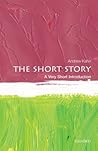
BOOK: “The Short Story: A Very Short Introduction” by Andrew Kahn

The Short Story: A Very Short Introduction (Very Short Introductions)The Short Story: A Very Short Introduction by Andrew Kahn
My rating: 4 of 5 stars

Publisher Site – OUP

This guide provides an overview of the short story, particularly literary short stories (though it’s not without mention of genre fiction.) The book is well organized and offers some fascinating food for thought, particularly regarding the psychology of character and the distinctions between short stories and novels. (The former are not to be thought of as pared down versions of the latter.)

I will say that, for a concise introduction, the book does occasionally get into the weeds on specific issues, potentially losing the non-specialist reader who this series is ostensibly geared toward.

I found the book’s organization to be logical and productive to its task. After an introduction that explores the advent and history of the short story, most of the chapters deal with structural or compositional aspects of story, including: openings, voice, setting, plot, irony / reversal, and endings. One chapter (Ch. 6) stands out as a bit different in that it zooms in on Chekhov and his influence on the short story as we’ve come to know it. While this could be said to demonstrate the author’s tendency to zoom in the specificity more than is usual for such a guide, I did find the chapter interesting and enlightening.

If one is interested in the short story (as a reader, writer, or both) one will find this guide worth one’s attention.

View all my reviews

Spillage [Free Verse]

What spills from the brush?
What shapes are made
on the page?

What curves? What lines?
What crosses? What binds?

Who will chase after the sparks
of meaning in those wild marks?

BOOK: “Spring, Summer, Asteroid, Bird” by Henry Lien

Spring, Summer, Asteroid, Bird: The Art of Eastern StorytellingSpring, Summer, Asteroid, Bird: The Art of Eastern Storytelling by Henry Lien
My rating: 4 of 5 stars

Publisher Site

I enjoyed, and was stimulated in thought, by the first half of this book, as well as by sections of the latter half, especially in the fourth chapter. (It’s arranged into four chapters, echoing the book’s central idea of a unique four-act approach to storytelling prevalent in Eastern societies. I’ll get to why I was not so fond of Ch. 3 later.) The book employs exemplary works of literature, film, and even video games to support the claim that there’s not just one approach to sound story crafting — but, rather, that Eastern societies developed distinct modes of storytelling reflecting their values and worldview. (A note on the use of the word “Eastern”: while the book draws heavily on East Asian sources, it tries to make a broader case suggesting not only South Asia but also the Middle East [i.e. everyplace not big-W “Western”] fit this mold. The book might have made a stronger case sticking to East Asia, as – for example – it might be argued that Arabia / Persia of the time of One Thousand and One Nights, being Abrahamic, was closer to Europe than East Asia in values and worldview. To be fair, the author does argue that some parts of that book are believed to have come from farther East (India and, possibly, beyond.))

The book proposes that there are two (arguably three) styles of story construction that are distinctly Eastern. The first is a four-act structure that is far from just a rejiggering of the three and five act forms with which English Literature students will be familiar. Incidentally, the book’s rather unusual title maps to the elements of this four-act structure. The second involves circular and nested story structure. I don’t know that the author succeeds in (or even seeks to) convince the reader that this is a uniquely Eastern approach, but -rather – makes an argument as to why it is prominent in Eastern storytelling.

The author picked an excellent set of works to illustrate his points. Generally, the works are both well-known and well-received among diverse audiences. The films he employs as cases include Parasite, Everything Everywhere All at Once, and Rashomon (the latter also being a literary work.) Lien uses one of my favorite Haruki Murakami novels Hard-Boiled Wonderland and the End of the World as a critical example. I was not at all familiar with the video games he describes (beyond name,) but – given that I’d at least heard of them – I assume they are pretty popular (though I can’t speak to whether they have any discernable stories and will have to take that on faith.) [I’m not sure whether One Thousand and One Nights was a good choice for Eastern literature, though it is an excellent choice as of nested structure.]

As for why I didn’t care for the book’s third part. I should point out that is the most philosophical (and the least explicitly concerned with story) part of the book, and it aims to show how values and worldview vary across cultures such that there are differences in story structure and crafting between different parts of the world. That could be a laudable objective and germane to the book’s point and it’s not why I found this section to be muddled and ineffective. The problem is that the chapter oversimplifies the issue in a way that seems to undercut a broader central argument (that Eastern modes of storytelling are underrepresented outside of the East.) Instead of suggesting that people experience conflicts along continuums (e.g. individual to group identity) and that Easterners tend come to different conclusions than Westerners do based on differing values and cultural perspectives, it engages in an elaboration of the distinctions that seems to suggest there’s some unbridgeable gulf of understanding between cultures (and, quite frankly, kind of feels like it’s shifted from making the aforementioned point to just being a thinly veiled critique of Western culture — which is fine, but probably belongs in a different book — or maybe a manifesto.) But if there were no basis for stories to resonate across this gulf, then not only wouldn’t Parasite and Everything Everywhere All at Once have killed it at both the Oscars and American box office, there’d be no reason for artists to attempt to branch out and tells stories across tribal lines. Without establishing a basis for story resonance, it’s ridiculous to argue that Hollywood should use Eastern modes of storytelling and Eastern worldviews to a greater extent. (A profit pursuing entity is always going to seek the largest possible customer base.) I’m not attempting to negate the argument that there are different approaches to storytelling among different peoples nor that more diversity of approaches shouldn’t be seen across cultures. I’m saying that this chapter doesn’t well support the argument for greater representation of Eastern modes of storytelling outside of Eastern outlets (publishers, film studios, etc.) because it spends so much time arguing the cultural differences that it doesn’t indicate how cross-cultural story resonance is possible.

Overall, I found this to be an interesting and thought-provoking read, though it was – for me – a bit muddled in the middle.

View all my reviews

“Song of the Open Road” (3 of 15) by Walt Whitman [w/ Audio]

You air that serves me with breath to speak!
You objects that call from diffusion my
meanings and give them shape!
You light that wraps me and all things in
delicate equable showers!
You paths worn in the irregular hollows by
the roadsides!
I believe you are latent with unseen
existences, you are so dear to me.

You flagg'd walks of the cities! you strong
curbs at the edges!
You ferries! you planks and posts of wharves!
you timber-lined sides! you distant ships!

You rows of houses! you window-pierc'd
façades! you roofs!
You porches and entrances! you copings and
iron guards!
You windows whose transparent shells
might expose so much!
You doors and ascending steps! you arches!
You gray stones of interminable pavements!
you trodden crossings!
From all that has touch'd you I believe you
have imparted to yourselves, and now
would impart the same secretly to me,
From the living and the dead you have
peopled your impassive surfaces, and the
spirits thereof would be evident and
amicable with me.

“The Joy of Words” by Lu Ji [w/ Audio]

Writing is joy --
so saints and scholars all pursue it.

A writer makes new life in the void,
knocks on silence to make a sound,
binds space and time on a sheet of silk
and pours out a river from an inch-sized heart.

As words give birth to words
and thoughts arouse deeper thoughts,
they smell like flowers giving off scent,
spread like green leaves in spring;
a long wind comes, whirls into a tornado of ideas,
and clouds rise from the writing-brush forest.

Translation by Tony Barnstone and Chou Ping in The Art of Writing (1996) Boston: Shambhala.

FIVE WISE LINES [November 2024]

Inspiration enters at the border between hard work and laziness.

Lu juren in “Poets’ jade splinters” [Trans. by Barnstone and Ping in The ART Of Writing]

I will not own anything that will one day be a valuable antique.

Miyamoto musashi in “My way of walking alone” [Dokkōdō] (Trans. by Teruo machida)

A house full of gold and jade can’t be guarded.

Laozi in the DAo De jing [Ch. 9]

Writing is a struggle between presence and absence.

Lu ji in The ART of Writing [Trans. by Barnstone and ping]

The best leaders remain unknown; the next best are praised; the next best are feared, and the worst are mocked.

Laozi in dAo de Jing [Ch.17]