PROMPT: Reread

Daily writing prompt
What book could you read over and over again?

If plays count as books, then most of Shakespeare’s plays. I’ve already reread a number of them (e.g. Hamlet, Macbeth, Merchant of Venice, and A Midsummer Night’s Dream.)

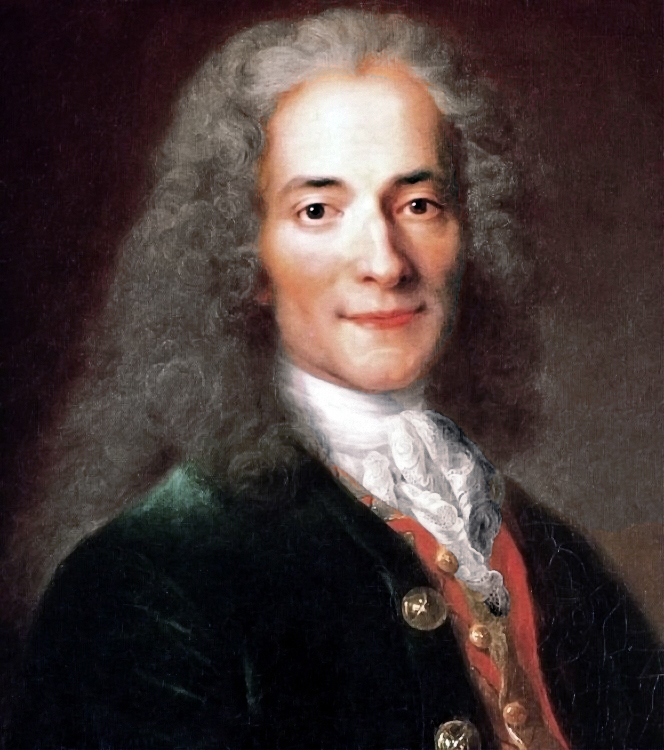
I’ve read Whitman’s Leaves of Grass, a couple times in full (and segments of it many times over) and expect to get to it again. I’ve read Voltaire’s Candide a couple times.

I could definitely see rereading Journey to the West, Water Margin, and Romance of the Three Kingdoms, but at this point I’m hoping my Mandarin will get good enough to read them in Simplified Chinese.

I’ve read a number of nonfiction texts multiple times — e.g. Sunzi’s Art of War, Miyamoto Musashi’s Book of Five Rings, Laozi’s Dao De Jing, and Emerson’s Selected Essays.

I’m generally not a fan of rereading books because there is so much awesome stuff out there to be read a first time. For all the reading I’ve done, there is still a massive number of classics that I have yet to touch. Usually there has to be a good reason for a reread, e.g. a new translation that promises to be improved / simplified, the book is just so potent as to still have lessons packed in after the first read, it’s a challenging read and the first go leaves a lot on the table, or — like The Little Prince — its enjoyment-to-time investment ratio is high.

Five Wise Lines [June 2024]

The man who says to me, “Believe as I do, or God will damn thee,” will presently say, “Believe as I do, or I shall assassinate thee.”

Voltaire, in On superstition

The real voyage of discovery lies not in seeking new landscapes but in having new eyes.

Marcel proust

The translation of a poem having any depth ends by being one of two things: Either it is the expression of the translator, virtually a new poem, or it is as it were a photograph, as exact as possible, of one side of the statue.

Ezra pound

The people are of supreme importance to the ruler,
food is of supreme importance to the people.

Chinese adage

All translators face two choices: leave the reader in peace and drag the author closer, or leave the author in peace and drag the reader closer.

Friedrich schleiermacher (1768-1834)
[Referenced in Twenty-Nine GOODBYES, ed. by timothy billings]

Five Wise Lines [May 2024]

Play is a state of mind, rather than an activity.

Stuart brown in PLay: How it shapes the brain, opens the imagination, and Invigorates the soul

My sins are running out behind me, and I do not see them, and today I come to judge the sins of another!

From Sayings of the Desert Fathers
(A Senior Monk’s reply upon being asked to Judge a younger monk’s actions)

Ye have heard that it hath been said, An eye for an eye, and a tooth for a tooth! But I say unto you, That ye resist not evil: but whosoever shall smite thee on thy right cheek, turn to him the other also.

Matthew 5: 38&39

I have no scepter, but I have a pen.

Voltaire to Fredrick the great

If a man is born to error, let us wish him virtuous errors.

Voltaire; ON Superstition

BOOK: “Toleration and Other Essays” by Voltaire

A Treatise on Toleration and Other Essays (Great Minds Series)A Treatise on Toleration and Other Essays by Voltaire
My rating: 5 of 5 stars

Project Gutenberg — Free Access

This collection gathers together eight essays and a poem. The theme that interconnects these works is a petition to avoid petty tribalism and irrationality / superstition in the practice of one’s religion. The titular essay, “On Toleration,” sets the collection’s tone, beginning with its detailing of the murder of Jean Calas on religious grounds and its exploration of many more acts of savagery attributable to sectarian forces in alliance with authoritarian governments. The poem, “Poem on the Lisbon Disaster,” echoes the central idea of “Candide” — i.e. the idea that we live in the best of all possible worlds is patently false.

As one would expect of Voltaire, there is plenty of humor and satire throughout these pieces. The arguments are also generally well supported by facts. It is clear that Voltaire possessed a great deal of the knowledge of his day. That said, the reader may well find some factual errors. Most notably, Voltaire tends to attribute a kind of enlightened utopian vision to cultures with which he was likely largely unfamiliar as he builds a case against many within the culture with which he is familiar. This isn’t to say that there isn’t some truth to Eastern traditions being historically more tolerant of other sects than the Abrahamic religions, but the degree to which he extends these idyllic views of those outside of Europe (and the details, thereof) don’t always seem to comport with the historic record.

While some may be inclined to dismiss this book as a collection of anti-religion writings, it is really not anti-belief at all. (Though he does poke holes in many a Biblical myth, so too does he actually provide a deist argument in favor of the existence of a god or gods in the book’s final essay.) Instead, the collection is anti-intolerance, anti-superstition, and anti-authoritarianism. I’d highly recommend this book for all readers. Whatever flaws it may contain are outweighed by the great importance of its message and the cleverness with which Voltaire conveys said message.

View all my reviews

Five Wise Lines [April 2024]

Diogenes Sitting in His Tub by Jean-Leon Gerome (1860)

Of what use for us is a man who, although he has long practiced philosophy, has never upset anyone?

Diogenes of sinope on Plato, according to themistius

The superstition that we must drive from the Earth is that which, making a tyrant of God, invites men to become tyrants.

Voltaire in On Superstition

The progress of an artist is a continual self-sacrifice, a continual extinction of personality.

T.S. Eliot in Tradition and the Individual talent

What’s the difference between a king and a poor man if they would both end the same bundle of white bones.

Zhuangzi

The absence of evidence is not the evidence of absence.

Carl sagan (Note: There are variations on this quote that long predate Sagan’s)

HONORABLE MENTIONS:

You live off the crumbs that fall from the festive table of my genius.

Kurban Said in Ali and Nino [Not so much wisdom as a wicked burn]

To roam Giddily and be everywhere, but at home, Such freedom doth a banishment become.

John donne in a Poetic letter to rowland woodward

Lions are not the slaves of those who feed them, it is the feeders, rather, who are the lion’s slaves. For fear is the mark of a slave, and wild beasts make men fearful.

Diogenes the cynic

“Mock on, Mock on, Voltaire, Rousseau” by William Blake [w/ Audio]

Mock on, Mock on, Voltaire, Rousseau;
Mock on, Mock on, 'tis all in vain.
You throw the sand against the wind,
And the wind blows it back again.

And every sand becomes a Gem
Reflected in the beams divine;
Blown back, they blind the mocking Eye,
But still in Israel's paths they shine.

The Atoms of Democritus
And Newton's Particles of light
Are sands upon the Red Sea shore
Where Israel's tents do shine so bright.

BOOKS: “Great Minds on Small Things” by Matthew Qvortrup

Great Minds on Small Things: The Philosophers' Guide to Everyday LifeGreat Minds on Small Things: The Philosophers’ Guide to Everyday Life by Matthew Qvortrup
My rating: 4 of 5 stars

Amazon.in Page

This book was inspired by Voltaire’s Philosophical Dictionary, a collection of essays by the French polymath put out in several editions and which covered topics such as: “Adultery,” “Free Will,” “Kissing,” and “Nakedness.” In some ways, the inevitable comparison that results from such a “reboot” as this proves the connection between the books to be apt. But in at least one sense, the comparison is unfortunate.

On a superficial level, comparison is apt. Not only does this book expound upon a range of alphabetized topics, often of an “everyday” nature, but it uses many of Voltaire’s topics. It should be noted that Qvortrup’s book also includes many topics that Voltaire didn’t address, notably topics such as “cars” that didn’t exist in Voltaire’s day. One difference that benefits the book greatly is that (as the title suggests,) Qvortrup’s book draws on ideas of a wide range of thinkers, mostly philosophers but also artists of a philosophical bent. [Whereas, Voltaire’s book is a single-point of view, his own.] The “great minds” in this book range from the ancient world to that of the present. While it is (by the author’s admission) Western-centric, it does reference Eastern thinkers (e.g. Taoists and Buddhists) more than many books I’ve read that weren’t as self-aware of their own Eurocentrism.

Where the comparison to Voltaire’s dictionary is not so apt is that Qvortrup’s book rarely mixes wit and stimulation in the way for which Voltaire had a genius. This doesn’t mean Qvortrup’s book isn’t witty or thought-provoking, but just that it’s rarely both, simultaneously. In dealing with a topic like flatulence it can be witty but trivial, in expounding on the ideas of Kant it is intriguing but not usually amusing. That said, the book is laden with interesting ideas and insights into seminal thinkers that most people will find unexpected, if quirky. It is also the case that the overall tone of this book is lighter and more aimed at amusement than is Voltaire.

I found this book to be compelling, readable, and well worth the time, and would recommend it for readers of pop philosophy.

View all my reviews

Food for Thought [Voltaire & Smartphones]

When Voltaire said:

“Once a nation begins to think, it is impossible to stop it.”

I don’t think he’d anticipated smartphones.

Voltaire Clerihew

The Enlightenment thinker called Voltaire
 beat the lottery to become a millionaire.
   To the man, he did stick it,
    by buying every ticket. 

BOOK REVIEW: Introducing the Enlightenment by Lloyd Spencer

Introducing the Enlightenment: A Graphic GuideIntroducing the Enlightenment: A Graphic Guide by Lloyd Spencer
My rating: 4 of 5 stars

Amazon.in Page

This brief illustrated guide offers a history of the Age of Enlightenment with a particular focus on the changing philosophical landscape and its opposition. It does dip into the literature and arts of the time, but most intensely with respect to philosophical novels. It also discusses a burgeoning scientific scene, but mostly with respect to Isaac Newton and his influence. The Enlightenment was an age in which religion’s hold on the populace was declining and tolerance of other sects was increasing, and at the same time there was increasing liberalization, rationality, and openness to new ideas. Therefore, much of the focus is on philosophy of religion and political philosophy, and Locke, Bacon, Rousseau, Diderot, and Voltaire are the most extensively discussed personalities. (Particularly Rousseau and Voltaire as their contrasting views offered insight to the breadth of views among Enlightenment philosophers.)

I felt this book did a fine job of delivering an overview of the era and the new ideas that informed it. It drew heavily on quintessential quotes of major figures of the day (particularly the very quotable Voltaire.) It’s a fine place to begin one’s examination of the topic and includes a “Further Reading” section as a means to direct those who would like deeper insight into the subject.


View all my reviews