Tradition v. Modernity in Fitness and Movement Arts


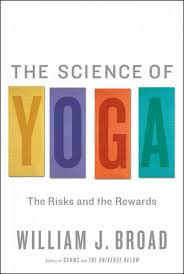
TheScienceofYoga_BroadOne of my favorite professors (and I had a lot of them) was in the Religious Studies department of Indiana University in Indianapolis (IUPUI.) Among the lessons he taught us were the various forms of fallacious reasoning applicable to the discipline. He did so in a way that was both erudite and folksy, often in a humorous way.


While I don’t remember the formal names he gave these concepts or their technical definitions, I do remember the more colorful variations. One was the “firstist-is-bestist” fallacy in which it’s assumed that the old ways are inherently superior because bad ideas die out, and young ideas are at least as likely to be crap as not. This is sometimes called “appeal to tradition.” Over a sufficiently long time horizon this assumption may prove true (i.e. the time horizon beyond which Keynes warned we’d all be dead), but we know that wrong ideas can live on for centuries.


Another was the “outhouse” fallacy, which says that because pre-modern man didn’t have indoor plumbing they must have been complete idiots, and we should assume newer is better. This is sometimes called the “appeal to modernity.”  While there is some advantage to having access to the compiled knowledge of history, this doesn’t keep people from coming up with idiotic ideas regularly.


What made me think about these conflicting fallacies is that I’ve been reading a lot about the science of yoga–and other systems of movement–lately. Specifically, I was reading The Science of Yoga by William Broad. During the 20th century, yoga went from not giving a whit about science to trying to show that it wasn’t at all at odds with science–if not that it was grounded in science. (Note: this statement could be applied to many of the old ways—e.g. religions—which sought to prove themselves consistent with scientific evidence out of fear that–in the age of rationality–to be inconsistent with scientific observation would be death to old beliefs.) While the hucksters and con men seeking to bilk people out of money through shows of yoga “magic” have lost power (though some still exist and prey on the gullible regularly), this isn’t to say that science has yet won the day entirely.


Chapter two of Broad’s book discusses the findings of the scientific community on whether yoga has any merit as aerobic exercise. (The consensus is that it doesn’t.) Now, one would think that the whole yoga community would be pleased that academia has for the most part shown that yoga has a range of positive benefits that make it a worthwhile endeavor when practiced safely and conscientiously, but some have been unwilling to accept that yoga isn’t excellent cardio on top of all its unambiguous benefits. The established consensus is being ignored and a single seriously flawed study (small sample size, no control group, and—while peer-reviewed—the author was the journal editor) is cited, that one—of course—suggests that yoga meets all one’s cardio needs.


It’s easy to follow the incentives. For example, if one runs a yoga studio one would like to be able to say that yoga is a panacea for all of a person’s health needs. People are busy and lazy, and if someone else can sell them a silver bullet then they’ll lose business.  If one gives the matter thought, it becomes hard to imagine an exercise panacea. Consider a list of health goals that includes reduced stress, improved balance, greater flexibility, more strength, and enhanced cardiovascular capacity. One should see that some of these goals are at odds with each other. The first three goals—at which yoga excels–require holding a static position for a time while engaging in deep and controlled breathing. The fourth goal, strength enhancement, (which yoga achieves only in a limited way) requires repeated alternation of stressing and relaxing a muscle. And cardio, the fifth goal,–for which yoga is less than helpful–requires rapid and sustained motion so as to cause the heart to be stressed.


Of course, individuals have tried to rectify yoga’s cardio deficit by creating yoga styles that add speed and repetition. If one does five sun salutations per minute for 45 minutes, then—congratulations–you are now getting cardio and strength building. Unfortunately, you are now losing out on the first three goals of stress reduction, balance enhancement, and flexibility improvement. Those three things requiring holding poses while engaging in relaxed and controlled breathing. So the question is whether one is happy having sacrificed the benefits yoga does better than everything else in a desire to have yoga gain benefits that other exercise systems probably still do better.


The old systems of movement and exercise, be it yoga or chi kung, have shown themselves to have merit. However, the mechanisms by which that merit is achieved (or the nature of the merit) are often not what the system’s mythology suggests. There’s no need to fear science, but one should be ready to embrace what is shown true and set aside what is shown to be false.


On the other hand, this modern idea that we can have our cake and eat it too by throwing together disparate systems, which often have conflicting goals and modes of operation, needs to be reevaluated. All of these fads have been created where someone crams together tai chi and yoga or yoga and jazz dance or Zen meditation and parkour and they think they have the ultimate system based on a more complete picture of modernity, and what they’ve got is a muddle.


What we need is the tested merit of tradition without its voodoo, and the compiled knowledge of modernity without its hubris.


Antifragility and First World Diseases

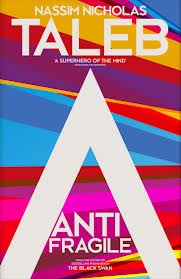
Antifragility

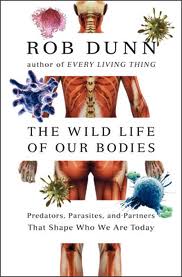
TheWildLifeofOurBodiesI was sitting at an outdoor cafe as I thought about how to write this post. I’d just finished reading chapter 5 of the Rob Dunn book entitled The Wild Life of Our Bodiesand was reflecting upon how interesting it was to be reading two books whose central premise–in broad brush strokes–was the same. As I was ruminating, a family of four–a couple and their two daughters, an infant and a preschooler/kindergartener–came and sat down at an adjacent table.

For a while the preternaturally-cute infant crawled around on the table top, but as the mother became concerned that the wriggly little child might fall or spill scalding coffee, she eventually set the child down. The child proceeded to crawl around on the ground–ground on which one could easily imagine pigeons trolling for crumbs. [Full-disclosure: I didn’t actually see any pigeons, or even any noticeable filth on the ground for that matter, and–while this is India–it was a major coffee chain attached to the side of a popular up-scale shopping mall, and so that particular ground was probably at least hosed down daily.] The child crawled on all-fours, except that she had the plastic number placard which told the waitress where to bring the order in one of her hands, and she would alternate between dragging it across the ground and–when she got tired of crawling–she would roll onto her rump and pop a corner of the placard into her mouth.

If reading the preceding scene made you a bit queasy, you should be reading one [or both] of books mentioned above. Doing so gave me a totally different perspective on this event. There was a point when I–like many–would have assumed the little girl would get some sort of ailment and that her parents would pay in lost sleep for letting the kid crawl on the ground in an urban public space, but I’m now more inclined to think that probably nothing will happen, and she could–theoretically–end up better off for the wear. I’m not advocating wallowing in filth, but I have come to see biological stressors in a new light. I wouldn’t go so far as to advocate letting a child crawl around sticking things in his or her mouth that have been on the ground at a cafe, but it would no longer surprise me to hear that this child lived a healthier life than children of germophobic (properly “mysophobic”) first-world moms who are about one cookie-off-the-kitchen-floor from forcing their children to live in a bubble.

The reader may be wondering two things: 1.) how these books could mitigate one’s queasiness, and 2.) what the books even have in common. If  you’re familiar with Nassim Nicholas Taleb, it’s likely you associate him with criticisms of the misuse of statistical methods, and the failure to understand under what conditions the usefulness of these methods break down. While Taleb does consider a wide range of examples in his popular books Black Swan,  Fooled by Randomness, and–most recently and most relevantly–Antifragilethe world of business is where Taleb’s background lies and where much of his discussion is centered. The Dunn book, one the other hand, fits squarely in the domain of biology and medicine.

Both of these books take as their core idea that there are systems that must face constant and occasionally serious challenges to grow stronger, and that the removal of these challenges can have adverse and sometimes dire consequences. Taleb looks at such systems in a broad and general sense, and coins a term, “antifragile”, to describe such systems. A system is antifragile if it gets stronger (i.e. in some way better) when subjected to stresses. This shouldn’t be confused with robustness, which is being indifferent to stressors. Robust systems can take or leave stressors, but antifragile systems need them or they become weakened. Dunn’s book deals with a specific example of an antifragile system, our guts. The biologist suggests that our war on parasites and germs has created a whole raft of problems never before seen. It’s probably not a new idea to most readers, as there are ongoing arguments about the risks of our antibacterial frenzy.

While first-world dwellers tend to take a superior view of those poor third-worlders and their myriad ailments–a number of which have been stamped out in the developed world–Westerners may not even be aware that there are a number of ailments that exist almost exclusively in the first world. Increasing evidence is developing that certain forms of diabetes and allergies are linked to “clean living.”  Interestingly, while one might readily imagine how a digestive tract ailment like Crohn’s Disease is tied to insufficiently populated digestive ecosystem, there’s reason to believe that diverse issues such as autism and anxiety disorders may also be linked to loss of internal predators and the imbalances their loss causes.

It’s not entirely a coincidence that I’m reading these books concurrently. I’ve been interested in the issue in a broad sense as of late. How does the craving of comfort weaken a population? What are the risks of indiscriminately weeding the stressors out of one’s life? (As seems to be a major objective of modernity.)  Of course, stressors are not eliminated, but instead stressors that are relatively feeble may become the 800 lb. gorilla of stressors.

BOOK REVIEW: Inventing Iron Man by E. Paul Zehr

Inventing Iron Man: The Possibility of a Human MachineInventing Iron Man: The Possibility of a Human Machine by E. Paul Zehr

My rating: 4 of 5 stars

Amazon page

As the title suggests, this book examines whether Iron Man could exist in the real world. As with Michio Kaku’s book Physics of the Impossible, answering the question involves defining the various meanings of “impossible.”

One way to parse the question is, “Is Iron Man possible today given the existing state of technology?” In and of itself, this question is of limited interest because the answer is, “no.” There’s certainly a demand, and so if Iron Man could exist given current technology, he probably would. That’s not to say it isn’t interesting to learn about what technologies are holding us back and where the cutting edge of relevant technologies lies—both of which are addressed by the book.

Still, a more interesting inquiry is, “Will Iron Man ever be reality given the physical laws that we know to govern the universe?” While more intriguing, it’s also a harder question to definitively answer. It’s impossible to foresee all the technological developments that might come along to answer the seemingly insurmountable challenges (e.g. Tony Stark’s inevitable Traumatic Brain Injury (TBI).) The book deals with the critical question of what challenges would have to be overcome for Iron Man to be reality.

As Zehr suggests, the appeal of Iron Man is that he’s considered to be among superheroes for the common man. Like Batman, the sufficiently bright and diligent nerd may fantasize that, “That could be me.” You or I can’t be Superman or Wolverine, but given enough money, smarts, and training we could be Batman, or—even better—pilot the Iron Man suit. Put in this light, the book may seem like just another frivolous attempt to capitalize on the popularity of superheroes to sell books. However, there’s actually a great deal of food for thought packed in the book. Like others, I read the book because its title is Inventing Iron Man and not Neuro-motor control of a self-propelled armor system or some other suitably scholarly title.

Dr. Zehr has the bona fides to delve into this topic. He is a Professor who investigates questions of how the nervous system controls movement. That subject may not constitute the sum total of critical concerns, but it’s one of the most important challenges. For Iron Man to move the way he does in the movies and comic books, Tony Stark’s impulses to move have to be transmitted seamlessly to the servo-motors that move the suit. From dodging Col. Rhodes’ (i.e. War Machine’s) punches to ducking RPGs, Stark can’t be quick enough if he has to manually steer the device. Then, of course, there’s the issue of feedback. Any neophyte meditator who’s had his or her foot fall sound asleep will know how difficult it is to walk surefootedly when one can’t feel anything through one’s foot.

[Iron Man 3 spoiler commentary in this paragraph.] One of the most damning challenges for making Iron Man a reality is the high probability of severe concussions. Let’s say you make the suit out of a material that is virtually indestructible? This may be possible. However, the pilot’s mushy brain is still sloshing around inside that impenetrable armor. One can remotely pilot the suit in order to negate this (as has been done in the comic books and the third movie), but—at that point—is it still Iron Man? I know from a writer’s perspective it’s a lot harder to maintain tension if there’s nothing human on the line. In the third movie about 30 autonomously piloted suits get wiped out and the viewer doesn’t care—the only source of tension is that Tony Stark is without armor half the time.

Some of the most interesting discussions are about where the current state of the art lies with respect to: a.) direct mind control over mechanical systems; b.) a “flying suit”; and c.) robotic movement enhancers. Zehr conducts interviews with those engineers and technologists involved in such technologies, and finds out where we are presently. Letter “a” above seems to be the least developed of the three technologies, but they are all active lines of research.

I enjoyed this book and found it interesting. I think anyone who is interested in the state of technology and its limits will find it a nice pop-sci introduction to the subject. The use of superheroes as a pedagogic device may be overdone, but it continues to work because we are fascinated by the edge of possibility, and that’s what superheroes represent.

View all my reviews

BOOK REVIEW: Mind Over Medicine by Lissa Rankin

Mind Over Medicine: Scientific Proof That You Can Heal YourselfMind Over Medicine: Scientific Proof That You Can Heal Yourself by Lissa Rankin

My rating: 4 of 5 stars

Amazon page

This book is one of many that challenge the conventional approach to medical care in which a patient is a passive character who just goes to the doctor and does (or ingests) whatever the doc tells them to. In the vein of works by Deepak Chopra and Bernie Siegal, this book is written by medical doctor who has different beliefs on healing. So what’s the niche of Mind Over Medicine, given that there are already a number of prominent medical doctors preaching the same message? That message is that your body is a healing machine and will do MOST (not ALL, none of these individuals advocates abandoning modern medical science) of the heavy lifting of healing, if you create the right conditions. Rankin presents results from scientific studies as the thrust of her book. I’m not really that familiar with Siegal, but you’ll find Rankin’s work a great deal less spiritual and more scientific than the works of Deepak Chopra.

There’s a lot of scientific interest in understanding why some people experience spontaneous remissions from the most lethal of ailments while others succumb to diseases that most people weather with ease. While many people will chalk it up to divine will or chakra nudging or having one’s demons expunged, these aren’t satisfying answers for the scientifically minded individual. However, neither is the extreme skeptic’s suggestion that these are just randomly distributed flukes of nature—and it’s a waste of time to try to explain the outliers. The latter being unsatisfying because phenomena like the placebo effect are well documented.

So what conclusion does Rankin draw from the scientific literature. As suggested earlier, the conclusion is that the body is extremely good at healing what ails it, but it has to be in the right mode to have this healing take place. What’s the right mode? It has to be in relaxed mode, or, in scientific parlance, the parasympathetic system must be engaged. The problem is that when a person is under stress, the body switches into a fight or flight mode. Humanity hasn’t really come to grips with the fact that work deadlines, fears about ailments, or fears that our spouse may be cheating aren’t really the same as our ancestor’s experience of being chased by a saber-tooth tiger. When that ancestor was being chased by a tiger, his or her body shut down everything that wasn’t germane to immediate survival (e.g. digestion is interrupted, blood isn’t evenly distributed but goes to lungs and skeletal muscles, etc.) The tiger chase is over shortly, and the body returns doing its regular at-rest functions (e.g. digesting, healing, etc.) However, if we let our stressors kick us into that immediate survival mode–and just having a disease can be stressing enough in itself–then our healing can be severely or completely curtailed.

Can faith healing, karma cleansing, chakra fluffing, or sugar pills contribute to healing? Sure, but not in the way that the faithful thinks. These systems–each of which has proponents who’ll swear they witnessed first-hand the power of faith or magic or invisible energy (and they are probably not lying)–work because the person who firmly believes in these therapies is able to relax and let their bodies can do what they do.

Does this mean that those who don’t believe in religion or cosmic energy manipulation are out of luck? No. You just skip the middleman and engage in activities such as meditation, yoga, tai chi, or breathing exercises that allow you to put the body in a relaxed state. Secular meditation works just fine if practiced consistently, and particularly if one confronts, addresses, and eliminates the long-terms stressors in one’s life.

At the heart of the book is a discussion about how to go about performing one’s own diagnosis and writing one’s own prescription. As I mentioned earlier, this isn’t about cutting the doctor out. In this case one is diagnosing one’s stressors and prescribing activities to eliminate them. This doesn’t mean one should pass up medical treatment or doctor’s advice. However, it may entail switching doctors if you have a doctor that firmly believes you are incapable of getting better—you don’t need any doubts about your body’s ability to do its thing being foist upon you.

I’d highly recommend this book for scientifically-minded individuals interested in learning how they can help their bodies get into a state conducive to healing.

View all my reviews

Chi: The Power of What Isn’t

Every morning I start my day with chi kung (a.k.a. qi gong), and many days I do tai chi (tai qi.) For those who are unfamiliar, chi is usually defined as “life force” or “life energy.” However, defining chi is neither simple nor will one find a consensus agreement. Some say chi is  “breath,” at which point its existence becomes a much less controversial, but also less explicative, concept. Others would say that chi is much more broadly dispersed than the “living” so “life force” is an understated definition.

Chi Kung are exercises combining breathing, movement, meditation, visualization, and self-massage that are used to keep one healthy. Because yoga also contains these components (e.g. breathing, movement, and meditation; though with very different specifics) some have even been known to call chi kung “Taoist yoga.” The idea behind these exercises is that chi is lost through living (some activities more than others), and can become blocked in the channels through which it is believed to move. Various exercises are used to replenish and ensure healthy circulation of the chi. Tai chi is a series of martial arts forms that are also considered to have the effect of replenishing and / or enhancing chi.

Two questions may leap to mind, especially among those who know me as a skeptic. First, do you believe in chi–despite the lack of evidence that it exists? (When I mention this lack of evidence, I am obviously not defining chi as breath or bodily fluids, in which case the most rabid skeptic would have to acknowledge its existence. However, then an entirely different set of questions is raised about the vast and complicated nature of chi kung exercises needed to circulate oxygen, which travels through blood vessels and not through channels or meridians. In other words, there’s no reason not to abandon a lot of the Traditional Chinese Medicine (TCM) / Taoist conceptions of health if one considers a narrow definition of chi.) Second, if you don’t have any reason to believe that chi is a real thing, why bother with the exercises?

First, no, I don’t believe in chi as a substance or physical entity in the way that your average Taoist priest does. I don’t mock or ridicule those who do, and I acknowledge it could always turn out that they were right and I was wrong and that my current state of ignorance combined with an incorrect deference to Occam’s Razor led me astray.

However, I have a pretty high standard for believing a person, place, or thing exists. I need to be able to observe it.  If I can’t perceive it directly, but there is some indirect sign it exists, then that indirect sign needs to be the simplest possible explanation I can imagine given my current state of knowledge. (Yes, I realize that Occam’s Razor isn’t a law, it can always be that an unlikely explanation is the correct explanation. I also know the raft of indirect signs of chi, and, yes, I’m saying I can imagine simpler explanations than an energy source that is immeasurable but powerful enough have bodily effects.) While I don’t believe in chi (or meridians, or the yet undiscovered organ called the “triple heater”) as physical things, I do believe in conceptual chi which is an object of visualization.

Moving on to the second question, I practice these exercises because they make me healthier.

This, of course, raises another question, “How can these exercises be effective if chi is not real?”

Now I have to go Socratic on my hypothetical questioner. The Socratic dialogue goes like this:

S: Have you ever been to a scary movie?

A: Of course, I have. What kind of a troll has never seen a scary movie?

S: I’m Socrates. I’ll ask the damned questions around here, thank you very kindly.

So while you were watching said movies, did you ever get startled? That is, did your pulse ever pound a bit harder; did you ever take a gasping breath; did your hands ever grip the armrest with white knuckles; or did you ever get butterflies in your stomach?

A: Of course, that’s part of the horror movie watching experience.

S: So, then, you were under the impression that the events you were watching were actually happening, and that the killer might come out into the theater after you at any moment?

A: No, of course not. Don’t be absurd!

S: And yet this thing that was not real–that was just symbolic or conceptual–had actual physiological effects?

[At this point Socrates breaks into his superiority dance.]

I think visualizing chi flow has positive benefits both mentally and physically. The mental benefits may be clear. The physical benefits result from putting oneself in the moment and conducting activities (deep breathing and movement) that help one de-stress. This process of de-stressing helps one to be healthier. Does it matter that one does the exercises as they have been handed down from ancient China? Probably not, but I believe that trial and error (even without complete information about anatomy and physiology) yield some impressive results. Of course, there are many other systems (e.g. yoga) that can work equal wonders using an approach that is quite different in its detail. (I also don’t believe in Chakras, but can imagine great benefits from behaving as if they exist.)
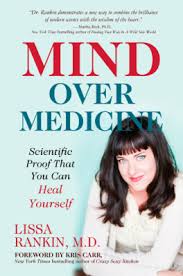
MindOverMedicineI just started reading a book by a medical doctor named Lissa Rankin. Rankin’s book, entitled Mind Over Medicine, presents evidence from a large body of scientific literature suggesting the mind often plays a major role in wellness by way of mechanisms that aren’t yet fully understood, but which defy the traditional view of Western medicine.

Rankin was intrigued by the vast number of anecdotal cases of what doctors call “spontaneous remissions.” Spontaneous remissions are when a patient becomes healthy in a way that defies explanation (i.e. they had no treatment, they had insufficient treatment, and they had an illness for with the body’s immune system is normally believed incapable of doing the job on its own.) She wasn’t satisfied with these one-off stories involving placebos, fake surgeries, busted radiology equipment, faith healing, etc, but rather wanted to see what the scientific literature contained by way of scientific double-blind studies on the subject.

She found there was evidence to support mind over matter when it came to illness, and that there was a fledgling explanatory literature. She also learned that while there was a large database of spontaneous remissions, there had not yet been an attempt to determine whether there were common characteristics of those who showed the “placebo effect” (getting well while being in the placebo group of a double-blind study) or other spontaneous remissions.

My point is that there is good reason for skeptics to consider that there may be a lot more to health and well-being than our current paradigm suggests.

BOOK REVIEW: The Einstein Theory of Relativity by H.A. Lorentz

The Einstein Theory Of RelativityThe Einstein Theory Of Relativity by Hendrik Antoon Lorentz

My rating: 3 of 5 stars

Amazon page

It’s hard to complain about this book because: a.) it’s a free kindle book, b.) the author was brilliant, a Nobel Laureate, and a man whose work contributed to the discoveries of Einstein, and c.) it’s a very short book, clocking in at about 60 pages, and so it’s not a huge time investment–though for most it will be a bigger time investment than its page count would suggest.

All that being said, I’ll be upfront and tell you that his work is the product of a different era and doesn’t establish its audience clearly.

Science writing, particularly on subjects as arcane as relativity, is a challenge. One has to pick an audience and carefully write for that audience. If ones audience is broad (i.e. not well-trained in science), this means one has to accept a lot less precision in exchange for clarity. In other words, one has to write like Brian Greene or Michio Kaku do in their popular works. On the other hand, if you want to write for technical people, you should probably feel free to show your math and sling the technical jargon.

This book tries to walk a middle ground. It doesn’t lay the subject out in clear, simple, and entertaining analogies. (With the exception of a moving car analogy early on that gets bogged down.) However, there’re no equations or highly technical and jargon-suffused discussions. (Though the section on deflection of light does get into measurements and is bit technical.)

So the question the reader needs to ask themselves–provided they haven’t had physics since high school or their freshman year of college–is whether they are willing and able to grind through reading that will require them to think hard the whole way. One doesn’t need a big science vocabulary, and you aren’t asked to ponder any equations, but you do have to noodle out what the author is saying to get value out of the reading. As I implied earlier, this book (pamphlet) took me considerably longer to read than 60 pages normally would–and I read a fair amount of popular science works.

Of course, given that it’s free, it’s worth a try if you have a Kindle. If nothing else, you should come away with some basics– such as what differentiates special from general relativity. If you don’t like the book you can always buy a Greene or Kaku book to explain the subject in a more palatable fashion.

View all my reviews

Interview with the Vampire: The Real Deal

InterviewwithaVampireMoviePosteI saw a review of Anne Rice’s book recently, and it got me thinking about how an actual interview with a vampire would go.

Interviewer (I): So, about this whole turning into a bat thing. It seems to me that a man is much bigger than a bat. Therefore, my first question is do you conserve mass? In other words, do you get really dense as a bat, and, if so, how do you even get off the ground? If not, you must shed mass, but then how do you get it back?

Vampire (V): I am the prince of darkness. I rule the night. I take whatever form suits my needs.

I: Well, that’s not really a proper answer, now is it? That’s sort of a politician on the Sunday morning talk shows answer.

V: [Bares fangs and growls]

I: Well then, moving on. Are you at all concerned about the many blood-borne illness out there: HIV, Hepatitis, Ebola, Rift Valley Fever, etc.?

V: I’m immortal. I can’t be killed by your puny germs.

I: So, that’s a… no?

V: Hrrumph!

I: Moving on. Have you ever had anyone put Vaseline on their neck or something else really gross–you know to prank you?

V: You suck!

I: One could say the same of you, my friend. Ha!… You know… because you suck on people’s necks… Well, then, moving on. Which would you rather have: a wooden stake to the heart or a silver bullet in the chest?

V: Silver bullets are for werewolves, you imbecile.

I: Yeah, but it’s still got to be quite unpleasant, wouldn’t you say?

V: [Sighs loudly] OK, I’d have to take the silver bullet, but the longer this interview goes on, the more fond I grow of the stake.

I: I love steak, too, but that’s besides the point. Any way, who would you rather have as an enemy: Bram Stoker’s  Van Helsing, who’s very smart but has no kung fu; or the  Hugh Jackman Van Helsing who’s all buff and studly but not the sharpest tool in the shed?

V: It matters not. They are both humans and, as such, no match for me.

I: Really, because in both the book and the movie…

V: [hisses like a rabid cat,  fangs out] Human propaganda. Are we done yet?

I: Not quite. What’s the hurry? Got a hot rendezvous with a Victorian wench on the docket?… Anywho. What would you say are the pros and cons of working the night-shift? I’d think it would be rather easy to get a parking space, but, then again, you don’t really need one if you turn into a bat. But, then again, all that flapping must get tiring…

V: I’m out of here!


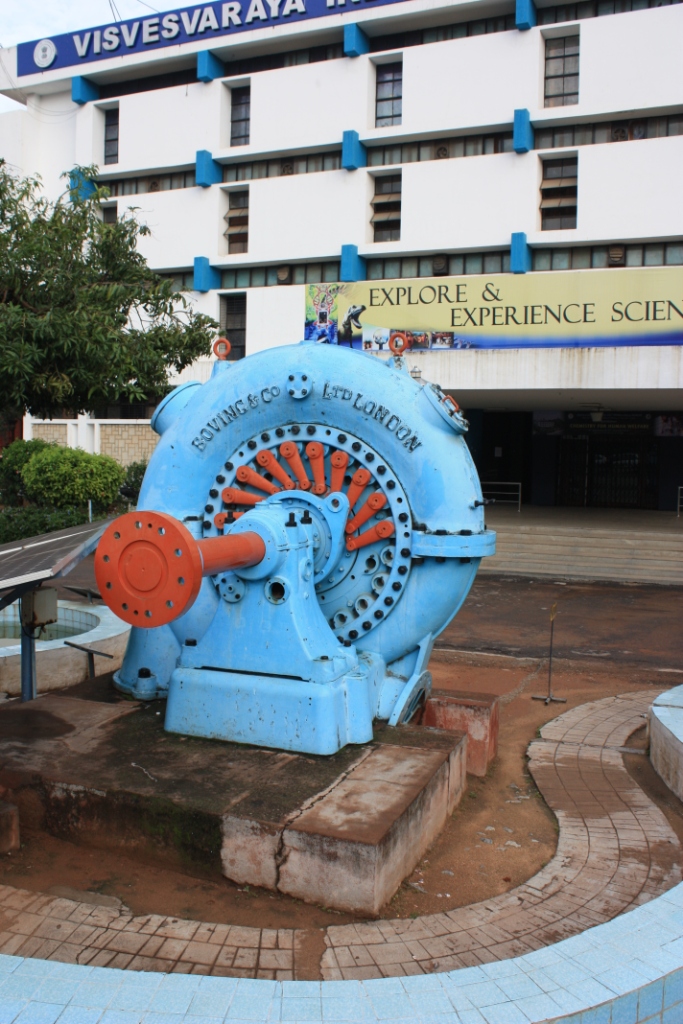
Visvesvaraya Industrial and Technological Museum

The plane is the HF-24, India's first indigenous figher jet (circa 1960's)

The plane is the HF-24, India’s first indigenous fighter jet (circa 1960’s)

I visited the Visvesvaraya Industrial and Technological Museum last week. I wasn’t sure what to expect. The admission fee is only 30 rupees (less than 50 cents in USD terms.) I ended up being pleasantly surprised. It took me back to childhood visits to Chicago’s Museum of Science and Industry. Granted it’s neither on the scale of the windy city’s museum nor as well-maintained, but it’s largely interactive and has some fascinating–if often retro–displays. It’s great for kids or adults who’d like to revisit the science that they’re forgetting, and to do so in a way that’s entertaining.

The museum consists of five exhibit halls and a few other stand-alone displays both inside and outside the building. Outside one will see an old locomotive, a copy of India’s first indigenously-built fighter jet, an Archimedes water drill, and a big steam turbine. One’s visit inside, unfortunately, begins inauspiciously with a solitary animatronic T-rex that looks a bit dog-eared.

Also on the ground floor, the first exhibit hall one visits is the Hall of Engines. This covers steam power, gasoline engines, turbines of various forms, as well as displays of human and animal powered technology. There are hand-crankable cut-away scale models that allow one to see how the various engine designs work. There are also cut-aways of some full-sized engines. Overhead there are a series of wire tunnels through which billiard-size balls circulate, having been hand-cranked up into the track by various mechanisms. This, I believe is intended to demonstrate gravity power, which it does in a whimsical Rube Goldberg-esque sort of way. There’s also a video on simple machines that looks like it was initially made for 1950’s school children in America.

There are two exhibit halls on the first floor (that’s the second floor to Americans), one that deals with electricity and another called “Fun with Science” that’s all hands-on exhibits intended to spark the interest of school-aged children. The former covers the basic science of electricity as well as looking at the various generation methods, including nuclear, wind, solar, hydroelectric, and fossil fuels.  The latter has interactive exhibits of the kind found in many a science or children’s museum. I would say the exhibits here are largely geared toward middle school and high school students. There is a small exhibit on the top floor that is aimed at young elementary school age students.

The second floor has a biotechnology exhibit hall as well as one that deals with space. The biotech hall covers basic biology, agriculture, and even beer brewing. The space hall discusses the history of space technology and particularly focuses on India’s Chandrayaan-1 moon-orbiting mission. (If you didn’t know that India had orbited the moon and delivered an impactor to the lunar surface, you are in good company. I had no idea either. But this was back in 2008-2009.)  Anyway, it was good to see some Indian focus. As I was traveling through the exhibit halls up to this point, it occurred to me that there wasn’t a great deal for the school children passing through this museum to take national pride in. There was a lot of material about discoveries made in places like Germany, America, and Japan, but not a lot of segments on contributions of national scientific heroes as one would expect at such a museum.

The third floor has a full-sized exhibit hall dedicated to electronics and computer technology, and part of one hall that is split between a small “Science for Children” exhibit geared toward young children (pre-school and the younger elementary grades) and a temporary exhibit on chemistry. The chemistry exhibit is the most reading-oriented exhibit, except for a couple of models and a touch screen interactive periodic table, it’s pretty much a poster exhibition. The hall of computers and electronics has many interesting exhibits, such as a cylinder supposedly containing the 42 million transistors that it takes to make up one Pentium 4 processor.

There’s a nice poster exhibit about the 2012 Nobel Prize Winners. I assume this will be updated sometime next month after the new winners have been announced.

All and all, I’d say this museum is a bargain at several times the price.

IMG_0189

BOOK REVIEW: Einstein’s Dreams by Alan Lightman

Einstein's DreamsEinstein’s Dreams by Alan Lightman

My rating: 4 of 5 stars

Amazon page

One might think that a novel written by a physicist would make for dreadful reading–and most of the time one would probably be correct. However, Lightman’s Einstein’s Dreams is a fascinating read. The arc of the book–what makes it a novel rather than a series of short scenes–is conveyed by a prologue, a few interludes, and an epilogue. These brief sections show an Albert Einstein as he went about life trying to work out his special theory of relativity.

In between the interludes are a series of written sketches that depict dreams that might have been had by Albert Einstein between April 14th and June 28th of 1905. Each of these dreams depicts an alternative universe in which time is not experienced as we experience it: that is, as an inexorably flowing river with a clearly defined arrow. In one dream, time is circular. In another, a lifetime is compressed into a day. In another, there is no flow of time; the world is a snapshot. In another, immortality is the norm. In the latter dreams of the book, we see a convergence on time as we know it–though in dream-like abstraction.

This short book is both creative and well-written. Lightman excels at creating scene through vivid description. His approach to structure is unique.

One thing that might have improved the book is if the author had been a little bolder. Lightman feels the need to explicitly state what is going on in each dream world. However, his description is strong enough that such discussion is generally anti-climactic–one already knows how time is working (or not working) in a given universe before the author states it explicitly. Thus, these explicit descriptions succeed only in taking one out of the dream.

View all my reviews

A [Different] Skeptic’s View of Traditional Chinese Medicine

Tai Chi Sculpture; Taken in Montreal

Tai Chi Sculpture; Taken in Montreal

I’m sick. I mean that literally for those readers who are saying, “Yes, I read your blog occasionally; I’m well aware that you’re a sick freak.”

I rarely get sick. I can usually knock colds out at the first sign of a scratchy throat with big does of zinc and remedies I’ll discuss below. I can’t remember the last time I had the flu. Let me say to any angry gods that I’m not bragging, so please don’t smite me. I hope I haven’t just fallen off some divine pestilence list (God: “Geewhiz, that boy hasn’t had the flu since like 2002, lets send him a doozy… plus throw in a side of locust plague.”) I’m just stating a fact; I’m blessed with a mighty immune system and a lack of those plague-bombs commonly called children.

However, before you, too, begin to wish evil upon me for my freakish good health, let me say that when I do get a full-bore cold, it’s a catastrophic train wreck. This is because I have a proclivity for sinusitis. That means that all those tiny little tubes by which mucus flows from one chamber to the next in my head so that it can eventually be expelled into a facial tissue become clogged up. This creates an effect similar to a trucker’s strike at a dildo factory. The phalli (phalluses?) keep coming off the line, but none of them are being shipped out, so soon everything is fucked. When I tap on the highest point on my head it sounds like one thumping on a perfectly ripe watermelon. GROSS CONTENT AHEAD: (If you’re disgusted easily, skip to the next paragraph.) So, last night my left side passages were so blocked that pus was oozing out around my left eye, and I began to have an earache as the pus tried to escape out my ear only to find my eardrum in the way. END GROSS-OUT ZONE.

So you might be expecting that I had a sleepless night and have a doctor’s appointment this morning. I’ve gone that route before. I know exactly what the doctor would do, she’d write a prescription or two: one for a round of antibiotics and one for something to reduce the pain. As a skeptic, this is the approach in which I should put my trust. They develop these medicines using the scientific method and double-blind studies.

What did I do? I diced up some ginger and made a steaming cup of ginger tea and, as it steeped, I ran through a couple qi gong exercises. Then, after drinking the tea, my passages opened up, I blew my nose and slept soundly for about four hours until it was time for me to get up and start my day. As a skeptic, Traditional Chinese Medicine (TCM) isn’t the horse on which I should put my money. It all revolves around chi (qi), life energy, a substance whose existence is to the best of my knowledge is completely unsupported by direct observation. It’s chocked full of archaic sounding treatments like “Immortal spanks the naughty dragon.” (Okay, I made that one up, but you get my point.) TCM proposes that the kidneys are integral to sexual health.

So why am I pressing acupressure points, doing qi gong (life energy exercises), and making homemade tea? The easy answer would be that, if I hadn’t, I probably would have gotten five non-consecutive minutes of sleep last night, and I’d, at best, now be sitting in a waiting room with my skull in my hands hoping to be squeezed in to a doctor’s busy schedule.  However, I have more of an explanation than that.

I don’t know much about medicine (either Western allopathic  or TCM.) So in the absence of knowledge about what one doesn’t know, one seeks analogy in what one does know.  First, everything I know makes me distrustful of the  “free lunch.” To my mind, the Western approach, in which I don’t have to do anything but pop pills periodically, is a free lunch scenario. If I to be active (or even consciously passive, i.e. restful) to achieve my cure, I’m inherently  more confident in it. In the martial arts, we groan at the sight of these “home-study black belt” courses. Any martial artist who is honest with himself or herself knows that the only way to develop the skills is by spending at least a couple of days a week in the dōjō and training outside the dōjō as well. One can’t learn martial arts like one learns music appreciation or business administration. As an economist, there’s always some hidden cost of the “free lunch.” So despite the vigorous use of the scientific method, I tend to be skeptical of Western medicine.  I’m skeptical because nothing worthwhile I’ve ever done could be achieved by just popping a pill, and I see little reason why achieving a healthy state should be any different. [If anyone knows of a pill for manuscript revision, I’d be willing to try it.]  (I’m particularly disconcerted by medicines like pain-killers that remove the symptoms while apparently doing nothing about the ailment itself.)

So I can’t say for sure whether the ginger tea, acupressure, and qi gong had anything to do with my passages opening up. It was, after all, a system under tension. GROSS-OUT BEGINS: At some point either the passage was going to open, my left eyeball was going to pop out of its socket, or my eardrum was going to rupture sending an avalanche of pus pouring onto my shoulder. GROSS-OUT COMPLETED. However, even if all the TCM approach did was to take my mind off of my misery while I was waiting, it did more for me than the pill-popping alternative.

Second, I also know a little something about systems, generically speaking. Another thing that appeals to me about TCM is its fundamental recognition that any problem will create feedback effects that reverberate through the system.  In other words, the root cause may not be anywhere near where the problem is first noted. Because of this, one may end up having to fix a dysfunction distant from the symptom in order to fix the problem. This seems consistent with other systems with which I am familiar.

I have some arthritis from a lifetime of beatings–most notably in my lower back and my ankles. It occurred to me that my back problem might be exacerbated–if not caused–by a problem with my right foot and ankle. I suspected the damaged ankle and flat foot might cause my pelvis to tilt and my lower back to be off kilter, thus wearing through the cartilage on the side of my back that gives me problems. Maybe this was, in fact, wrong. However, when I asked the specialist who diagnosed my ankle arthritis about this possibility, he looked at me like I was the biggest idiot in the world.  “You see, son, the ankle bone is connected to the shin bone and the shin bone is connected to the knee bone and the knee bone is connected to the thigh bone, the thigh bone is connected to the pelvic bone, and it’s not until this point that the pelvic bone is connected to the back bone. There’s like half a dozen things between those two problems. They couldn’t possible have anything to do with each other.”

Now let me be clear, I’m not dismissing Western medicine by any means. There are some things it does vastly better than TCM or Ayurvedic healing or any other holistic healing method. So if I show up in your Emergency Room with a piece of rebar sticking out of my skull, please don’t throw this back in my face. “Oh maybe you should massage the Valley of Harmony (LI-4), do some ‘Parting the Clouds,’ and drink a glass of lavender-infused carrot juice.”