BOOK: “Swami Kripalu’s Ladder of Yoga” by Richard Faulds

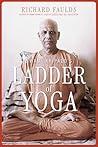
Swami Kripalu’s Ladder of YogaSwami Kripalu’s Ladder of Yoga by Richard Faulds
My rating: 4 of 5 stars

Publisher Site – Monkfish

Release Date: April 7, 2026

This book discusses the organizational structure of yoga as described by prominent 20th century yoga guru, Swami Kripalu, an approach that draws on (but distinguishes itself from) the 8-limb (Ashtanga) framework outlined by Patanjali in the Yoga Sutras. Swami Kripalu deemphasized yogic ethics (Yama and Niyama,) and put great emphasis on hierarchy among the elements of yoga — i.e. that one must pass through the lessons of some limbs before you can begin to move up to the next. (This idea is certainly taught in Patanjali’s Sutras, but not with the same emphasis — hence Kripalu’s “ladder,” rather than “limbs” — making clear that these are not independent elements but rather are completely dependent.)

The greatest strength of this book is in distinguishing concepts like dhyana (meditation) from samadhi, distinction of which is often given short shrift with simplistic soundbite-like definitions in books on yoga. The book is not the usual yoga text in that it spends a great deal of time discussing the “higher limbs” of yoga (to resort back to Patanjali’s formulation.) Faulds adds benefit by discussing his own subjective experiences, the lack of access to subjective understanding often gives even students actively training with teachers doubts about their experiences.

I should point out that the book does also spend a good deal of page count (perhaps more space than any other subject) on pranayama (breathwork,) both covering it over several chapters in the book’s midsection and then further in a couple appendices that get into the physiology of breathwork.

One nice feature is that almost all of the chapters end with sections entitled “Be a Discerning Student” and “Applying this Chapter in Practice” to help readers with practical insights into what is by and large a philosophical discussion. There are also several appendices (the most useful one to me was a discussion of the shifting understanding of the term “samadhi” over time and across disciplines.)

If you want to explore what the higher limbs are and how they are distinguished, I’d recommend this book. (As I said, it also deals with Pranayama in some detail, but that will likely offer less new insight for students and teachers of yoga who’ve received an education in [and maintain a practice of] yoga.)

View all my reviews

BOOK: “Breath” by James Nestor

Breath: The New Science of a Lost ArtBreath: The New Science of a Lost Art by James Nestor
My rating: 5 of 5 stars

Author’s Book Site

In this book, James Nestor takes an immersion journalism approach to reporting on the art and science of better breathing. In addition to participating in trainings on particular breathwork (e.g. Tummo / Wim Hof, Buteyko breathing, Sudarshan Kriya, the DeRose method, etc.,) he participates in a scientific studying involving closing off his nostrils for a few weeks and then systematically nose breathing for a few more. (The first half of which he describes as torturous.) In between discussions of his own experiences, he explores both ancient breathwork teachings and the discoveries of modern science.

While there’s not really anything new in this book, it does a good job of presenting the information in a clear and readable form. In truth, it would be hard to say something both profound and new on the subject, given that yogis, tantrics, Daoists, and others have been systematically observing and altering breath for centuries to improve health, concentration, and emotional poise. Even the seemingly modern systems are by-and-large variants of the old ways (e.g. Wim Hof breathwork adapts the Tummo of Vajrayana Buddhism, DeRose worked from ancient yoga teachings, and Andrew Weil’s 4-7-8 breathing is pretty much the 1:2:2 vrtti pranayama that yogi’s have practiced for centuries.) Still, despite the basic information in the book being widely available, there remains a crisis of bad breathing and the cascade of ill-health that results, therefrom, and so it is a valuable book. (The key takeaways are: nose breathe, breathe slowly and deeply, hyperventilate only consciously and occasionally, and elongate exhalation to facilitate relaxation.)

The newest information to me, personally, was that of Chapter 7, which dealt with the role that shifting to softer, cooked foods played in humanity’s proclivity for breathing problems. Chapter 1, which deals with humankind’s unique breathing issues, also provides insight into why people have so many problems with something so fundamental to life as breathing. Nestor also presented some of the breath-relevant insights of Albert Szent-Györgyi, a Nobel-winning biochemist whose work offered some insight into the connection between electrons and both cancer and aging. So, in addition to some nice reminders and references, I did learn a thing or two as well.

This is a fine overview of breath and how to improve it for better living, and I’d recommend it for anyone looking to learn more on the subject.

View all my reviews

PROMPT: Relax

Daily writing prompt
How do you relax?

I usually don’t find it too difficult. I find reading and free writing conducive to relaxation. In cases in which I’m wound up, I move and / or exercise intensely. If I ever need to achieve relaxation expeditiously, I use Visama Vritti Pranayama or PMR (progressive muscle relaxation.)

Kevala [Free Verse]

breath ceases
and the body is quiet
and the mind is calm

and there is nothing
no world
no throngs
no hordes
no disasters

breath returns
&
so does the world

BOOK REVIEW: Yoga Anatomy, 3rd Ed. by Leslie Kaminoff and Amy Matthews

Yoga AnatomyYoga Anatomy by Leslie Kaminoff
My rating: 5 of 5 stars

Amazon.in Page

This book has several competitors, and so this review will focus on a few of the features that I believe make it one of the best books on yoga anatomy, and the most appropriate for many users. To clarify, H. David Coulter’s “Anatomy of Hatha Yoga” has some advantages over this book, but Coulter’s book is also denser and will send neophyte readers to the glossary / internet / library much more often. On the other hand, some of the other yoga anatomy books fixate entirely on postural yoga and treat it entirely as a matter of skeletal alignment and muscular engagement. While a lot of this book (and any such book, really) focuses on skeletal alignment and muscular engagement, I appreciated the books exploration of breath and the nervous system – topics that are often neglected. In short, this book offers a mix of reader-friendliness and detail that makes it at once approachable and tremendously informative.

One important feature of this book is that it avoids the dogmatism of some yoga texts, encouraging experimentation and recognizing that a one-size-fits-all approach to bodies is bound to fail. This can best be seen in the “Cueing Callout” boxes that explore the pithy adjustment directives for which yoga teachers are famous (and often satirized,) advice that is often misunderstood in ways detrimental to a student’s progress.

A second key feature involves keeping anatomy and physiology distinct from the folk science of yoga / ayurveda. While Kaminoff and Matthews do refer to ideas like prana and apana, they do so in a broad, conceptual way that doesn’t conflate said ideas with science. A common problem in yoga texts is conflation of science with folk science such that confused readers are left with a muddle of puzzle pieces that don’t belong to the same puzzle.

Finally, as one who’s found pranayama (breathwork) to be one of the most profoundly transformative elements of a yoga practice, I appreciated that the book not only had a chapter on breath dynamics, but that all the posture discussions included a “breath inquiry” section that encouraged readers to reflect upon the effect of the posture on breathing, as well as suggesting ways in which a practitioner might experiment to improve one’s breathing.

The only criticism I have is that many of the text-boxes in the early chapters seemed to contain random information that could have been incorporated into the text, into footnotes, or edited out altogether. [In contrast to the aforementioned “Cueing Callout” boxes that had a clear and distinct purpose.] If you’re a yoga teacher or dedicated practitioner without a deep scientific background, you’d be hard-pressed to do better than this book for learning about the anatomy of yoga.


View all my reviews

Thoughts of a Traveler Traveling Amid the COVID-19 Pandemic

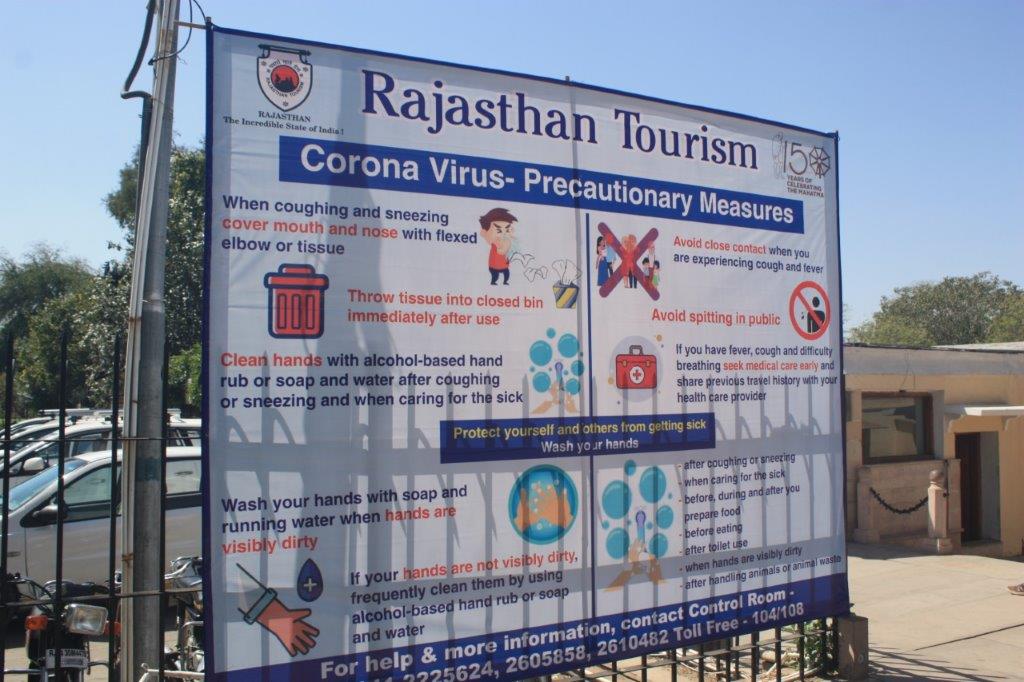
I just returned from a week of traveling in Rajasthan and Punjab for Holi and Hola Mohalla, respectively. Because my trip involved only domestic travel within India, there were no formal disruptions, but evidence of concern about the virus was widespread.

The first thing one notices is that instead of a few East Asian tourists protecting themselves against the poor air quality of megalopolises, at least a third of those traveling were wearing masks. Some unknown percentage of these travelers presumably have sound, medically-directed reasons for donning the masks (e.g. they have some sort of infection, they have compromised immune systems, etc.) but for many they are merely a security blanket. I suspect the reason that “wear masks” isn’t a part of the advice of public health experts has to do with the two types of masks that one sees:

First, the type that are to keeping out virus as a chain-link fence is to keeping out mosquitos.

Second, the type that will keep out virus (if worn / changed as directed,) but which — because they are expensive and hard to come by — are worn far too long, such that they become a nice warm, moist petri-dish pressed up against one’s face.

I don’t begrudge anyone a security blanket. In fact, a lot of what I’m suggesting herein are ways to maintain a confident and positive attitude so your immune system can be its awesome self — whatever that takes. My worry about the mask phenomena is that some people seem to believe that if one little viral agent makes it inside their body they are doomed. That’s simply not the case. If a viral marauder gets into your body, its chances of being escorted right back out by your body’s mucosal bouncers, swallowed whole by a macrophage, dissolved in your stomach’s acid bath, or otherwise being discovered and destroyed by your body’s sentry force is quite good.

In short, a mask isn’t your last line of defense. It’s a first line of defense that’s followed by an immune response that is swift and deadly to foreign invaders. It should be noted that nose-breathers already have a kind of mask, in the form of the nose and nasal passages. When you breath through your nose, your natural filtration system is at work. If you tend to breath through your mouth (particularly during inhalation) you have a lessened defense.

If you have trouble maintaining nose-breathing under all circumstances, I’d recommend a pranayama (yogic breathing exercises) practice. I don’t know how well it’s established by study, but I’ve found that I breath much more effectively and consistently through my nose since I’ve regularly practiced pranayama. Another helpful yogic tool is kechari mudra, which has helped me to even run without mouth breathing. (Kechari mudra involves curling the tongue so that the bottom of the tongue rests against the soft palate at the back of the roof of one’s mouth. This seems to reduce turbulence that would be created by air swirling in one’s oral cavity, and makes more of a direct line of travel for the breath in and out through the nasal passageways. At a minimum, it focuses one’s attention on the area the breath is passing through, and makes one aware of the breath.)

All this talk about one’s immune system keeping one safe may seem a bit pollyannaish or over-optimistic. Don’t get me wrong, I follow and would recommend others follow all the basic precautions regarding washing one’s hands and minimizing hanging out in high density environments — particularly high density environments with high-risk individuals. (i.e. for the asymptomatic [or alternatively-symptomatic individuals, i.e. those who have something but probably not COVID-19] who think they absolutely must be tested to have peace of mind, realize that you are likely walking into a high-risk environment and increasing your chance of self-fulfilling prophecy. Just sayin’. If you are able to rest comfortably, you might want to consider doing so.)

Back to the issue of being irrationally optimistic or a Pollyanna. My response is: fair enough. But there is an upside to being overly optimistic (if cautious) but none-whatsoever to being a worrier. Again, by being “a worrier” I’m not talking about taking precautions, I’m talking about obsessing or being needlessly pessimistic about the bodily systems (e.g. your immune system, your lymphatic system, your digestive system, etc.) that are keeping you safe all day and everyday.

I’d say if there is an upside to the pandemic, it was in reminding me to practice gratitude toward my body, my immune system, my gut bacteria, etc. — all of which keep me feeling excellent 99.9% percent of the time. Does that mean I think I can’t catch infection? No, it doesn’t, but it does mean that if I catch one my body will be much more effective at defending itself.

So when people ask me why I’m not worried about traveling, it’s because my immune system is awesome and I’m thankful for it every day.

A couple of post-scripts:

– I’ve been seeing the swarm of memes about toilet paper shortage in the US. Having moved to a part of the world that recognizes that wiping one’s backside with dry paper isn’t the height of sanitary practice, all I can say is: “You might want to look into what most of the world does most of the time.”

– I understand that there is a desire to curtail a wider spread of the virus, but this easily tips into a form of xenophobia — “a your COVID-19 is worse than our COVID-19.”  If a person is without symptoms, being Chinese (or from any other country with many cases) doesn’t mean that they are Typhoid Mary.

An App for That: Profound Yogic Practices You May Not See in Class

To the average person, yoga consists of a series of poses that stretch the muscles and strengthen the core.  In truth, often the most profound and life-altering experiences had by yoga practitioners involve only a seated or lying posture. If you practice yoga, you’re probably aware that postural practice, or asana, is just only one element of yoga, and perhaps you’ve experienced some of the other elements of yogic practice. However, it’s not always easy to access such training at the local studio.


These days there’s another way. These practices can be accessed through apps such as EKA.


Below are five powerful yogic practices that you might not find taught at your local yoga studio, but that you’ll find on EKA.


5.) Yoga Nidra: Yoga Nidra translates to “yogic sleep.” It’s a practice in which one stays in the mind-state between wakefulness and sleep, i.e. hypnagogia, for an extended period while working through a sequence of practices. Yoga nidra is extremely relaxing, but also allows one to access the subconscious in a manner similar to that of self-hypnosis. This makes the practice useful both for people who have trouble with sleep or settling into rest, but it also allows one to influence the subconscious so that one can make changes in areas where subconscious influence is strong.


For example, a person seeking to lose weight understands that they need to be careful about what they eat. However, the subconscious isn’t always on the same page as the conscious mind, and cravings for sugary or fatty foods may win the battle. In yoga nidra, we use sankalpa — a resolution, to help win the subconscious over. We also use practices like visualizations to gain insight into what is happening outside the bounds of conscious thought, and to exercise influence over it.


4.) Kaya Sthairyam: Kaya Sthairyam translates to bodily stillness, or steadiness. If you’ve done any meditation, you were probably taught to adopt a position in which you could be as still as possible throughout the practice. The reason for this is that even subtle movements can distract one, weaken one’s concentration, or have a stimulating effect. In yoga, kaya sthairyam is used to achieve a state of maximum stillness. If one wishes to increase one’s ability to concentrate for extended periods, one must build one’s capacity to remain still. That said, kaya sthairyam need not be thought of as only a prelude to meditation. The tranquility that arises from these practices make them worthwhile in their own right.


3.) Bija Mantra: In India, chanting is a very popular practice among yoga practitioners, and many have found great clarity in it. In one of my early classes teaching yoga to children, I found that as soon as the kids sat in a cross-legged pose many of the younger children spontaneously started softly reciting the gayatri mantra. That’s how intense was their association between sitting down cross-legged and chanting.


In the West, mantra chanting is less familiar. The six bija mantra, or seed mantra, are a beautiful way to introduce oneself to mantra chanting because of their simplicity. Because the bija mantra (LAM, VAM, RAM, YAM, HUM, and AUM) are all monosyllabic, easily pronounced, and are related sounds, they can be picked up quickly and easily.


2.) Witnessing Meditations: The yogic teaching that has had the most life-changing effect on me has been dispassionate witnessing. While it’s not a complex idea, it requires some explanation.


Let’s first consider what minds usually do in the face of a problem. There are two common responses that are not particularly healthy.


The first is to distract oneself from the problem. In some cases, this distraction can be an unhealthy activity — such as drug abuse, but it might also be something neutral like watching television. However, even if you distract yourself with a wholesome activity like volunteering at a soup kitchen, the problem is still there and it will have its say. If not directly, then indirectly through nightmares, indigestion, or a stress-induced illness.


The second option is obsessing. The brain tries to lessen the sting by anticipating the worst possible scenario. The trouble with this obsession is that to find our worst case scenario — we have to hang toxic labels on all possible events and invent possibilities that are so unlikely as to be nearly impossible. And having invented such dire cases, we often give them too much weight. As Mark Twain put it, “I’ve had a lot of worries in my life, most of which never happened.”  The negativity piles up and causes stress and anxiety to balloon out of control.


In dispassionate witnessing, we don’t ignore or distract ourselves, but we also don’t strap on value judgements or build worst cases. We simply recognize what we are feeling, acknowledge it, but don’t feed our anxieties.


One of the most basic witnessing practices involves watching sensations in the body. Imagine you’re doing this practice and you feel an ache in your back. If you try to ignore the sensation, the mind may turn up the intensity to get your attention.  If you obsess, you’ll soon convince yourself that this sensation is really an ache… no, a pain… no, it’s agony… oh no, could there be a tumor growing on my spine? [That may be exaggerating a bit, but you see the point.] However, if you focus your attention on the sensation without labeling it, you’ll probably find that the sensation passes. In essence, the body says, “Hmm, the brain examined this sensation and didn’t think it was anything to be concerned about, let’s move on.”


1.) Pranayama: Probably the most under-rated yogic practice is pranayama, or breathing exercises. By controlling one’s breath, one can influence one’s emotional state, one’s physiological processes, and the state of agitation in one’s mind. Breath practices are the most direct means to counteracting the stress response. However, despite constantly breathing — day in and day out — most people remain unaware of the incredible power of consciously controlling the breath.


There are a variety of types of breath exercises. There are breaths that have a stimulating effect on the body and mind, and those that have a calming effect. Scientific evidence has accumulated that there are benefits to practicing slower and deeper breathing, and pranayama offers a systematic approach to building this capacity. No matter what kind of pranayama one is doing, there is a side benefit from holding one’s focus on one point, the breath.


Pranayama is a great lead-in to meditative practices. It helps achieve a state of mind which is neither drowsy nor agitated. That said, pranayama is also beneficial on its own.


If you’re interested in exploring any of these practices, the EKA app is a great place to start.


HAIKU OF BREATH

F56802D5-FFD7-4436-88DC-8BB06B89C43B


at the seashore
breath syncs to lapping waves
sea teachings


in between
the inhale and exhale
lies stillness


a breath missed
life takes a moment’s pause
mind is void


slow the breath
drawing each instant out
slow your world


breath control
lets one drop the sails
in rough seas

BOOK REVIEW: Prana and Pranayama by Swami Niranjanananda Saraswati

Prana And PranayamaPrana And Pranayama by Swami Niranjananda
My rating: 5 of 5 stars

Amazon page


This is the Bihar School of Yoga manual on pranayama, or yogic breathing exercises. The book is a one-stop reference for yoga students and teachers wishing to review the philosophy and physiology of breathing practices, as well as to put together lessons or a plan of action for practice that consists of both preparatory exercises and classical pranayama.

Students in the West may be more familiar with B.K.S. Iyengar’s “Light on Pranayama,” which offers a similar set of material and is this book’s main competitor for most readers. In my view, Swami Saraswati’s book is a bit more pragmatic and gets caught in the weeds less, but offers fewer detailed photos and is a little bit less precisely organized. If one is considering between the two books, I’d say the advantage of Iyengar is a 200-week course plan that some individuals may find a handy way to systematically advance their practice pranayama. The disadvantage of Iyengar is that he goes into vastly greater detail than most people will be able to take advantage of via book. (For example, there’s 22 pages of precise explanation of closing off one’s nostrils for digital pranayama.) In short, both books give the reader everything they’ll need in a pranayama reference, Swami Saraswati’s book is a bit more laid-back, and Iyengar’s a bit more oriented as a step-by-step instruction manual.

The twenty-one chapters of this book are organized into three parts, but we’ll call it four because the last part is divided in two sub-parts. The first part of the book is entitled, “Philosophy of Pranayama” and it dives into the definitions of prana, kosha (sheaths), chakra, nadi (channels), pranic fields, and discusses the connection between prana and chanting.

The second part of the book (ch. 8 – 13) explores the physiology of breath. This section explains the anatomy of the musculature that drives respiration (e.g. the diaphragm, intercostals, etc.), the processes of respiration and circulation, and the importance of the nose in breathing (which is more extensive than the average person could imagine.) This section also discusses the classical distinction between pranayama and rudimentary breath practices (i.e. whether there is breath retention, or kumbhaka), and has a separate chapter explaining retention. It also has a couple chapters that present the research on the benefits and effects of pranayama practice. (Full-disclosure: this isn’t up-to-date in the edition I read, and that was the 2016 — first digital — edition. So, I wouldn’t go here looking for information on the state of research because there’s been a virtual explosion of research that’s more recent than what is covered in the book. However, it will give one a gist what has been known for a while.)

Part III consists of two sub-parts. The first is called “Pre-Pranayama” and it includes many exercises to help one become familiar with one’s breath as well as to develop the foundational breaths (e.g. abdominal / diaphragmatic verses chest breathing) that are built upon in the final section. Part III.B presents the classic pranayama. The four chapters of this section are conveniently organized into: guidelines for practice (e.g. contraindications and general concepts to keep in mind), nadi shodhana (alternate nostril breathing), tranquilizing / calming breaths, and vitalizing / excitatory breaths.

There are five appendices as well as a glossary and two indexes (an index of practices and a general index.) The five appendices provide instruction on practices that are employed in pranayama, but are not pranayama themselves. These include supplementary practices, asana (seated postures for doing pranayama more than asana for opening the rib-cage, etc.,) mudra (“seals” postures of specific body parts), and bandha (locks). The presence of the first four appendices mean that one doesn’t have to buy other books (e.g. the APMB) to access this information. The fifth appendix gathers the sutra from “Hatha Yoga Pradipika” that deal with pranayama and provide an English translation. (HYP is a 15th century manual of Hatha Yoga that is much more detailed than Patanjali’s sutras.) There are graphics throughout the book as needed to convey information, mostly line drawings.

I found this book very useful and well presented. If there is one change that would improve the book it would be less crow-barring of science and traditional / philosophical beliefs about the body to be consistent with one another. I see the value of presenting both sets of information as both this book and the Iyengar book do, but a muddle is created by trying to force the explanations into consistency when they aren’t. (I think this book does it a bit more than Iyengar, but only because Iyengar puts much less emphasis on science than does this one.) The problem is that one ends up with low-quality pseudo-science amid the strong studies, and most readers won’t be able to tell scientific consensus and from the lunatic fringe. (e.g. The belief that kirlian photography is evidence of pranic fields or qi is far from scientifically supported.) That said, for most practitioners it doesn’t much matter as it doesn’t affect the nature of the practices, which are sound and well-described.

If you’re looking for a pranayama reference, this is a great option.

View all my reviews

My Year of Discovering How Weird the Mind Gets, Pt. IX [Streaming Poetry]

As I continue to look at variations in consciousness, it occurred to me that poetry writing (or at least pre-writing) often involves an altered state of consciousness. Often, I do an exercise akin to freewriting. Freewriting is an exercise that has been popular for a long time for beating writer’s block. You just write: fast, without judgement, and without concern that you’re taking a reader to any particular place. (It’s somewhat like “brainstorming” in process, but usually solitary and producing sentences or phrases and not bullet-point lists.) The point is to break the grip of self-consciousness and lay waste to the idea that every word has to be pure brilliance to be worthy of your time.

My process begins by quieting my conscious mind, typically with long exhalation breathwork (pranayama.) For those unfamiliar with yogic pranayama or other forms of breathwork, drawing out one’s exhalations (in conjunction with relaxing the body) slows the heart rate and otherwise activates the rest and digest functions of the body. (The curious or dubious can look up “cardiac sinus arrhythmia” or “respiratory sinus arrhythmia,” which is the same thing alternatively labeled by the cause [respiration adjusted] or the effect [heartbeat changes])

After my conscious mind is tranquil, I set pencil to paper and just start writing quickly — without looking back or forward, but just trying to be present with whatever my mind vomits forth. Usually, there is an understandable grammar, but no understandable meaning (at least not beyond the granularity of a phrase.) But building meaning isn’t the point, and I don’t care. Sometimes, I fall into a rhythmic sound quality, but other times I don’t. To give an idea of what the raw feed of this looks like, here’s an example from this morning:

Turn ten, run the nines. I found a fever down the line and could not bend the wall to weep, but heard the conveyor line… beep – beep – beep. Oh, so some fucking wisdom says let live the demons that I dread, but there’s a cold magnolia leaf on the ground and I can hear it skid at the break of dawn, but what sign is that to feel it out. I killed a monk and stole his doubt, but you’ll never blame away the triple frame…

So, it’s a collection of words and phrases that has no discernible meaning collectively. Once and a while, I go through some of these flows of verbiage and underline words, phrases, or ideas that have some spark or merit, and then — if I can — unshuffle and word-cobble until I have a poem.

However, my point in this post isn’t to describe how a poem gets its wings. Instead, it’s to discuss the process by which the consciousness “presents” us with something from out of nowhere. (The conscious mind would claim it “created” it, but I have my doubts. I’ve learned the conscious mind routinely takes credit for many things that are not its doing.)

It’s not like I have an idea (stolen or otherwise) and then I think it through, and then I order those thoughts into an outline. (The usual writing process.) On the contrary, I go to great lengths to make my conscious as quiet as possible as a precursor. I think about the term William James coined, “stream of consciousness” which became a prominent literary device. Is it streaming into consciousness, from consciousness, or through consciousness? Where does it come from? 

You might say, “Why worry about where it comes from because it’s a garbage heap?”

But once in a while there are epiphanies and flashes of insight amidst the rubble and dung. Sure, maybe I grant detritus post-hoc gold status, but there’s something there I feel I have yet to understand.

In consciousness, we seem to have awareness of [something] and meta-awareness (i.e. we are aware of what we are aware of [something.]) Sometimes that meta-awareness is a grand and beneficial tool, but sometimes it’s just another word for self-consciousness. Sometimes having a one-track mind is a beautiful thing.

I said that my practice was “akin to freewriting,” and it might seem exactly freewriting, but the main difference is that it’s purposeless. Sure, once and a while I go back through and rag-pick, but mostly I do the practice just to revel in the experience of being completely with whatever words are streaming. The writing and being consciousness of what is surprising me on the page takes enough of my mental faculties that I have none left to be self-conscious.

Who knows where this journey will take me next month? There’s still a lot of territory left in the altered states of consciousness. Fasting, dance, shamanic drumming, tantric sex, psychonautics, etc. Who knows?