No. I try to see wherever I’m at as being as good as any other place I’ve been. And, of course, it is — only my perceptions change and can drive value judgements. The places and the peoples are just different. If one starts ranking and rating places, one can kill the ability to see what is beautiful and spectacular about a particular place. If a place didn’t have redeeming features, people wouldn’t live there. And, by the way, if people don’t live there, that’s probably my favorite place on earth.
Tag Archives: Philosophy
Crouching Tiger [Free Verse]
In a square hut -
beside a craggy pass -
lived a Crouching Tiger,
a man of spontaneity
who danced to no music,
staggered when sober,
rested in times of urgency,
& labored when there seemed
to be nothing in need of doing.
He was courted by Emperors,
but shunned them.
The only way the Emperor
could get him to visit was
to order his exile.
PROMPT: Meat
What are your feelings about eating meat?
The condensed version is, I’m fine with it. As a traveler, I try to eat mostly things locals eat. While I don’t go to great effort or expense to sample the most rare and exotic foods, I’ve eaten snake in China, croc in Zambia, horse in Kyrgyzstan, and guinea pig in Peru. Anything that regular people eat where I’m visiting is fair game. [That is part of the process of breaking down the invisible barriers between us’s and them’s so as to not enter into the interaction with a feeling of superiority because: “my arbitrary cultural conventions are better than your arbitrary cultural conventions.”]
I do believe that everyone would be better off if they were closer to [i.e. more intimately familiar with] the source of their food. I feel this of myself as well, though I did have the benefit of growing up on a small farm and seeing at close range the origins of food and how life moves on to being food. (By different mechanisms [hopefully — #SoylentGreenIsPeople,] it’s a process that I am fully aware will apply to me, as well. Ultimately, nothing living gets out of this world without being transformed through a process of being food. In my case –probably — I’ll be food to bacteria and fungi, but if I have a good run and am eaten by a tiger or wild dogs, I’d not begrudge them the meal.)
In fact, as I’ve learned more about how plants and trees live, e.g. sending warning pheromone signals to neighboring trees when under attack by insects, I’ve come to see the logic by which people determine what life is edible and what isn’t as mere species-chauvinism and anthropomorphizing. It is true that there are excellent points about the environmental benefits of some form of vegetarian diet. However, when one starts to talk to environmental vegetarians about eating insects (one of the most sustainable protein sources available, supposedly,) many will shove their fingers in their ears and sing, “La-la-La-la, I don’t want to hear this.”
BOOKS: Mad World by Slavoj Žižek
Mad World: War, Movies, Sex by Slavoj ŽižekMy rating: 5 of 5 stars
Amazon.in Page
Release Date: November 27, 2023 (Jan 11, 2024 in some markets)
I can see why Slavoj Žižek is one of the most successful popular philosophical authors out there today. For one thing, he deals in provocative topics straight from the headlines: politics, pop culture, war, and sex. Furthermore, like the authors of such books as Freakonomics, he picks cases that are fascinating, if inconsequential / frivolous (e.g. in the case of this book, the question of a proposed massive Ukrainian orgy to be carried out in response to a Russian nuclear strike.) For another thing, while philosophy tends to be nigh unreadable owing to the philosopher’s need to be defensively precise (which, in turn, leads to overuse of complex jargon and tedious qualifiers,) Žižek is quite readable owing to an ability to make clear and confident statements.
Of course, there is a downside to this confident clarity. Many a reader will find too many gratuitous statements for his or her taste. Žižek is often willing to say “clearly, x means y” about things for which there is no consensus, whatsoever. An example seen more than once in this book is in discussing what Žižek believes to be the unambiguous meaning of symbolism in artistic works. Of course, there is a name for the fallacy of believing one knows what an author or artist meant to convey, i.e. the intentional fallacy.
That said, the author provides many intriguing ways of thinking about the absurdity of the modern world. For example, to (deceased) former Secretary of Defense Donald Rumsfeld’s tripartite epistemological nomenclature (i.e. known-knowns, known-unknowns, and unknown-unknowns) Žižek asks us to consider a seemingly impossible fourth sector, unknown-knowns (i.e. we don’t know the question, but we have an “answer.”) Žižek’s self-described “pessimistic realism” appeals to the reader’s sense of martyrdom even as it frustrates, by-and-large telling us that the modern world is screwed and there’s little chance of saving it.
If you’re interested in popular philosophy, this book is worth giving a read. However, if you are used to scholarly philosophy, you may find it a bit sloppy and trivial.
View all my reviews
PROMPT: Live Anywhere
If you could live anywhere in the world, where would it be?
First of all, I’d say that I probably could live most places in the world, and the few I couldn’t (e.g. North Korea) have no appeal to me as a place of residence. Having lived several places in the US, a couple years in England, and now over ten years in India, I’m under no illusions that there is a Shangri-la out there, a perfect utopia. Most places are fine places to live if one is flexible-minded and can adapt to that place’s rhythms and peculiarities. There may be a honeymoon period during which some place seems better than the rest, but even the most seemingly idyllic place will lose its luster in time.
That’s why I recommend travel. Everyplace offers beauty and life lessons when taken in bite-size pieces.
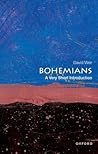
BOOKS: Bohemians: A Very Short Introduction by David Weir
Bohemians: A Very Short Introduction by David WeirMy rating: 5 of 5 stars
Amazon.in Page
This book examines the brief life of the Bohemian artistic lifestyle, exploring how it came about, what it looked like in its heyday, what led to its demise, and by what / whom it was replaced (e.g. the Beats.) It is an intriguing examination of the subject. I will say, there were points that I felt the book had become lost in the weeds, but at other points I found it fascinating. I concluded that my own calculus was to find it interesting when it discussed the lives and works of artists who are still deemed to have relevance and influence today (e.g. Baudelaire, Picasso, and Whitman,) and not so much when it was elaborating on artists and works that have fallen into obscurity among the general populace (e.g. Henry Murger’s Scenes of Bohemian Life.) So, that may be more a reflection on me than on the book.
The author touches upon the fictional influences that inspired Bohemianism, the places where the lifestyle thrived (e.g. Paris and New York,) the philosophy and – particularly – the political philosophy of the Bohemians (e.g. often Anarchists or – at least – anti-government.) One of the topics that most interested me is how the successor artistic communities differed from the Bohemians.
If you’re interested in who the Bohemians were and how they differ from other artistic communities (before and after,) this book is well worth the brief read required.
View all my reviews
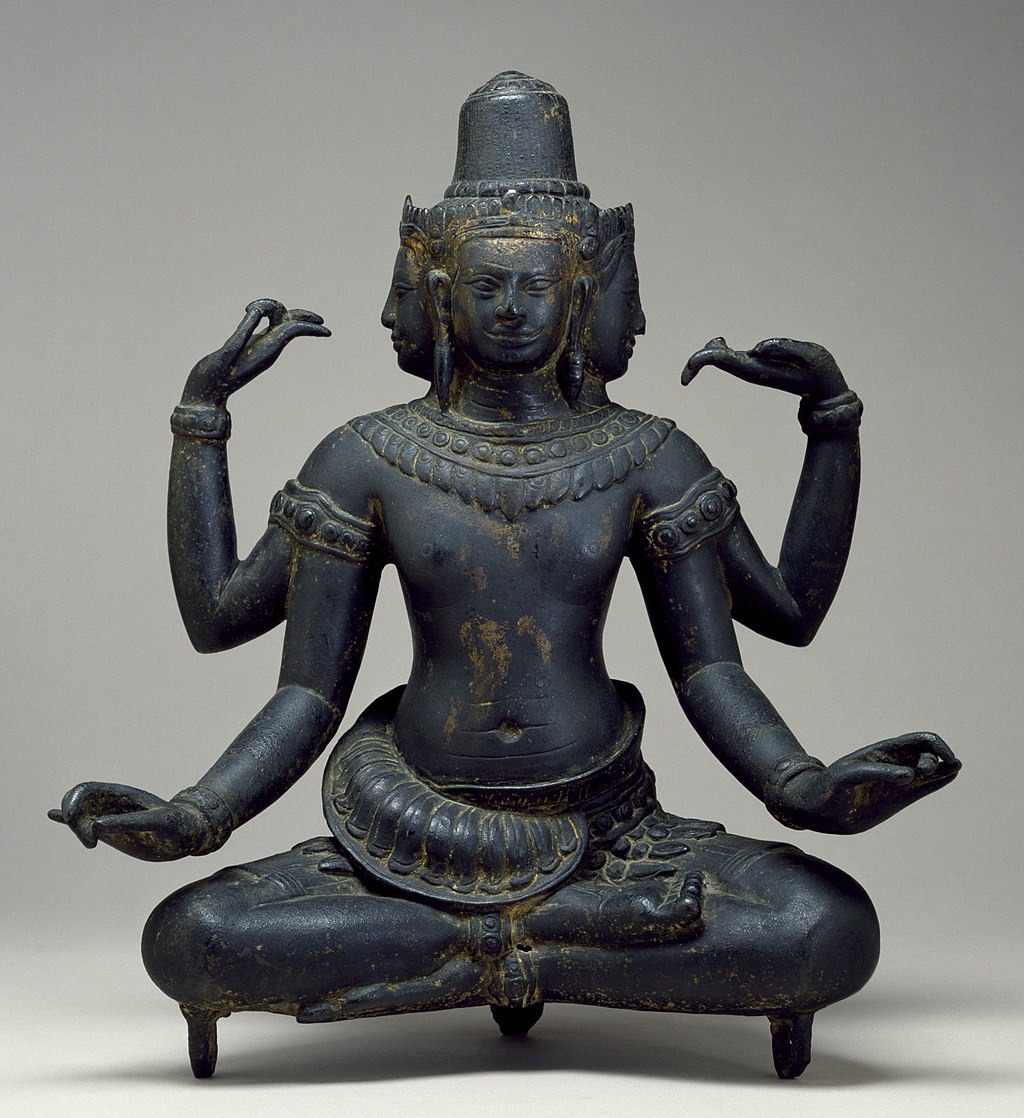
Brahma by Ralph Waldo Emerson
If the red slayer think he slays, Or if the slain think he is slain, They know not well the subtle ways I keep, and pass, and turn again. Far or forgot to me is near; Shadow and sunlight are the same; The vanished gods to me appear; And one to me are shame and fame. They reckon ill who leave me out; When me they fly, I am the wings; I am the doubter and the doubt, I am the hymn the Brahmin sings. The strong gods pine for my abode, And pine in vain the sacred Seven; But thou, meek lover of the good! Find me, and turn thy back on heaven.
PROMPT: Risk
What’s the biggest risk you’d like to take — but haven’t been able to?
Fully embrace the crazy, in the manner of Diogenes, Blake, or Drukpa Kunley.
PROMPT: Principles
What happens in the external world does not DETERMINE one’s mental / emotional experience.
It’s better to see oneself as a student than as a master — at any stage of life and development.
Be tolerant. No one knows enough to justify smug superiority.
Self-expression is what we live for, and it is curtailed to everyone’s detriment.
PROMPT: Changed Mind
Oh so many things. My epistemological stance is that one should be ready to drop any belief like a hot rock in the face of better information or better means to understanding.
One of the most fundamental changes is that I used to take for granted that there was a god. Now I’m agnostic about whether there is one, and am virtually certain that – in the unlikely event there is a god – it (she? they? he?) bears no resemblance to any of the tribally derived deities of the various world religions.
I used to think introversion was something that could be, and should be, overcome. Now, I believe the healthy approach is in accepting it and managing one’s life so that it’s not a problem. Truth be told, in my youth, I had a lot of grandiose ideas about what was possible with regards to the mind, ideas which I have jettisoned in favor of one’s that better match the empirical evidence.