BOOKS: “The Zen Teaching of Bodhidharma” Translation by Red Pine

The Zen Teaching of Bodhidharma (English and Chinese Edition)The Zen Teaching of Bodhidharma by Bodhidharma
My rating: 5 of 5 stars

Publisher’s Site

Bodhidharma was a Buddhist Monk who is credited with bringing an approach to Buddhism to China that would become Zen. This book presents four of his surviving lectures in their entirety: “Outline of Practice,” “Bloodstream Sermon,” “Wake-up Sermon,” and “Breakthrough Sermon.” It is a bilingual edition, featuring Traditional Chinese script juxtaposed with the English translation.

Bodhidharma was an intriguing and important character in the history of Buddhism, so much so that a legend has grown up around him that is in all likelihood substantially false. The most well-known element of the legend is that he taught monks the martial art that became Shaolin Kung Fu. (Historians refute the likelihood of this because there was no evidence of it in the documentation in the centuries immediately after Bodhidharma’s death. The story came along much later and caught on like gangbusters, so much so that it is routinely repeated today as if established fact. For elaboration, see Meir Shahar’s “The Shaolin Monastery.”) There is simply not a lot known about Bodhidharma (or even the extent which there was a Bodhidharma,) and what is known is not without controversy. Popular accounts put his homeland in Tamil Nadu, India, but dissenting accounts put it as far away as Persia (Iran.)

The reason I mention all this is because some potential readers may expect a kind of fabled story, full of kung fu and magic, and — in point of fact — these teachings offer a clear and straightforward approach to the practice of Buddhism. I’d highly recommend the book for readers interested in Buddhism, Zen, and meditational practices – generally. It is a clear and thought-provoking work. But, if you’re expecting a thrilling recitation of legend and woo-woo, this isn’t it.

View all my reviews

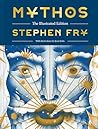
BOOKS: “Mythos: The Illustrated Edition” by Stephen Fry

Mythos: The Illustrated Edition: The Illustrated Edition (Stephen Fry's Greek Myths)Mythos: The Illustrated Edition: The Illustrated Edition by Stephen Fry
My rating: 5 of 5 stars

Publisher Site

This book offers a humorous telling of many stories from Greek Mythology. One gets the well-known tales such as Prometheus, Sisyphus, and Pandora, but also the myths involving a number of lesser-known characters: god, demi-god, and mortal. As these myths are being told, there is also a substantial amount of nonfiction information presented by footnotes and such — e.g. how later authors (Shakespeare, for example) presented these myths or tales built upon them, how the myths inform popular culture and language to this day, and how Greek and Roman mythology related.

The art is nice, though I can’t say that it added much to the reading experience for me, personally. The art is done in a consistent style throughout and is colorful and visually interesting, though I couldn’t say much else about it in an intelligent fashion. It somewhat reminded me of William Blake’s art and somewhat of Soviet posters.

I enjoyed this book. It is light-hearted and even humorous without detracting from the tone of the myth and is a highly readable way to learn more about Greek Mythology.

View all my reviews

BOOKS: “Road to Mussoorie” by Ruskin Bond

Roads to MussoorieRoads to Mussoorie by Ruskin Bond
My rating: 5 of 5 stars

Publisher’s Site

This is a collection of essays about Bond’s home of many years, Mussoorie, along with — as the title suggests — the areas one comes through traveling to – and hiking out of – Mussoorie. The book ventures from a straight up travelogue into ghost stories, local gossip, autobiography, and municipal history. It enlightens the reader on the White Woman of Mussoorie, on the death of its cinema, and on the town’s historical involvement in colonial licentiousness.

I enjoyed this short book. It’s humorous and offers one a feel of hill station India.

View all my reviews

BOOKS: “Thirty-Six Stratagems” by Sun Bin [or Anonymous]

Thirty-Six Stratagems: Bilingual Edition, English and Chinese 三十六計: The Art of War Companion, Chinese Strategy Classic, Includes PinyinThirty-Six Stratagems: Bilingual Edition, English and Chinese 三十六計: The Art of War Companion, Chinese Strategy Classic, Includes Pinyin by Sun Bin
My rating: 3 of 5 stars

This is a collection of idioms on strategy with brief explanatory commentaries on each. The idioms, themselves, are thought-provoking and worth studying, but the book is problematic in a couple of regards. First, some of the work seems to either be plagiarized or has been plagiarized. Let me explain that accusation, because the actual thirty-six stratagems are clearly in the public domain, dating to the Sixth Century AD. However, while checking out the Wikipedia site to learn more about the author (incidentally, attribution of this work to Sun Bin is not accepted by consensus,) I discovered that the whole English translation of commentaries is verbatim the same as in Wikipedia. (Wikipedia has a tag on the article that it may contain original research and solicits further information.) I further noticed that the commentaries aren’t straight translations of the original Chinese text, but rather are reformulations written to be understandable to a present-day reader of English with no particular insight to Classical Chinese culture and history (which they are.) I can’t say whose work it is or whether it isn’t a misunderstanding that would be cleared up with additional information, but my point is that I wouldn’t recommend forking over any money to the publisher without knowing that the actual work (not the copy / pasting, but the intellectual work) either belongs to them or is in the public domain. Especially, given that it’s freely available on the internet.

That brings me to a second problem, a problem that is clearly on the publisher. There is a very limited sense in which this is a bilingual edition. Yes, the idioms themselves are presented in Chinese characters with pinyin as promised, but the commentary is wholly in English. The idioms, themselves, are largely Chengyu and other forms of Chinese idiom (so 4 characters, give or take, are all that is in Chinese for each.) So, if you’re purchasing this book to work on learning to read Chinese, it’s of limited benefit, and you’ll have to go elsewhere to get the Chinese commentary.

There is an appendix that explains a little about Classical Chinese. I can’t say whether this is original work or exists elsewhere on the internet. I can say that it also isn’t presented in a bilingual fashion either, excepting a few characters for some of the vocabulary. The appendix does have some interesting information.

My recommendation to readers would be not to buy this text when you can read both the Chinese and the exact English translation on Wikipedia for free. My recommendation to the publisher would be, if the commentaries are their original work, to put in a complaint to Wikipedia to pull it as copyright infringement. (And if they were the ones who lifted the text, to stop it already.)

View all my reviews

BOOKS: “Mother Tongue” by Bill Bryson

The Mother Tongue: English and How It Got That WayThe Mother Tongue: English and How It Got That Way by Bill Bryson
My rating: 5 of 5 stars

Publisher’s site

This is a humorous and readable overview of the English language. It examines the language’s history and evolution, as well as exploring some niche areas of interest such as swearing, wordplay, and naming conventions. Bryson takes on such questions as how a language that’s a train wreck of non-phonetic spelling and logical inconsistencies that made a career for comedian, Steven Wright (e.g. Why do we park in the driveway and drive on the parkway?) becomes the world’s most broadly spoken language. (At this time, it’s even the most spoken in absolute terms, but the book is fairly old now.)

Part of what one learns is that English isn’t so bad. Yes, our spelling is random and nonsensical (despite many failed attempts to improve it,) but in some ways English is grammatically simpler than many languages. English also has a history of embracing loan words and so there’s something familiar for all comers. Bryson does provide a number of fascinating points about other languages, largely by way of comparing and contrasting them with English.

Bryson was born in America, worked much of his life in Britain, and moved back to America. This bi-nationalism gives him unique insight into some of the book’s central questions — e.g. whether the language of these two hubs of English language will diverge or converge. There has been a concern that the English language would become so fractured that it would no longer be mutually intelligible to those on opposite sides of the Atlantic. However, increasingly, there is greater concern that people who watch both British and American versions of “The Office” may homogenize the language into one in which regional differences vanish.

I found this book to be both interesting and entertaining and would highly recommend it for anyone who wants more insight into the English language presented in an approachable manner.

View all my reviews

BOOKS: “Languages: A Very Short Introduction” by Stephen Anderson

Languages: A Very Short IntroductionLanguages: A Very Short Introduction by Stephen R. Anderson
My rating: 4 of 5 stars

Publisher’s Website

This is a quick guide to the (not so briefly answered) question of how many human languages there are. SPOILER ALERT: There is either one or some number of thousands, depending upon one’s philosophical leanings and a range of factors touched upon by this book. Given that there is clearly not a consensus answer, much of the book deals with what obstructions hinder a clear count, as well as some related questions that influence the number of languages over time.

With respect to the trouble spots of counting languages, the core question is what exactly is a language? Can two people who can understand each other (e.g. as I’ve been told Russians and Ukrainians can) be said to be speaking two different languages? If yes, the number of languages will be higher than if not. But then, how well do you have to understand each other? There are short and simple sentences in German that I understand, but that doesn’t mean I could understand a German, or a German would understand me (well, they probably would because most speak English as an Other Language.)

The related questions dealt with in the book include: why is number of languages shrinking, and is it inevitable? Can a globalized world be consistent with thousands of tribal-scale languages, and — if so — how?

The book also discusses the diversity of sign languages, and how signed languages differ from (and are similar to) spoken languages. The final chapter considers a number of questions, including how language separates humanity from wildlife, or — alternatively stated — what is it that makes human language different from the communication systems of other species of which we’re aware.

This is a readable book that deals in some interesting questions.

View all my reviews

BOOK: “Twenty-Nine Goodbyes” by Timothy Billings

Twenty-Nine Goodbyes: An Introduction to Chinese PoetryTwenty-Nine Goodbyes: An Introduction to Chinese Poetry by Timothy Billings
My rating: 5 of 5 stars

Publisher website

The premise of this book is simple, Billings presents twenty-nine different translations of a famous farewell poem by the Tang Dynasty poetic genius, Li Bai, and compares, contrasts, and critiques them in detail. The included translations weren’t all crafted in the English language, but English translations (of the translations) are presented as needed. There are translations from French, Spanish, Japanese, and even modern Mandarin Chinese — among others.

Despite how that may sound, it is a tremendously readable book. Billings writes with engaging prose, employs humor (especially when critiquing his own contribution in the final chapter,) and uses complicated jargon only when necessary and with comprehensible explanations.

Still, it does take a certain level of passion to read because one is repeatedly examining the same poem, and one has to have an interest in the minutiae of said poem and – more importantly — an interest in the broader lessons conveyed about translation. If whether a color is translated as green or blue (or what symbolic object tumbles on the ground, or what sound a horse makes) doesn’t seem change the emotional experience of the poem for you, then you’ll probably have a hard time getting into this book. That said, the ability to take a longitudinal view –seeing same points in a given poem through the lens of different poets and translators cross time and cultures, does offer insight that one would be unlikely to get from reading any of the twenty-nine translations in isolation as part of a single translator’s collection of translations.

The most useful thing the book did for me was to increase my understanding of the nature of translation and its tradeoffs, as well as to elucidate how easy it is to miss the mark when one is translating from a perspective so different in time and worldview.

I’d highly recommend this book for anyone interested in Tang Dynasty poetry, translation, and the interface of culture and language.

View all my reviews

BOOKS: “Chinese Grammar Wiki BOOK: Just the Basics” ed. by John Pasden

Chinese Grammar Wiki BOOK: Just the BasicsChinese Grammar Wiki BOOK: Just the Basics by John Pasden
My rating: 5 of 5 stars

Publisher Website

This is the first in a series of books that present the rules and structure of grammar for Mandarin Chinese along with examples. As the subtitle suggests, it covers only the rudiments of sentence structure as well as the most elementary ways of expressing existence, possession, location, number, and a few other basic grammatic functions, as well as teaching the reader how to count and express time and date.

The examples are all presented in characters, pinyin [w/ tone markers,] and the English translation. The explanations are straightforward, and the examples offer basic and useful sentences and phrases.

I found this book to be beneficial, and have obtained the next volume, which expands upon the basics. The book presents a simple and painless approach to Chinese grammar. I’d recommend this book for any fellow neophytes just learning Chinese.

View all my reviews

BOOKS: “Fluent Forever” by Gabriel Wyner

Fluent Forever: How to Learn Any Language Fast and Never Forget ItFluent Forever: How to Learn Any Language Fast and Never Forget It by Gabriel Wyner
My rating: 5 of 5 stars

Publisher’s Website

This is one of the most useful books I’ve read in some time. Wyner proposes a method to learn a new language that both removes some of the drudgery while improving retention. Anticipating the skepticism that I would have myself at this point: no, it is not one of those books that makes ridiculous and unfounded claims such as that you can learn a language entirely in your sleep or that you can develop native fluency in seven days. Instead, Wyner’s method is based on sound scientific ideas.

So, what does this method consist of? A few of the key points are: first, one doesn’t skip straight to basic conversational phrases as many books and courses do, but rather places great emphasis on learning how to hear and say the sounds of the target language. This phase is often given short shrift, presumably assuming that this skill will be picked up automatically in the process, but Wyner’s argument is that not being able to hear what’s correct or not great slows progress in the long run. Second, memorization tasks use the “spaced repetition system” (SRS) method whereby you increase the time between exposure to new knowledge as you learn it until it is firmly entrenched in one’s mind. Third, one seeks to build a more visceral connection to the new vocabulary and phrases, and this makes learning more fun while improving retention. This is principally done by making flash cards that tell a story relevant to one’s personal experience (and / or which uses subject matter such as sex [which tends to produce more indelibility of memories.])

Beyond the method presented by the book, one is also presented with a great number of resources that can be helpful. Some of these resources are a part of the author’s own website, but many are external resources (from Anki [an app that allows one to build flashcards and study them on a SRS schedule] to courses of the State Department’s Foreign Service Institute.)

I’ve started to learn Mandarin and have begun employing a number of ideas from this book. I would highly recommend the book for anyone who is interested in learning another language, no matter what said language might be. (This is a book of “how to” learn, not “what to” learn.)

View all my reviews

BOOKS: “Chinese Folktales for Language Learners” by Vivian Ling and Peng Wang

Chinese Folktales for Language Learners: Famous Folk Stories in Chinese and English (Free online Audio Recordings)Chinese Folktales for Language Learners: Famous Folk Stories in Chinese and English by Vivian Ling
My rating: 5 of 5 stars

Publisher Website

As the title suggests, this is a collection of fifteen Chinese folktales presented bilingually in a manner optimized to language learners. To clarify the “optimized for language learners” comment, these stories are paced differently than they would be if the central objective was to entertain. That old writerly chestnut of “show don’t tell” is often violated and the stories are kept short and sweet in a way that can feel like they sprint through critical moments. This is not criticism. I think it is the best way to give individuals learning Mandarin (or presumably Mandarin speakers learning English) a user-friendly book that doesn’t feature dense blocks of text and overly complicated language. (Note: it’s also not bad for those who just want the quick and dirty version of these tales.)

Each of the stories includes a section with some background information on the history and cultural elements behind the stories (stories which display a range of realism and are from distant times,) a list of terms and phrases in English and Chinese, and a brief set of questions to help the reader develop deeper insight into the stories. These ancillary features are all quite useful to the student of language.

As stories, some of these folktales are more compelling than others. A number of them are dry, but what they lack in intrigue they make up for in insight into the history and culture of China. And some of the stories, e.g. “Judge Bao Takes on the Emperor’s Son-in-Law,” are fascinating.

I’d highly recommend this book for those who are trying to learn Mandarin, but it would also serve those who wish to learn some Chinese folklore in a condensed and readable format.

View all my reviews