BOOKS: “A Man Was Going Down the Road” by Otar Chiladze

A Man Was Going Down the RoadA Man Was Going Down the Road by Otar Chiladze
My rating: 5 of 5 stars

Publisher Site

This is the English translation of a novel considered to be one of the most important literary works of Georgia (i.e. the country, not the state) in the twentieth century. The multigenerational tale adapts from Greek Mythology, most notably the story of Jason and the Golden Fleece and Daedalus and Icarus (the former taking place early in the book and the latter towards the end.)

Given its pacing, multigenerational sprawl, and the rambling ordinary life interactions between big events, this book isn’t of the highest readability, but that has its benefits. Supposedly, the author was taking digs at the Soviets and their invasions and operations in Georgia, but – apparently – the Soviet censors never made the connection due to the abstruse nature of the story. Otherwise, we might not have this book to read, today.

Regardless of my comments about readability, the book does have a number of positive things going for it. I found the translation to have some beautiful stretches of language. There was an opening paragraph of one of the latter chapters that floored me. Also, it’s not all soap opera, the more intensely plot-driven bits are compelling, most notably the Golden Fleece story.

I’d highly recommend this book for readers who don’t mind the challenge of literary fiction pacing and everyday minutiae.

View all my reviews

“Lethe” by Walter de la Mare [w/ Audio]

Only the Blessed of Lethe's dews
May stoop to drink. And yet,
Were their Elysium mine to lose,
Could I, sans all repining, choose
Life's sorrows to forget?

“Ultima Thule: Dedication to G. W. G.” by Henry Wadsworth Longfellow [w/ Audio]

With favoring winds, o'er sunlit seas,
We sailed for the Hesperides,
The land where golden apples grow;
But that, ah! that was long ago.

How far, since then, the ocean streams
Have swept us from that land of dreams,
That land of fiction and of truth,
The lost Atlantis of our youth!

Whither, ah, whither? Are not these
The tempest-haunted Orcades,
Where sea-gulls scream, and breakers roar,
And wreck and sea-weed line the shore?

Ultima Thule! Utmost Isle!
Here in thy harbors for a while
We lower our sails; a while we rest
From the unending, endless quest.

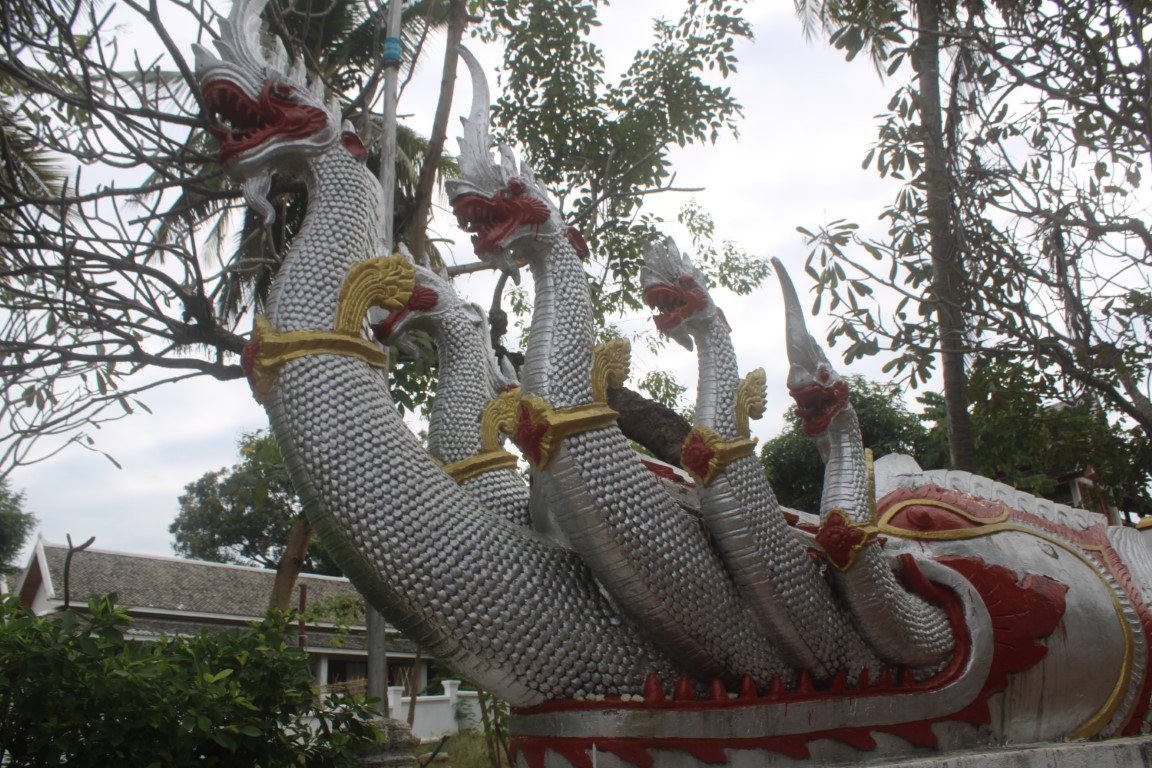
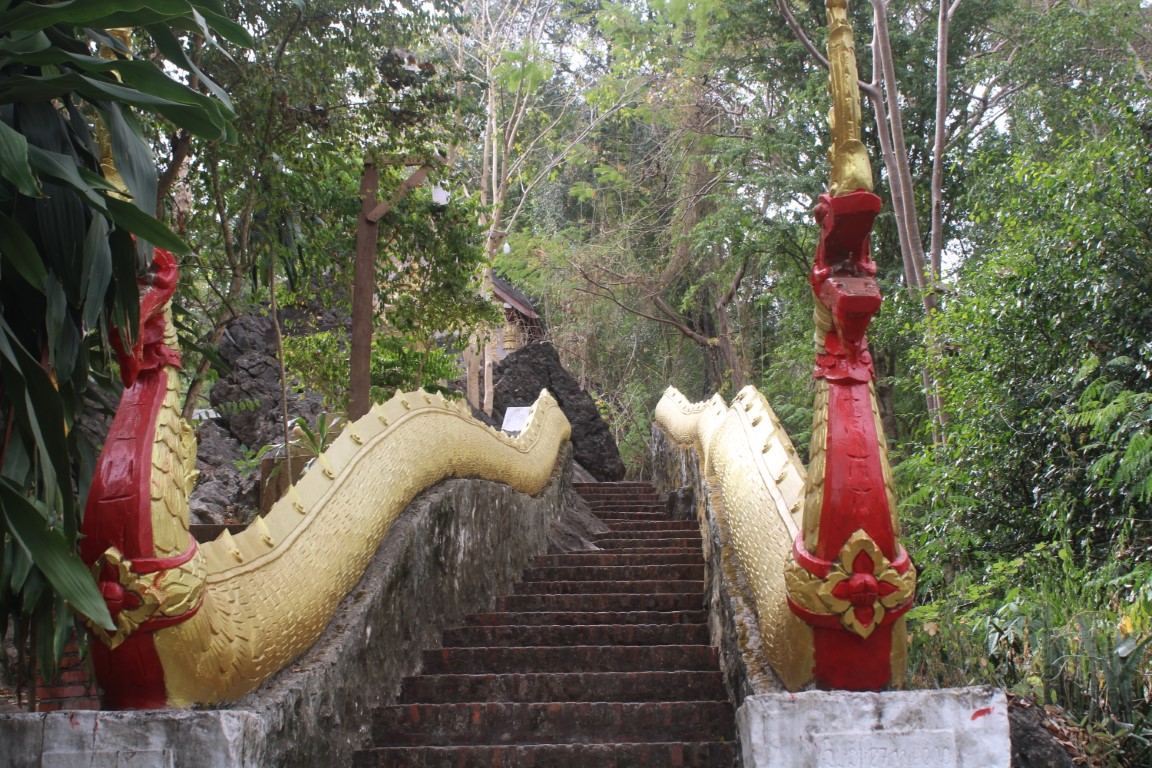
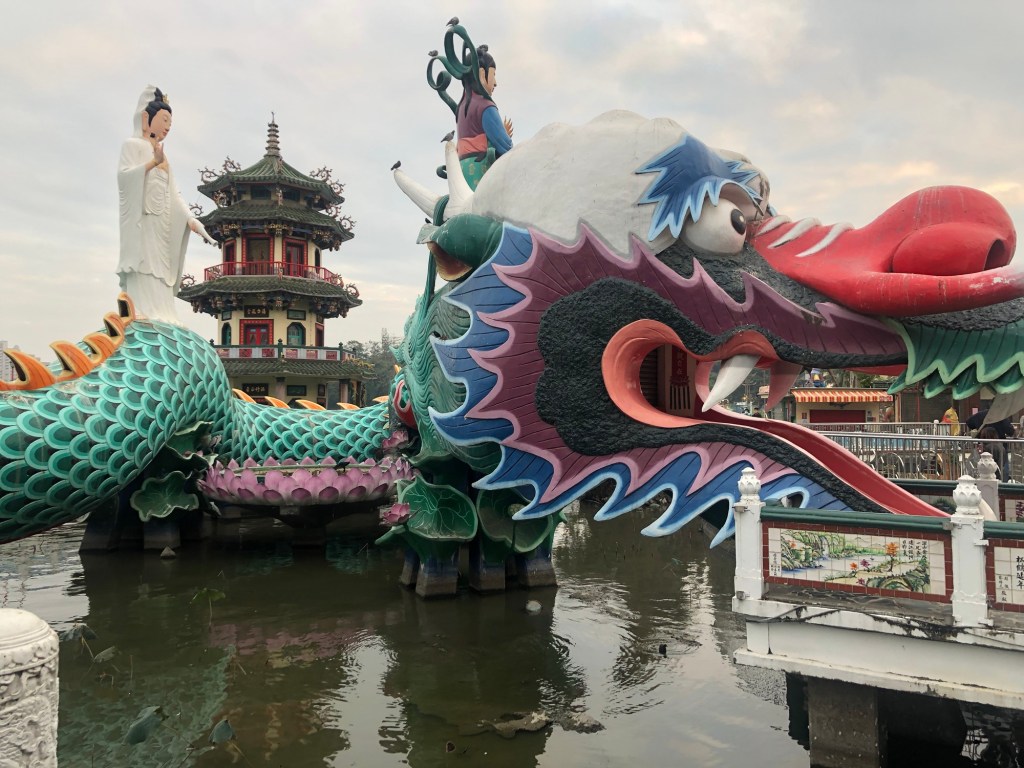
DAILY PHOTO: Guardian Serpents of Luang Prabang

“Fulani Creation Myth” by Anonymous [w/ Audio]

At the beginning there was a huge drop of milk.
Then Doondari came and he created the stone.
Then the stone created iron;
And iron created fire;
And fire created water;
And water created air.
Then Doondari descended the second time.
And he took the five elements
And he shaped them into man.
But man was proud.
Then Doondari created blindness,
and blindness defeated man.
But when blindness became too proud,
Doondari created sleep,
and sleep defeated blindness;
But when sleep became too proud,
Doondari created worry,
and worry defeated sleep;
But when worry became too proud,
Doondari created death,
and death defeated worry.
But then death became too proud,
Doondari descended for the third time,
And he came as Gueno, the eternal one.
And Gueno defeated death.

NOTE: The Fulani (also known as Fula and Fulbe) are a West African herding tribe that live in Mali, Niger, Nigeria, Guinea, and Senegal.

BOOKS: “The Sandman, Vol. 3: Dream Country” by Neil Gaiman

The Sandman, Vol. 3: Dream CountryThe Sandman, Vol. 3: Dream Country by Neil Gaiman
My rating: 5 of 5 stars

DC Site

If you love a good story, you really can’t go wrong with Gaiman. This volume consists of four standalone pieces of short fiction set in the Sandman universe.

“Calliope,” like Greek Mythology, envisions an anthropomorphized muse, but takes the idea into a dark and modern twist as said muse is held captive and violated.

“A Dream of a Thousand Cats” imagines dreams do shape the real world and asks what if animals dreamt as big as humans.

“A Midsummer Night’s Dream” is built around the premise that Shakespeare had a patron, none other than Morpheus, a.k.a. Dream, himself.

“Facade” is about a supernatural woman who can only go out in public by taking risky measures to look “normal,” and explores her lonely existence.

All of these stories are clever and compelling, and I’d highly recommend this collection for readers of speculative fiction.

View all my reviews

BOOKS: “Mythos: The Illustrated Edition” by Stephen Fry

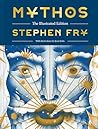
Mythos: The Illustrated Edition: The Illustrated Edition (Stephen Fry's Greek Myths)Mythos: The Illustrated Edition: The Illustrated Edition by Stephen Fry
My rating: 5 of 5 stars

Publisher Site

This book offers a humorous telling of many stories from Greek Mythology. One gets the well-known tales such as Prometheus, Sisyphus, and Pandora, but also the myths involving a number of lesser-known characters: god, demi-god, and mortal. As these myths are being told, there is also a substantial amount of nonfiction information presented by footnotes and such — e.g. how later authors (Shakespeare, for example) presented these myths or tales built upon them, how the myths inform popular culture and language to this day, and how Greek and Roman mythology related.

The art is nice, though I can’t say that it added much to the reading experience for me, personally. The art is done in a consistent style throughout and is colorful and visually interesting, though I couldn’t say much else about it in an intelligent fashion. It somewhat reminded me of William Blake’s art and somewhat of Soviet posters.

I enjoyed this book. It is light-hearted and even humorous without detracting from the tone of the myth and is a highly readable way to learn more about Greek Mythology.

View all my reviews

BOOKS: “The Song of Hiawatha” by Henry Wadsworth Longfellow

The Song of HiawathaThe Song of Hiawatha by Henry Wadsworth Longfellow
My rating: 5 of 5 stars

Project Gutenberg edition

This epic poem borrows from American Indian folklore and legend to build a fictional life story for the protagonist, Hiawatha. (There was an actual Hiawatha, but his life story apparently in no way resembles that of Longfellow’s Hiawatha, which is good because the fictional one had to deal with ghosts, tricksters, and deities.) The poem is part hero’s trials, part love story, and part tale of the supernatural, blending real world type tragedy with an otherworldly form.

The choice of trochaic tetrameter makes the poem rhythmically readable, while evoking a drumming sound that contributes to atmospherics.

When the poem came out in the mid-19th century, it faced some controversy. It was claimed that it was a knock off of the Kalevala of Finland. Longfellow’s reply was that he was influenced by that poem’s rhythm (the Kalevala is also trochaic,) but that all the plot events where from his conversations with American Indians and researchers, thereof, (or, presumably his own imagination,) and that any coincidence of events was owing to the broad brushstrokes of them both being heroic tales.

I enjoyed reading this poem and would highly recommend it for poetry readers and lovers of American Literature.


View all my reviews
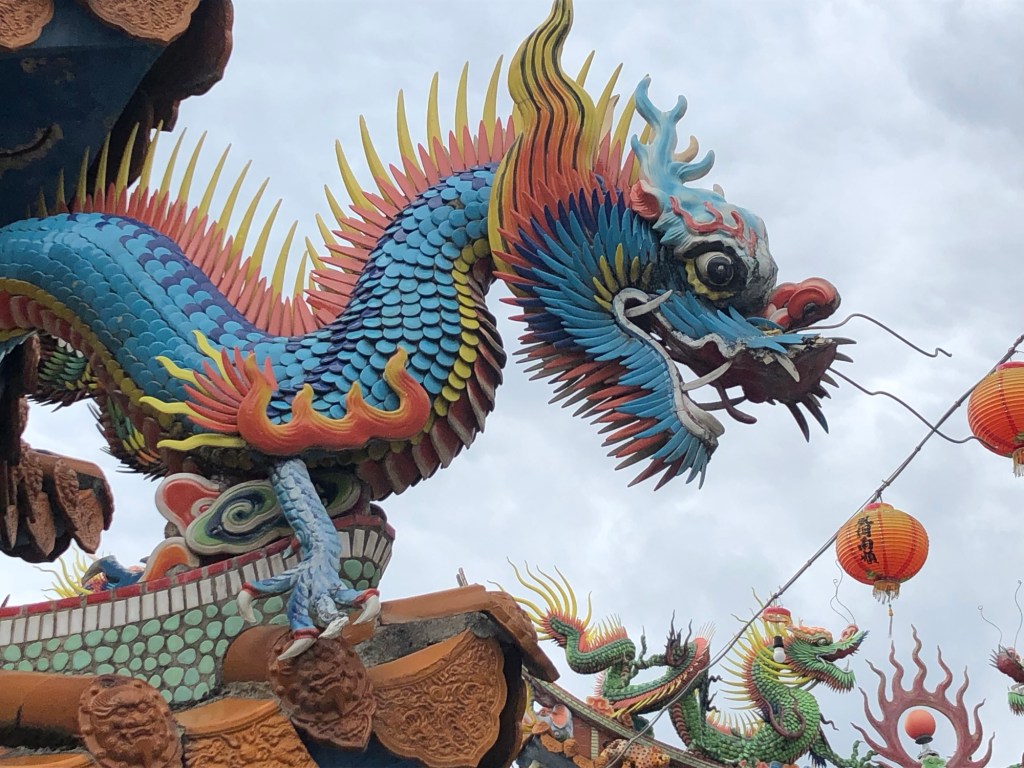
DAILY PHOTO: Thar be Dragons

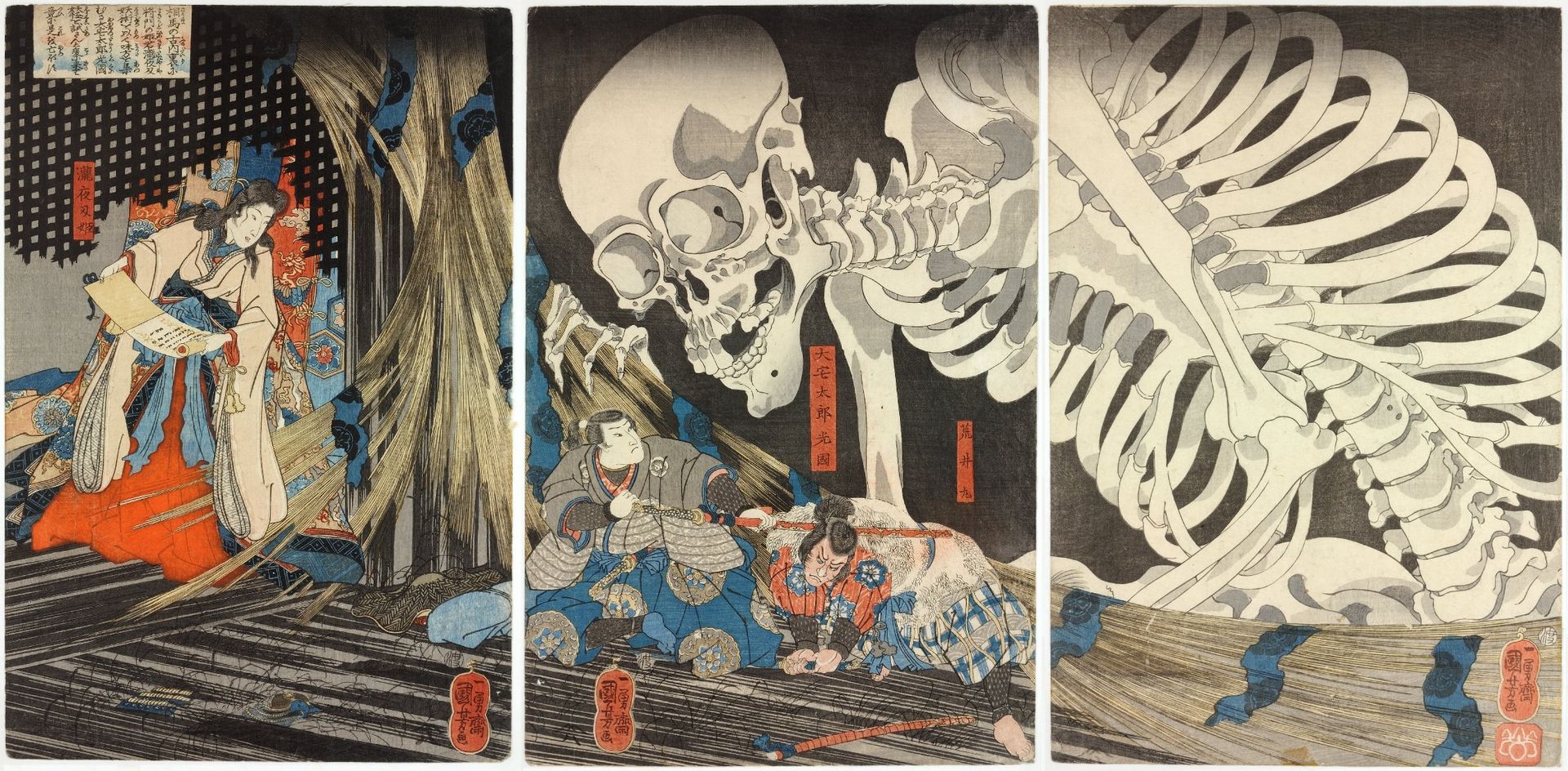
Witch & Skeleton [Free Verse / Senryū]

Takiyasha the Witch and the Skeleton Spectre; Utagawa Kuniyoshi (1844)
PREMISE:
Princess Takiyasha
 summoned a skeleton to
  kill a samurai.

MORAL?:
"Don't bring swords
 to a giant skeleton-ghost 
  fight!"

CONCLUSION:
Yet, in settled dust,
 the world was less one
  Princess-witch.