This post was inspired in large part by a tidbit about whiskey heir James Jameson (#1, below) in a book that I’m reading called “Crossing the Heart of Africa” by Julian Smith. It may have also been influence by having recently seen the surprisingly awesome “Wonder Woman” film, in which a central theme is the notion that good and evil vie for each person’s soul. (Note: I say “surprisingly” only because the DC movie universe has mostly been floating stinkers in recent years.)
I should note that when I started researching, there were an astounding number of candidates for the slots on this list, and so you may have a favorite example that didn’t make the list (please feel free to comment on any prime examples that I missed below.) As for criteria, I tried to avoid including people who just said horrifying things, who acted in an irresponsible or nit-witted manner that didn’t rise to the level of evil, or who were forced to make “lesser of two evil” decisions during time of war or national emergency.
I also didn’t have the time or energy to get into the he-said-she-said of politicians, because in America ideological types accuse people from the other party all manner of evil, constantly. So I didn’t wade into whether George W Bush personally flew the planes into the Trade Center towers via drone-style cockpit override technology, or whether Barack Obama had all nuclear spent fuel jettisoned onto the Arctic Circle to manufacture a climate change crisis. (Note: neither of those is a real thing, please don’t quote.) But, beyond that, I tried to pick candidates that would come as a surprise, and it wouldn’t surprise anyone that a politician did evil. (Frankly, people would be more surprised if they didn’t.)
5.) Chuck Berry: He had secret tapes made of women doing their business in the toilets at his restaurant. I don’t want to be moralistic and get into people’s kinky proclivities with this list, but this breach of trust rises above and beyond.
4.) Alexander Graham Bell was a dick to deaf people. The inventor of the telephone advocated for eugenics, and, specifically, trying to breed the deaf out of existence. Sure, if you invent the phone, the people who can’t use it might not be your favorites, but trying to eliminate them… that’s just cold.
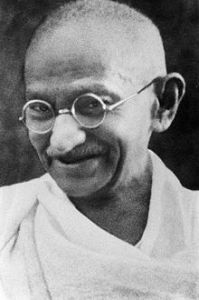
3.) Mohandas K. Gandhi: I said I wouldn’t pick on purely verbal hideous acts, of which Gandhi had a number from suggesting rape victims were responsible to supporting honor killings to racial slurs against Africans (quite a shocker for someone battling British racism so vehemently.) As far as actions, sleeping nude with his under-aged great-granddaughter is pretty vile behavior. It’s said that he was trying to challenge his celibacy, but you don’t need to bring kids into whatever oddities you need to prove to yourself.
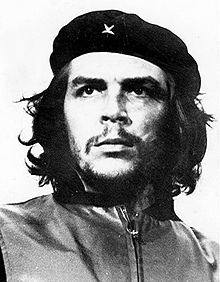
2.) Che Guevara: He had countless people executed without trials or due process. I included him because I assume that not all among the vast number of people who wear his face on their t-shirts are aware of this dimension of his character. Certainly, he was no worse than Lavrentiy Beria (Stalin’s Secret Police Chief), but I’m unaware of any idolization of Beria.
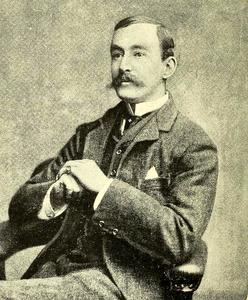
1.) James Jameson: The whiskey magnate bought an 11-year old girl so he could sketch her being victimized by cannibals in Africa.
When I first thought about this post, I was reading Steppenwolf, and I realized that the book wasn’t about the lead being dissatisfied with society as much as with his inability to function in the modern world. Then it occurred to me that this was just the flip-side of the same coin. I’m avoiding the hardcore literary dystopias.
5.) The Narrator & Tyler Durden of Fight Club: The lead feels that modern society emasculates.
4.) Christopher McCandless of Into the Wild: This is non-fiction, but it’s a great story of a man who believes that modern society robs individuals of self-reliance.
3.) Ray Smith of Dharma Bums: The lead character and his compatriots feel that modern society is devoid of a spirit of transcendence.
2.) Narrator [and Ishmael] in Ishmael: Author, Daniel Quinn, suggests that modern society is composed of “takers”–in contrast to the “leavers” of aboriginal societies.
1.) Harry Haller of Steppenwolf: Haller can’t cope with what he sees as the triviality of modern society.
In recent years I’ve spent a lot of time trying to quiet the conscious mind in order to let the subconscious do what it does best. There’s a lot of terminology that’s used to describe the mind state in which one’s actions are effortless and one can adjust swiftly to unforeseen challenges: e.g. “in the zone,” the Flow, Zen mindset, and (in the Kotler and Wheal book I just reviewed) ecstasis. However, regardless of the name, one key to this state is a reduced activity of the part of the mind that’s self-critical and overly cautious, and that requires not letting the conscious mind do what it’s prone to do.
However, taking a course on mauythai advanced fundamentals recently has reminded me of the important roles the conscious mind plays in learning. The challenge is to use the conscious mind effectively–without letting it running amok.
The conscious mind is largely driven by anxiety about uncertainty. This makes the conscious mind a planner and worst-case scenario generator extraordinaire. (In meditation, I’ve begun to not only note what thought popped into my head before I dismiss said distraction, but I also have a classification scheme of kinds of thoughts, and “planning thoughts” are probably the most common type of thought to hijack my mind.) This planning / forecasting proclivity can be beneficial if one is doing a job that requires such planning, anticipation of possible hazards, and the need to adjust to complex difficulties. However, it can also make one neurotic, overly risk-averse, and pessimistic.
So, here are my five thoughts on the conscious mind in martial arts training.
5.) Feed the right wolf: There’s a well-known story about a Native American man telling his grandchild that inside each person there are two wolves at war, one good and one evil.
The child asks, “Which one wins?”
The old man replies, “The one you feed.”
This is a variation on the theme–not so much about good and evil as about positive and negative outlook. In martial arts training there are often competing emotional states. On one hand, there is often anxiety about either being injured or even about the embarrassment of being bested. (Surprisingly, it seems like the magnitude of the latter is often greater than the former.) On the other hand, there is an intense thrill that comes with making progress. For those who don’t understand how martial artists can put themselves through what they do, this is the part for which you’re probably not understanding the intensity of the high. When it clicks and you’re getting it right more often than you previously did, the feeling is transcendent.
So, when one sees either of these two feelings arising, choose the latter. If one notices the anxiety, remind oneself the promise of that awesome feeling of having it fall together.
4.) Scanning for lapses in form: The process of learning a martial art–like any movement art–is repetition of the movements until they become ingrained in one’s procedural memory. Early in the process, this feels clunky as one has to scan for imperfections in form with one’s super-intelligent but slow and cumbersome conscious mind. However, increasingly, the body begins to incorporate these movement patterns and they start to become second nature. The trick is to keep this in the moment and not let one’s thoughts linger on what one just got wrong, or any perceived ramifications of getting it wrong.
3.) Try visualization: This once would have been thought hippie guff, but now it’s entered the mainstream. Of course, the advice from #5 must be kept in mind. When I think of the technique of visualization, I’m reminded of a story that Dan Millman told about a girl that he was coaching in gymnastics. He came to check on her only to find her repeatedly cringing and grimacing. He asked what was going on, and she said she kept falling off the balance beam whenever she visualized her routine. It sounds silly, but attitude is a powerful thing, and I lot of people sabotage themselves in ways not much different from this. It’s your mind, you have the power to do the move perfectly every time, if you take the proper mindset.
2.) Conscious mind as governor of action and agent of trust: The subconscious mind can be feral. As one spars, one has to match speeds with one’s opposition so that learning can take place. While sparring looks reminiscent of fighting, the goal of sparring is learning, whereas the goal of fighting is winning (or–as a minimum in actual combat–not being destroyed.)
This is another role for the conscious mind. It can keep reminders to the fore to keep one’s movement appropriate to the occasion. It can inject an awareness that there’s a relationship of trust rather than warring competitiveness between. That one needn’t respond at the same magnitude that one would under attack.
1.) Dropping the Conscious Mind Out of the Equation: While the conscious mind is critical in the learning process, eventually one must do something that feels uncomfortable, which is shifting subconscious operations to the fore and quieting the conscious mind. Overthinking can be death in tests, competitions, not to mention, I’m told, actual combative situations. At some point you’ve got to have some trust in what you’ve trained to do up to that point. It might fail you, but not necessarily as spectacularly as if you let your conscious run amok, getting caught in a death spiral of self-criticism and futile guesswork.
Since I’ve been watching quite a few muaythai fights recently at the Rangsit Boxing Stadium, I’ve begun to wonder just how useful corner advice is. I know that people think it’s beneficial because it’s done in droves. Not only is the fighter’s trainer trying tell them what to do, but also his parents, his siblings, his granny, and a hundred random people who may or may not have put money on him. It would be interesting to see a scientific study of how fighters performed who tuned everything out between rounds versus those who tried to take in all the advice. I tried to look up whether any such study had been done, but a cursor Google search came up empty.
The laissez-faire and easy-going yoga community has spawned some phenomenally ridiculous mergers. I have “yoga” as a term on Google News, and almost every week I get fed a new example. I’m not saying every new approach to yoga is bad, but there’s one disturbing trend–i.e. the distraction yoga.
In the title, I refer to “hyphenated yogas,” but what I’m really ranting about is “distraction yogas.” A distraction yoga is one in which an element is brought into the practice so that one doesn’t have to keep one’s mind on one’s breath, alignment, and / or mental state. (Because who wants to think about that shit when one can be thinking “Wow, that kitten sure is cute.” or–believe it or not–“This beer has hoppy undertones.”)
Now before I get accused of hating puppies or beer, let me point out that nothing could be further from the truth. What I’m ranting against is the notion that you can marry any two good things and make a great thing. If you don’t believe me, please allow me to dip my nachos in your banana split. See, there are plenty of things that are awesome independently that make abominations when forced together.
I’ll include links as I go, lest you think I made this stuff up for hilarity’s sake.
5.) Beer Yoga: This is one of the most recent and intriguing distraction yogas. I’m not saying that one needs to follow a strict Vedic approach to life to practice yoga, but–come on–could you stop drinking for a couple hours to pretend your body is a temple (or at least that it’s not sitting in a trailer park with the windows busted out.) Unless “calf slaughter-yoga” catches on, it’s hard to imagine a less yoga-like practice than consuming intoxicants during the practice of yoga. By the way, there’s also a marijuana yoga, but I’ll lump these together as intoxicant yogas.
4.) Goat Yoga: This is one of many “animal yogas.” Like the others, the point is to have cute creatures around. How it’s supposed to help one’s yoga, I can’t fathom. Actually, I can fathom the suggested logic, probably something to do with calming and engendering feelings of compassion and well-being. But, ultimately it’s distraction by cuteness. Note: you can also do yoga with cats, dogs, horses, and probably river otters.
3.) Karaoke Yoga: Talk about distraction–nothing better than pounding music and reading a prompter to keep one’s mind off that ache in one’s hamstring.
2.) Rave Yoga / Club Yoga: This might be a cheat because it’s similar to the previous one on the list, and I’m trying to lump these together so as to not be too repetitive. However, it’s not exactly the same, and is the perfect example of a distraction yoga. (There’s also Harmonica yoga and other musical yogas, but I won’t double-dip anymore.)
1.) Tantrum Yoga: It wasn’t easy to determine whether I’d include this one or not. On the one hand, it’s not a distraction yoga in the sense that the others are. On the other hand, it takes the award for being least yoga like on the grounds that it’s not about dispassionately witnessing one’s emotional state but rather feeding one’s negative emotions. Note that I don’t group laughter yoga into the same class. I’m not sure whether laughter yoga is beneficial (or to what degree it’s a yoga), but I know that many people benefit from it because it bolsters positive emotional states.
Now, one may have noticed that there are many seemingly strange (hyphenated) yogas that I haven’t mentioned. I haven’t said a thing about surf board-yoga, stripper pole-yoga, or acro-yoga–and I specifically excluded Laughter Yoga from the wrath of my rant. That’s because this isn’t a rant about people being innovative or non-traditional, it’s about people missing the point of what yoga is supposed to be (i.e. a means to quiet the mind.) I don’t know whether I can see myself doing yoga on a surf board or a stripper pole, but I’m certain that one has to give it one’s full attention–it’s not about finding a distraction to make yoga more palatable to hipsters.
5.) Acknowledge that there is a universe in which his or her point is valid: However, tell your adversary that this is contingent upon theoretical physicists being correct that there are an infinite number of universes, each governed by a different set of laws–at least a some of which would have to be stupid. This is called the bubble-verse flummox.
4.) Challenge him or her to a duel: This will require that you carry a well-worn leather glove wherever you go. For it’s not so much the words that produce an effect as the slap across the cheek. You are going for decibels. You can’t pull this off with a cotton glove, a rusty metal gauntlet, or a stiff leather work-glove. You need the glove to have some weight and to be able to put some whip into it. This is called the Aaron Burr.
3.) Talk to your adversary as if that person were a beloved household pet. This will involve both head tousling and inquiries as to, “Who’s a good boy?” It’s called the canine gambit.
2.) Ask your adversary whether he or she is trying to seduce you. It doesn’t matter how mundane or technical the subject is (trade pacts, non-proliferation agreement, etc.), this one is almost guaranteed to shut down opposition. It’s called the Mrs. Robinson.
1.) Say, “The game is afoot!” and then just walk off. It’s very important that you don’t respond to any question about what this means or whether you’re insane. Furthermore, one must break off all contact with the adversary for several days there after. Stew time is necessary. I call this one, The Sherlock.
5.) Eye contact: Train yourself to be aware of eye contact. Eye contact doesn’t come naturally for an introvert. It’s common to not only avert one’s gaze, but to zone out in the process because one’s mind is trying to anticipate the direction of the conversation and formulate a replies. There’s not enough consciousness left for monitoring the visual stream. This has a number of side-effects such as:
-missing non-verbal cues
-appearing uninterested
-staring in the wrong direction (crotches, cleavage, Hells Angels, etc.)
Just don’t let the pendulum swing too far such that one stares like a homicidal maniac.
4.) Scheduling: Bracket social and /or noisy events with quiet time. It’s not just social activity that can be draining for the introvert, being in environments with high levels of sensory stimulation will run down one’s energy even if one isn’t interacting socially. Living in India, I find that sometimes just walking down the street and minding my own business wears fairly rapidly. In moderated doses, these sensory-intensive situations are enjoyable and beneficial, but the secret is to avoid redlining. Extended periods of high stimulation may result in you being grumpy and / or dull.
3.) Readings: Come on, you’re an introvert, you know you love reading. There are a number of books that have come out in recent years to help introverts both better understand introversion and to learn to arrange their lives in a manner optimized to it. I’ll mention two of the more well-known ones.
The first is The Introvert Advantage by Marti Olsen Laney. I mention this one first because it was the first book I read on the subject, and it transformed my thinking about what it meant to be introverted. Though I’m an introvert, I didn’t really understand introvertism until I read Laney’s work.
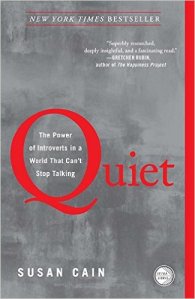
The more well-known and critically acclaimed book, however, is Quiet by Susan Cain.
2.) Introversion ≠ Shyness: Know the difference between introversion and shyness (social anxiety.) Introversion has long been considered synonymous with shyness. Even many psychologists and mental health professionals seem to believe they are one in the same–or at least they did until the recent spate of books, TED Talks, etc. It’s true that many people are both shy and introverted, but it’s more complicated than that. One can be extroverted and shy. Talk about a raw deal. The shy introvert faces forces pulling them in one direction. The shy extrovert is being pulled in two different directions at once.
1.) Embrace it: Accept your introverted nature. Given an extrovert bias, there’s a proclivity for introverts to wish they were extroverted or to even try to force themselves to be so. This is a recipe for disaster. I discussed the difference between introversion and shyness above, shyness is something that one can work on reducing through visualization, mindfulness, and–most importantly–practice interacting, but introversion is hardwired.
1.) The Dispassionate Witness: A person’s default setting is to repress emotions and pretend they don’t exist. On the one hand, this seems to work because others rarely notice one’s clenched jaw or downing of Prozac, and it’s true that fist-fights rarely break out in workplaces and classrooms. On the other hand, this approach leads to a lot of passive-aggressive behavior and stress-related illness. I just read in some material on Flow and business that 2/3rds of performance issues in businesses result from strained relationships.
The alternative is to take time to observe one’s emotional state, but to watch it without dumping fuel onto the fire. This process puts one’s feelings in perspective so that one can respond in a careful, but not repressed, manner. It doesn’t mean one won’t still be mad, sad, or scared, but one will be in a position to act in a manner that is neither petty and knee-jerk, nor one that consists of gobbling antacids. This brings us to #2.
2.) The Second Dart: [Siddhartha Gotama] Buddha talked about the mind’s response to an event as the second dart, suggesting that the second dart produces much more prolonged misery than the first. Imagine one is walking along and gets hit by a dart. Ow! It hurts. But what makes it agonizing is when one’s mind becomes obsessed with the injury. It’s unfair that someone threw a dart at me. What if the wound doesn’t heal right? What if the wound heals up too well, and I don’t have a cool scar at story time?
This point is closely related to #1. One has to observe, but not let mind run wild. The first dart is real. The second dart is immaterial, a figment of the mind.
3.) Relaxation is Part of the Process: Anyone who’s attended a yoga class is familiar with closing in savasana (corpse pose.) Occasionally, a student wants to get up and walk out at this point. They “aren’t paying __ $’s to lay around on their a##.” For Americans, rest is something begrudgingly accepted between actually doing stuff.
The problem with the “rest as laziness” approach isn’t just that one is likely to suffer a relaxation deficit, but also that the rest one gets isn’t effective. But how can rest be effective? I’m glad you asked. Because when you’re doing savasana or yoga nidra (yogic sleep) you’re not just letting your monkey mind run wild as it does when one is watching television or stuck in afternoon rush hour.
4.) Breath is Anything but Mundane: Since breathing is constantly going on and one can choose not to think about it, people dismiss it as unworthy of consideration. However, breath is the one point at which we can consciously influence our autonomic nervous system. [Well, there’s also blinking, but to my knowledge there’s no evidence that one can adjust one’s energy level or emotional state through blinking–but you can with breath.] Breath is the key to improved physical performance, but it’s also a powerful tool to train the mind.
5.) Use the Belly: I haven’t studied a large number of martial arts, but I’ve trained in a diverse few that were extremely different in both approach and priorities. It could be said that these arts (budō, tai chi chuan, muaythai, and kalaripayattu) had nothing in common. Except they did. They all valued strength in a point below the navel. Sometimes it was called dan tien; other times tanden. However, regardless of the pronunciation, name, or the precise anatomical location, there was this commonality.
Strength in the belly is tied to both breath and mental concentration.
Amazon recently put out a list of 100 Books to Read in a Lifetime. I appreciate the mega-bookseller taking a less doctrinaire approach than, say, The Guardian’s 1000 Novels Everyone Must Read. Also, props to Amazon for including a number of contemporary works—though I guess that is self-serving of them (i.e. $10 versus $0 sales price)—so never mind.
Whenever I see one of these lists—and there are so many of them—I always feel a bit inadequate. I suspect I’m not alone, given a recent generic list posted by The Millions, entitled 28 Books You Should Read If You Want To. That author’s approach is laudable. She doesn’t hand out exact titles as if we all need the same books, but rather suggests the kind of books one should consider reading (but only if you want to.)
I read like a fiend. While I usually don’t read rapidly (I can; I learned how in grad school, but I prefer savoring to injecting words), I’m constantly reading. So it’s a little disappointing to see how I stack up in the grand scheme of list-makers.
So this brings me to the point of this post, which is to boost my self-esteem by building a list of books, all of which, I’ve read. As I considered the books I’ve read that I would be so bold as to recommend “everyone” read, I saw trends. First, I read a lot of thin books, or, perhaps, they stick with me more. Don’t get me wrong, I’ve read some monsters Moby Dick (on everybody’s list—I don’t know why), Atlas Shrugged (on the Libertarian Book-of-the-Month Club list, and not much else), and 1Q84 (given a few years, it’ll be on all the lists.) However, it’s the thin books that have stuck with me, and they often get kicked aside by the [other] pretentious list makers. Also, shorter forms (e.g. essays, short stories, poems, and novellas) often don’t get properly recognized because everyone wants to talk about novels and tomes.
Second, while I like to consider myself an international reader (e.g. I’ve read a fair number of translated Japanese and Chinese classics), the fact of the matter is that I’ve had a skewed reading history. I’m an American, and have disproportionately read books that are either by Americans or that speak to the American worldview / mindset (my list will be both.) This isn’t so much an issue for most of the list makers as they simply propose that every Nigerian, Thai, and Peruvian should read a canon devoid of any Nigerian, Thai, and Peruvian authors (but instead that is 50% British, 30% American, and 20% all others.) While the list may be targeted toward U.S. audience, these books are good for everybody, and everybody should read outside the familiar.
Without further ado, my list, 30 Thin Books That Every [Attention-Challenged] American Should Read:
Because poetry is good for the soul. Yes, this anthology is skewed toward dead poets, but it’s not only thin, it’s cheap. It’s got Whitman, Dickinson, Frost, Sandburg, and Hughes.
Because, screw totalitarianism, that’s why. This is like 1984, but without the villainy clubbing one over the skull. Therefore, you can introduce the kids to commie-hating early and without giving them nightmares—well not bad ones. Plus, it’s thinner than 1984.
Because virtue is good for the soul. This is Plato’s account of Socrates’ defense at his own trial and his subsequent explanation of why he was going to drink the hemlock. Yes, it’s technically three books, but they are often bundled together as one book. Even with all three, it’s pretty thin.
Because Orwellian dystopia isn’t the only dystopia. In Huxley’s book, tyranny wasn’t a matter of force, but manipulation. This book shows how dystopia can be disguised as utopia by keeping the population adequately drugged and well-sexed.
Because satire is good for the soul. No sacred cows escape roasting in this thin volume. A naïve young man travels out into the world to find that evil is ubiquitous.
Because how often does a book coin a common phrase. (FYI- “A Clockwork Orange” was a phrase Burgess borrowed for the book that was common in some parts, but Heller invented the term “Catch-22.”) The story revolves around the notion that one can’t get out of the war by reason of insanity, because if one is trying to get out of the war one is sane by definition, and if you are insane, you don’t try to get out.
Because if you’re going to break the law, you should know how to do it do it virtuously and not like a dirtbag. (Hint: It’s more painful than you think.) This essay tells of Thoreau’s imprisonment because he refused to pay taxes that would fund the war with Mexico. It’s usually bundled with other essays.
Because books are good. The title comes from the temperature at which books burn, and it’s set in a dystopian future in which the protagonist, “Fireman” Guy Montag, goes around collecting and burning books.
Because you should know how to turn someone down (e.g. I would not eat them on a boat, I would not eat them with a goat.) Or, because learning to be playful with words may serve one well. Or, because you should try new things. In the story, an unnamed narrator is subjected endlessly to green eggs and ham, which he steadfastly, refuses until the end.
Because you think you’ve got a weird family. Hamlet exacts revenge when he finds out that his uncle killed his father to marry his mother and usurp the throne.
Because you don’t want to underestimate Mother Nature when you strike out to build your indomitable American spirit. This is the true story of a college graduate who gives away his bank account, burns his pocket-money, cuts ties with his upper-middle class family, and sets off to become self-made. Ultimately, he ends up in Alaska, and it does not end well.
Because, stop being such a gloomy-Gus. Admittedly, this is an unconventional choice– both because it’s not particularly skillfully written and a few of its conclusions may not be as true as they once were. However, it does inject a dose of reality for those who view the world through shit-colored glasses. As the title suggests, the authors argue that life in America is getting better year after year. We are getting healthier and richer. Being economists, they present much of their findings as graphic representations of statistical data.
Because sometimes the world actually looks better through shit-colored glasses, Seriously, because you need to know how to get on with it when life is at its toughest. Viktor Frankl was a psychiatrist and Holocaust survivor who writes about what kept people going at places like Auschwitz.
Because, just get on with it. This was actually a kind of “Notes to Self,” written by the Roman Emperor to remind himself to be virtuous, to live, and to not fear death.
Because you don’t get enough of the word “rickety” these days. But seriously, you get to “see” a lot of America through Kerouac’s poetic language. It follows the road trips of a beat generation protagonist through America.
Because Faulkner’s language rocks, and this is a gripping and gritty tale. It’s the story of an upper class co-ed who’s dragged down into the underworld and some desperate times by a couple bad decisions, not the least of which was going for a ride with a stupid drunk.
Because you need a pep talk to think for yourself. Emerson proposed that one stand as an individual and stop letting political parties, religions, or other organizations decide what one believes. Emerson and Twain both saw a sad trend brewing in which people were starting define their beliefs by identifying with a party and then letting that party’s opinion leaders tell them what to think. Sadly, this trend only grew since there day to the point that many people have extremely strong beliefs that they can’t begin explain in a logically and factually consistent way.
Because one day China is going to collect on our debts, and well need some grasp of their culture. Seriously, you should read outside your culture. In the process, you’ll find that the Taoist stream of thought isn’t all that far off our own—“f#@k authority and pretentiousness and all the bureaucratic formalities.”
Because, screw Melville, this is the great American novel. Yes, I realize that it’s not particularly thin, but compared to Moby Dick it is—and it reads more quickly because there aren’t long drawn out sections on the minutiae of whale pineal glands and what not. This book follows the adventures of that rapscallion, Huck, as he flees a drunk father and a lady who wants to make him civilized, and takes to rafting on the Mississippi with an escaped slave. Yes, it has the n-word like a billion times, but if you read all the words (and not just that one) you’ll see there’s a positive message about the development of mutual friendship and respect between Huck and Jim.
Because you need to get outside more. It’s the story of a dog who is taken from the good life as a pet in California to the wilds of Alaska, and what said dog must do to survive.
Because you need to be concise AND coherent. In the age of Twitter, people are mastering the former while losing the latter. This is a thin books that tells you most of what you need to know to write intelligibly in English.
Because America has a dark side, and nobody writes it better than Poe. Any of the many collections of Poe’s short stories (some including poems and/or long-form works) will do. One definitely wants “The Pit and the Pendulum,” “Tell-tale Heart,” “The Murders in the Rue Morgue,” “A Descent into the Maelstrom,” and, of course, the title poem.
Because we need an injection of Stoicism to counteract the prevailing trend toward whining and moaning. Epictetus was a slave who became one of the most famous Greek sages. His sayings are mostly about not crying over spilt milk, but to be careful not to be the one who spills the milk. In other words, don’t whine about what the world gives you, devote your energies to being virtuous and conscientious.
Because you should understand your place in the ecosystem, and Lewis Thomas describes it artfully and concisely. This is a series of essays that covers a lot of ground with respect to the subjects of biology and physiology.
Because you may just want to take over the word someday. This is advice about how to rule. It may not make one popular as a middle manager, but there are bits of wisdom throughout.
Because someday it’s all going to come to an end, and it will probably end badly. This is the story of a father and son wandering through a post-apocalyptic wasteland. I realize I’ve put a lot of dystopianism on this short list, but I’m going to say that’s part of the American condition. America has had it good for long enough to realize that all things come to an end.
Because we should not give the short story short shrift, and Hemingway—like Poe—did them well. Besides the title story, this collection includes “The Killers”, “The Gambler, The Nun, and the Radio”, and “A Clean, Well-lighted Place.”
Because you need to get out of the country and experience some of the rest of the world. This is about the travels from Paris to Pamplona of a group of men who’ve all fallen for the same woman with that woman—of course—along for the ride.
Because you need to get out of the house, away from your cubicle, and out into nature. This is an essay extolling the virtues of putting one foot in front of the other like you mean it.
This is the story of a little boy’s dreamtime journey to a world inhabited by “monsters” and his interaction with them. Like Green Eggs and Ham, you should have read this as a kid. If you didn’t, I’m sorry about your defective parents, but get over it. Since you probably don’t want to read this as an adult on the Metro going to work, you can get Christopher Walken to read it for you on YouTube.
So that is it. That is my list of 30 Thin Books that Every [Attention-Challenged] American Should Read.
I remember when I could remember,
but these days I invariably forget.
My life isn’t even in its September
but by absent-mindedness I’m beset.
My keys? My keys? Where are they please?
I’ve searched from ceiling to floor.
My keys? My keys? Where are they please?
No, I’m certain I didn’t ask that before.
Once I juggled a hundred tasks right within my mind.
Now I need write a list if they number more than two.
Buy stock in the makers of legal pads, if you’re so inclined
What were we talking about? There’s something I need to do…
Do not use semicolons. They are transvestite hermaphrodites representing absolutely nothing. All they do is show you’ve been to college. –Kurt Vonnegut
Write without pay until somebody offers pay. If nobody offers within three years, the candidate may look upon this circumstance with the most implicit confidence as the sign that sawing wood is what he was intended for. –Mark Twain
The faster you blurt, the more swiftly you write, the more honest you are. –Ray Bradbury
Try to leave out the part that readers tend to skip. –Elmore Leonard
The first draft of anything is shit.—Ernest Hemingway.
Omit needless words. –William Strunk
The only rule for writing I have is to leave it while I’m still hot… –William Faulkner
Whoever wants to tell a story of a sainted grandmother, unless you can find some old love letters, and get a new grandfather? –Robert Penn Warren
When you write the thing through once, you find out what the end is. Then you can go back to the first chapter and put in a lot of those foreshadowings. –Flannery O’Connor
As far as I’m concerned the entire reason for becoming a writer is not having to get up in the morning. –Neil Gaiman



























 Tiger Riding for Beginners