BOOKS: 孙子兵法 [Sunzi’s Art of War] by Sunzi

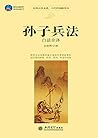
孙子兵法白话全译孙子兵法白话全译 by 史哲 文
My rating: 5 of 5 stars

Available online – YellowBridge

In thirteen short chapters, Sunzi lays out a masterclass in strategy. One sees in Sunzi’s work the mark of a Taoist mindset, seeing it in the book’s emphasis on engaging in warfare only when necessary, doing things the easy way whenever possible, and never letting one’s ego write checks one isn’t able to cash in lives.

There is good reason that this is one of the world’s most well-known (if not the most well-known) treatise on warfare. Far from being complicated and technical, this guide is full of pithy teachings such as: “War is the way of deception.” “No country ever benefited from a long war.” “Defeating the enemy without fighting is supreme excellence.” “To be undefeated lies in oneself, to be victorious lies in the enemy.” “Know the enemy and yourself and victory is assured; know heaven and earth and victory is complete.” (And these teachings are even more concise in the original Chinese.)

In addition to basics like leadership, maneuver, and terrain, the book devotes chapters to both the use of fire and spies in warfare. (One’s level of understanding is central to strategic victory throughout Sunzi’s teachings.)

I’d highly recommend this book for anyone interested in strategy, martial arts, or other strategic pursuits. The book may be ancient, but it’s not obsolete by any means.

View all my reviews

“The Joy of Words” by Lu Ji [w/ Audio]

Writing is joy --
so saints and scholars all pursue it.

A writer makes new life in the void,
knocks on silence to make a sound,
binds space and time on a sheet of silk
and pours out a river from an inch-sized heart.

As words give birth to words
and thoughts arouse deeper thoughts,
they smell like flowers giving off scent,
spread like green leaves in spring;
a long wind comes, whirls into a tornado of ideas,
and clouds rise from the writing-brush forest.

Translation by Tony Barnstone and Chou Ping in The Art of Writing (1996) Boston: Shambhala.

BOOKS: “The Romance of the Three Kingdoms” by Luo Guanzhong

Three Kingdoms (4-Volume Boxed Set)Three Kingdoms by Luo Guanzhong
My rating: 5 of 5 stars

Publisher Website – Penguin

The edition that I read was the Penguin abridged version that fits this sprawling epic into a single volume of a little over 600 pages. This is one of the four Great Classics of Chinese literature (along with Journey to the West, Water Margin, and Dream of the Red Chamber.) It offers a fictionalized telling of a period of Chinese history featuring a three-way civil war, especially centered upon the Han attempt to maintain its Imperial line against challengers, a fight that would ultimately end in the reunification under the Jin.

I’ve loved reading the Chinese classics. While this book and Water Margin feature massive ensembles of characters and could become clunky and cumbersome to read, they don’t because stories are told in intense battle-sized chunks and with a profound capacity to build character hooks that maintain clarity despite so many characters.

I would break this book up into three parts. The first (and by far the bulk of the story) focuses on a trio of great warriors that form a kind of blood-brother pact: Xuande, Guan Yu, and Zhang Fei. Under Xuande’s leadership, these men fight to keep the Han imperial line intact. (It’s fair to say it could also be seen as focusing on the opposition to these men, notably Cao Cao.) The next bit continues the action as the masterful strategist, Kong Ming, tries to keep the wheels rolling on Xuande’s army after the dramatic deaths of the aforementioned trio, and finally there is a section in which it is as though all the great warriors are gone, resulting in an inevitable reunification as there are no longer those who can fight insurmountable odds. As I describe it, it might seem anticlimactic, but it is far so, but I would count it a tragedy.

To me, this book read more like historical fiction than did Water Margin, the latter (also excellent) is almost like fantasy: its characters are so much larger than life as to be veritably superhuman. That said, this novel does feature some magic, but the characters feel much more life-sized — if not without a measure of grandiosity.

I’d highly recommend this book for readers of historical fiction. It’s highly engaging and readable, despite being long and of epic of proportions.

View all my reviews

“A One-String Harp” by Lu Ji [w/ Audio]

When an author composes too short a poem,
it trails off with a lonely feeling
like looking down at solitude with no friends
or peering into the vast sky, disconnected.
One string on a harp is crisp and sweet
but sings without resonance and harmony.

Translation by Tony Barnstone and Chou Ping in: The Art of Writing (1996) Boston: Shambhala Publications.

“Fortune-teller’s Song” by Su Shi [w/ Audio]

The crescent moon hangs on a barren tree.
The water clock has stopped and all is still.
Who sees the sad man pace the shore alone?
His shadow slants and curls into a swan.

The startled man stiffens and turns to look;
His grief remains unseen by anyone.
He passes on a seat of fallen log,
And plops down on the wet and cold sandbank.

NOTE: The original title is: 卜算子.

BOOKS: “Strange Tales from a Chinese Studio” by Pu Songling [Trans. by John Minford]

Strange Tales from a Chinese StudioStrange Tales from a Chinese Studio by Pu Songling
My rating: 5 of 5 stars

Publisher Site – Penguin

This is a collection of short stories, almost entirely speculative fiction, dating from the Qing Dynasty (specifically, the late 1600’s to early 17oo’s.) Ghosts, folkloric creatures, and Taoist magic all feature prominently in the stories. The stories average about five pages, but with a wide deviation from stories scarcely longer than today’s micro-fiction to extensive pieces. The Penguin edition collects 104 out of a much larger collection of stories.

The best of these stories are clever and highly engaging, and there are many such tales. Being from Qing Dynasty China, the stories offer a perspective different from one’s typical horror and fantasy short stories. Many of the stories prominently feature eroticism, but not graphically so.

As for the weakness of the volume, even though it selects only a portion of Pu Songling’s original, there are many stories that blend together, failing to distinguish themselves. This is most notable among the fox-spirit stories, of which there are just so many. [A number of them are fantastically unique, but others are just variations on the same.] So, the book can seem a bit repetitive in that sense. However, before you get to the point where you feel you can’t read one more fox-spirit story, you’re quite likely to read a tale that blows your mind.

I greatly enjoyed many of the stories herein. Perhaps, the volume could have benefited from further abridgement, but it’s well worth the read.

View all my reviews

“Mulberry Picking” [採桑子] by Ouyang Xiu [w/ Audio]

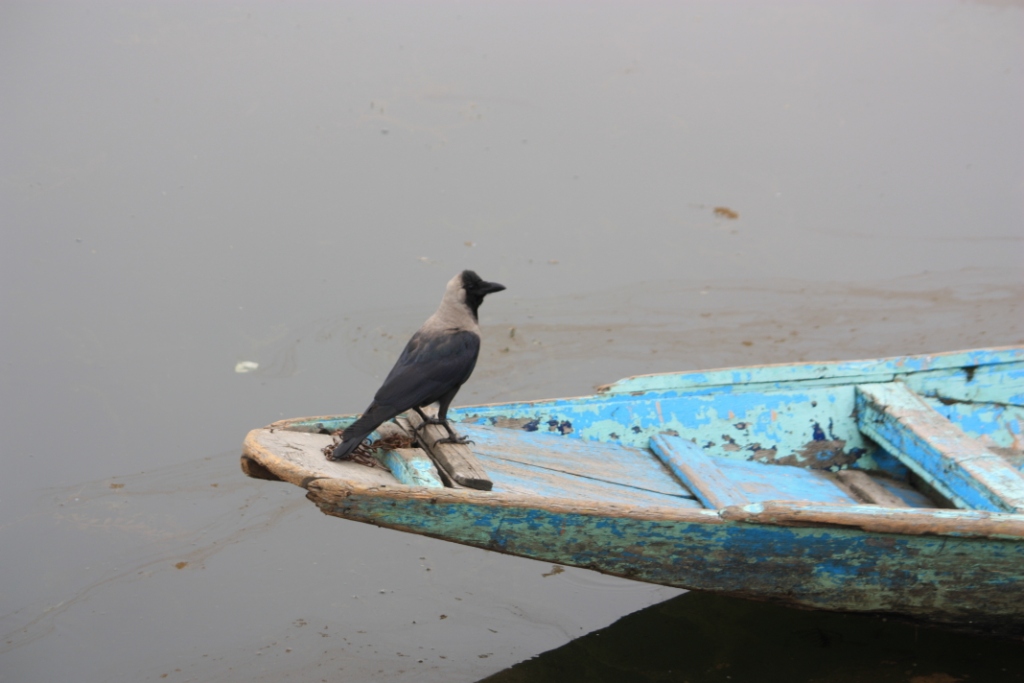
West Lake is beautiful from a small boat.
Green water wends its way through the lotus,
Sweet grass grows thickly all along the bank,
Faint music wafts from unknown points ashore.

When the wind quits, the Lake is glassy smooth;
The boat is perfectly still for a beat,
Then its movement is betrayed by ripples
And startled waterfowls' furious flapping.

Note: The title “Gathering Mulberry Leaves” was used by Xu Yuanchong for his translation. The Chinese title is: 採桑子 (Cǎi Sāngzǐ)

“Spring Dawn” (春曉) by Meng Haoran [w/ Audio]

My Spring sleep is unswayed by dawn --
Though birds are heard through screen, still drawn.
Recalling night sounds of rain and wind,
I wonder how the flowers have thinned?

Original in Chinese:

春眠不覺曉,
處處聞啼鳥。
夜來風雨聲,
花落知多少。

“Silk-Washing Stream” by Su Shi [w/ Audio]

Stream-washed leaves are glistening.
Someone is boiling cocoons.
Workers gossip, I'm listening.

Dim-eyed man with a cane spoons
Food into a bowl, bending
To pass it before I swoon.

I ask when the bean leaves yellow.

“The Blue-Green Stream” by Wang Wei (Lowell version) [w/ Audio]

Every time I have started for the Yellow Flower River,
I have gone down the Blue-Green Stream,
Following the hills, making ten thousand turnings.
We go along rapidly, but advance scarcely one hundred li.
We are in the midst of a noise of water,
Of the confused and mingled sounds of water broken by stones,
And in the deep darkness of pine-trees.
Rocked, rocked,
Moving on and on,
We float past water-chestnuts
Into a still clearness reflecting reeds and rushes.
My heart is clean and white as silk;
it has already achieved Peace;
It is smooth as the placid river.
I long to stay here, curled up on the rocks,
Dropping my fish-line forever.

NOTE: This version was translated by Florence Ayscough and adapted by Amy Lowell in the book: Fir-Flower Tablets (1921) New York: Houghton Mifflin, p. 123