FIVE WISE LINES [December 2025]

William Blake painting of Urizen praying to the world he created, an illustration from "Song of Los."
William Blake:
Urizen prays to the world he created (1795)
Song of Los

I must create a system
or be enslaved by another man’s…

william blake; Jerusalem: The emanation of the great albion

Saying Yoga exists to make one more flexible
is like saying that it exists to wring farts out of one’s body,
both will happen — neither is the primary objective.

Me

He that is without sin among you,
let him first cast a stone at her…

JESUS; John 8:7

The best government is that which governs least.

Henry david thoreau, Civil Disobedience

Gods always behave like the people who make them…

zora neale hurston; Tell my horse

FIVE WISE LINES [November 2025]

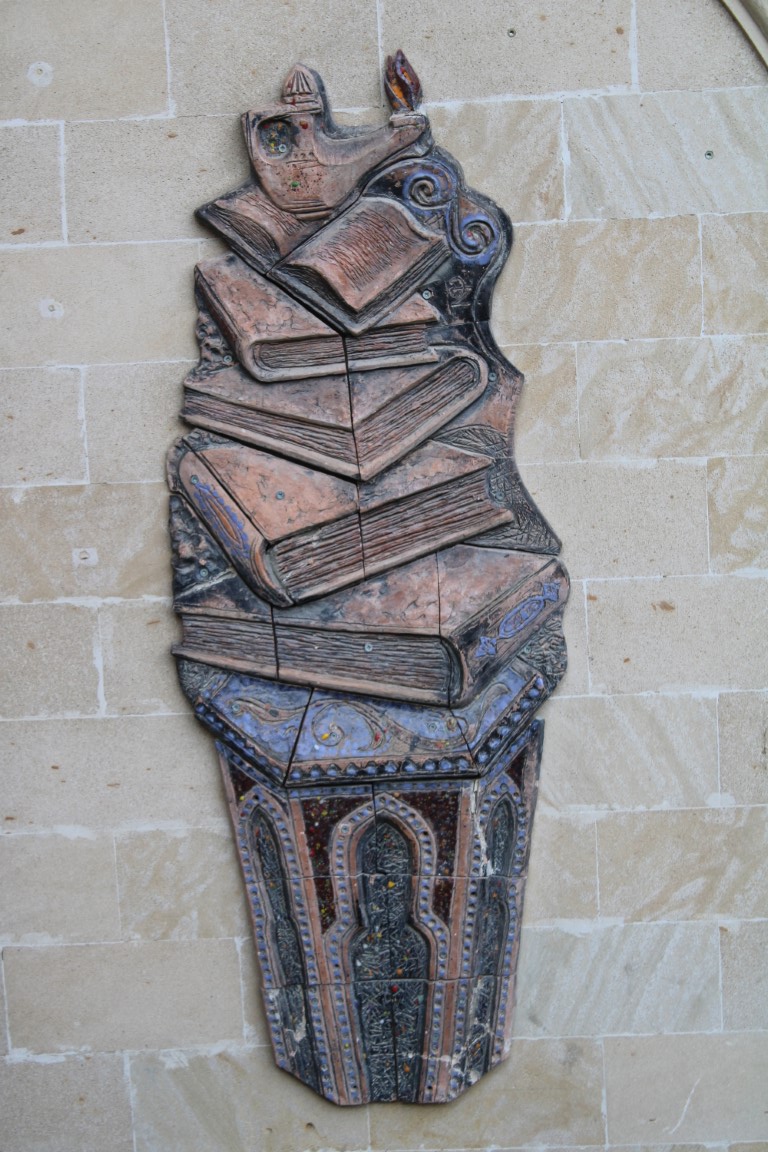
Taken at Fo Guang Shan, near Kaohsiung in Southern Taiwan.

A thing is mighty big when time
and distance cannot shrink it.

Zora Neale hurston; Tell my horse

…if you want to be elected, it is better
to be Mean than to be Funny.

hunter s. thompson; Better than sex

And whosoever shall compel thee to go a mile,
go with him twain.

jesus; Matthew 5:38-40

The only gamblers who will talk openly
are the ones who don’t make money.
The successful ones keep their mouths shut.

Kit chellel; lucky devils

To live a creative life,
we must lose our fear of being wrong.

joseph chilton pearce

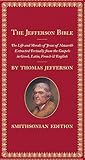
BOOK: “The Jefferson Bible” by Thomas Jefferson

The Jefferson Bible: The Life and Morals of Jesus of NazarethThe Jefferson Bible: The Life and Morals of Jesus of Nazareth by Thomas Jefferson
My rating: 5 of 5 stars

PDF available online [Public Domain]

Thomas Jefferson (yes, the same one who wrote the Declaration of Independence) produced this book by cutting and pasting excerpts from the Gospels so as to produce a distillation of who he believed Jesus was and what Jesus’s essential teachings were. It mixes parables and other New Testament teachings with biographical description.

There is an introduction which offers the reader more specific insight into Jefferson’s thinking than can be gleaned merely from what he includes and what he trims. The Introduction also discusses the similarities and differences between Christian philosophy and that of the Jews, the Greeks, and the Romans.

If you’re looking for a condensed version of the New Testament, I’d highly recommend this book. Jefferson was obviously a sharp guy who looked at the Bible from the perspective of Enlightenment-era thinking.

View all my reviews

Five Wise Lines [May 2024]

Play is a state of mind, rather than an activity.

Stuart brown in PLay: How it shapes the brain, opens the imagination, and Invigorates the soul

My sins are running out behind me, and I do not see them, and today I come to judge the sins of another!

From Sayings of the Desert Fathers
(A Senior Monk’s reply upon being asked to Judge a younger monk’s actions)

Ye have heard that it hath been said, An eye for an eye, and a tooth for a tooth! But I say unto you, That ye resist not evil: but whosoever shall smite thee on thy right cheek, turn to him the other also.

Matthew 5: 38&39

I have no scepter, but I have a pen.

Voltaire to Fredrick the great

If a man is born to error, let us wish him virtuous errors.

Voltaire; ON Superstition

BOOKS: “Christianity: A Very Short Introduction” by Linda Woodhead

Christianity: A Very Short IntroductionChristianity: A Very Short Introduction by Linda Woodhead
My rating: 5 of 5 stars

Publisher’s Page OUP

The central idea of this book is that (despite all the complexity of schisms, sects, and subsects) the various entities that call themselves Christian can be put into one of three categories: church, biblical, or mystical. These groups reflect where the adherents see the ultimate source of authority. Church Christians, exemplified by Roman Catholics, view the hierarchy of clergy as the ultimate authority. Biblical Christians, e.g. Baptists, see the Bible as the highest authority. Finally, mystics see the individual’s relationship with (or connection to or oneness with) God to be what matters.

Bookending elaboration upon those three forms of Christianity, there is an opening that discusses early development of the Christian religion and the dividing lines that characterized it (e.g. whether Jesus was man, god, or a bit of both,) and there is a closing chapter about modern Christianity that explores various modern movements, such as: liberal Christianity, Evangelicalism, Fundamentalism, and charismatic Christianity.

If you’re interested in understanding the various permutations of Christianity (past and present,) and how they developed and differentiated themselves, this is a fine introduction to the subject.

View all my reviews

BOOKS: “Teachings of the Christian Mystics” ed. by Andrew Harvey

Teachings of the Christian Mystics (Shambhala Pocket Library)Teachings of the Christian Mystics by Andrew Harvey
My rating: 5 of 5 stars

Acquired at Blossom Bookhouse

This book gathers a collection of short writings (mostly paragraph to a few page excerpts as well as a few poems) on mystic Christianity from the time of the Gospels through the twentieth century. While the bulk of the pieces are (if not from scriptures) the work of clergymen and / or theologians, there are some by individuals known elsewise (e.g. poets William Blake and Gerard Manley Hopkins.) The book is arranged somewhat, but not perfectly, chronologically — enough that all the Biblical excerpts are lumped together at the beginning to form about the first quarter of the selections. While there are a number of one-off contributors, there are several pieces from each of: Gregory of Nyssa, the Desert Fathers, Saint Symeon the New Theologian, Saint Bernard of Clairvaux, Saint Teresa of Avila, and Eckhart von Hochheim.

One nice feature of this book is that it does include selections from a wide range of sources (Roman Catholic, Orthodox Catholic, and Protestant) over a range of time periods, and from scriptures both canonical and “apocryphal.” So, there are many varied ideas of the mystical experience and the path thereto. The flipside of this fact is that there doesn’t seem to be a lot of cohesiveness to the collection. It isn’t always clear why Harvey (the editor) thought a given excerpt was representative of mystic teachings versus of mainstream Christianity. There is a substantial introduction, but otherwise the selections are left to speak for themselves.

Still, it was a quick read, dense with insights, and I found — particularly some of the scriptural selections — to be among the most profound statements of Christian philosophy that I’ve seen.

View all my reviews