Available online — Project Gutenberg
This is a Confucian primer written in lines of three characters. It’s a children’s book in the sense that it’s aimed at children, but not necessarily with respect to being presented in a manner most conducive to childhood learning. (While it’s concise, the material isn’t presented in an interesting or memorable form. i.e. It’s intended for brute force rote memorization.)
The book consists of five sections, ranging between twenty-four and one hundred and six lines (72 to 318 characters per chapter.) The first introduces Confucian virtues. The second offers a broad overview of classics of Chinese philosophy. The third section lists the dynasties of China. The penultimate section describes ideal behavior from a Confucian perspective. The last, and briefest, section is largely a pep talk on studying hard.
As someone learning Mandarin Chinese, it’s interesting to see how sentences are formed in this sparse format, and this text offers insight into Chinese history and philosophy, in addition to providing a good early reader.
If you are interested in learning elementary Confucianism or you’re learning Chinese and looking for short and simple texts for reading, I’d recommend one look into the Three Character Classic.
Allons! to that which is endless as it was
   beginningless,
 To undergo much, tramps for days, rests of
   nights,
 To merge all in the travel they tend to, and
   the days and nights they tend to,
 Again to merge them in the start of superior
   journeys,
 To see nothing anywhere but what you may
   reach it and pass it,
 To conceive no time, however distant, but
   what you may reach it and pass it,
 To look up or down no road but it stretches
   and waits for you, however long but it
   stretches and waits for you,
 To see no being, not God's or any, but you
   also go thither,
 To see no possession but you may possess it,
   enjoying all without labor or purchase,
   abstracting the feast yet no abstracting
   one particle of it,
 To take the best of the farmer's farm and the
   rich man's elegant villa, and the chaste
   blessings of the well-married couple, and
   the fruits of orchards and flowers of
   gardens,
 To take to your use out of the compact
   cities as you pass through,
 To carry buildings and streets with you
   afterward wherever you go,
 To gather the minds of men out of their
   brains as you encounter them, to gather
   the love out of their hearts,
 To take your lovers on the road with you,
   for all that you leave them behind you,
 To know the universe itself as a road, as
   many roads, as roads for traveling souls.

All parts away for the progress of souls,
 All religion, all solid things, arts,
   governments -- all that was or is apparent
   upon this globe or any globe, falls into
   niches and corners before the procession
   of souls along the grand roads of the
   universe.

Of the progress of the souls of men and
   women along the grand roads of the
   universe, all other progress is the needed
   emblem and sustenance.

Forever alive, forever forward,
 Stately, solemn, sad, withdrawn, baffled,
   mad, turbulent, feeble, dissatisfied,
 Desperate, proud, fond, sick, accepted by
   men, rejected by men,
 They go! they go! I know that they go, but I
   know not where they go,
 But I know that they go toward the best --
   toward something great.

Whoever you are, come forth! or man or
   woman come forth!
 You must not stay sleeping and dallying
   there in the house, though you built it, or
   though it has been built for you.

Out of the dark confinement! out from
   behind the screen!
 It is useless to protest, I know all and expose
   it.

Behold through you as bad as the rest,
 Through the laughter, dancing, dining,
   supping, of people,
 Inside of dresses and ornaments, inside of
   those wash'd and trimm'd faces,
 Behold a secret silent loathing and despair.

No husband, no wife, no friend, trusted to
   hear the confession,
 Another self, a duplicate of every one,
   skulking and hiding it goes,
 Formless and wordless through the streets of
   the cities, polite and bland in the parlors,
 In the cars of railroads, in steamboats, in the
   public assembly,
 Home to the houses of men and women, at
   the table, in the bedroom, everywhere,
 Smartly attired, countenance smiling, form
   upright, death under the breast-bones,
   hell under the skull-bones,
 Under the broadcloth and gloves, under the
   ribbons and artificial flowers,
 Keeping fair with the customs, speaking not
   a syllable of itself,
 Speaking of any thing else but never of
   itself.
Online – Archive.org
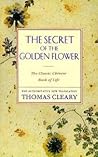
This is a manual on Taoist inner alchemy practices, particularly a meditative practice called “turning the light around.” The book has been attributed to Lü Dongbin, said to be an immortal who lived during the Tang Dynasty, though there are differing views about the manual’s actual origins. While it is nominally a Taoist manual, it also discusses the Buddhist approach extensively (and Confucian ideas to a lesser extent) such that it could be considered a Buddhist teaching as much as a Taoist one.
The Cleary translation seems to exist not merely to provide an English translation of this Chinese manual, but to combat the misunderstandings perpetrated by the earlier English translation, that of Richard Wilhelm, a translation famously associated with the psychoanalyst Carl Jung. Neither Wilhelm nor Jung had any depth of understanding of Taoist and Buddhist methods and philosophy, and Wilhelm’s grasp of the Chinese language, itself, seems to have been fairly rudimentary. (At least the Chinese of the 1600’s, which is when the edition that Wilhelm is believed to have worked from is dated.) Thus, there is a lot of peddling of the notion that the ideas of this manual were in line with twentieth century psychotherapy in ways that were really not true — either because Wilhelm was mistaken or wanted them to be true or some combination, thereof.
The translation, itself, is quite short and makes up less than half of the text length of this book. More than half consists of extensive notes as well as an Afterward. While I have complained many times about publishers padding out pamphlet length publications to make them salable at book prices, in this case I believe the “ancillary” matter is helpful to achieving a better understanding of the text. The translation itself is not only sparse but features a bit of Taoist and Buddhist arcana that is likely to be unfamiliar — even to those with some understanding of the traditions. The notes and afterward help one to comprehend this book’s ideas much better.
If you’re interested in Taoist inner alchemy or Buddhist meditative practices, this book is worth checking out. That said, it can be a bit of a tedious read, flipping between the translation and the notes to make sense of ideas that don’t readily translate.
Allons! after the great Companions, and to
   belong to them!
 They too are on the road -- they are the
   swift and majestic men -- they are the
   greatest women,
 Enjoyers of calms of seas and storms of seas,
 Sailors of many a ship, walkers of many a
   mile of land,
 Habituès of many distant countries,
   habituès of far-distant dwellings,
 Trusters of men and women, observers of
   cities, solitary toilers,
 Pausers and contemplators of tufts,
   blossoms, shells of the shore,
 Dancers at wedding-dances, kissers of
   brides, tender helpers of children, bearers
   of children,
 Soldiers of revolts, standers by gaping
   graves, lowerers-down of coffins,
 Journeyers over consecutive seasons, over
   the years, the curious years each emerging
   from that which preceded it,
 Journeyers as with companions, namely
   their own diverse phases,
 Forth-steppers from the latent unrealized
   baby-days,
 Journeyers gayly with their own youth,
   journeyers with their bearded and well-
   grain'd manhood,
 Journeyers with their womanhood, ample,
   unsurpass'd, content,
 Journeyers with their own sublime old age
   of manhood or womanhood,
 Old age, calm, expanded, broad with the
   haughty breadth of the universe,
 Old age, flowing free with the delicious
   near-by freedom of death.


 三字经 by 章炳麟

 The Secret of the Golden Flower: The Classical Chinese Book of Life by Lü Dongbin




 Tiger Riding for Beginners