FIVE WISE LINES [March 2025]

Would the world ever have been made if its maker had been afraid of making trouble?

george bernard shaw, PygMalion

Refrain from talk of others’ shortcomings; don’t rest on your strengths.
[罔谈彼短; 靡恃己长.]

Thousand Character classic [千字文]

The reasonable man adapts himself to the world: the unreasonable one persists in trying to adapt the world to himself. Therefore all progress depends on the unreasonable man.

george bernard shaw, Man and superman

A child is the most reliable measure of time. His daily growth is proof of your daily ageing and decline. The child’s gains are your losses, and the closer a child gets to anything, the farther you withdraw, as though you were tied to one another on opposite spokes of a wheel and the wheel, without your noticing it, turns. Dawn for the child is dusk for you.

Otar chiladze, A Man was going down the road

We are all dependent on one another, every soul of us on earth.

George bernard shaw, Pygmalion

Flower Mind [Free Verse]

Morning Glories
don’t feel slighted
because they bloomed
in the shadow of
Mexican Sunflowers…

Though the humans
who otherwise might
stop to admire them
can now not be
bothered to notice them.

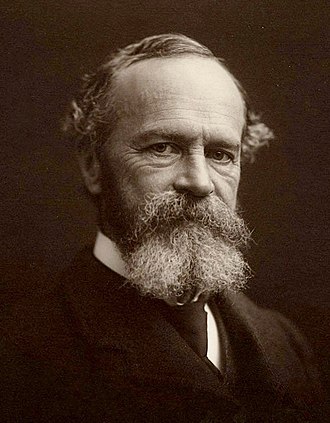
FIVE WISE LINES FROM WILLIAM JAMES [Feb. 2025]

Our view of the world is truly shaped
by what we decide to hear.

The greatest weapon against stress
is our ability to choose
one thought over another.

The art of being wise is
the art of knowing what to overlook.

We have grown literally afraid to be poor.
We despise anyone who elects to be poor
in order to simplify and save his inner life.

Whenever two people meet,
there are really six people present.
There is each man as he sees himself,
each man as the other person sees him,
and each man as he really is.

NOTABLE MENTIONS:

We may be in the Universe as dogs and cats
are in our libraries, seeing the books
and hearing the conversation,
but having no inkling of the meaning of it all.

My experience is what I agree to attend to.

Mountain Envy [Free Verse]

Ah, the mountain!
Old enough to know
When to stay quiet,
And disciplined enough
To stick to it.

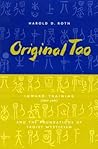
BOOKS: “Original Tao” by Harold D. Roth

Original Tao: Inward Training (Nei-yeh) and the Foundations of Taoist Mysticism (Translations from the Asian Classics)Original Tao: Inward Training (Nei-yeh) and the Foundations of Taoist Mysticism by Harold D. Roth
My rating: 5 of 5 stars

Publisher site – Columbia University Press

This book is built around a translation of an old Taoist manual called “Inward Training” (i.e. 内业,) and the book serves not only to elaborate the meaning of the twenty-six poems that make up the manual, but also to put this work in a context with respect to its place in early Taoist mysticism — which raises further questions as to what constitutes early Taoism and early Taoist mysticism. (Just as the earliest followers of Jesus didn’t think of themselves as “Christians” – at least not as we understand that term – it’s an open question as to when people started to think of themselves as Taoists and how that start relates to when people began holding a set of proto-beliefs that formed the basis of the school(s) of philosophy.)

“Inward Training” presents breathwork and meditational exercises that Roth calls “inner cultivation” — or what some have called “inner alchemy.” The book does contain the entire manual both in Traditional Chinese and an English translation, as well as a much more extensive elaboration of the teachings of the manual. The latter is necessary because, like many old manuals, sparse description, archaic language, and assumptions about common knowledge du jour make it difficult for the layman to get any depth of understanding from the manual, itself.

This is a scholarly work, which means that its readability isn’t the highest and it does dive into matters that will be arcana for non-expert readers. That said, particularly as works of academic philosophy go, its readability isn’t bad. The book is heavily annotated and offers and extensive bibliography.

If you are interested in Taoist practices of breath, meditation, and alignment, this book is well worth investigating.

View all my reviews

FIVE WISE LINES [January 2025]

“Reality is that which, when you stop believing in it, does not go away.”

Philip k. dick

“The Wu and the Yue peoples hate each other. But in the same boat in a storm, they work together like left and right hands.”

SunZi in The ART of War

“Travel changes you. As you move through this life and this world you change things slightly, you leave marks behind, however small. And in return, life – and travel – leaves marks on you. Most of the time, those marks – on your body or on your heart – are beautiful. Often, though, they hurt.”

anthony bourdain

What allows great kings and generals to win, more frequently than ordinary men, is foreknowledge.
Foreknowledge cannot be attained by spirits or deduced or calculated.”

Sunzi in The ART of war

“Only those who risk going too far can possibly find out how far one can go.”

T. S. Eliot

FIVE WISE LINES [December 2024]

Today as in ancient times
it’s hard to write a simple poem.

Mei Yaochen in Poets’ Jade Splinters

To be undefeated lies with oneself;
to be victorious lies with the enemy.

Sunzi in The ART of War (孙子兵法)

A buddha is an idle person.
He doesn’t run around after fortune and fame.
What good are such things in the end?

Bodhidharma; Bloodstream Sermon

Not what we have, but what we enjoy, constitutes our abundance.

Epicurus

Take more time, cover less ground.

Thomas Merton

BOOKS: 道德经 by 老子 [a.k.a. Daodejing by Laozi]

老子道德经校释(简体中文版): 中华传世珍藏古典文库 (Chinese Edition)老子道德经校释(简体中文版): 中华传世珍藏古典文库 by 王弼
My rating: 5 of 5 stars

Available in Traditional & Simplified Chinese [w/ multiple translations] at YellowBridge

Packed into the 81 brief chapters of this book is the core Taoist philosophy on life, human relationships, governance, and war. Most often, it offers a wisdom that turns conventional wisdom on its head, advocating for inaction over action, less over more, simplicity over complication, and for recognizing the usefulness of what isn’t.

Some of the book’s central ideas are captured in these quotes:

上善若水。水善利万物而不争. “The greatest good is like water. It benefits all without fighting.” [Ch. 8]
金玉满堂,莫之能守 “A house full of jade and gold cannot be guarded.” [Ch. 9]
知人者智,自知者明。胜人者有力,自胜者强。“He who knows others is smart; he who knows himself is enlightened. He who conquers others has power; he who conquers himself is mighty.” [Ch. 33]
柔胜刚,弱胜强。“Softness overcomes hardness; weakness overcomes strength.” [Ch. 36]
道常无为而无不为。“The Dao is constant inaction, yet nothing is left undone.” [Ch. 37]
善者,吾善之;不善者,吾亦善之;德善。“The good, I treat well; the bad, I also treat well. Yeah Virtue!” [Ch. 49]
知者不言,言者不知。“He who knows does not speak; he who speaks does not know.” [Ch. 56]
千里之行,始于足下。“The journey of a thousand li (“miles”) begins with a single step.” [Ch. 64]
天之道,不争而善胜 “The way of heaven is to win without fighting.” [Ch. 73]
信言不美,美言不信。“True words aren’t pleasing; pleasing words aren’t true.” [Ch. 81]

I think this is one of those works that should be read and reread. It may help rewire your brain in useful ways.

View all my reviews

FIVE WISE LINES [November 2024]

Inspiration enters at the border between hard work and laziness.

Lu juren in “Poets’ jade splinters” [Trans. by Barnstone and Ping in The ART Of Writing]

I will not own anything that will one day be a valuable antique.

Miyamoto musashi in “My way of walking alone” [Dokkōdō] (Trans. by Teruo machida)

A house full of gold and jade can’t be guarded.

Laozi in the DAo De jing [Ch. 9]

Writing is a struggle between presence and absence.

Lu ji in The ART of Writing [Trans. by Barnstone and ping]

The best leaders remain unknown; the next best are praised; the next best are feared, and the worst are mocked.

Laozi in dAo de Jing [Ch.17]

FIVE WISE LINES [October 2024]

If any thing is sacred the human body is sacred

walt whitman; Leaves of grass; “I sing the body electric”

Strong in their softness are the sprays of the wisteria creeper;
The pine in its hardness is broken by the weak snow.

Saying of Master Jukyo as Translated by Trevor Leggett in Zen and the Ways

When there is mutual ignorance, confidence indeed is king.

Trevor leggett; Zen and the Ways

Do not see the gate and think it is the house. The house is something which is reached by passing through and going beyond the gate.

YAgyu Munenori’s Art of War (As translated by trevor leggett in Zen and the ways)

Students of the Ways must see clearly that in an untrained man the intellect is like a barrister. It argues clearly and logically, but the aim is not truth, but to reach a predetermined conclusion.

Trevor Leggett; Zen and the Ways