BOOKS: “Tranquil Sitting” by Yin Shi Zi

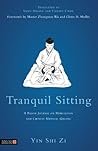
Tranquil Sitting: A Taoist Journal on Meditation and Chinese Medical QigongTranquil Sitting: A Taoist Journal on Meditation and Chinese Medical Qigong by Yin Shih Tzu
My rating: 4 of 5 stars

Publisher’s Site

This manual is an English translation of a work earlier published in Chinese. It is nominally on Taoist meditation and is written by a Taoist author, but it does include discussion of Buddhist practices as well (specifically Mahamudra.) Also, part of the author’s declared intent with this text is to write in a manner approachable to a wider audience, and because of this sect is rendered less important. So, for example, the book employs more scientific and physiological modes of explanation as opposed to meridians and other conceptual approaches from Traditional Chinese Medicine.

The book is presented in two parts. I found the first part much more beneficial and productive. Said first part is a general guide to meditation. It discusses fundamentals, theory, physiology, and how to align one’s living with a meditative practice (i.e. how diet, breathwork, sleep, etc. influence one’s practice.)

The second part consists of long and fairly detailed descriptions of the author’s experiences with both Taoist and Mahamudra meditation. I didn’t find this part useful, and I believe it may be counterproductive. Discussion of the author’s subjective experience may lead readers to get hung up on chasing identical experiences to the detriment of just practicing. It may give false ideas about “correct” and “incorrect” experiences of the meditation.

Overall, it’s a fine guide to meditation, particularly the first (i.e. larger) part. I can’t say that it breaks a lot of ground. A reader well-versed in meditation may not gain much insight from this book, but it’s as good as any to get started.

View all my reviews

BOOKS: “Sweet Tooth, Vol. 5: Unnatural Habitats” by Jeff Lemire

Sweet Tooth, Vol. 5: Unnatural HabitatsSweet Tooth, Vol. 5: Unnatural Habitats by Jeff Lemire
My rating: 5 of 5 stars

Publisher Site

This volume carries out two story arcs. The first is a self-contained flashback that offers the reader new insight into the central strangeness of this series (i.e. a plague on humanity and the development of various human-animal hybrids.) The second is the conclusion of the Volume 4 storyline in which Gus, Jepperd, and their human and hybrid traveling companions find an apparent safe haven that splits the group between those who wish to stay and those who want to continue on their original path to Alaska.

Both arcs are visceral and engaging. This is a very satisfying volume. It’s a pity that publishers are so constrained by page count because Volumes 4 and 5 combined together would be a phenomenal book (whereas Vol. 4 – as it stands – is kind of a lackluster read.) Anyone whose been to a movie in India and is familiar with the random intermission placed right in the middle of the runtime (regardless of what is going on in the story at the time) can grasp what I’m saying. It’s a little mean to break the momentum of a good story in progress. However, this volume offers all the satisfaction of resolution and conclusion — while leaving open clear routes for advancing the story overall.

I’d highly recommend this volume and that one read it closely back-to-back with Volume 4.

View all my reviews

BOOKS: “Tai-Chi Chuan in Theory and Practice” by Kuo Lien-Ying [ed. Simmone Kuo]

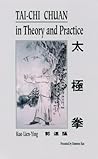
Tai-Chi Chuan in Theory and PracticeTai-Chi Chuan in Theory and Practice by Kuo Lien-Ying
My rating: 4 of 5 stars

Publisher Site

This brief book discusses Taijiquan primarily from a philosophical perspective. Though a significant amount of the book’s page-count consists of full-page pictures of various taijiquan movements, it isn’t so much a how-to book. Readers who enjoy an eclectic book that’s short and sweet but also kind of all over the place have a good chance of liking this book and gaining from its varied tidbits of wisdom. Readers who favor books with a clear organization and internal logic will probably find this to be an odd stew of short writings (essays, guides, poems, scriptural excerpts, etc.) It should be noted that not all of the writings are from Kuo Lien-Ying, himself. It includes a translation of a manual by Wang Tsung-Yue (13th Century) as well as an appendix consisting of writings from the Daodejing, Tang Dynasty poetry, and quotes from Mencius and Confucius. It also features a chapter on the I-Ching and Taiji philosophy by Kuo’s wife, Simmone Kuo. Besides the Wang manual, which is right up the alley of Kuo’s writings, it’s not clear why the other pieces were selected (not that they aren’t beneficial, but that they seem random.)

One thing I really liked about this book is that a lot of it is presented in bilingual format. For someone learning Chinese, this is quite beneficial. (Especially, given that it consists of short pieces that can be more easily consumed by a new reader.) That said, those who don’t read Chinese may see the translations as further indication of padding a pamphlet up to book scale. The monochrome photos are well-done and could definitely be of use to someone who practices taijiquan (though would not be of much use to someone new to it.)

This book is an insightful mess, make of that what you will.

View all my reviews

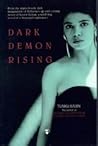
BOOKS: “Dark Demon Rising” by Tunku Halim

Dark demon risingDark demon rising by Tunku Halim
My rating: 4 of 5 stars

Author Site

On one level this is a folklore-based tale of horror, but – on another level – it is a commentary on tribal village life versus modern life in the super-tribal metropole.

The lead character, Shazral, comes from a long line of Shaman — medicine men. However, in the opening chapter we find that he has moved to the big city, Kuala Lumpur, and has become a successful lawyer. He has a nice office, a big salary, and a fashionable sportscar. He thinks he has it all. Then he’s called to return to the village to see his dying father. Son and father haven’t been on speaking terms because the father wanted Shazral to continue the Shamanic line, but Shazral wanted to escape the village and the strained familial situation that existed since his mother died during his youth. His return sets events in motion, events that will both show his beloved city life isn’t all it seems, as well as drawing him into the family business.

I enjoyed the story and think it was well-crafted and evocative. The backstory provides powerful motive, and the characters are distinctive and worthy of the reader’s consideration. There were a number of typos in the edition that I read (none were detrimental to understanding the story, but they could break the flow of reading.)

I’d recommend this book for readers interested in tales of horror rooted in folklore (in this case Malaysian folklore) and shamanism.

View all my reviews

BOOKS: “Sweet Tooth, Vol. 4: Endangered Species” by Jeff Lemire

Sweet Tooth, Vol. 4: Endangered SpeciesSweet Tooth, Vol. 4: Endangered Species by Jeff Lemire
My rating: 4 of 5 stars

Publisher Site: DC Vertigo

Heading north to solve the mystery of Gus (the titular deer-boy “hybrid” that some call Sweet Tooth, the first-known hybrid child and one who Dr. Singh believes may be integral to understanding the disease that swept through humanity at the same time hybrids started being born,) the ragtag group of hybrid kids and human chaperones runs into its first snag. The group stumbles upon a place that may offer the security and resources needed to live comfortably (i.e. for a post mega-pandemic wasteland.) This threatens to split up the group, most of which longs for the safety and sustainability that this place appears to provide. But the reader is presented crumbs of unease about this place. It feels like this sanctuary might harbor a dirty secret.

I continue to enjoy this series. I didn’t find the arc as satisfying as some of the volumes. It is a thriller, and we are given crucial new information by the book’s end, but the central question of the story arc remains unanswered. That said, the story does a fantastic job of building up internal tension as well as creating unease in the reader. If you’ve enjoyed the story so far, you will want to continue onward.

View all my reviews

BOOKS: “Language” by Xiaolu Guo

LanguageLanguage by Xiaolu Guo
My rating: 5 of 5 stars

Publisher Site

This book is excerpted from a full-length novel entitled, A Concise Chinese-English Dictionary for Lovers, and it conveys what it’s like to be a stranger in a strange land — particularly when one has only a rudimentary grasp of the local language. Specifically, the story revolves around a young Chinese woman who moves to London to pursue her studies. In London, the young woman becomes involved with an older man, and much of the story looks at how culture — and particularly language — impacts the nature of the relationship. (And, also, how being in a relationship with a native of her new home impacts her language learning.)

Perhaps the most important factor influencing whether a reader will like or loath this book is how one feels about reading broken English. Like the dialectic poetry of Paul Laurence Dunbar, this book isn’t written in grammatically correct standard English. The broken – “learner’s” – English is quite effective at conveying the struggle of language learning and how culture and language are intertwined. But if reading grammatically incorrect writing gives you a headache, then this book is not for you.

As for why this book consists of excerpts, it’s part of a series called “Vintage Minis” that consists of short (or excerpted) works from prominent authors from around the globe, generally with a straightforward unifying theme. [Vintage Classics is an imprint of Penguin Random House.] The fact that the book was an excerpt didn’t create a problem for me. The origin material is a literary fiction novel and doesn’t seem to be significantly plot-driven. It’s much more character-driven, and thus getting a limited picture doesn’t open up a lot of unanswered questions about what will come next. In other words, it felt like it could have been a full piece of short, character-driven literary fiction.

I enjoyed reading this slim volume. I think it offers interesting insight into being a language learner abroad. If you’re interested in the challenges of language and culture in an unfamiliar place, this thin book is well worth reading.

View all my reviews

BOOKS: “American Vampire, Vol. 5” by Scott Snyder

American Vampire, Vol. 5American Vampire, Vol. 5 by Scott Snyder
My rating: 5 of 5 stars

Publisher Site — DC Comics

This collection contains two separate story arcs. The first, entitled “Lord of Nightmares,” takes place in Europe and features Felicia Book reluctantly being drawn back into Vampire fighting to protect her son, Gus, from a threat created by an ominous rising force. The second, entitled “The Blacklist,” takes place in California and also centers on a woman being drawn into Vampire hunting. In this case that woman is Pearl Jones — whose husband, Henry, is in a coma, and Pearl concludes they can never be safe until the coven that is after them has been eliminated. Despite the commonalities of the two arcs, they both feel quite distinct. The first being more a slick tale of intrigue and the second one being more Hollywood noir.

There is a single-issue at the end that sets up the continuing story.

I continue to like this series. The story arcs are satisfying and action-packed. I would recommend it for comic book readers who aren’t averse to a bit of horror.

View all my reviews

BOOKS: “A Dome of Many-Coloured Glass” by Amy Lowell

A Dome Of Many Colored GlassA Dome Of Many Colored Glass by Amy Lowell
My rating: 5 of 5 stars

Project Gutenberg Page

This was Lowell’s first published collection (1912,) and my 5-stars notwithstanding, it is not everyone’s cup of tea. I think I understand why this is. If you read some of Lowell’s more popular and highly anthologized poems, you might find that this collection is unlike them in several ways. Many of those popular poems are highly imagist, emulate East Asian sparseness, and are free verse. These poems are by and large metered and rhymed verse and I would not be the first to say that they often feel conventional and pedestrian. As I was reading the final section, “Verses for Children,” I figured out what other key feature of Lowell’s poetry was largely missing from the lyric poetry and sonnets that preceded these Children’s poems — playfulness. [Fortunately, it’s on display in the kid’s poems.]
.
With all that said, there are some spectacularly evocative images presented within these poems. I particularly enjoyed poems like: “New York at Night” and “A Japanese Wood-Carving.” As I don’t have the aversion to metered verse that many poetry readers seem to have today, I wasn’t as dismayed by the collection as some readers seem to be. Though I will admit that the collection doesn’t just play it safe with form, it also infects the tone and content of the poems.

Still, I found the collection readable and pleasant reading. (But maybe this is because I like a good scavenger hunt for golden nuggets of beautiful verse.)

View all my reviews

BOOKS: “Zen and the Ways” by Trevor Leggett

Zen and the WaysZen and the Ways by Trevor Leggett
My rating: 5 of 5 stars

Open Library Page

This book is the most densely populated with interesting insights that I’ve read in some time. It’s not new, being first published in 1978, but it takes a variety of approaches to give the reader a better understanding of Zen and the application of Zen mind to martial arts and other activities that found benefit in stillness and clarity. By “the Ways,” Leggett is referring to those arts and activities benefiting from Zen, which include: tea ceremony, flower arranging, painting, poetry writing, and all manner of martial arts. [Often represented by ending “do” in Japanese.] (The latter are dealt with most extensively, but not exclusively.)

The book is arranged in six parts, the first half of which focus mostly upon Zen Buddhism and, particularly, the Kamakura school that found a huge following among warriors and other artists. Those first three chapters take a big to small approach, examining Zen from ever finer levels of detail, starting with an introduction to Zen Buddhism broadly, moving on to the Kamakura developments, and then finally focusing on one particular practice — that of Koans (stories that present riddles which the student can only “solve” in a non-intellectual fashion.)

The second half of the book investigates the ways Zen has been applied to various arts. This is where one sees the varied approaches used to explore the confluence of Zen and artistry. Part Four consists of a series of essays explaining concepts such as ri (universal truth) and ji (formal technique,) ki (vital energy,) and isshin (single-heartedness) / zanshin (lingering awareness.) Part Five consists of historic martial arts scrolls and excerpts, including Yagyu Munenori’s Art of War and Chozan Shisai’s “Tengu’s Guide to the Martial Arts.” The final part consists of stories that illustrate crucial ideas in a readable and memorable fashion.

I was extremely pleased to stumble across a copy of this book in a second-hand bookshop. I’d long ago heard a fascinating story about murders in Edo era Japan of high-level martial artists, all killed in the same manner. They never found the killer, but they figured out how the murders were done easily enough. The killer exploited his knowledge of that school’s techniques to lay a fake that exploited their own technique to create an opening. It’s a cautionary tale that drilling muscle memory is not the end-all be-all of martial arts, and that it can create its own problems. At any rate, I’d never been able to find the source… until now. There is a detailed discussion of it in this book.

For readers interested in how state of mind influences artistic performance, I’d highly recommend this book.

View all my reviews

BOOKS: “The Black Riders and Other Lines” by Stephen Crane

The Black Riders and Other LinesThe Black Riders and Other Lines by Stephen Crane
My rating: 5 of 5 stars

Project Gutenberg Site

This collection consists of sixty-eight free verse poems, most of which are short (though a small number take up more than a page.) Crane’s poetry is philosophical and often surreal. It’s poetry that’s as likely to spur rumination as it is to evoke intense emotional experience. Some may find Crane’s poetry irreverent because it takes on formal religion and dogmatic groupthink, more generally, but – for others of us – therein lies its appeal.

This collection includes “In the Desert” as well as a number of Crane’s other well-known poems.

I’d highly recommend this collection for poetry readers, particularly those who enjoy poetry of a philosophical bent.

View all my reviews