BOOKS: “The Romance of the Three Kingdoms” by Luo Guanzhong

Three Kingdoms (4-Volume Boxed Set)Three Kingdoms by Luo Guanzhong
My rating: 5 of 5 stars

Publisher Website – Penguin

The edition that I read was the Penguin abridged version that fits this sprawling epic into a single volume of a little over 600 pages. This is one of the four Great Classics of Chinese literature (along with Journey to the West, Water Margin, and Dream of the Red Chamber.) It offers a fictionalized telling of a period of Chinese history featuring a three-way civil war, especially centered upon the Han attempt to maintain its Imperial line against challengers, a fight that would ultimately end in the reunification under the Jin.

I’ve loved reading the Chinese classics. While this book and Water Margin feature massive ensembles of characters and could become clunky and cumbersome to read, they don’t because stories are told in intense battle-sized chunks and with a profound capacity to build character hooks that maintain clarity despite so many characters.

I would break this book up into three parts. The first (and by far the bulk of the story) focuses on a trio of great warriors that form a kind of blood-brother pact: Xuande, Guan Yu, and Zhang Fei. Under Xuande’s leadership, these men fight to keep the Han imperial line intact. (It’s fair to say it could also be seen as focusing on the opposition to these men, notably Cao Cao.) The next bit continues the action as the masterful strategist, Kong Ming, tries to keep the wheels rolling on Xuande’s army after the dramatic deaths of the aforementioned trio, and finally there is a section in which it is as though all the great warriors are gone, resulting in an inevitable reunification as there are no longer those who can fight insurmountable odds. As I describe it, it might seem anticlimactic, but it is far so, but I would count it a tragedy.

To me, this book read more like historical fiction than did Water Margin, the latter (also excellent) is almost like fantasy: its characters are so much larger than life as to be veritably superhuman. That said, this novel does feature some magic, but the characters feel much more life-sized — if not without a measure of grandiosity.

I’d highly recommend this book for readers of historical fiction. It’s highly engaging and readable, despite being long and of epic of proportions.

View all my reviews

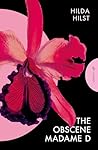
BOOKS: “The Obscene Madame D” by Hilda Hilst

The Obscene Madame DThe Obscene Madame D by Hilda Hilst
My rating: 4 of 5 stars

Publisher Site – Pushkin Classics

Release Date: May 27, 2025

This strange novella features a lot of stream-of-consciousness exchanges between the lead and her common-law spouse / lover. Hille, the protagonist, is a woman who’s decided to withdraw from her normal life and live a celibate, hermetic existence in a recess under the stairs of the home she shares with Ehud (her lover / long-time partner.)

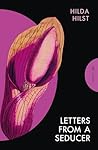
It is a thought-provoking and philosophical work and will be most of interest to readers who like such books. On the other hand, it isn’t likely to have much appeal for readers of commercial fiction. It’s not story-driven and isn’t even deeply character-driven. [Except in the sense of showing thought processes that encourage the reader to drill down into the character’s psyche.] This book has been placed in the genre of (and titled as) erotica (or even pornography,) but I would say that it is much less accurately defined as such than other works of that category, including Hilst’s “Letters from a Seducer.” This isn’t to say the book doesn’t use graphic language or mention past sexual activity, but it’s not erotic at the core. It’s not shy about sex or “vulgar language” by any means, but it is a book about a woman who has given up sex along with other activities of ordinary life.

Ultimately, I’d recommend this book for readers of psychological and philosophical literary fiction. It is not intensely readable as a story and is not intensely erotic as erotica, but it does keep a curious person wondering about the motives and future of Hille.

View all my reviews
BOOKS: “How to Fight Tough” by Jack Dempsey

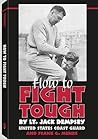
How to Fight ToughHow to Fight Tough by Jack Dempsey
My rating: 5 of 5 stars

Read online at Archive.org

This book was put out by the Coast Guard during World War II as a commando fighting manual. The lead on the project was heavyweight boxing champion Jack Dempsey, aided by a small team of others — all with varied bona fides in Combatives.

This is a fun book to read. It’s loaded with 1940’s slang, over-the-top reminders to fight tough and mean, and jokes that — while dated — still amuse with their quirky language. Seriously, the voice in my head was playing in Trans-Atlantic dialect (1940’s radio announcer voice) or as James Cagney playing a gangster the whole time I was reading this book.

That said, while the text was campy, the actual techniques are solid. The book consists of eighteen lessons that are built on well-established grappling and submission techniques such as hadaka jime (rear naked choke.) Also, while there is often only one (or — at most — a few) photos per technique, they seemed to put some effort into doing them conscientiously. (And they are almost full-page shots, so one can actually see a bit of detail.) The techniques include: unarmed v. various unarmed attacks, unarmed v. knife, unarmed v. gun (holstered, and front and rear approaches,) and unarmed v. bayonet.

I’d highly recommend reading this book. It’s a quick and amusing read with some useful techniques inside.

View all my reviews

BOOKS: “Kokoro” by Natsume Sōseki 

KokoroKokoro by Natsume Sōseki
My rating: 5 of 5 stars

Publisher Site – Pushkin Press

I first read this many years ago in college for a course on Japanese culture. I didn’t have a good reading experience then because this novel is too quiet to hold the concentration of a fidgety mind. However, on rereading it, I found it to be an intense and moving reading experience. It’s a brutally realistic piece of literary fiction, featuring quiet and unexpressive characters who are never-the-less experiencing a kind of agony of living.

The book’s beginning revolves around the relationship between a young man just finishing college and an older, somewhat hermetic, man. By “relationship” I’m not talking about a sexual or otherwise intimate interaction. This strange relationship might best be made sense of by the fact that the young man calls the older, “Sensei” (i.e. “teacher.”) So, it is largely an informal mentor-mentee relationship, but the reader may not really understand why “Sensei” is a reasonable honorific for the old man until the end. The latter portion of the book is Sensei’s “confession,” or the telling of formative events of his life. It is in this confession that we learn that Sensei is not so much a teacher by virtue of conveying abstract scholarly information but rather he teaches by showing the young man his own life story as a cautionary tale.

You must be in a quiet state of mind to keep attuned to this book, but – if you can do so – it is well worth reading. I’d highly recommend it for readers of literary fiction.

View all my reviews

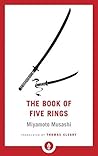
BOOKS: “The Book of Five Rings” by Miyamoto Musashi [trans. by Thomas Cleary] [w/ Yagyu Munenori’s “Book of Family Traditions”]

The Book of Five Rings: A Classic Text on the Japanese Way of the Sword (Shambhala Pocket Library)The Book of Five Rings: A Classic Text on the Japanese Way of the Sword by Miyamoto Musashi
My rating: 5 of 5 stars

Publisher Site – Shambhala Publications

This edition, i.e. The Shambhala Pocket Library edition, contains two guides to strategy, tactics, and philosophy of combat by famous early Edo Period swordsmen. The titular work is Miyamoto Musashi’s The Book of Five Rings, but the volume also contains Yagyu Munenori’s The Book of Family Traditions. The naming of the book is meant to capitalize on the continuing popularity of Musashi, who remains well-known to this day not only because of his own works and legend, but because of an afterlife in pop culture that ranges from Eiji Yoshikawa’s novel to a recent Netflix animated series. That said, one shouldn’t conclude Yagyu Munenori was some sort of slouch. He was, in fact, a martial arts teacher to the Shogun’s son, and he founded a branch of his family’s martial arts school that continues to this day.

It is interesting to see these two guides back-to-back, being by authors whose lifespans largely overlapped, though – in other ways – their lives were quite different. While there is some conceptual overlap in these guides, the two definitely show two very different minds at work, Musashi the pragmatic eccentric and Yagyu the Zen philosopher of noble standing.

Miyamoto Musashi is probably the most famous swordsman in Japan’s history. Oddly enough, he’s not known for his experience in battle (he lived at the tail end of the Warring States period and was only in a couple battles), but – rather – for his 62 duels. The Book of Five Rings and other works he left behind are certainly important factors in his continuing fame. Musashi was a bit of a renaissance man: painter, poet, and sculptor in addition to a swordsman. He also left behind a school of swordsmanship, Niten Ichi-ryū.

The Book of Five Rings is divided into five parts: earth scroll, water scroll, fire scroll, wind scroll, and void scroll.

The earth scroll provides an overview of martial science and an introduction to Musashi’s school, which is noted for its simultaneous use of both the large and short sword. A section is devoted the rhythm of martial arts, a crucial topic. It also includes what might be considered Musashi’s 9-point budō kun (a list of warrior precepts.)It’s worth mentioning a couple of these:
#7 Become aware of what is not obvious.
#9 Do not do anything useless.

The Water scroll describes Musashi’s approach to swordsmanship. It covers a range of elements of a martial art including footwork, the focus of one’s eyes, physical posture, mental posture, techniques, and approaches to cutting and thrusting.

The Fire scroll deals with the strategic or interactive aspects of the battle.

The Wind scroll explores other martial arts. Musashi discusses martial arts that use an unusually long sword, an atypically short sword, that focus on powerful strikes, and those that focus on many rapid strikes. He contrasts other martial arts with his own on subjects such as their focus with the eyes and their footwork.

The void scroll deals with, well, emptiness. It’s actually a short wrap-up.

Yagyu’s guide is much more philosophical and mind-centric. It’s not that Musashi doesn’t deal with such topics, but he also devotes considerable space to more practical nuts and bolts of swordsmanship and strategy. It’s also true that Yagyu gets into technical considerations such as control of distancing (if in a bit more poetic way than Musashi.) One can get a feel for the nature of Yagyu’s Book of Family Traditions [on the Art of War] by seeing how it is organized into three parts: “The Killing Sword,” “The Life-Giving Sword,” and “No Sword.” The latter two indicating the author’s belief in the importance of not equating warrior and killer (nor winning with killing) as well as not fixating on the sword.

These two men had great insight into strategy and the tactics of swordsmanship, their guides are worth being read and reread. And the two authors do offer two intriguingly different approaches to a similar subject.

View all my reviews

BOOKS: 道德经 by 老子 [a.k.a. Daodejing by Laozi]

老子道德经校释(简体中文版): 中华传世珍藏古典文库 (Chinese Edition)老子道德经校释(简体中文版): 中华传世珍藏古典文库 by 王弼
My rating: 5 of 5 stars

Available in Traditional & Simplified Chinese [w/ multiple translations] at YellowBridge

Packed into the 81 brief chapters of this book is the core Taoist philosophy on life, human relationships, governance, and war. Most often, it offers a wisdom that turns conventional wisdom on its head, advocating for inaction over action, less over more, simplicity over complication, and for recognizing the usefulness of what isn’t.

Some of the book’s central ideas are captured in these quotes:

上善若水。水善利万物而不争. “The greatest good is like water. It benefits all without fighting.” [Ch. 8]
金玉满堂,莫之能守 “A house full of jade and gold cannot be guarded.” [Ch. 9]
知人者智,自知者明。胜人者有力,自胜者强。“He who knows others is smart; he who knows himself is enlightened. He who conquers others has power; he who conquers himself is mighty.” [Ch. 33]
柔胜刚,弱胜强。“Softness overcomes hardness; weakness overcomes strength.” [Ch. 36]
道常无为而无不为。“The Dao is constant inaction, yet nothing is left undone.” [Ch. 37]
善者,吾善之;不善者,吾亦善之;德善。“The good, I treat well; the bad, I also treat well. Yeah Virtue!” [Ch. 49]
知者不言,言者不知。“He who knows does not speak; he who speaks does not know.” [Ch. 56]
千里之行,始于足下。“The journey of a thousand li (“miles”) begins with a single step.” [Ch. 64]
天之道,不争而善胜 “The way of heaven is to win without fighting.” [Ch. 73]
信言不美,美言不信。“True words aren’t pleasing; pleasing words aren’t true.” [Ch. 81]

I think this is one of those works that should be read and reread. It may help rewire your brain in useful ways.

View all my reviews

BOOKS: “Buddha Jumps Over the Wall” by Ying Chang Compestine

Buddha Jumps over the Wall, and Other Curiously Named Classic Chinese Dishes: A Graphic Cookbook—26 Recipes & StoriesBuddha Jumps over the Wall, and Other Curiously Named Classic Chinese Dishes: A Graphic Cookbook—26 Recipes & Stories by Ying Chang Compestine
My rating: 5 of 5 stars

Publisher’s Site – Chronicle Books

Cookbooks don’t get more interesting than this. As the title suggests, the author selected dishes that have colorful names (and often histories or folklore to match) and presents lessons in culinary history as well as teaching the reader how to make each dish. The graphic novel format conveys these stories compactly and with a bit of added liveliness. The graphic novel approach is also used to “demonstrate” the preparation process — in lieu of photographs.

In addition to the twenty-six recipes (5 appetizers, 16 main course, and 5 desserts,) the book has five appendices and some front matter to both help readers who are entirely new to Chinese cooking as well as those who’d like a bit more depth of culinary cultural insight. (I should point out that the book looks at Chinese food broadly, including items like Chop Suey and Fortune Cookies that developed outside of China, and either don’t exist within China or have subsequently been introduced from foreign lands.)

If you are interested in learning to cook Chinese food, or are interested in Chinese culinary history and culture, I’d highly recommend this book.

View all my reviews

BOOKS: “Nightwing, Vol. 1: Leaping into the Light” by Tom Taylor

Nightwing, Vol. 1: Leaping into the LightNightwing, Vol. 1: Leaping into the Light by Tom Taylor
My rating: 5 of 5 stars

Publisher Site – DC Comics

As in a lot of the Batman stories, in this volume, Nightwing (Dick Grayson) is fighting a two-front war. On the one hand, there is a mysterious central villain du jour, Heartless — an augmented masked criminal who is killing in impoverished neighborhoods by (literally) stealing his victims’ hearts. Then, on the other hand, there is the usual systematic corruption and organized crime of his chosen city, Blüdhaven. These two fights bump into each other here and there but are largely independent of one other (at least as far as one can tell in this, the first, volume of a run.) Barbara Gordon and Tim Drake / Robin participate in the story, but other than that the only hero appearances are cameos.

I enjoyed the pacing and emotional arc of this story. My reading pleasure surprises even me because I think I would ordinarily feel the book had a poor resolution to hook ratio. (i.e. I would feel that not enough was resolved to make this feel like as satisfactory standalone story.) However, there was a resolution that offered satisfaction, but it was just not what I (or -probably- the typical reader) would think of as a normal comic book resolution. (i.e. It was not a resolution achieved by kicking and punching, but rather by soul-searching.)

At any rate, I’d highly recommend this book for comic book readers.

View all my reviews

BOOKS: “Chinese Grammar Wiki BOOK: Elementary” ed. by John Pasden

Chinese Grammar Wiki BOOK: ElementaryChinese Grammar Wiki BOOK: Elementary by John Pasden
My rating: 5 of 5 stars

Publisher Site

Confronted with a vast sea of Chinese grammar texts, this is the series I chose, and I’ve been happy with my decision. This, the beginner level grammar guide, is reasonably priced, logically organized, easy to use, and has all one needs without time-wasting excesses.

The core of the book consists of 135 grammar points (40 “A1” level and 95 “A2” level.) For each point there is a clear but simple explanation of the rule, a formulaic statement of said rule [an easy to find timesaver when reviewing,] a number of examples (with Chinese characters, pinyin, and an English translation) and any cautions to consider (i.e. common mistakes, ways Chinese grammar differs from English, and common exceptions to the rule.) The examples used simple and common words and phrases to drill basic and useful vocabulary.

This book is organized to put bite-sized chunks of learning at hand so that one can do more or less, depending upon one’s schedule.

I’d recommend this book for anyone looking for a basic Chinese Grammar text.

View all my reviews

BOOKS: “The Creature Commandos” by J.M. DeMatteis, et. al.

The Creature CommandosThe Creature Commandos by J.M. DeMatteis
My rating: 4 of 5 stars

Publisher Site – DC

Having recently heard about the impending animated series being made under James Gunn’s aegis, I read this book to learn who, exactly, were the “Creature Commandos.” This volume collects eighteen issues of “Weird War Tales” from the 1980’s and is where this superhero team got its start. It’s not a complicated premise: a team consisting of characters based on classic horror figures is assembled to carry out challenging missions on behalf of Allied powers during World War II. It should be pointed out that these aren’t the original horror characters, but rather were mostly made in the lab using “science.” The core team of Lucky Taylor (Frankenstein’s Monster-like,) Sgt. Velcro (Dracula-like,) and Griffith (a Werewolf) were all produced in such a way by “Project M.” A fourth member of the team, Dr. Medusa (Myrra Rhodes,) got her powers in a laboratory accident (yes, this wasn’t exactly sophisticated storytelling.) An occasional fifth member J.A.K.E., the robotic infantryman, appears in only a few issues.

This collection is definitely from another era. It is written with an audience of children in mind. It’s not just the “science” that lacks cleverness, but also much of the dialogue and some of the story elements. It is also different in that there is no overarching story continuity. Each episode is standalone. This is probably in part because the Creature Commandos didn’t have their own title at this point and were appearing in “Weird War Tales.” In early issues there is a fair amount of repetitive exposition to catch new readers up, but that became less prominent as the series progressed.

Having said all that, many of the stories are compelling and — despite the campiness — the authors do succeed in making the reader sympathize with the core group and their plight as humans turned monster. My only complaint about character development would be with respect to the team’s leader, Lt. Shrieve. I’m sure they were aiming for “gruff, war-hardened, but fundamentally decent,” but through the first three-fourths of these comics Shrieve is completely detestable and has no redeeming value whatsoever. The authors did start to make course corrections toward the end, planting seeds to make Shrieve less loathsome, to make him someone that you can understand (despite his rough edges) why his team might save him instead of fragging him. I suspect that they wanted to make the most physiologically human character the least humane of the characters, but they took it too far.

All and all, I found this collection enjoyable to read — despite being juvenile and camp — and am looking forward to what they will do in the animated TV series. [Note: It is a different slate of characters and is otherwise updated to appeal to an adult audience, but – I suspect – draws from the original source material in some ways.]

View all my reviews