BOOKS: “A Short Stay in Hell” by Steven L. Peck

A Short Stay in HellA Short Stay in Hell by Steven L. Peck
My rating: 5 of 5 stars

Publisher Site: Strange Violin Editions

If you enjoy books like Joseph Heller’s Catch-22 or Douglas Adams’ The Hitchhiker’s Guide to the Galaxy this book will probably be right up your alley. It may not be as unrelentingly (and hilariously) absurd as H2G2, but it’s clever, amusing, and thought-provoking.

The premise is that a devout Christian finds himself in hell because it turns out that Zoroastrianism was actually the one true religion. Fortunately, Zoroastrian hell is neither as grim nor (perhaps, ironically) as fire & brimstone-oriented as the Biblical version, but it is tedious, demoralizing, and — while it might not last forever –it lasts long enough to seem like forever.

Jorge Luis Borges fans (such as myself) will find a nod to his work in the shape of said hell.

I’d highly recommend this book for readers of irreverent and humorous literary fiction. It’s funny. It’s clever. And it’s a quick read.

View all my reviews

BOOKS: “Wen-Tzu” Trans. by Thomas Cleary

Wen-TzuWen-Tzu by Lao-Tzu
My rating: 5 of 5 stars

Publisher Site – Shambhala

This work is presented as “further thoughts of Laozi [老子].” Readers of the Dàodé jīng [道德经] will recognize many a familiar statement of that work, but this book is much more extensive and detailed. I say “presented as” because scholars no longer believe this was a product of Laozi and his lifetime (if such an individual ever existed.) For one thing, the book seems more syncretic than the Dàodé jīng, that is to say there are points at which it sounds strikingly Confucian — rather than purely Taoist.

As with the Dàodé jīng the Wénzǐ [文子] covers a lot of ground from metaphysics to individual ethics to political philosophy, but this book has more room to sprawl on each subject.

As with other Cleary translations, it’s a pretty readable translation.

I’d recommend it for readers interested in Chinese Philosophy.

View all my reviews

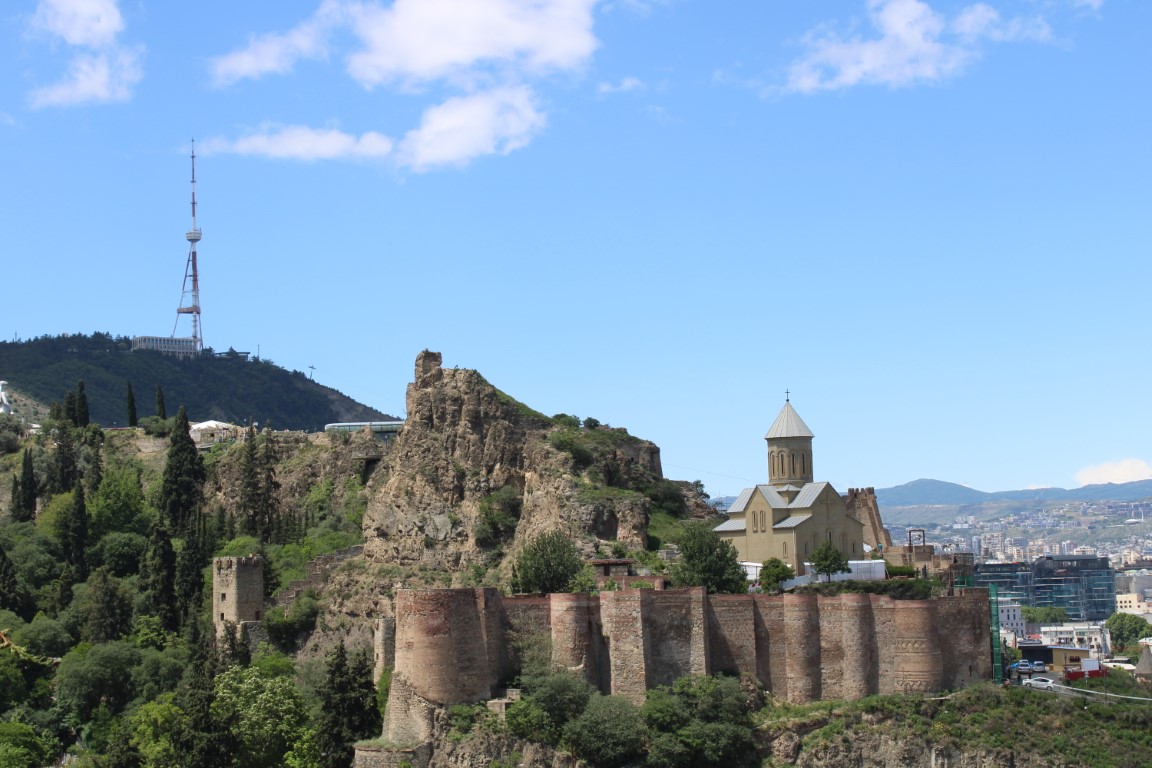
DAILY PHOTO: Narikala Fortress from Tabor Monastery

Image

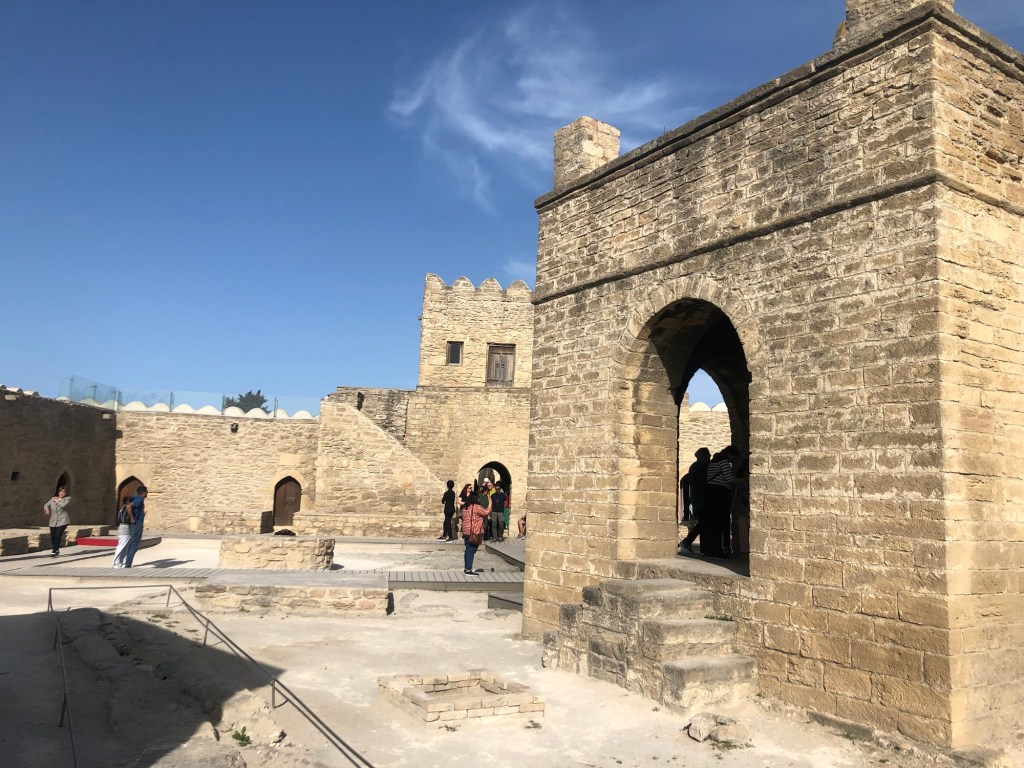
DAILY PHOTO: Surakhani Zoroastrian Temple

DAILY PHOTO: Gangtian Temple, Hualien

“To Tirzah” by William Blake [w/ Audio]

Whate'er is Born of Mortal Birth
Must be consumed with the Earth
To rise from Generation free:
Then what have I to do with thee?

The Sexes sprung from Shame & Pride,
Blow'd in the morn; in evening died;
But Mercy chang'd Death to Sleep;
The Sexes rose to work & weep.

Thou, Mother of my Mortal part,
With cruelty didst mould my Heart,
And with false self-deceiving tears
Didst bind my Nostrils, Eyes, & Ears:

Didst close my Tongue in senseless clay,
And me to Mortal Life betray.
The Death of Jesus set me free:
Then what have I to do with thee?

“An Ancient Proverb” by William Blake [w/ Audio]

Remove away that black'ning church:
Remove away that marriage hearse:
Remove away that man of blood:
You'll quite remove the ancient curse.

DAILY PHOTO: Immaculate Conception Church of Panjim

Picture Horse [Lyric Poem]

Stacks and stacks
of wooden plaques:
Prayers on front,
Art on the back.

Each a wish
and a dream?
More an expression,
or so it seems.

Whatever prayer
may be writ,
There’s always
something
more to it.

A need to show
one’s unique soul:
To tell the world
that one is whole.

A life reduced
to a shingle:
Multitudes,
to a single.

BOOKS: “The Varieties of Religious Experience” by William James

The Varieties of Religious Experience: A Study in Human NatureThe Varieties of Religious Experience: A Study in Human Nature by Dr. William James
My rating: 5 of 5 stars

Project Gutenberg — Free Online

This book is now more than 120 years old and yet is still widely read and is still provoking thought about the nature of religious experiences and how they should be considered by academia. The book is a write-up of a series of twenty lectures that the famous American Philosopher-Psychologist, William James, delivered at the University of Edinburgh in 1901-02.

There are a few things that impressed me about this book. First, James was skilled with language and clever in conveying ideas, resulting in a good bit of quotable material and stimulating ideas.

Second, James’s writings about Eastern practices and philosophies were impressively clear and faithful. In those days, there wasn’t a lot translated from Sanskrit, Pali, etc. and what had been translated was frequently done by outside academicians with no firsthand experience with Eastern systems — e.g. Hinduism or Buddhism. This meant that the writings about Eastern Philosophy and practices from those days were often contorted by a Western / Abrahamic frame in a way that distorted the true nature of those traditions. James seems to have gained at least some of his understanding from someone with enough practical experience to produce accurate descriptions. Furthermore, James avoids spewing myths and misapprehensions by being humble in stating what is merely his understanding. It should be noted that James does write much more about Abrahamic traditions (as one would expect given his direct experience,) but it’s hard to plumb the depths of mysticism without looking to the East where such practices reached such advanced states.

Finally, I was impressed with James’s ability to walk the line of believer and scholar in a way that was fair both to religion and the religious but also to the scientifically-minded rational sceptic. So much of what I read on the subject takes a vitriolic tone of strict opposition and often unfairly depicts the positions of the other side (to be fair, usually this seems to be because the critic doesn’t understand the views of the other side and so produces an interpretation of the opposing ideas conforming to their own worldview, rather than just lying to win.) [As was attributed to James as well as others, “…people think they are thinking when they are merely rearranging their prejudices.”]

I’d highly recommend this book for readers interested in philosophy of religion and the psychology of religious experience.

View all my reviews