Anytime that such an encounter doesn’t start with a socially-programmed question [e.g. “Where are you from?” or “How ya doin’?”] or attempt to drag me into a communal bitching session [e.g. “Man, this line sure is slow!”] it has the potential to be a great interaction.
Unfortunately, encounters that meet both criteria are so rare that I’m usually caught off-guard. It’s like seeing a leprechaun or a unicorn, one doesn’t have time to process it before the moment is gone. Still, there have been a few over the years — conversations on topics of mutual interest, mostly.
Publisher Site – Shambhala
This work is presented as “further thoughts of Laozi [老子].” Readers of the Dàodé jīng [道德经] will recognize many a familiar statement of that work, but this book is much more extensive and detailed. I say “presented as” because scholars no longer believe this was a product of Laozi and his lifetime (if such an individual ever existed.) For one thing, the book seems more syncretic than the Dàodé jīng, that is to say there are points at which it sounds strikingly Confucian — rather than purely Taoist.
As with the Dàodé jīng the Wénzǐ [文子] covers a lot of ground from metaphysics to individual ethics to political philosophy, but this book has more room to sprawl on each subject.
As with other Cleary translations, it’s a pretty readable translation.
I’d recommend it for readers interested in Chinese Philosophy.
To surrender to my ignorance. If one can never know exactly what game one is playing, it becomes much easier to avoid getting worked up about whether one is playing it right or whether one will “win” or not.
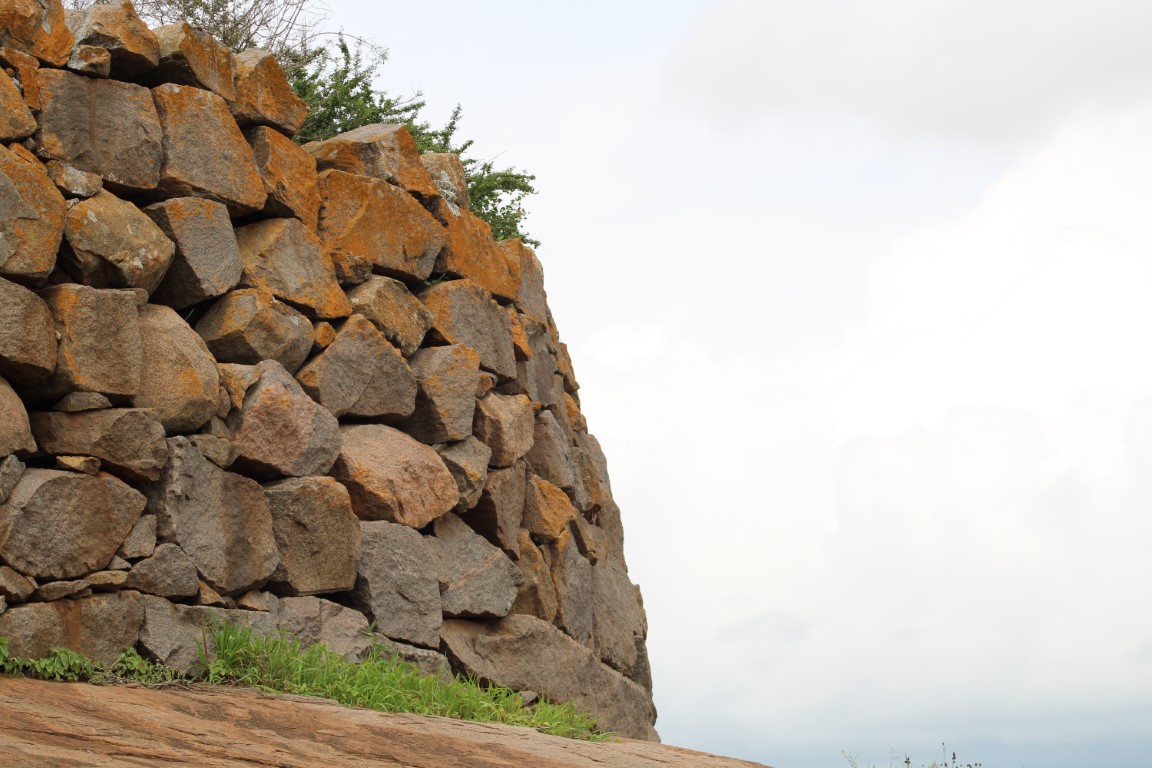
Something there is that doesn't love a wall,
  That sends the frozen-ground-swell under it,
  And spills the upper boulders in the sun;
  And makes gaps even two can pass abreast.
The work of hunters is another thing:
  I have come after them and made repair
  Where they have left not one stone on a stone,
  But they would have the rabbit out of hiding,
  To please the yelping dogs. The gaps I mean,
  No one has seen them made or heard them made,
  But at spring mending-time we find them there.
 I let my neighbor know beyond the hill;
  And on a day we meet to walk the line
  And set the wall between us once again.
 We keep the wall between us as we go.
 To each the boulders that have fallen to each.
 And some are loaves and some so nearly balls
  We have to use a spell to make them balance:
  'Stay where you are until our backs are turned!'
  We wear our fingers rough with handling them.
 Oh, just another kind of out-door game,
  One on a side. It comes to little more:
  There where it is we do not need the wall:
  He is all pine and I am apple orchard.
 My apple trees will never get across
  And eat the cones under his pines, I tell him.
 He only says, 'Good fences make good neighbors.'
 Spring is the mischief in me, and I wonder
  If I could put a notion in his head:
  'Why do they make good neighbors? Isn't it
  Where there are cows? But here there are no cows.
 Before I built a wall I'd ask to know
  What I was walling in or walling out,
  And to whom I was like to give offense.
 Something there is that doesn't love a wall,
  That wants it down.' I could say 'Elves' to him,
  But it's not elves exactly, and I'd rather
  He said it for himself. I see him there
  Bringing a stone grasped firmly by the top
  In each hand, like an old-stone savage armed.
 He moves in darkness as it seems to me,
  Not of woods only and the shade of trees.
 He will not go behind his father's saying,
  And he likes having thought of it so well
  He says again, 'Good fences make good neighbors.'
I don’t have a favorite restaurant, but I do have a type: mom-and-pop hole-in-the-wall that only does a few things but does them all exceedingly well. I don’t care for frou-frou places, and it drives me batty when a place has a thirty-page menu and you have to play the “guess what they actually have” game. I always loved watching Monty Python’s “Cheese Shop Sketch,” but have loathed reprising the John Cleese part in so many restaurants.
Chains have their place in the travel pipeline or in a busy schedule, but I generally prefer a novel experience over a cookie cutter one.
My wife, movement, new & interesting ideas, play, and epiphanies.
[I’m presuming we’re using the word “thing” in the broadest possible sense — as a stand in for any noun. If it is meant in the narrower common usage of trinkets, gewgaws, baubles, and tchotchkes, then I’ve got nothing.]









 Tiger Riding for Beginners