Bifurcated [Haiku]

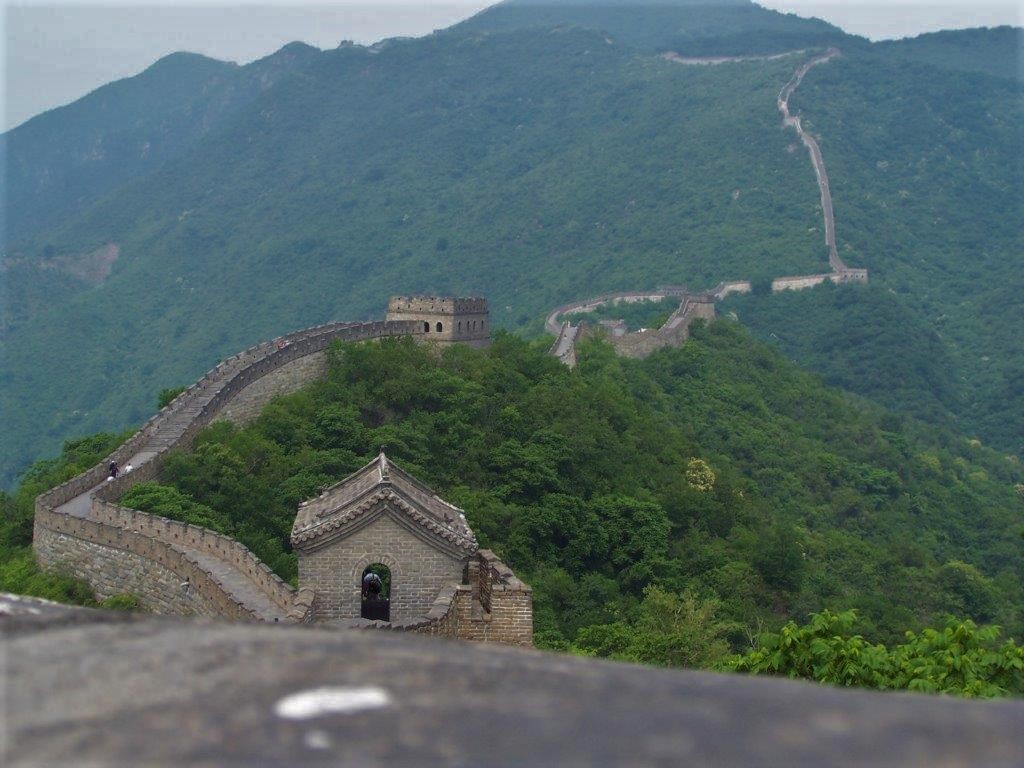
body in the temple yard;
mind on distant mountains.

Be Water [Free Verse]

The floating feather
that eludes my grasp
isn't haughty or gleeful.

It just rolls, slips, glides,
and is gone.

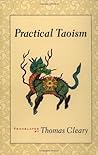
BOOKS: “Practical Taoism” ed. / trans. by Thomas Cleary

Practical TaoismPractical Taoism by Thomas Cleary
My rating: 4 of 5 stars

Publisher Site – Shambhala

Like a number of Eastern systems, Taoism is thought of in many different ways by many different people, and a few of those ways are fairly “out there.” To some, it is a philosophy. To others, it is a religion. To still others, it is a style of magic. By “practical Taoism” Cleary is suggesting that the many varied sources from which he drew snippets, assembling them together to make a coherent whole, reflect some of the more down-to-earth philosophy of “inner alchemy.” [Not to be confused with the “alchemy” in which lead is turned to gold, but sharing the central idea that methods exist to convert a low-quality entity into a high-quality one, but in the case of inner alchemy these methods are breathwork, meditation, and movement techniques that improve one’s vitality as a human being.]

The good news is that Cleary does collect a group of ideas that seem less arcane and cryptic than the average Taoist inner alchemy manual content (or, at least, they are translated so as to seem so.) The bad news is that the average Taoist inner alchemy manual was apparently pretty darn arcane and cryptic, such that even this selection isn’t exactly clear as a limpid stream. Some parts of it are straightforward, but one still has some work to do to make sense of what the original authors were trying to get across. [Some readers will enjoy that more than others.]

Presumably owing to the attempt to simplify through selection and translation, the book isn’t annotated, nor does it feature much ancillary material besides a relatively lengthy introduction to setup the reader with a contextual backdrop. So, there is not a lot of help to clarify ideas that are murky. (I do recognize the translator’s challenge in that there is only so much he can do to try to clarify ideas without imposing upon the authors’ intensions.)

I enjoyed, and learned from, this book — even if I didn’t always feel I was reading a “practical” guide to self-betterment.

View all my reviews

BOOKS: “Original Tao” by Harold D. Roth

Original Tao: Inward Training (Nei-yeh) and the Foundations of Taoist Mysticism (Translations from the Asian Classics)Original Tao: Inward Training (Nei-yeh) and the Foundations of Taoist Mysticism by Harold D. Roth
My rating: 5 of 5 stars

Publisher site – Columbia University Press

This book is built around a translation of an old Taoist manual called “Inward Training” (i.e. 内业,) and the book serves not only to elaborate the meaning of the twenty-six poems that make up the manual, but also to put this work in a context with respect to its place in early Taoist mysticism — which raises further questions as to what constitutes early Taoism and early Taoist mysticism. (Just as the earliest followers of Jesus didn’t think of themselves as “Christians” – at least not as we understand that term – it’s an open question as to when people started to think of themselves as Taoists and how that start relates to when people began holding a set of proto-beliefs that formed the basis of the school(s) of philosophy.)

“Inward Training” presents breathwork and meditational exercises that Roth calls “inner cultivation” — or what some have called “inner alchemy.” The book does contain the entire manual both in Traditional Chinese and an English translation, as well as a much more extensive elaboration of the teachings of the manual. The latter is necessary because, like many old manuals, sparse description, archaic language, and assumptions about common knowledge du jour make it difficult for the layman to get any depth of understanding from the manual, itself.

This is a scholarly work, which means that its readability isn’t the highest and it does dive into matters that will be arcana for non-expert readers. That said, particularly as works of academic philosophy go, its readability isn’t bad. The book is heavily annotated and offers and extensive bibliography.

If you are interested in Taoist practices of breath, meditation, and alignment, this book is well worth investigating.

View all my reviews

“Difference” by Stephen Vincent Benét [w/ Audio]

My mind's a map. A mad sea-captain drew
it
Under a flowing moon until he knew it;
Winds with brass trumpets, puffy-cheeked
as jugs,
And states bright-patterned like Arabian
rugs.
"Here there be tygers." "Here we buried
Jim."
Here is the strait where eyeless fishes swim
About their buried idol, drowned so cold
He weeps away his eyes in salt and gold.
A country like the dark side of the moon,
A cider-apple country, harsh and boon,
A country savage as a chestnut-rind,
A land of hungry sorcerers.
Your mind?

--Your mind is water through an April
night,
A cherry-branch, plume-feathery with its
white,
A lavender as fragrant as your words,
A room where Peace and Honor talk like
birds,
Sewing bright coins upon the tragic cloth
Of heavy Fate, and Mockery, like a moth,
Flutters and beats about those lovely
things.
You are the soul, enchanted with its
wings,
The single voice that raises up the dead
To shake the pride of angels.
I have said.

BOOKS: “The Secret of the Golden Flower” ed. / trans. by Thomas Cleary

The Secret of the Golden Flower: The Classical Chinese Book of LifeThe Secret of the Golden Flower: The Classical Chinese Book of Life by Lü Dongbin
My rating: 4 of 5 stars

Online – Archive.org

This is a manual on Taoist inner alchemy practices, particularly a meditative practice called “turning the light around.” The book has been attributed to Lü Dongbin, said to be an immortal who lived during the Tang Dynasty, though there are differing views about the manual’s actual origins. While it is nominally a Taoist manual, it also discusses the Buddhist approach extensively (and Confucian ideas to a lesser extent) such that it could be considered a Buddhist teaching as much as a Taoist one.

The Cleary translation seems to exist not merely to provide an English translation of this Chinese manual, but to combat the misunderstandings perpetrated by the earlier English translation, that of Richard Wilhelm, a translation famously associated with the psychoanalyst Carl Jung. Neither Wilhelm nor Jung had any depth of understanding of Taoist and Buddhist methods and philosophy, and Wilhelm’s grasp of the Chinese language, itself, seems to have been fairly rudimentary. (At least the Chinese of the 1600’s, which is when the edition that Wilhelm is believed to have worked from is dated.) Thus, there is a lot of peddling of the notion that the ideas of this manual were in line with twentieth century psychotherapy in ways that were really not true — either because Wilhelm was mistaken or wanted them to be true or some combination, thereof.

The translation, itself, is quite short and makes up less than half of the text length of this book. More than half consists of extensive notes as well as an Afterward. While I have complained many times about publishers padding out pamphlet length publications to make them salable at book prices, in this case I believe the “ancillary” matter is helpful to achieving a better understanding of the text. The translation itself is not only sparse but features a bit of Taoist and Buddhist arcana that is likely to be unfamiliar — even to those with some understanding of the traditions. The notes and afterward help one to comprehend this book’s ideas much better.

If you’re interested in Taoist inner alchemy or Buddhist meditative practices, this book is worth checking out. That said, it can be a bit of a tedious read, flipping between the translation and the notes to make sense of ideas that don’t readily translate.

View all my reviews

The Cave [Free Verse]

Jagged window 
on the world:
All light and sound
deadened,
but from one opening --
The cave mouth.

From behind
nothing stirs,
nothing glows,
shadows are subsumed
by shadow.

Eyes and mind
frame the cave mouth,
making the mind
a cave within a cave:
layered silence
layered remoteness,
and all input of a single,
common source.

How many caves deep might
this thing go?

Piano Mind [Haiku]

snow has fallen.
cars of many colors, all white:
a piano-esque lot.

BOOKS: “Tranquil Sitting” by Yin Shi Zi

Tranquil Sitting: A Taoist Journal on Meditation and Chinese Medical QigongTranquil Sitting: A Taoist Journal on Meditation and Chinese Medical Qigong by Yin Shih Tzu
My rating: 4 of 5 stars

Publisher’s Site

This manual is an English translation of a work earlier published in Chinese. It is nominally on Taoist meditation and is written by a Taoist author, but it does include discussion of Buddhist practices as well (specifically Mahamudra.) Also, part of the author’s declared intent with this text is to write in a manner approachable to a wider audience, and because of this sect is rendered less important. So, for example, the book employs more scientific and physiological modes of explanation as opposed to meridians and other conceptual approaches from Traditional Chinese Medicine.

The book is presented in two parts. I found the first part much more beneficial and productive. Said first part is a general guide to meditation. It discusses fundamentals, theory, physiology, and how to align one’s living with a meditative practice (i.e. how diet, breathwork, sleep, etc. influence one’s practice.)

The second part consists of long and fairly detailed descriptions of the author’s experiences with both Taoist and Mahamudra meditation. I didn’t find this part useful, and I believe it may be counterproductive. Discussion of the author’s subjective experience may lead readers to get hung up on chasing identical experiences to the detriment of just practicing. It may give false ideas about “correct” and “incorrect” experiences of the meditation.

Overall, it’s a fine guide to meditation, particularly the first (i.e. larger) part. I can’t say that it breaks a lot of ground. A reader well-versed in meditation may not gain much insight from this book, but it’s as good as any to get started.

View all my reviews

FIVE WISE LINES [October 2024]

If any thing is sacred the human body is sacred

walt whitman; Leaves of grass; “I sing the body electric”

Strong in their softness are the sprays of the wisteria creeper;
The pine in its hardness is broken by the weak snow.

Saying of Master Jukyo as Translated by Trevor Leggett in Zen and the Ways

When there is mutual ignorance, confidence indeed is king.

Trevor leggett; Zen and the Ways

Do not see the gate and think it is the house. The house is something which is reached by passing through and going beyond the gate.

YAgyu Munenori’s Art of War (As translated by trevor leggett in Zen and the ways)

Students of the Ways must see clearly that in an untrained man the intellect is like a barrister. It argues clearly and logically, but the aim is not truth, but to reach a predetermined conclusion.

Trevor Leggett; Zen and the Ways