BOOK REVIEW: Right Ho, Jeeves by P.G. Wodehouse

Right Ho, JeevesRight Ho, Jeeves by P.G. Wodehouse
My rating: 5 of 5 stars

Amazon.in Page

This is the second novel and seventh book by P.G. Wodehouse to feature the comedic duo of Bertram Wooster and his butler Jeeves. Wooster is a young man from a wealthy family who thinks more highly of himself than anyone else does. He’s a schemer, but not a particularly adept one. He serves as both narrator and comedic foil. He’s not a bright man, but thinks himself clever and is jealous that people are always coming to his preternaturally professional and laconic manservant, Jeeves, with their problems.

The plot and the humor are driven by Bertram’s harebrained schemes to save the day while showing everybody that it is he, and not Jeeves, with the insight to solve their problems. In this case, said problems include rectifying two breakups, getting a relative to repay his aunt Dahlia, and keeping a temperamental French chef from quitting, forcing the household of Brinkley Manor (Dahlia’s estate) to be subjected to the horrors of British cuisine.

While lifestyles of the rich and British might not be relatable, the humor travels well. I found the book to be funny, and – while it has a slow build — it ultimately generates a compelling plot. If you like humorous novels, this one is worth reading.


View all my reviews

BOOK REVIEW: Romanticism: A Very Short Introduction by Michael Ferber

Romanticism: A Very Short IntroductionRomanticism: A Very Short Introduction by Michael Ferber
My rating: 4 of 5 stars

Amazon.in Page

Romanticism was a literary, artistic, and philosophical movement of the late 18th and early 19th century. It’s commonly believed to have been a response to the Enlightenment, a desire to not throw out the baby with the bathwater as the influence of religion waned. In this book, we learn that that’s a misleading oversimplification, but not one completely devoid of truth.

Like a lot of “movements,” Romanticism is a fairly loose set, containing a disparate band of entities. This is exacerbated because it’s not just, say, a style of painting or of music, but rather it cuts across a diverse range of activities. Because of that, the book offers the least clarity in the opening chapters (ch. 1&2) and in the last one (ch. 6.) The first two try to rope in Romanticism and to differentiate it from “sensibility,” a movement oft-confused for Romanticism. The last chapter attempts to show the commonality that cuts across different domains, e.g. how are Romantic paintings similar to Romantic novels, or – for that matter – Idealist philosophy.

However, starting with chapter three, the book provides clear insight into the nature of Romanticism. Chapter three investigates poetry. Chapter four examines philosophy and Romantic attitudes towards religion and science. This was quite eye opening to me because I’d previously contrasted Romanticism with the Enlightenment, and here I learned that the Romantics’ views on religion and science were far from the opposite end of a spectrum. Chapter five shines light on the social context of Romanticism, focusing on politics, the French and the Industrial Revolutions, and War, but also evaluating what influence, if any, Romanticism had on changing views toward women.

I feel I came away from the book with a better understanding of Romanticism, and so I’d recommend it for others interested in learning more.

View all my reviews

BOOK REVIEW: A Bad Business by Fyodor Dostoevsky

A Bad BusinessA Bad Business by Fyodor Dostoevsky
My rating: 5 of 5 stars

Amazon.in Page

This collection gathers six pieces of Dostoevsky’s short fiction, each brilliant in its own way. The stories vary in length and genre, but share an interesting insight into humanity.

“A Bad Business” is about a high-ranking official who decides to wedding crash one of his underlings. Like the third story in this collection, it’s the psychology that makes this tale compelling. The lead character vacillates between feeling empowered by his host’s deferential behavior and feelings of embarrassment and regret over violating norms. While it might sound like an unrelatable story, the psychological foibles shine through recognizably.

“Conversations in a Graveyard (Bobok)” is largely as the title describes, and is one of the speculative fiction pieces.

Much like the first story, “A Meek Creature” deals in subject matter that may seem unrelatable to today’s reader, but one will recognize the state of mind that drives the story. It’s about a middle-aged man who marries a teenaged girl. The story revolves around the young wife’s death, and attempts to reconcile her demise, which leads him into a dismal territory of self-discovery.

“The Crocodile” is the one piece that doesn’t at all suffer from being dated. While the details may feel retro, this absurdist dark comedy story remains both hilarious and meaningful. The underlying theme is disappointment that economic considerations have come to rule the world, but the story doesn’t beat one over the head with the politics, but rather lets the absurd situation of a man being swallowed whole by a crocodile do the work.

“The Heavenly Christmas Tree” reminded me of the fairytale “The Little Match Girl,” and is a heartfelt Christmas tale.

“The Peasant Marey” is the story of a prisoner having a flashback of the kindness of a neighborhood peasant in his childhood. It’s written in an autobiographical style. I don’t know how much license was taken, but I do know that Dostoevsky did spend time in prison as does the story’s lead.

This collection is well worth reading by any lover of short fiction.

View all my reviews

BOOK REVIEW: Puella Mea by e.e. cummings

Puella MeaPuella Mea by E.E. Cummings
My rating: 5 of 5 stars

Amazon.in Page

Free online at: Project Gutenberg

This is a single poem, Cummings’s longest, a love poem to his first wife. It’s a longform poem – at least by the standards of poets of the Modern era, though at less than 300 lines it’s far from epic in scale. It’s a beautiful love poem, favorably comparing the wife in question to Helen of Troy, Medea (from “Jason and the Argonauts,”) Guinevere, and other historic beauties.

It’s a highly readable poem; its short lines pack a lot of punch, and while Cummings writes in free verse, he’s not afraid to drop a rhyme or play with the texture of meter to give his lines an appealing sound quality.

The edition I read included art from Paul Klee, Pablo Picasso, Amedeo Modigliani, and Kurt Roesch. It’s definitely worth checking out this edition, particularly if you enjoy Modern and Surreal art.

I’d highly recommend this for poetry readers.

View all my reviews

BOOK REVIEW: The Beats: A Very Short Introduction by David Sterritt

The Beats: A Very Short IntroductionThe Beats: A Very Short Introduction by David Sterritt
My rating: 5 of 5 stars

Amazon.in Page

This is the most fascinating book I’ve read in the VSI (Very Short Introductions) series, and I read a lot of these books as a means to mainline the gist of various academic subjects. I should point out that the subject matter is more colorful than the average scholarly topic. The Beats were a 1950’s American countercultural literary movement that some may confuse with the hippies of the 60’s, but which was different in many ways. As is emphasized in the book, the Beats were more about revolutions from within than they were about upending society. In that sense, they might have more in common with the Transcendentalists (i.e. Emerson, Thoreau, etc.) than the hippies. That said, some Beats did flow pretty smoothly from one movement to the next, and were both interested in revolution from within and without – most notably, Allen Ginsberg.

The first thing that one finds compelling is the biographical sketches of key Beat figures (i.e. chapters 3 and 4 on Beat novelists and poets, respectively.) A disturbing number of Beats lived tragically short lives, owing to drugs, alcohol (e.g. Kerouac,) and sometimes just being around a violent contrarian. Even the Beats who lived long lives had their share of outlandishness, such as William Burroughs killing his wife, Joan Vollmer, in an ill-fate William Tell imitation. (Those who know Burroughs from later in his career may wonder why he even had a wife, being gay and all. That’s just one of the ways that hidden, latent, and repressed homosexuality plays out as tragedy in the Beat story of the socially conservative 1950’s.)

The second thing I found absorbing was the discussion of how these writers and poets made art. Like the aforementioned Transcendentalists, the Beats drew heavily on Eastern philosophies and psychologies – most notably Buddhism, and Zen, in particular. Beat authors not only looked to the East for subject matter and aesthetics, but also to help them achieve the spontaneity and nowness associated with Zen. However, this wasn’t wholesale conversion to Buddhism, it remained a uniquely American strain, and also sought to draw inspiration from that most American of arts, Jazz.

If you’re interested in the Beats or their approach to writing, I’d highly recommend reading this book.


View all my reviews

Visionary Poets [Free Verse]

Blake had visions of angels
&
Ginsberg had visions of Blake

I'm sure some 
angelheaded post-Hippie hipster 
has had, or will have had,
 visions of Ginsberg,

But who are Blake's angels hallucinating?

Maybe the angels have no eyes
and have
visionless visions 
of visionary poets?

BOOK REVIEW: Comparative Literature: A Very Short Introduction by Ben Hutchinson

Comparative Literature: A Very Short IntroductionComparative Literature: A Very Short Introduction by Ben Hutchinson
My rating: 4 of 5 stars

Amazon.in Page

By the book’s end, I had a much better grasp of the field of Comparative Literature, which is a multidisciplinary subject concerned with comparing / contrasting various forms of literature across time and space (among other ways.) That said, it’s not one of the more friendly of books in this series for a neophyte in need of a grasp of the basics of a field. [I’m a big fan of the AVSI series, and frequently turn to it.]

I attribute the book’s problems to two factors. First of all, the first chapter didn’t feel like it really said anything, and I came away from it with the thought, “So, Comparative Literature is all the disparate things I thought it might be, and more.” I understand why there’s a desire for a broad overview upfront, but it would work better for a discipline that was more contained and orderly.

Second, while it might be the necessary way to tell the story of this discipline, the book spends a lot of space discussing comparisons between literary theorists and what felt like little in comparisons of works of literature. The challenge is that most readers come to such a book with an extensive understanding of major works of world literature, but few people outside the field are familiar with literary theorists and critics. A reader might expect to learn why and how “Don Quixote” would be compared to stories of Jorge Luis Borges or Ovid, but one learns more about how the ideas of Roland Barthes compare to those of George Steiner.

Once I got into the second chapter, I felt I was getting a little clarity on the subject and that the chapter was well organized for learning. In subsequent chapters, I found that there were many interesting ways of thinking about translation of literature, the debates in the field, and the competing ideas about discipline’s future. The book also has a useful further reading section that breaks down the various dimensions of comparative literature a little so that interested parties can find a line of attack to advance their studies.

Ultimately, I think the book helps one get a grasp of the subject, but I’d skip over the first chapter and then go back to it once one has a little confidence that there will be clarity rather than obscurity in store.


View all my reviews

BOOK REVIEW: Fresh Out of the Sky by George Szirtes

Fresh Out of the SkyFresh Out of the Sky by George Szirtes
My rating: 5 of 5 stars

Amazon.in Page

This is a collection of nested poems and other short creative writings of varied formats. There are four sections in the book, each with parts and sub-parts. The titular work, “Fresh Out of the Sky,” consists of five parts, each having five parts in turn. It explores memories of an immigrant childhood and being “Citizens of nowhere.” [Szirtes was Hungarian born but his family moved to England in 1956, the year of the uprising that was brutally suppressed by the Soviets.]

The second section, “Inside the Yellow Room,” has an eerie surrealism to it that I found unexpectedly intense. The penultimate, “Going Viral,” touches on the present-day pandemic world while continuing to revisit memories in a hazy, ethereal sort of way. The last section, “Five Interludes” has the tightest interconnectedness of themes, touching upon breath, dreams, and the animal-human world at turns.

I enjoyed this collection, finding it evocative, phantasmagoric, and nostalgic.


View all my reviews

BOOK REVIEW: The Medea by Euripides [Trans. Gilbert Murray]

The Medea of EuripidesThe Medea of Euripides by Gilbert Murray
My rating: 5 of 5 stars

Amazon.in Page

Project Gutenberg

This tragedy follows up the myth of “The Golden Fleece.” That hero’s journey culminated in three trials which Jason (of Jason and the Argonauts) must complete in order to acquire the golden MacGuffin. Jason succeeds in large part because (arguably, entirely because) Medea, daughter of the fleece’s owner, i.e. King Aeetes, gives Jason some potions to make the trials a cinch. She does this in exchange for Jason’s everlasting love.

And, herein, lies the heart of this play’s conflict. Jason – like many heroes of Greek Mythology – is kind of a jerk. In flashing forward to the beginning of this play, we find Jason has traded Medea in for a younger and higher stature wife (i.e. a princess whose father doesn’t despise and disown her). [Note: Technically, Medea may not be married to Jason because of legalities, but she did bear him two boys.] To add insult to injury, Jason’s new father-in-law (King Creon) insists that Medea and her two boys be exiled, effective immediately.

What makes this play so fascinating is that we have sympathy for Medea’s plight, but then her inner monologue turns to the nuclear option she will employ – killing Jason’s new princess-wife and, more disconcertingly, her own children. Medea goes back and forth about her plan, showing reluctance to kill her boys, at least. So, the reader (viewer) ends up finding Jason loathsome because he steadfastly refuses to accept any blame for how poorly things have gone, but – on the other hand – he’s being more reasonable. (i.e. He talks kindly and isn’t murdering anyone.) It’s a fascinating reflection on the battle between rationality and passion.

I’d highly recommend this play. It’s a short and straightforward story, but it does present a great deal of food-for-thought.


View all my reviews

BOOK REVIEW: Duino Elegies by Rainer Maria Rilke [Trans. Vita & Edward Sackville-West]

Duino ElegiesDuino Elegies by Rainer Maria Rilke
My rating: 5 of 5 stars

Amazon.in Page

Out: February 22, 2022 [In some markets it may be out already.]

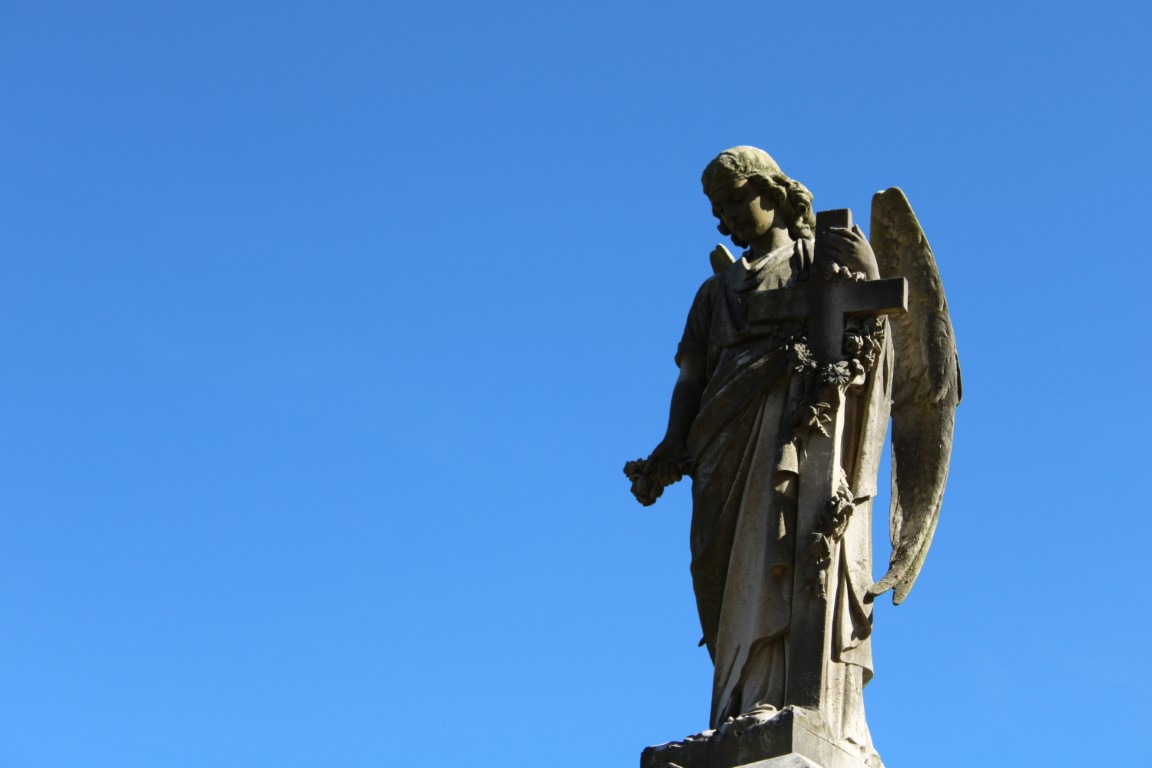
This is a reissue of the original English translation of Rilke’s elegies composed on the karst cliffs of northeast Italy in the early 1920’s. The book consists of ten medium-length, angel-laden elegiac poems. [Yes, dude was just that into angels.] The translator’s notes are posted as an epilogue and the volume has a new preface. It should be noted that the translators suggest one think of it as one long elegy in ten parts.

I’m far from qualified to comment on the skill of translation from the perspective of how well it catches the meaning and nuance of the original poems. However, the Sackville-Wests’ words are evocative and impactful in their own right, and I enjoyed and was moved by this collection of poems. [In their notes, the translators say they decided it was most productive to try to artfully paraphrase rather than getting too caught up in strict literal translation.] I’d highly recommend this book for poetry readers.


View all my reviews