Panglossian Limerick

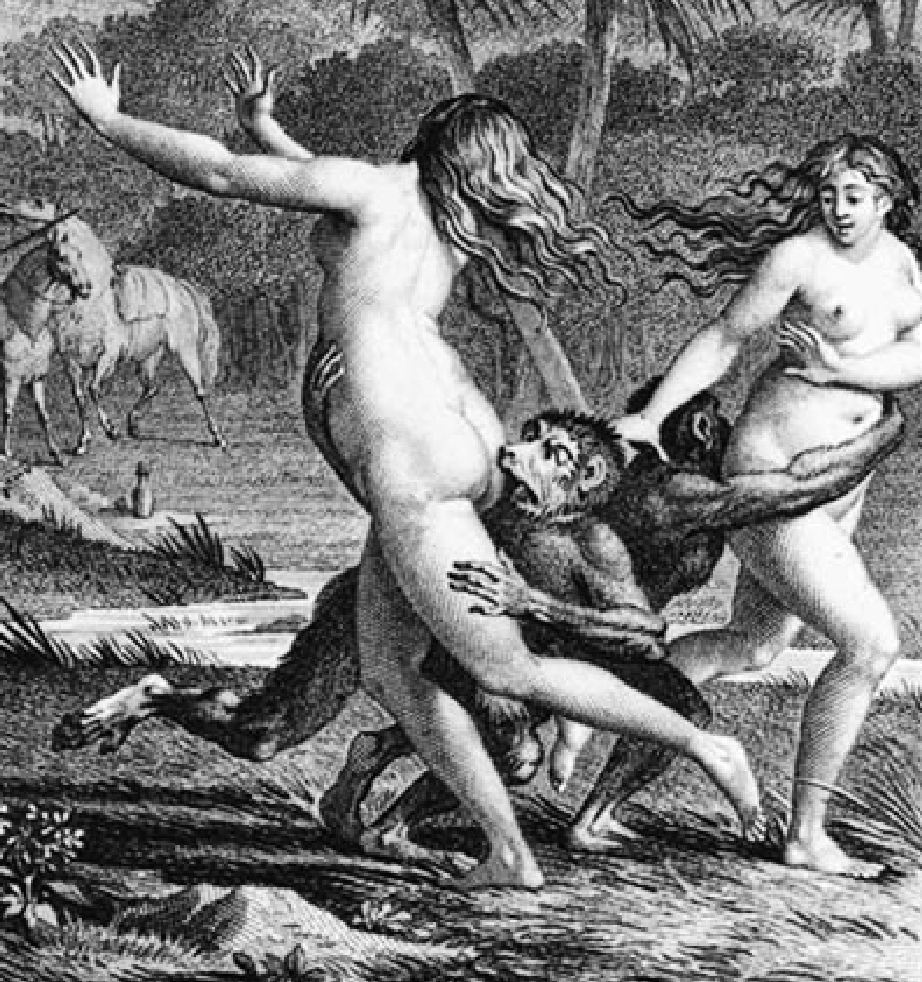
From an 1803 edition of Candide
There was a philosopher named Pangloss
whose sole objective was to get across:
Ours is the best of worlds!
And yet, the crapper swirled
and nothing escaped but dregs and dross.

BOOK REVIEW: Candide by Voltaire

CandideCandide by Voltaire
My rating: 5 of 5 stars

Amazon.in Page

Get Speechify to make any book an audiobook

Do we live in the best of all possible worlds? “Candide” attempts to wrestle with this question. The protagonist, Candide, is taught by his tutor – the renowned philosopher, Pangloss – that their’s is the best possible world. However, as the story unfolds as one bad turn of events after the next, it becomes harder to argue that there couldn’t be a better world.

Candide is forced to flee from his love (Cunegonda,) is conscripted into wartime military service, is arrested for heresy, becomes a serial killer, acquires and subsequently loses a fortune, is robbed, finds himself in the middle of war and other conflicts, and stumbles into and then flees what might be the closest his world has to a utopia, el Dorado. And, it could be argued, Candide gets off relatively easy. Cunegonda is raped, sliced open, and enslaved. Her brother, the Baron, is run through and is also enslaved. Pangloss gets syphilis, is hung, is partially dissected, and is enslaved, as well.

And yet, to the end, Pangloss retains his (and Liebniz’s) belief that they live in the best of all possible worlds. Candide (kind of) does as well, though at the book’s end he’s fatigued by the question and just wants to distract himself from it with some gardening. The degree to which Candide sticks to his guns is impressive, not only because of everything that goes wrong, but also because he gets a new mentor / friend, Martin, a mentor diametrically opposed to the views of Pangloss. Like Pangloss, Martin is also a philosopher, but Martin’s worldview is much less optimistic, but it also reflects the crucial idea that how bad or good the world is has more to do with one’s perception of it than the events that one experiences. (When Candide asks Martin who has it worse: one of the deposed kings they met or Candide, himself, Martin said he couldn’t know without experiencing what’s in the mind of each.)

Despite the steady flow of negative happenings, the book doesn’t definitively answer the thematic question. How could it? The most it can say is that we don’t live in the best of all imaginable worlds, but we can’t know whether those worlds we imagine are possible. For one thing, we are forced to recognize that humans are flawed and that nature is indifferent, and these factors might play a role in the variation between best imagined world and the world we know. For another thing, maybe we couldn’t handle a more perfect world. The old lady character asks the group whether all the trials they’ve collectively suffered are worse, or better, than sitting around doing nothing – as they happened to be [not] doing at that moment.

This book provides a thought-provoking journey, and it’s well worth reading.

View all my reviews

Macbeth Limerick

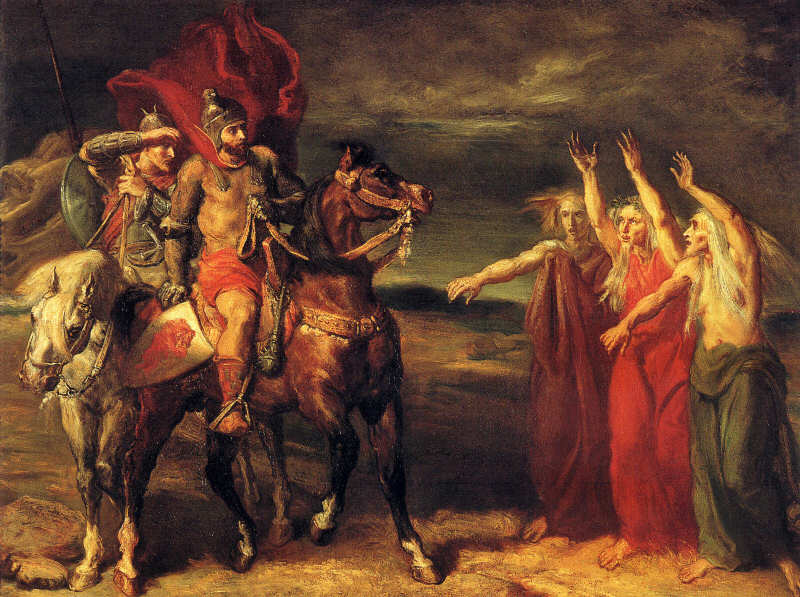
Macbeth and Banquo Meeting the Witches;
Théodore Chasséria (1855)
There was a great General named Macbeth.
All that kept him from kingship was a death,
but - as with a Pringle -
he couldn't do a single.
So, he showed seven more their last breaths.

BOOK REVIEW: American Poetry: A Very Short Introduction by David Caplan

American Poetry: A Very Short IntroductionAmerican Poetry: A Very Short Introduction by David Caplan
My rating: 5 of 5 stars

Amazon.in Page

Get Speechify to make any book an audiobook

This book does a great job of helping the reader understand what distinguishes the American strain of poetry from other poetic traditions, particularly the one from which it sprang and to which it’s most closely related, linguistically speaking: i.e. English poetry. Among the unique aspects of American poetry are a shift toward more idiosyncratic poetry, a shift that flows from America’s individual-centric orientation, the employment of American idiom – especially informal language, the connection to other American artforms (e.g. Blues music,) the diversity of form and style that resulted from being a diverse population, and the loud and clear expression of dissenting voices.

The page limitations of a concise guide keep this book from drifting wide in its discussion. The reader will note that it’s focused on mainstream poetry, and there’s little to no mention of counter-cultural movements, e.g. the Beats (e.g. Ginsberg and Synder) are not discussed. However, even within the restriction to mainstream poets, there’re only a few poets that are discussed in depth. Of course, these include the two poets largely considered the pillars of the American form: Walt Whitman and Emily Dickinson. It also includes two poets who were challenging cases for a discussion of national poetic movements: W.H. Auden, a Brit by birth who spent most of his poetry writing years in America; and T.S. Eliot, who was an American by birth but moved to Britain. Both poets produced poetry of importance while on both sides of the Atlantic, and, so, the question is whether anything of note can be said about their poetry vis-a-vis its location of origin (and, if not, have we exited the era in which nationality of poetry is worth discussing?)

I learned a great deal from this book. Again, if you’re looking for a broad accounting of American poetry, this isn’t necessarily the book for you, but if you want to gain a glimpse of the interesting and unique elements of American poetry through a few of its most crucial poets, this is an excellent choice.


View all my reviews

BOOK REVIEW: Myth: A Very Short Introduction by Robert A. Segal
Myth: A Very Short IntroductionMyth: A Very Short Introduction by Robert A. Segal
My rating: 4 of 5 stars

Amazon.in Page

Get Speechify to make any book an audiobook

This book situates myth amid the broader body of scholarship by examining what role myth plays within – or in opposition to – various academic disciplines, including: science, philosophy, religion, the study of ritual, literature, psychology, structuralism, and social studies. The book is organized so as to compare competing ideas of various major scholars in each of the aforementioned domains. So, as the blurb is upfront about, the book doesn’t spend much time talking about what myths are, and the discussion of how myths are structured is only made as relevant to distinguishing various hypotheses.

One does obtain some food-for-thought about what myths are as one learns how different scholars have approached myth. Questions of how narrowly myth should be defined (e.g. only creation stories v. all god and supernatural tales,) and how myths compare to folktales, national literatures, and the like are touched upon. One also learns that some scholars took myths literally (and, therefore, saw them as obsolete in the face of science and modern scholarship,) but other scholars viewed myths more symbolically.

If you’re looking for an introductory book to position myth in the larger scholarly domain and to examine competing hypotheses about myths, this is a great book for you. However, those who want a book that elucidates what myths are (and aren’t) and how they are structured and to what ends, may find this book inadequate for those objectives. Just be aware of the book you’re getting.


View all my reviews

Hamlet Limerick

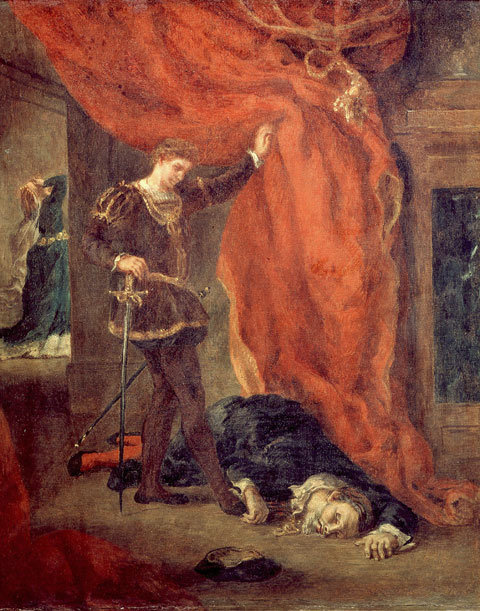
Hamlet Stands Over Polonius;
Eugène Delacroix (1855)
There once was a wavering Prince of Denmark
whose uncle replaced his dad as monarch.
The ghost of his dad
said, "Kill 'em, my lad!"
Too bad he took that stab in the dark.

BOOK REVIEW: Rilke: The Last Inward Man by Lesley Chamberlain

Rilke: The Last Inward ManRilke: The Last Inward Man by Lesley Chamberlain
My rating: 5 of 5 stars

Amazon.in Page

This book surveys the influences on Rainer Maria Rilke’s poetry, and makes the argument that Rilke was the last vestige of a mystically spiritual [Romantic or Romantic-esque] poetic line. Poetry was becoming more political and more influenced by nihilistic philosophies that eschewed inward investigations of meaning and self-realization, constructs that were seen as artificial and empty. Rilke bucked the trend, and while he did become an important poet, Chamberlain believes he paid a price.

The book discusses the influence of sexuality, spirituality, and artistic obsessions on Rilke’s poetry in great detail. It also talks about his life as an influence, both his family life (or lack, thereof) and the key years he spent in Paris. The last couple chapters tie the story together by clarifying what Rilke achieved and how it contrasted with prevailing trends.

If you’re interested in understanding more about the philosophical and spiritual forces impacting Rilke’s work, this is an interesting read. It’s not a biography, strictly speaking, but does unavoidably discuss Rilke’s life in some detail (though always through a literary / philosophical lens.)


View all my reviews

ESSAY REVIEW: The Kentucky Derby is Decadent and Depraved by Hunter S. Thompson

The Kentucky Derby Is Decadent and DepravedThe Kentucky Derby Is Decadent and Depraved by Hunter S. Thompson
My rating: 5 of 5 stars

Online Available Free: Grantland

Available within the collection: The Great Shark Hunt

This story is cited as the first work of gonzo journalism, a highly entertaining style of immersion journalism which takes liberties with objectivity and factual detail for comedic effect or heightened narrative impact. The Kentucky Derby is more setting than subject of the story. It’s Thompson attempting to throw together coverage of the horse race at the last minute for Scanlan’s Monthly, a magazine that existed less than a year. So, the story is as much Thompson racing around trying to con his way into some press passes as he and the graphic artist sent by the magazine go on a booze-fueled junket on and around the race track grounds.

The story is laugh-out-loud funny in places, and features Thompson’s irreverent and fast-paced style throughout. It really was something new. Thompson, apparently, thought he’d failed completely when he sent in the story, but the response indicated that – rather – he’d invented something new, something for which there would be a huge market.

It’s definitely worth reading this story, just don’t expect deep insight into the horse racing tradition of Kentucky.

View all my reviews

BOOK REVIEW: Cotton Candy by Ted Kooser

Cotton Candy: Poems Dipped Out of the AirCotton Candy: Poems Dipped Out of the Air by Ted Kooser
My rating: 5 of 5 stars

Amazon.in Page

Release date: September 1, 2022

The new collection by Ted Kooser is vibrant and playful. While imagery is front and center in these poems, it’s not the imagery of still life, but rather conveys the constant motion of all things. It’s that dynamism that makes for an uplifting read. Most of the entries are nature-centric, but a few – like the titular poem – delve into the world of man.

It’s a brief collection, consisting of about seventy short-form poems.

With so many mopey poetry collections out there, it was a pleasure to read one that enlivens and energizes. I’d highly recommend it for poetry readers.


View all my reviews

Prospero’s Limerick

There once was a bookish Duke from Milan
who, while distracted, was played for a pawn.
They thought him a twerp
his Dukedom was usurped…
Eventually, brains won out over brawn.