Five Wise Lines from Fireflies by Rabindranath Tagore

In the drowsy dark caves of the mind / dreams build their nest with fragments / dropped from day’s caravan.

From the solemn gloom of the temple / children run out to sit in the dust, / God watches them play / and forgets the priest.

The wind tries to take the flame by storm / only to blow it out.

The same sun is newly born in new lands / in a ring of endless dawns.

When death comes and whispers to me, / “Thy days are ended.” / let me say to him, “I have lived in love / and not in mere time.” / He will ask, “Will thy songs remain?” / I shall say, “I know not, but this I know / that often when I sang I found my eternity.

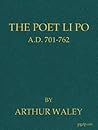
Fireflies by Rabindranath Tagore is in the public domain and can be read at sites such as:

Fireflies is available at PoetryVerse

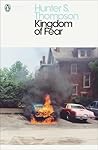
BOOKS: Kingdom of Fear by Hunter S. Thompson

Kingdom of Fear: Loathsome Secrets of a Star-crossed Child in the Final Days of the American CenturyKingdom of Fear: Loathsome Secrets of a Star-crossed Child in the Final Days of the American Century by Hunter S Thompson
My rating: 5 of 5 stars

Amazon.in Page

Kingdom of Fear is part memoir and part commentary on the state of America at the turn of the millennium. As a memoir, it explores Thompson’s bid for Sheriff, his arrest and judicial proceedings for drug and explosives charges that resulted from a “he said / she said” accusation that did not warrant charges in and of itself, a wild and wooly road-trip through Nevada, and Thompson’s position at the center of an investigation of a “threat” on the life of actor, Jack Nicholson.

As a commentary on the decline of America it discusses the battle for Grenada, a trip to Cuba, 9-11 and its aftermath, and the book revisits the ’68 Democratic Convention. It’s all written in Thompson’s drug-fueled Gonzo style, making it incredibly entertaining to read even as the hard walls between fact and fiction seem to dissolve. While the factualness might be at times in question, there is always a kind of truth that can only be received from those who’ve tossed off the shackles of societal convention and are willing to tell it as it is — even the embarrassing bits (especially the embarrassing bits.)

It’s not for those who take life and authority figures too seriously, but otherwise it’s a tremendously compelling and sometimes hilarious in its depiction of pre- and post-Y2K America.

View all my reviews

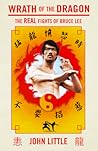
BOOK REVIEW: Wrath of the Dragon by John Little

Wrath of the Dragon: The Real Fights of Bruce LeeWrath of the Dragon: The Real Fights of Bruce Lee by John Little
My rating: 5 of 5 stars

Amazon.in Page

Release Date: September 5, 2023

There are many Bruce Lee biographies out there, from general bios (such as Matthew Polly’s Bruce Lee: A Life) to those that are much more narrowly focused (e.g. Rick Wing’s Showdown in Oakland about Lee’s fight with Wong Jack Man.) This book is somewhere in between in that it is theme-focused (Lee’s fights and matches,) but it does offer insights from Lee’s childhood through to his death as they pertain to these fights and sparring experiences. The book explores all of the known real-world scraps and matches, as well as some of the more telling sparring sessions. Fights range from Lee’s adolescent skirmishes as a punk kid through the challenge matches with extras on the set of Enter the Dragon as an astute (if still quick-tempered) master. When I say that the book includes sparring sessions, I’m not talking about every time Lee sparred, but rather those exchanges that offered particular insight into Lee’s prowess, such as his last ever sparring session with his old Wing Chun teacher, Wong Shun-Leung (a senior student of Ip Man’s) as well as those with athletes at the top of their respective combative sports.

The point of the book is to challenge a belief — widespread at times — that Lee was a blow-hard offering banal quasi-mystical Eastern philosophy and martial insights that were based only on a few Wing Chun lessons from Ip Man. In contrast, the book paints a picture of a broadly experienced fighter who was obsessive about his betterment as a martial artist. Lee was an innovator and trained with great endurance and intensity. The book portrays Lee as a martial artist of such speed and athleticism that even World Champion competitors were left in awe.

While reading, one does have to question how objectively the information is being presented. After all, Little is definitely a bit of a fanboy and he’s clearly taking a stance on Lee’s prowess. Furthermore, the fact that (at one point, I’m not sure about presently) Little was the only one with full access to Lee’s archived notes suggests his message was sufficiently on point for Lee’s family to feel comfortable with him. That said, I felt there was enough admission of Lee’s weaknesses and mistakes as well as a willingness to present competing statements when details were in question that I believe this is an honest attempt to get the details right (within the unavoidable constraints of memories of events being decades in the past and being seen from multiple perspectives — psychologically as well as geographically.)

I found this book to be fascinating from cover to cover, and well worth reading. In addition to the stories of the fights, the author discusses the lessons that Lee learned along the way. Even in winning, Lee was sometimes dissatisfied with his own performance, and this drove him to adapt and to develop new training methods. I’d highly recommend this book for those interested in the martial arts or who love a good biography.

View all my reviews

BOOK: Caged by Brandon Dean Lamson

Caged: A Teacher's Journey Through Rikers, or How I Beheaded the MinotaurCaged: A Teacher’s Journey Through Rikers, or How I Beheaded the Minotaur by Brandon Dean Lamson
My rating: 5 of 5 stars

Amazon.in Page

In Caged, Brandon Dean Lamson tells the story of his time teaching inmates on Rikers Island, finding himself in conflict both with students and with the guards. There is definitely a unique culture to the world of incarceration. I found myself thinking about the Stanford Prison Experiments in which ordinary people were randomly assigned to play either inmate or guard. The subjects’ behavior changed during the short period of the experiment, guards becoming more domineering and sadistic and inmates becoming more scheming and duplicitous than these people were in their regular lives. One sees evidence of this strange power dynamic and the resulting unusual behavior throughout the book. Lamson and the other teachers and staff involved with the school often saw the guards as vicious fascists, but – at the same time — they couldn’t trust the prisoners because learning was never an inmate’s top priority but rather was a combination of survival and maintenance of status.

As interesting as the story inside the wire is, it’s equally fascinating to learn what happens with Lamson outside his workday. The author is forthright about changes in his own psychology as he developed a need to work out his own violent tendencies as well as uncharacteristic sexual behavior. Lamson describes time spent in a boxing gym and S&M dungeon in service of these changes.

The book also offers some insight into what teaching methods worked or didn’t. Some of this pedagogical insight might be exclusively applicable to jails and prisons, but some would likely be of use to regular teachers, particularly in dealing with troubled or challenging kids. Lamson is also forthright about his own teaching missteps and failures, while offering the reader insight to what he learned from those teachers who seemed to be unusually effective.

I found this to be a fascinating book. It’s well-written and thought-provoking. I’d highly recommend it for readers of nonfiction.


View all my reviews

BOOK REVIEW: A Boy Named Rose by Gaëlle Geniller

A Boy Named RoseA Boy Named Rose by Gaëlle Geniller
My rating: 4 of 5 stars

Amazon.in Page

Release Date: July 18, 2023

This is the story of a preternaturally likeable and enthralling young cabaret dancer, the titular boy named Rose. Rose’s entire life has been lived in the cabaret that his mother runs, and much of the story revolves around his introduction to the broader world as his fame grows.

It is eye-catchingly illustrated in a way that creates and facilitates a unique feel for the story.

As stories go, it’s not particularly emotionally rousing. I suspect that is partly because, as is common with literary fiction, it’s more character-driven than story-driven, and this presents a challenge for the graphic novel format in which the reader has more direct exposure to the characters’ external happenings. One may see a character being pensive, but without insight into that individual’s mental world one doesn’t feel it as intensely as one would with a novel that allows one some internal insight.

That said, a world is presented that is so foreign to most of us, life inside a cabaret, that it generates interest in that sense.

Overall, it was an enjoyable, light-hearted read.

View all my reviews

Five Wise Lines from Chōmei’s Hōjōki

drawing by Kikuchi Yōsai

On flows the river ceaselessly, nor does its water ever stay the same.

 Kamo no Chōmei, Hōjōki

No one owns a splendid view, so nothing prevents the heart’s delight in it.

Kamo no Chōmei, Hōjōki

Knowing what the world holds and its ways, I desire nothing from it, nor chase after its prizes. My one craving is to be at peace; my one pleasure is to live free from troubles.

Kamo no Chōmei, Hōjōki

These days, I divide myself into two uses — these hands are my servants, these feet my transport.

Kamo no Chōmei, Hōjōki

When I chance to go down to the capital, I am ashamed of my lowly beggar status, but once back here again I pity those who chase after the sordid rewards of the world.

Kamo no Chōmei, Hōjōki

Reference: Saigyō Hōshi, Kamo no Chōmei, Yoshida Kenkō. 2021. Three Japanese Buddhist Monks. New York: Penguin Books. 112pp.

Available Here

BOOK REVIEW: Asimov’s Foundation and Philosophy ed. by Heter Joshua & Josef Thomas Simpson

Asimov's Foundation and PhilosophyAsimov’s Foundation and Philosophy by Heter Joshua
My rating: 5 of 5 stars

Amazon.in Page

Release Date: August 24, 2023 [Paperback; ebook is out]

When I was a budding social science grad student, I learned that Asimov’s “Foundation” series was impetus for many young nerds of the previous generation to enter fields like Economics and Poli-Sci. The reason? At the heart of the story is a fictional discipline called Psycho-history, a mathematical field that’s premised on the idea that [while one can’t reliably forecast what an individual (or even small groups) will do,] given a large enough population one can make grand over-arching predictions about what will happen to society as a whole. It’s an idea that Asimov drew from his education in Chemistry, a field where one couldn’t say much about individual molecules but you could accurately model collective parameters (e.g. temperature.) It turns out that humans and their interactions are more complicated than gas molecules and so Psycho-history only works as a powerful plot device (a fact that Asimov discovered himself, supposedly driving mid-course corrections in the limited space he had to make them.) Anyhow, the idea that one might predict the unfolding of societal, economic, and international events was a powerful scholarly aphrodisiac for individuals who might otherwise have dismissed study of the social world as hopelessly and absurdly chaotic.

With that background generating curiosity and having read a number of Asimov’s books, I was eager to investigate this book that explores the philosophic underpinnings of Asimov’s fictional world. I was not disappointed. The imaginative “Foundation” series of books provides plenty of situations and ideas to which one can apply the lens of philosophy, from the limitations of reason and symbolic logic as tools to solve humanity’s problems to the morality of manipulation and questions of transparency that follow from it to what kind of free will — if any — can exist in a universe where Psycho-history works. This anthology of essays considers questions of mind, logic, morality, free will, identity, and existence, as well as various ideas from the Philosophies of History, Religion, and Science. The twenty-one essays are grouped into six parts by philosophic subdiscipline.

There are so many of these “pop culture meets philosophy” books out there, but I think this one does better than most because Asimov’s creative mind really offered such a rich assortment of ideas upon which to reflect.

View all my reviews

BOOK REVIEW: Mindfulness in Wild Swimming by Tessa Wardley

Mindfulness in Wild Swimming: Meditations on Nature & Flow (Mindfulness series)Mindfulness in Wild Swimming: Meditations on Nature & Flow by Tessa Wardley
My rating: 4 of 5 stars

Amazon.in Page

Release Date: June 13, 2023

As the title suggests, this is a book about combining mindfulness and swimming in natural bodies of water. It’s part of a large series of “Mindfulness and …” books, and this particular volume is a re-release of a title that came out a couple years back.

While the book does provide an overview the basic methods and considerations for both mindfulness meditation and wild swimming, it’s largely a peptalk or enticement to take up wild swimming as a means to improve awareness (as well as to bolster physical health and mental well-being.) That said, some of this peptalk is artfully, almost poetically, written, and the book is a pleasure to read.

The book discusses solo swims versus those in a group, and it even explores using onshore experiences to bolster mindfulness — e.g. using the sensory experience of the water as a focal point for practicing awareness. The around- (v. in-) water discussions are probably in part because the book uses seasons as a secondary mode of organization, and long and leisurely winter swims in lakes and rivers aren’t an option for people in many parts of the world.

I picked up some interesting food-for-thought in the book, and — as I say — it made for enjoyable reading.

View all my reviews

BOOKS: The Mind of Adi Shankaracharya by Y. Keshava Menon

The Mind of Adi ShankaracharyaThe Mind of Adi Shankaracharya by Y. Keshava Menon
My rating: 4 of 5 stars

Amazon.in Page

This book does a good job of that at which the title hints, offering the reader insight into the philosophy of Adi Shankaracharya. Along the way, Menon presents clear descriptions of Indian philosophical concepts such as Maya, Avidya, Antahkarana, etc., and also compares and contrasts Shankaracharya’s philosophy with those of other philosophers (from both the East and West) as a means to clarify ideas that can be subtle and complex.

That said, what the book isn’t is an unbiased and objective look at Shankaracharya’s ideas. While Menon doesn’t go as far as to support the supernatural myths of Shankaracharya’s life (which are only discussed in the Appendix,) and he skirts that 800-pound gorilla of Hindu philosophic controversy, caste, he does present the philosophy as an advocate for Shankaracharya rather than as an indifferent scholar who merely wishes to deliver arguments and ideas while inviting thought among his readers.

While the book deals with epistemology, ethics, and various aspects of metaphysics, the biggest single subject is Self. I found the explanation of this topic to be fascinating. I had previously understood that among the major differences between Shankaracharya and Buddha was on this question. While I still find the Buddhist approach to Self (or, more properly, lack of Self — i.e. Anatta) to be the more compelling and parsimonious explanation, I feel that I was provided with about as clear an explanation of the Hindu (generally) and Shankaracharyan (specifically) views on Self as one could wish for.

I’d recommend this book. If you’ve come away from reading about subjects like “Maya” (Is it illusion? Is it NOT illusion?) this book can definitely help offer clarification, and (as books on philosophy go) it’s readable and not too jargon-laden. That said, if one is looking for a book that is not advocating a philosophy but, rather, objectively providing ideas and contrasting explanations, this book may bias your views.

View all my reviews

BOOKS: The Slow Traveller by Jo Tinsley

The Slow Traveller: An intentional path to mindful adventuresThe Slow Traveller: An intentional path to mindful adventures by Jo Tinsley
My rating: 4 of 5 stars

Amazon.in Page

Out: June 13, 2023

This book, gorgeously illustrated with photographs, consists of a series of essays on a different approach to travel, an approach familiar to travelers but not so much to tourists, an approach that is the antithesis of leaping from one postcard panorama to the next, packing a couple weeks’ vacation with maximum sights seen.

Most of the chapters / essays look at a specific mode of travel – i.e. the road trip, hiking / pilgrimage, train travel, and water travel. However, a few of the chapters tack from different angles to look at local food-centric travel, sheltering with permanent structures like bothies and teahouses, and urban slow travel.

There are some interesting insights in this book, it has stunning photography, and I even picked up some book recommendations. If you’re interested in changing your approach to travel to go deeper / less broad, this book is worth reading.

View all my reviews