There once was a renowned psychoanalyst
 Who found childhood events were always the catalyst.
   A patient who lived happily
   'Til a recent tragedy,
 Learned it all stemmed from thoughts as a neonatalist.


There once was a renowned psychoanalyst
Who found childhood events were always the catalyst.
A patient who lived happily
'Til a recent tragedy,
Learned it all stemmed from thoughts as a neonatalist.
I
That is no country for old men. The young
 In one another's arms, birds in the trees,
 -- Those dying generations - at their song,
 The salmon-falls, the mackerel-crowded seas,
 Fish, flesh, or fowl, commend all summer long
 Whatever is begotten, born, and dies.
   Caught in that sensual music all neglect
   Monuments of unageing intellect.
II
An aged man is but a paltry thing,
 A tattered coat upon a stick, unless
 Soul clap its hands and sing, and louder sing
 For every tatter in its mortal dress,
 Nor is there singing school but studying
 Monuments of its own magnificence;
   And therefore I have sailed the seas and come
   To the holy city of Byzantium.
III
O sages standing in God's holy fire
 As in the gold mosaic of a wall,
 Come from the holy fire, perne a gyre,
 And be the singing-masters of my soul.
 Consume my heart away; sick with desire
 And fastened to a dying animal
   It knows not what it is; and gather me
   Into the artifice of eternity.
IV
Once out of nature I shall never take
 My bodily form from any natural thing,
 But such a form as Grecian goldsmiths make
 Of hammered gold and gold enamelling
 To keep a drowsy Emperor awake;
 Or set upon a golden bough to sing
   To lords and ladies of Byzantium
   Of what is past, or passing, or to come.
 Eternals by Neil Gaiman
After transitioning from tighty-whities, through boxers, and on to the boxer-brief, I think I have finally found the path to downstairs bliss.

Buying fine jade in the springtime,
 Enjoying rain song from within a cabin,
 A taciturn scholar sits betwixt
 Copses of tall, arching bamboo.
Sparse white clouds in a newly clear sky;
 Swallows weave 'round trees in pursuit.
Light through leaf casts a green hue on all;
 Sound of falling water, thin but near;
 Flower petals fall without a sound.
But the man sits unyielding as a mum;
 He writes what the scene dictates
   To make a pithy book.
NOTE: The late Tang Dynasty poet, Sikong Tu (a.k.a. Ssŭ-k‘ung T‘u,) wrote an ars poetica entitled Twenty-Four Styles of Poetry. It presents twenty-four poems that are each in a different tone, reflecting varied concepts from Taoist philosophy and aesthetics. Above is a translation of the sixth of the twenty-four poems.
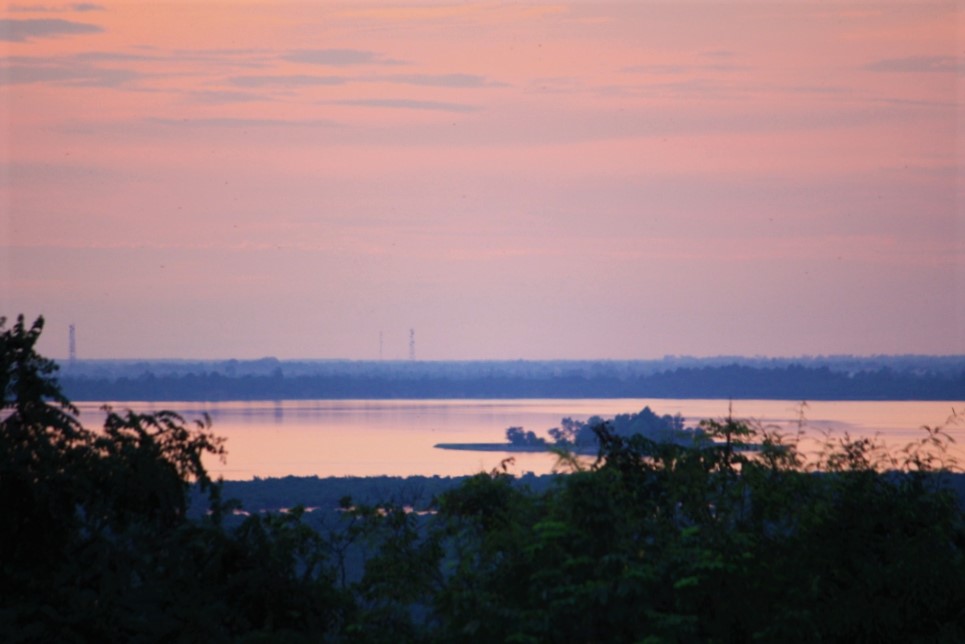
the coral-hued lake
 will soon be the inky void
  between coastal lights.
 The Perennial Philosophy Reloaded: A Guide for the Mystically-inclined by Dana Sawyer