Unknown's avatar

About B Gourley

Bernie Gourley is a writer living in Bangalore, India. His poetry collection, Poems of the Introverted Yogi is now available on Amazon. He teaches yoga, with a specialization in pranayama, and holds a RYT500 certification. For most of his adult life, he practiced martial arts, including: Kobudo, Muay Thai, Kalaripayattu, and Taiji. He is a world traveler, having visited more than 40 countries around the globe.

Surrender [Lyric Poem]

Let the flood sweep 
one away — out
of the shallows,
into the deeps.
Don’t ever cry;
Don’t ever weep;
Just feel the speed
Carry one on.

The Fray [Lyric Poem]

Rainy December day
blows in - not long to stay.
From season to season,
without any reason,
sometimes we feel the fray.

DAILY PHOTO: Tiny Door, Atlanta Beltline

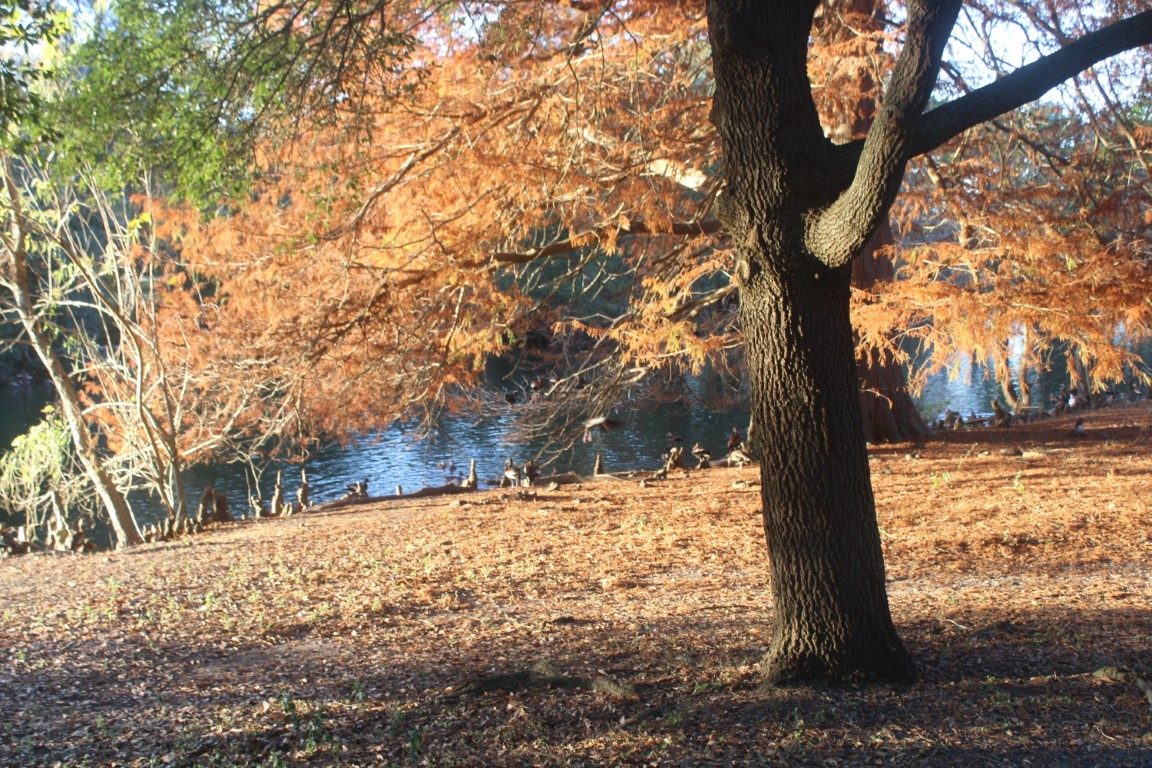
Autumn [Lyric Poem]

The chill is here.
The sky never
bluer.

The colors turn,
with leaves ever
fewer.

Until a last
hanger-on yields
to a weak breeze.

PROMPT: 3 Favorite Meals

Daily writing prompt
What are your family’s top 3 favorite meals?

Breakfast, Lunch, and Dinner. (Chronologically, not in order of preference.)

Paper masala dosa for breakfast; Thai red curry for lunch; mixed fruit for dinner.

DAILY PHOTO: Centennial Olympic Park

PROMPT: Historical Figure

Daily writing prompt
If you could meet a historical figure, who would it be and why?

If babel fish existed or I could have access to a fluid translator, then perhaps Drukpa Kunley, (or, alternatively, Hanshan or Ikkyu,) because I would like to know how that level of freedom is achieved (and whether it’s all it’s cracked up to be.)

If I was on my own for language, maybe Thoreau or Whitman. (For largely the same reason.)

DAILY PHOTO: King & Queen of Sandy Springs

BOOK: “Understanding Eastern Philosophy” by Ray Billington

Understanding Eastern PhilosophyUnderstanding Eastern Philosophy by Ray Billington
My rating: 4 of 5 stars

Publisher Site — Taylor & Francis

This book does a solid job for one that bites off so much in a single go. Eastern Philosophy is a large subject, and to try to outline the major premises of its varied systems and also compare them to Western / Abrahamic notions (when Western schools are sometimes no more different from Eastern schools than each side is within,) and to do so in under two-hundred pages is a daunting undertaking.

For the most part, I felt the book did a fine job of meeting its objective. A fair amount of selection and simplification is required. I will say the part describing karmic doctrine didn’t seem consistent with what I was taught and seems more in line with the early Western scholars who started writing about Eastern Philosophy but could not help but couch the subject in a Western / Abrahamic frame because it was what they knew and was invisible to them. I say this as one who is no big fan of Karmic philosophy, though for another reason (one which is also mentioned in this book.) I’ve always been told that the central idea is to do selfless acts in order to escape the karmic cycle. Billington, like others before him, states it as do “good deeds” and then he puts forth the critique that this won’t help because doing good for one’s own benefit is fraught with peril. My understanding from Sanskrit scholars is: first, Hindu philosophers were aware of this paradox from the beginning and that’s why the emphasis has always been on “selfless” acts; second, the Abrahamic bifurcation of all actions into good and evil is not so much a thing in Hindu thinking (most actions are inherently neither.) I should point out that there is a lot of internal conflict within these philosophies (e.g. differences between Buddhist and Hindu thoughts on Karma) and that Billington does elsewhere reflect on the differences between Eastern and Western thinking about good and evil.

The first two-thirds of the book is organized by schools of thought (beginning with the Indian ones and working toward Chinese / East Asian schools) and the last third deals with a series of fundamental philosophical questions.

If you want a quick outline of Eastern philosophical ideas, this book gives a good look at them, particularly if one is interested in a comparison to Western ideas. The book also spends a fair amount of time in discussion of what a religion is and how one differs from a philosophy.

View all my reviews

PROMPT: Instincts

Daily writing prompt
Do you trust your instincts?

More and more each day. And I’m starting to trust reason less and less.