Unknown's avatar

About B Gourley

Bernie Gourley is a writer living in Bangalore, India. His poetry collection, Poems of the Introverted Yogi is now available on Amazon. He teaches yoga, with a specialization in pranayama, and holds a RYT500 certification. For most of his adult life, he practiced martial arts, including: Kobudo, Muay Thai, Kalaripayattu, and Taiji. He is a world traveler, having visited more than 40 countries around the globe.

TODAY’S RANDOM THOUGHT: “That” Doesn’t Make You So Mad

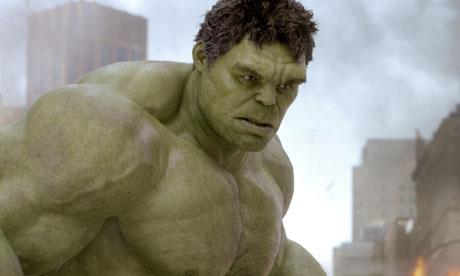
Source: Avengers Movie

Source: Avengers movie

“That makes me so mad!” One hears it all the time. It has to be among the most commonly uttered phrases in the realm of emotional experience. And, of course, it’s completely and utterly wrong. Your anger is a wholly contained neurochemical response. To credit something external with your anger is to grant that person or thing power over you–to enslave yourself. (Stoic philosopher, and former slave, Epictetus was known to piss off gentlemen citizens by asking them if they were “really free.”)


This isn’t to say there isn’t just anger.  However, think about what emotions are. Our emotions are a system evolutionarily evolved to allow us to make decisions with limited or no information. Without emotions our species, if we ever came to be, would have likely become extinct by way of “paralysis by analysis.” We know that happens to people who have neurological damage that keeps them from experiencing emotion. You might think they would become cold and rational Mr. Spocks, but the defining characteristic of such people is that they become paralyzed by indecision. It turns out that we make a lot of decisions with limited information or from an inability to determine a clear winner by way of facts and reason. Emotion plays and important role in those cases.


Chances are that if your immediate gut reaction to something is anger, you probably haven’t worked out a rational argument for your preference. If one has a clear line of reasoning rooted in fact, anger isn’t necessary to justify a position or decision. If your gut reaction to something is emotional, see whether you can  noodle out a rational reason before you swing into too rash an action…. unless the crosstown bus is careening at you.


DAILY PHOTO: Phnom Penh Street Corner

Taken in October of 2012 in Phnom Penh.

Taken in October of 2012 in Phnom Penh.

9 Self-Defence Tips for Women

Today is a day of protest in Bangalore to decry sexual assaults on women and children. It seems like an apropos time to offer some advice on self-defense.

1.) NEVER GET INTO A VEHICLE or allow yourself to be taken to another location:

This is line in the sand #1.  He’s telling you to get in the vehicle because he wants to do something that he’s scared to do at the present location. That means your chances if you scream, run, fight, or some combination of the above are better than if you get in the car. A thief wants your money/possessions and then wants to put as much distance between you and he as possible. Don’t believe anything a thug tells you about why he wants to take you somewhere–no matter what kind of soothing tone he may use. He means to do you harm at the end of that ride.

2.) Never allow your freedom of movement to be restrained:

Line in the sand #2. The same logic applies. He wants to bind or handcuff you because he’s scared to do what he wants to do with an unrestrained victim. Your chances are better if you scream, run, fight, or all of the above than if you allow yourself to be hogtied.

3.) If you remember nothing else from this post, remember points 1 and 2. 

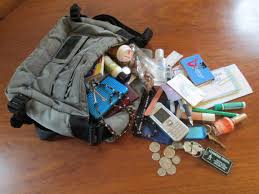
Source: www.clutterclearcoach.com

Source: clutterclearcoach.com

4.) 2 ways a cluttered purse can be perilous:

First, if you decide to carry some form of weapon (e.g. pepper-spay or a stun-gun) or the ineloquently named “rape-whistle”, it will do you less than no good if you can’t put your hand on it instantaneously. (Why less than no good? Because your eyes will be on your bag, instead of on the threat.)

Second, see point 5, below.

5.) How to be robbed, a primer:

You’ve probably heard the mantra, “Never fight over money or possessions, they can be replaced, you can’t!” That’s sound advice. However, you must keep in mind that violent criminals use “gimme your money” as a ploy. They wait until your eyes go down and then they pounce with much more ominous intent.  This is the second way a cluttered purse can be perilous. If you start looking through your purse, you’re at risk. Pitch the whole purse, let them find it. If they don’t go for it, then it’s time to flee or fight.

What’s the “proper way” to be robbed? You throw the money in the robber’s direction (preferably between his feet and behind him) and then you run the other direction. If he’s a robber, he’ll grab the money and hightail it in the opposite direction from you. If he chases you, then it’s time to be ready to fight for your life.
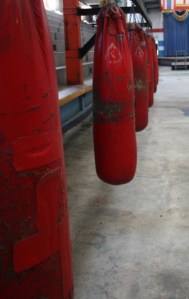
IMG_40726.) Choose classes wisely:

There are a lot of offerings of self-defense and martial arts classes. The first thing to know is the difference between self-defense and martial arts classes. Self-defense classes will teach you a few basic, easily remembered techniques to get out of the grasp of an unsophisticated attacker so that you can run. If you know that you don’t have a lot of time and energy to devote to learning to protect yourself, this is the type of class you should pursue. You probably won’t learn what you need to get safely away from an athletic psychopath, but–fortunately–such individuals are rather rare. I’d recommend this type of training periodically even for women with no interest in martial arts.

There are many different primary objectives one may see in various martial arts, including: sport, entertainment, sustaining a historical lineage, or preserving historical / cultural events and ways. While self-defense is one of several objectives of almost all martial arts, it’s the primary objective that will shape the martial art and its relevance to you. Sporting martial arts will get you in fighting shape and teach you to take a hit and keep moving, but may leave you with systematic vulnerabilities around the rules of the game.

For example, if punches to the head aren’t allowed, you won’t learn to defend yourself from the head punches that a real world attacker won’t hesitate to employ. If fighting on the ground isn’t allowed, then you’ll miss out on some beneficial training. Also, in a sport you may spend a lot of time punching with a closed fist. This is great if: a.) you’ve built up bone density with bag work and exercises, b.) your hand is wrapped tightly, and c.) you have a padded glove on. If not, there’s a good chance you’ll break one of the tiny bones in your hand on the attacker’s thick, bony skull–and it may distract you enough to lose advantage. This isn’t to imply such a martial won’t prepare you better than the next woman (and better than an attacker, for that matter), but you should only do it if you’re interested in the sport as well as in defending yourself.

Martial arts for entertainment may have you spending a lot of time practicing complex, spinning, aerial maneuvers that you cannot count on being useful against an attacker on the street. Again, if you enjoy this kind of martial art for its own sake, I’m not suggesting you should abandon it or that it isn’t benefiting you at all from a defensive standpoint.

Historical martial arts often offer the advantages of being combat-oriented and not rule constrained, but you may spend a lot of time working with archaic weapons and may not practice sparring or free-form fighting–which, I would argue, is essential to being ready to defend yourself. Again, these arts are awesome, but you need to be aware of what you are studying and what it’s value is to you.

Questions to ask:

a.) Can I watch a class? I’ve heard clever explanations for why this isn’t necessary for such-and-such martial art, but if they won’t let you watch a class, I’d move on to the next place. The observation class allows you to see whether that art is right for you and whether the teacher is skilled and professional.  Now, don’t expect a school to keep allowing you to show up and watch, but one class should give you enough idea. You may want to ask ahead to make sure it’s a fairly typical class. Some martial art schools occasionally have atypical classes to communicate some ancillary information to students which isn’t at all that useful in a day-to-day sense. (Alternatively, some schools have classes that are rigidly identical from one session to the next.)

b and c.) Will you teach me how to stay on my feet?  and Will you teach me how to fight on the ground? The ideal answers to both is “yes.” If they answer the first question by saying, “All fights go to the ground, we teach you how to get down and control the situation.” You have some sort of submission sport school that would likely make you tough as nails. However, there’s a reason there are weight classes in those sports. You don’t want to default to the ground voluntarily with someone who outweighs you by 60 pounds and who can bench press your body weight two or three times over.

That being said, if the answer to the second question is, “No. Going to the ground is ridiculous,” you might want to move on to the next school. To summarize, you want a school that will teach you how to stay on your feet so you can get away, but, also, you want a school that’ll prepare you for the worst case scenarios.

d.) Do you do sparring, randori, rolling (as in ground-fighting free-form training), or other free-form training? Note: In most martial arts, you’ll need to spend some time learning basics before you get into sparring (and that’s a good thing, in my view.) However, if the school doesn’t do any of that type of training at any level, it probably won’t prepare you for what you are likely to face. There are some old school martial arts that only do form and technique training, but with no “unstructured” training.

My final word on looking for a school: Don’t be scared off by the students looking haggard, sweaty, and mildly gimpy by the end of class. Such a school will prepare you much better than one in which the students look pristine going home.

7.) Drill with any weapon you carry:

Believe it or not, I once saw a professional law enforcement officer who accidentally sprayed himself full in the face with pepper-spray. (Among my varied and sundry past occupations was a stint in law enforcement.) No weapon is a magic talisman that you can put in your bag and expect to have it ward off evil.

8.) Don’t expect the Hollywood plop:

Squirting an attacker with pepper-spray, shocking them with a stun gun, or even shooting them with a handgun will not necessarily immediately and definitively incapacitate them. They may keep coming, hopefully impaired, but possibly just angered. There is an old samurai saying that goes, “Even in victory, cinch tight your helmet cords.” This means, even when it looks like your attacker is down for the count, maintain caution.

9.) Remember items 1 and 2, NEVER GET IN THE CAR and NEVER LET YOURSELF BE TIED UP.

DAILY PHOTO: Dunapart

Taken in July of 2011 in Budapest

Taken in July of 2011 in Budapest

BOOK REVIEW: Batman: Year One by Frank Miller, et. al.

Batman: Year OneBatman: Year One by Frank Miller

My rating: 3 of 5 stars

Amazon page

Amazon recently had a sale on classic Batman collections in celebration of the Caped Crusader’s 75th anniversary. I bought a few titles, including this one.

Batman: Year One is Frank Miller’s vision of the hero’s first year of crime fighting. Unlike the first movie in the Nolan trilogy, Batman Begins, there’s no backstory about Bruce Wayne’s training. The comic begins with Bruce Wayne beginning to go on the equivalent of self-sanctioned “neighborhood watch” rounds in Gotham’s seedy underbelly. He’s in his planning and research phase, and only quasi-reluctantly gets into brawls with street thugs. His goal is, ostensibly, intelligence gathering.

Miller’s work isn’t aimed at a boyish market. From the intimation of underage prostitution to themes of marital infidelity to the unsubtle homage to Edward Hopper’s famous painting Nighthawks, this book is directed at a more mature reader. It’s grittier, but Batman hasn’t yet become so sophisticated as to abandon wearing his underwear outside his pants.

The four chapters that make up this graphic novel parallel and twist together the stories of Jim Gordon and Bruce Wayne as they each begin their Gotham crime fighting careers. In many versions of the Batman mythology, Gordon is a young cop who helps boyhood Bruce Wayne on the night his parents are killed. This is one of the ways in which the Miller version differs. In Batman: Year One Gordon is a detective who moves to Gotham from Chicago at about the same time Bruce Wayne is sticking his toe in the waters of Gotham crime. This comes in handy for Miller later in works like Batman: The Dark Knight Returns in which he is able to have a geriatric Bruce Wayne and Jim Gordon coexisting.

The interests of Gordon and Batman only align at the very end of the last chapter. Until then, Gordon is trying to find and apprehend Batman like all the other cops. In fact, Gordon is leading the crusade against the Dark Knight when his bosses still have little interest in it—until Batman crashes their ball.

There are no supervillains yet—only corrupt cops and organized crime. Bruce Wayne, who adopts the guise of Batman only after a bat flies through his window (never heard of that happening), gets off to a rough start. He isn’t yet the phantom nightmare that he will later become, and is still learning his lessons. In his early encounters with criminals, he prevails mostly by being able to take a punch.

Besides Bruce Wayne’s inner monologue being a bit ham-handed, I enjoyed this work. The ham-handed inner monologue is—no doubt–intended to convey that Wayne is a man of thought as well as a man of action, but it’s hard to believe that someone who could transform himself into the Batman would be that riddled with doubt. That said, the dialogue is better written than the typical comic. There’s not a lot of the “As-you-know-Bob” dialogue that often plagues this genre.

If you’re a fan of the Dark Knight, this is worth reading.

View all my reviews

TODAY’S RANDOM THOUGHT: Narrow Escapes

IMG_1330


Every living soul exists by virtue of an ancestor who narrowly escaped death. Someone in your family tree refused to quit during an onslaught by predators, as war raged on ceaselessly, or while clinging to the side of a cliff.

That potential now remains dormant.

DAILY PHOTO: Porch in the Tibetan Style

Taken in March of 2014 at Namdroling Monastery.

Taken in March of 2014 at Namdroling Monastery.

BOOK REVIEW: The Good Soldier Ŝvejk by Jaroslav Haŝek

The Good Soldier ŠvejkThe Good Soldier Švejk by Jaroslav Hašek

My rating: 4 of 5 stars

Amazon page

Haŝek’s novel is a satire of war and the absurdities that arise therein. It’s a novel in the vein of Heller’s Catch-22 and Vonnegut’s Slaughterhouse Five. It predates those novels, and is set around World War I–rather than those other novels’ World War II bases.

The novel begins at the outset of the First World War, and revolves around the title character, Ŝvejk (also spelled Schweik). Ŝvejk is an enigma. Believing that no man can be so stupid, authority figures are constantly suspecting him of being a saboteur or a goldbrick. It’s never made clear whether Ŝvejk is a brilliant con artist or the complete dolt he appears to be.

The story follows Ŝvejk from some ill-considered statements about the Archduke Franz Ferdinand that get him in trouble through to his unit’s advance on the front lines of the war. He leaves behind his job selling mangy dogs with forged pedigrees when he’s drawn back into the military (he’d previously served and been released as feeble-minded.) Along the way, he spends time as a chaplain’s assistant and a batman (a military officer’s servant, not the superhero)—that is, after he gets released from a lunatic asylum.

Ŝvejk is, at once, the best and worst of soldiers. He is honest to a fault, except when lying in the service of others—at which point his lies are inevitably humorously transparent. He isn’t a free-thinker and will follow orders—as best he can remember or understand them—to their, often absurd, bitter end. Of course, the flip side of this is that he doesn’t know how or when to speak, and while he’s not a free-thinker, nor is he much of a thinker–period.

The following quote sums up why Ŝvejk is the best and worst of soldiers: “Beg to report, sir. I don’t think because soldiers ain’t allowed to. Years and years ago, when I was in the Ninety-first Regiment, the captain always used to tell us: ‘Soldiers must’nt think. Their superior officers do all their thinking for them. As soon as a soldier begins to think, he’s no longer a soldier, but a lousy civilian.’” This is the mantra Ŝvejk lives by, and it serves no one well in the volatile and mercurial world of war.

Ŝvejk isn’t the only comedic character in the book. There’s a drunkard Catholic priest of Jewish ancestry for whom Ŝvejk serves as an assistant until the priest lost him in a card game. There’s another batman who’s constantly hungry, and eats anything he can get his hands on–even if it’s the private stock of the officer for whom he works. There’s a reserve officer, Lieutenant Dub, who is always trying to show how tough he is but is constantly foiled by Ŝvejk’s frankness and naiveté.

There’re also straight men such as Lieutenant Lukas—the man who wins Ŝvejk’s services from the chaplain, and who comes to rue the day he did. Lukas is a competent military officer with a good head on his shoulders. But Ŝvejk’s bumbling antics are constantly getting the Lieutenant in hot water, and he finds Ŝvejk to be the proverbial bad penny. A prime example of Lukas’s regret comes when Ŝvejk gets the Lieutenant a dog that he knows is stolen, but that turns out to be rightfully owned by a Colonel.

Another straight man is the Quartermaster who knows enough to ignore the first order to draw rations because the military never moves as quickly as the officers think it will. (Incidentally, the best piece of advice I ever got when working with bureaucratic organizations was to always ignore new directives that seemed asinine because eventually most will die on the vine.)

This book is humorous, if not hilarious. One of the funniest episodes is when Ŝvejk is cast in with the malingerers and has no idea what they are talking about as they discuss their strategies for staying out of the war. Another is when the officers devise a code based on an obscure book only to discover that it’s a two volume set and they’ve dispatched the wrong volume as the key.

Much of the humor comes in the form of Ŝvejk’s dialogue. He’s a gregarious chap who rambles on at the most inopportune times. Some classic Ŝvejk quotes include:
-“I’m feeble-minded, fair and square.” (when accused of being a cunning malingerer)
-“I’ve been cross-examined once and they chucked me out. And what I’m afraid of is that these other gentlemen who are here along with me are going to have a grudge against me because I’ve been called for cross-examination twice running and they’ve not been there at all yet this evening.” (upon being called back for a second round of interrogation)
-“Pigs might fly if they had wings.” (when accused of being a spy, and asked whether he’d have taken pictures if he’d had a camera)
-“I used to serve under a Colonel Flieder von Boomerang, or something like that, and he was just about half your height. He had a long beard, and it made him look like a monkey, and when he got ratty he used to jump so high that we called him India-rubber Daddy. Well, one day—“ (upon being accused of having no respect for his superiors)

One of the weaknesses of this novel is its rather abrupt ending. This is because Haŝek was only two-thirds of the way through with the novel when he died of tuberculosis. It’s not that there is no ending, but it reads like just another turn of events that Ŝvejk would eventually bumble his way out of. Of course, that’s likely because that’s what the author intended it to be.

As with Heller and Vonnegut, Haŝek’s novel benefits from his personal experience. He was drafted into the military and spent five years as a prisoner of war in the hands of the Russians. (A situation that somewhat mirrors the experience of his protagonist.)

If you like war satire, you should pick up The Good Soldier Ŝvejk.

View all my reviews

DAILY PHOTO: Back Lake Pagoda

Taken in July of 2008 in Beijing.

Taken in July of 2008 in Beijing.

TODAY’S RANDOM THOUGHT: Blind Dog

IMG_0606

This dog followed us around during our tea plantation walk in Munnar. It was a fine-looking dog with a warm disposition. It seemed quite healthy, except for the fact that it was missing its left eye.

This made me think. If you take in a blind dog, does that make you its seeing eye human?