Unknown's avatar

About B Gourley

Bernie Gourley is a writer living in Bangalore, India. His poetry collection, Poems of the Introverted Yogi is now available on Amazon. He teaches yoga, with a specialization in pranayama, and holds a RYT500 certification. For most of his adult life, he practiced martial arts, including: Kobudo, Muay Thai, Kalaripayattu, and Taiji. He is a world traveler, having visited more than 40 countries around the globe.

TODAY’S RANDOM THOUGHT: Be the Change

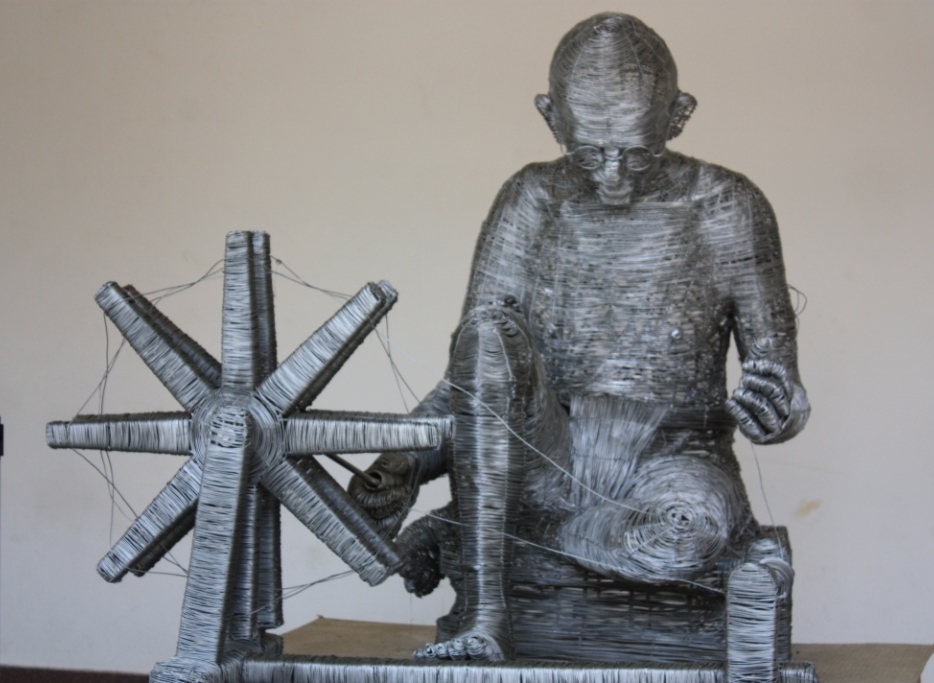
IMG_1501Gandhi is credited with saying, “Be the change you wish to see in the world.”

That’s powerful phrasing. It’s much more effective than, say: “Nag your friends until they’re the change you desire.” It’s also far more potent than: “Write your legislator to draft a new bill so that we all have to be the change you wish to see.”

It’s powerful because it acknowledges that–whatever else you do–you have to set a good example by doing what you think is right. Even if that”s painful and lonely. It’s powerful because it’s bold.

That’s why it sticks in the mind. I once read an entire book by a well-known billionaire who made his fortune in foreign currency arbitrage. I was underwhelmed by the book and the character of the author, and don’t even remember the title because I remember thinking the title should have been: “Why It Should Be Illegal to do What I Did.” This individual came to believe it was morally repugnant to upset the economies of entire nations to make a quick buck, but the lure of making that buck was too great for him to stop without the threat that someone would put him in jail for it. In other words, instead of living by the motto of “be the change,” he lived  by the motto of “If I don’t do it, someone else will.”

DAILY PHOTO: Danube Ferry

Taken in July of 2011 in Budapest.

Taken in July of 2011 in Budapest.

DAILY PHOTO: Art Restoration at the Royal Palace

Taken on October 2012 in Phnom Penh's Royal Palace

Taken on October 2012 in Phnom Penh’s Royal Palace

BOOK REVIEW: The Naive and the Sentimental Novelist by Orhan Pamuk

The Naive and the Sentimental NovelistThe Naive and the Sentimental Novelist by Orhan Pamuk

My rating: 5 of 5 stars

Amazon page

The Naïve and the Sentimental Novelist is Orhan Pamuk’s theory of the novel, and is based on a series of lectures given by the Turkish Nobel Laureate in 2009. It’s a brief work, consisting of less than 200 pages written across six chapters plus an epilogue. Pamuk explores just a handful of concepts, but he elaborates on each with examples from literature. Having said that, Pamuk has the novelist’s gift for strategic ambiguity, and there are some ideas–such as the “secret center of the novel”–for which the author leaves much for the reader to interpret.

In the first chapter, Pamuk explores what occurs in the mind of a reader as they consume a novel. He proposes nine mental activities that one engages in over the course of reading a novel. These activities range from the essence of reading, such as observing scene and narrative arc, to less essential acts such as self-congratulatory narcissism. A central theme is the novel as a visual medium in that the mind converts words into images and those images are what are experienced in reading. The final action is search for the novel’s “secret center,” an important element of Pamuk’s theory and the topic of the book’s final chapter.

The title subjects are also introduced in the first chapter, i.e. naïve and sentimental novelists. Pamuk borrows this concept from Schiller, who used it to describe poets. The naïve novelist writes spontaneously and with confidence that he or she is capturing reality in the work. The sentimental novelist is much more uneasy about the degree that his work will convey something true. While an oversimplification, this idea corresponds somewhat to the much more commonly known division of writers into outliners and non-outliners, i.e. some writers can’t get started until they’ve done extensive research and outlining, but others begin with—at most—a vague outline in their heads and let the words stream from deep within.

The second chapter discusses the reader’s inability to accept that the novel is complete fiction—and, conversely, what truths a novelist reveals in the process of writing a purely fictitious work. (It should be noted that while Pamuk refers throughout to the “novel,” he’s really referring to the “literary novel.” Much of what he has to say isn’t relevant for either commercial or genre fiction.) Pamuk points out that it’s not just gullible yokels who believe that what he’s writing is autobiographical. Sophisticated readers who work in the publishing industry have been known to think he is living the life of one of his characters. On the other hand, when an avid reader suggested that they knew Pamuk so well because they had read all his books, he found himself being embarrassed. This embarrassment wasn’t because he felt they had learned any details of his life, but that they had developed a psychological insight.

The next chapter is on character, plot, and time. As one would expect, character is the most important and substantially addressed topic. I say that not because it’s listed first, but because we are talking about literary fiction—a medium in which character is of the utmost importance and plotting is loose to optional. However, the portion of the chapter that I found most interesting was the question of time in novel. Time stretches, compresses, and can bounce non-linearly in a novel. The protagonist’s time is on display in the novel, and that can be done artfully or not.

The fourth chapter is the one that most deeply delves into the topic of novel as a visual media, one which is more closely related to painting that to the media to which the novel is more frequently compared. Here he divides novelists not into the naïve and the sentimental, but into visual versus verbal writers. Pamuk suggests that the novel is a series of frozen moments as opposed to a continuous running of time—and thus its connection to paintings. Of course, Pamuk was a painter before being a novelist, and thus may be more prone to see that connection than most

The penultimate chapter is a comparison of novels to museums. No two things might seem farther apart at first blush, but a museum is a themed collection of artifacts that hopefully serve to tell a story—story here being used not as fiction but as a narrative that could contain fact, fiction, or mythology. This discussion really continues on the theme of the visual aspect of the novel. It suggests that those artifacts that are seen or manipulated in a novel convey a great deal of what the author wants to get across and help to create a more real fictional world. Pamuk elaborates on the connection by using three points to connect museums and novels that are all related by pride.

The final chapter elucidates the “center” of the novel. This is a concept that Pamuk has written around since the beginning of the book without providing a clear conceptualization. The first line of the last chapter defines the center as: “…a profound opinion or insight about life, a deeply embedded point of mystery, whether real or imagined.” The idea of a center, we are told, separates literary fiction from genre / commercial fiction. Readers and authors of genre fiction may find themselves becoming miffed with Pamuk for saying that such works either don’t have a center or have one that’s painfully easily found. He does make explicit exceptions for works by Philip K. Dick and Stanislaw Lem, and one would expect that works of speculative fiction by the likes of Vonnegut, Murakami, and LeGuin would meet his approval as well. However, the presence of a tight story arc—one of the factors that makes work salable—is part of the reason genre fiction tends to have a readily discovered center. For Pamuk, the name of the game is writing a work that has a center that isn’t easily discovered, but neither is so deeply hidden as to remain forever beyond the grasp of most readers. He suggests the novel should be a puzzle, which is solved to reveal the center.

The epilogue includes some autobiographical insight and elaboration on what Pamuk was attempting to convey in this work.

I’d recommend this book for writers as well as serious readers of novels. Obviously, it’s well-written, but beyond that it offers insights that make the reader do some of the work—just what Pamuk proposes a novelist should do.

View all my reviews

TODAY’S RANDOM THOUGHT: What Does It Mean To Be Educated?

controversialbooksOnly reading books that you’re comfortable with doesn’t make you educated, it makes you indoctrinated. 

DAILY PHOTO: White House Amid the Tea Plantation

Taken July 7, 2014 in Munnar.

Taken July 7, 2014 in Munnar.

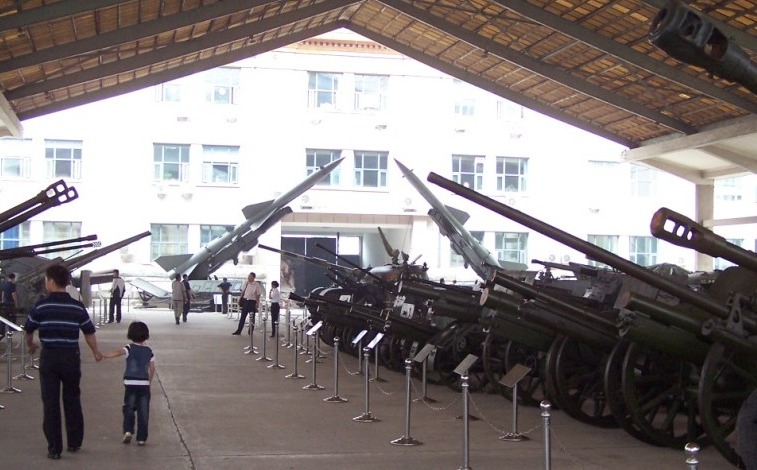
DAILY PHOTO: Walking Amid the Big Guns

Taken in the summer of 2008 in Beijing at the Military Museum.

Taken in the summer of 2008 in Beijing at the Military Museum.

BOOK REVIEW: The Art of Peace by Morihei Ueshiba and John Stevens

The Art of PeaceThe Art of Peace by Morihei Ueshiba

My rating: 5 of 5 stars

Amazon page

The edition of The Art of Peace that I read is divided into three parts. Part I is a brief biography of Morihei Ueshiba, who was known as Ō-sensei to Aikidō practitioners and other admirers. Part II contrasts the art of war to Ueshiba’s art of peace. Part III is a collection of aphorisms and brief statements outlining the art of peace.

Ueshiba is the founder of Aikidō, a martial art that was derived in part from Daitō-ryū Aiki-jūjutsu, but which is distinct from that art in many ways. (e.g. the lack of set forms and emphasis on randori.) Along with Jigorō Kanō, Gichin Funakoshi, and a few others, Ueshiba is one of the pioneers of gendai budō, modern Japanese martial arts that take as their primary aim non-bellicose objectives like sport and self-defense. This is in contrast to the koryū budō (kobudō) which evolved primarily for war fighting. In contrast to Kanō’s Judō, which was first and foremost a competitive sport, Ueshiba’s Aikidō offered a particular approach to self-defense that was purely defensive and in which movement was harmonized to the opponent’s actions so as to perpetrate the least violence possible.

The biographic portion of the book is intriguing, but on a few occasions drifts from biography to hagiography. I feel that the suggestion of supernatural abilities does a disservice in the telling of Ueshiba’s story. By all accounts, Ueshiba was an accomplished and highly skilled martial artist, and I would like to read a full biography of his life (a biography exists, but I can’t comment on how well written it is yet.) Given Ueshiba’s pacifistic views, it would be easy to dismiss him as a pie-in-the-sky idealist who had no idea of the realities of the world. I don’t believe that is the case. However, when the biography tells stories of god-like superpowers, it makes it hard to take the man seriously as a martial artist. Either Ueshiba was skilled as an illusionist / mentalist (a distinct possibility) or some of the stories were embellished to deify the man. The story that comes to mind is one in which Ueshiba voluntarily faced a firing squad and emerged unharmed due to either ninja-like or Hollywood vampire movie style actions. This story is attributed to one of his students, Gozo Shioda, who passed away in the 1990’s.

We may get an indication of the roots of this appeal to the supernatural in an early statement about Ueshiba’s childhood fascination with individuals like En no Gyoja and Kukai who are themselves attributed supernatural abilities in stories. Ueshiba is clearly a man of faith. He suggests life should be lived on basis of 70 percent faith and 30 percent science. Full disclosure: I’m more skeptical than Descartes, and obviously favor an outlook more firmly rooted in science and rationality.

Part two includes extensive quotes from Ueshiba himself. It contrasts the arts of war with Aikidō in mental and physical aspects. A core theme of the book is that the martial arts shouldn’t be about learning to die, but rather learning to live. Ueshiba criticizes the past Shoguns who used the art of war to control people. Ueshiba’s views on the purpose of martial arts are stated in this part. From a physical point of view, Ueshiba emphasizes the lack of forms in Aikidō (Bruce Lee echoed similar sentiments on this subject.) There is an interesting comparison of Ueshiba to swordsman and Zen master Tesshu Yamaoka (about whom John Stevens also wrote a biography.)

Part three reads like the work of an ancient yogi in places, and, in other places, offers the stern admonitions to train hard that one would expect from a martial arts teacher. A recurring theme is that the martial artist should purge himself of pettiness, be it in the form of being judgmental, materialistic, fearful, selfish, or malicious. He goes as far as to say, “Be grateful even for hardship, setbacks, and bad people.”

Another theme is that one should strive to be natural and to make one’s movement natural. Ueshiba’s advice in this book is about virtue and the mind, and rarely strays into the subject of physical tactics. It does offer a little advice about types of distancing, where one should place one’s gaze, the power of circular movement, as well as discussing technique in the abstract. This is not a criticism. There are other books to learn more about physical technique. However, one should be aware that if one would like to know what Aikidō looks like, this isn’t the book for you.

This thin book provided me with a great deal to think about. I’d recommend it for martial artists, as well as for those interested in the life of this extraordinary man.

View all my reviews

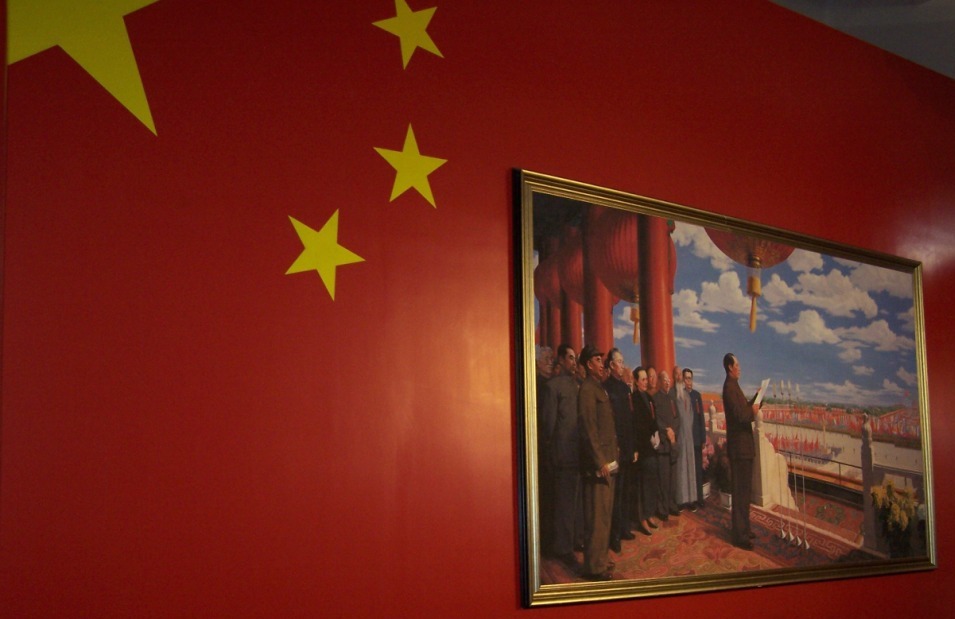
DAILY PHOTO: The Red Wall

Taken in the summer of 2008 in the Beijing Military Museum

Taken in the summer of 2008 in the Beijing Military Museum


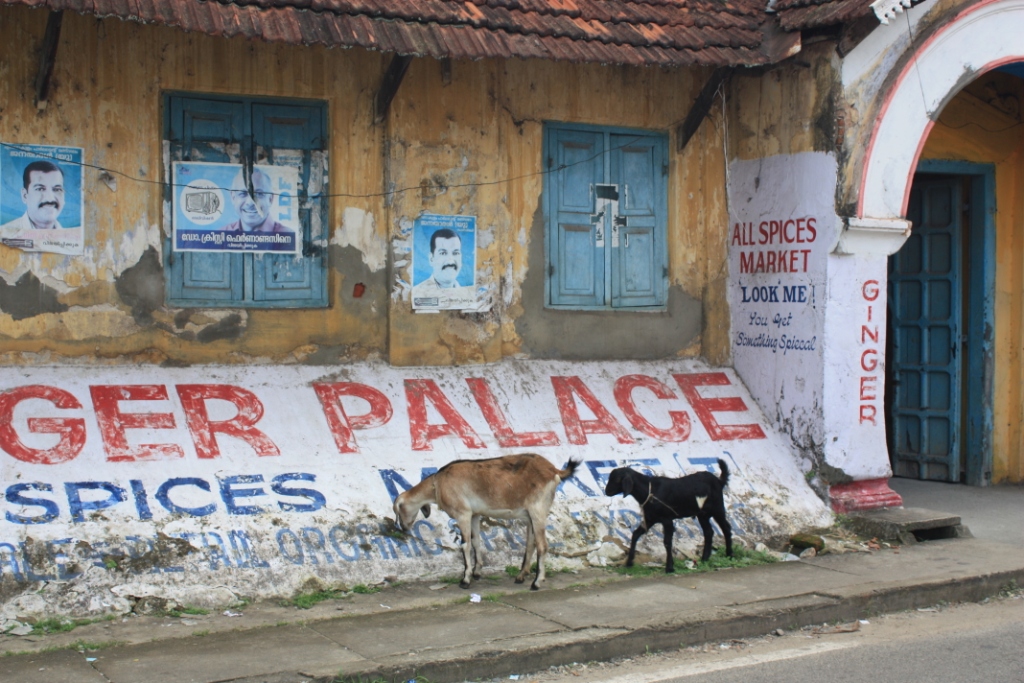
DAILY PHOTO: Kochi Street Goats

Taken July 7, 2014 in Kochi

Taken July 7, 2014 in Kochi

On your visit to Kochi (Cochin) you’ll note a different mix of fauna than elsewhere in India. Urban bovines are rare, but roving flocks of goats roam the streets. Also, cats are much more prominent than in doggie-dominant Bangalore. I suspect the latter has to do with the large amounts of seafood that comes ashore here.