The Internet [Verse in Tetrameter]

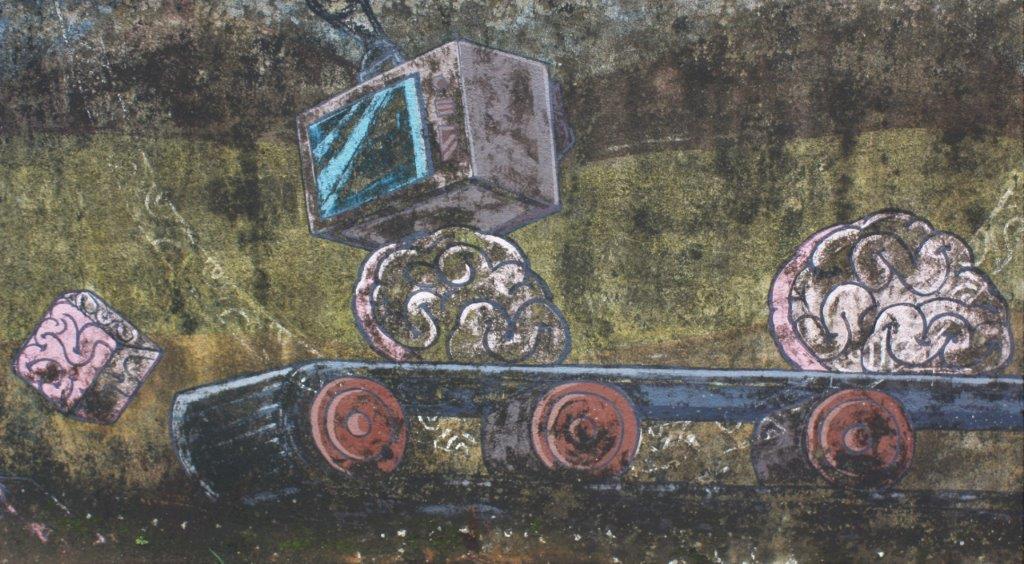
We've reached the place where screams aren't heard.
You'd think they'd build into a din,
but one can't grasp a single word.
It has become silent as sin.

The angry words are shot to black -
that inky void that's unpatrolled,
It's silent, yet all're struck by flak.
Still, no one admits being sold.

But each life 's a product consumed.
They wail away the night and day,
pretending they're not rightly doomed.
Some will say that it's here to stay...

True, but are we?

BOOK REVIEW: Philosophy for Gardeners by Kate Collyns

Philosophy for Gardeners: Ideas and paradoxes to ponder in the gardenPhilosophy for Gardeners: Ideas and paradoxes to ponder in the garden by Kate Collyns
My rating: 5 of 5 stars

Amazon.in Page

Out: March 1, 2022

This book can benefit not only gardeners interested in philosophy, but also philosophers interested in gardening. [If you’re in the intersect of people expert in both philosophy and gardening, the book probably won’t hold a great deal of intrigue as it’s written for a more general audience.] The gist is examples and analogies from gardening applied to elucidating philosophical concepts. In a few cases, these examples feel a bit forced. In most cases, they work just fine. But in a few other cases, the gardening analogies offer a powerful and unique insight that one would be unlikely to take away from a single-axis philosophy guide. For example, I found the relating of utilitarianism to the gardener’s dilemma of whether to start with a wildly overgrown bed or a relatively clean one offered a fresh perspective on the topic.

The book’s twenty chapters are divided into four parts. The parts are labeled “Soil,” “Growth,” “Harvest,” and “Cycles;” which I took to apply to fundamentals, change, outcomes, and the cycle of life and death. Part I, “Soil,” investigates topics in metaphysics, governance, and taxonomy. The second part, “Growth,” explores evolutionary adaptation, altruism / cooperation, the blank slate (and its critique,) and Zeno’s paradoxes. The penultimate section, “Harvest,” delves into topics such as forms, aesthetics, the reliability of senses, epistemology, and economic philosophy. Finally, “Cycles” discusses identity, logic and linguistic limitations, ethics, and pragmatism.

The book uses retro illustrations that look like the plates one might see in a book from the 19th century. There’s a brief bibliography, primarily of philosophical classics.

I’m always on the lookout for books that consider the perspective that humans exist within nature and our ways can’t be understood divorced from our place in the natural world. In that sense, I believe the book has much to offer.

View all my reviews

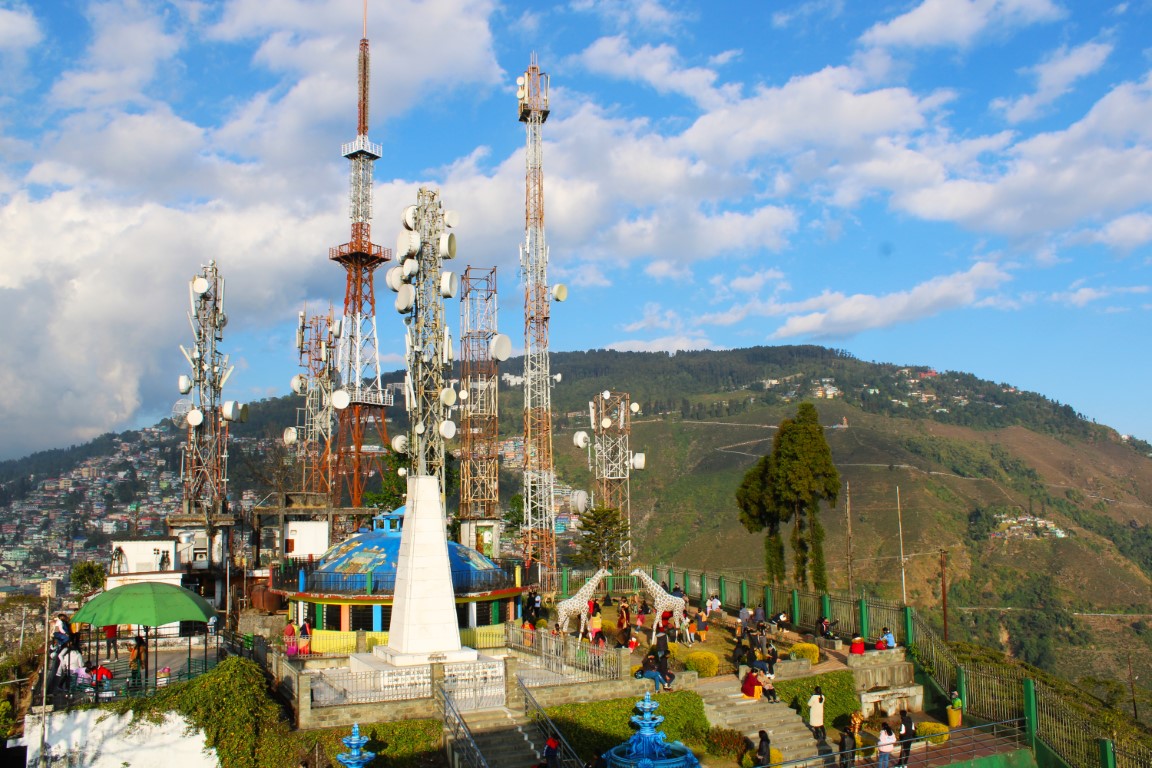
Bright Heights [Haiku]

sun-warmed rooftop,
clouds down in the valley --
i breathe in bright heights

DAILY PHOTO: View from the Eagle’s Crag, Kurseong

Taken in December of 2021 in Kurseong

BOOK REVIEW: Breathe! You are Alive [i.e. Anapanasati Sutta] Trans. & Commentary by Thich Nhat Hanh

Breathe! You Are Alive: Sutra on the Full Awareness of BreathingBreathe! You Are Alive: Sutra on the Full Awareness of Breathing by Thich Nhat Hanh
My rating: 5 of 5 stars

Amazon.in Page

One evening at the end of a rainy season in Shravasti (present-day Uttar Pradesh near the Nepali border,) the Buddha taught a practice using awareness of breath to quiet the mind. This is a translation with commentary by the Vietnamese Zen monk, Thich Nhat Hanh [RIP, FYI – he passed away on January 22nd.] (To clarify: Annabel Laity translated the book from Vietnamese to English, Thich Nhat Hanh translated versions of the sutra from Pali and Chinese.) The teaching is called the Anapanasati Sutta (i.e. “Sutra on the Full Awareness of Breathing.”) It consists of sixteen variations on the theme of “Breathing in, I know I’m breathing in. Breathing out, I know I’m breathing out.”

The sutra itself is only a few pages long, leaving commentaries and appendices to stretch the book to its barely one-hundred-pages. This isn’t a criticism; the commentary is beneficial because the sutra is bare bones. Even being somewhat aware of basic Buddhist concepts (e.g. impermanence, emptiness, liberation, etc.) I still found that the commentary offered some valuable insight about how to understand these ideas as well as how they relate to the practice. The Appendices consist of a variation on the practice and a translation of Chinese version of the sutra. The latter is a bit redundant, but one can also see little differences in translation that may be informative for some.

Besides presenting the practice, the book explains how it relates to (and is built around the principles from) the “Sutra on the Four Establishments of Mindfulness.” This book outlines the Four Establishments clearly enough to see how the Anapanasati practice is shaped by them. However, it’s worth noting that Thich Nhat Hanh also produced a translation and commentary on the Four Establishments that is entitled “Transformation & Healing.”

As someone who has found breath practices to be among the most effective tools for improving the mind, I benefited from this book tremendously. Besides its discussion of the practice and variations, I learned a lot from the philosophical elaborations that were made. I’d highly recommend this book.

View all my reviews

BOOK REVIEW: Saints: A Very Short Introduction by Simon Yarrow

Saints: A Very Short IntroductionSaints: A Very Short Introduction by Simon Yarrow
My rating: 4 of 5 stars

Amazon.in Page

This is an overview of the history of sainthood in Christianity: how the canonization process changed over time (i.e. from mostly dispersed to increasingly controlled by Rome,) what types of individuals have been selected (from ascetics and martyrs to the heads of orders and other more conventional candidates,) the changing incidence of women saints (while always far less than males, at times almost nonexistent,) and who were some of the more prominent (or atypical) saints.

The book’s organization is primarily a chronological flow, but there are a couple chapters that are of a more topical nature (e.g. on female saints and about hagiographies [“biographies” of saints that mix fact and fiction.]) It was fascinating to me to learn that we are amid a resurgence of canonization. The making of saints had fallen off for a time around the 1800’s (presumably at least in part because it became increasingly challenging / embarrassing in an “Enlightened” age to argue for miracles [“proof” of which is necessary as part of the process.]) However, that can’t be the full story because since John Paul II there’s been a substantial increase in canonization, while we have less reason to believe in supernatural phenomena than ever.

The book takes an agnostic / scholarly stance on the rightness or wrongness of sainthood and doesn’t go out of its way to discuss the scandalous. However, it does not shy away from – here and there – mentioning misbehavior of the Church (e.g. Papal Indulgences and political canonization.) The economist in me found it fascinating that Indulgences gained fungibility – i.e. tradable as an intermediary of value, i.e. like cash.

I found the book interesting despite its occasional drifts into obscure theological / historical territory. It’s readable and, at times, fascinating.

View all my reviews

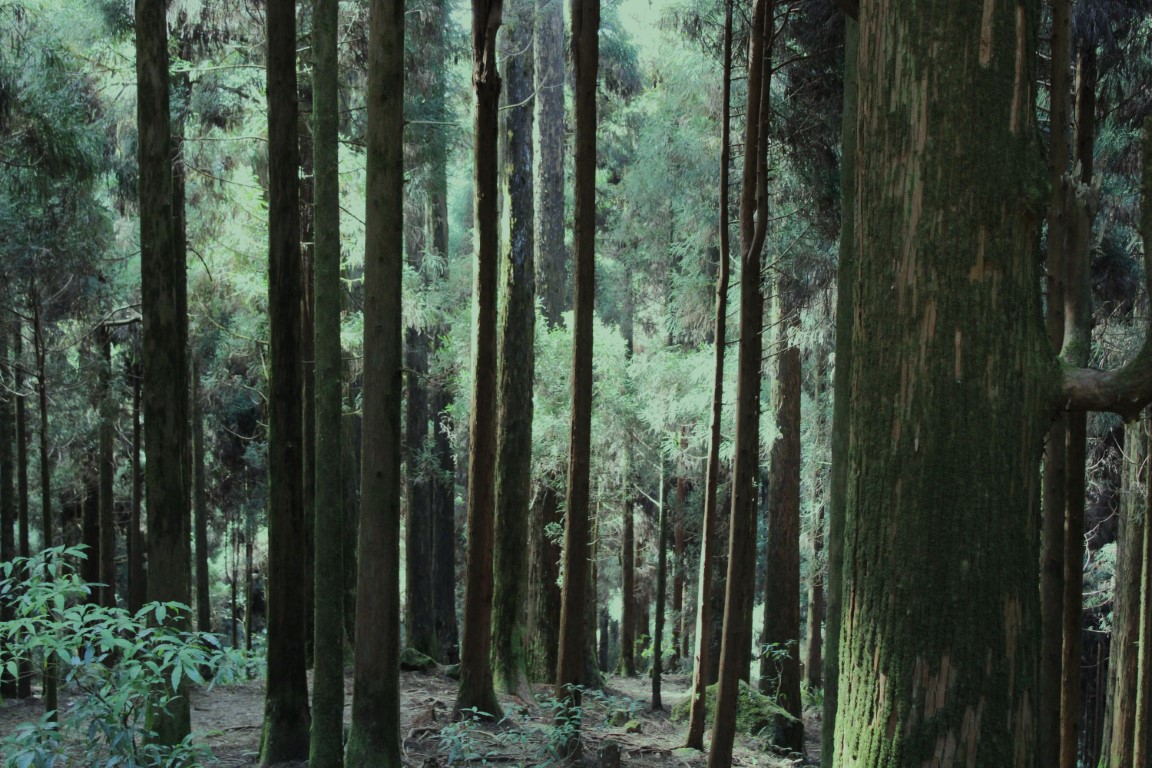
Haunted Forest [Tanka]

trees stand straight
in the woods they call "haunted;"
all i see are trees,
but maybe they're ghost trees
and I see nothing at all

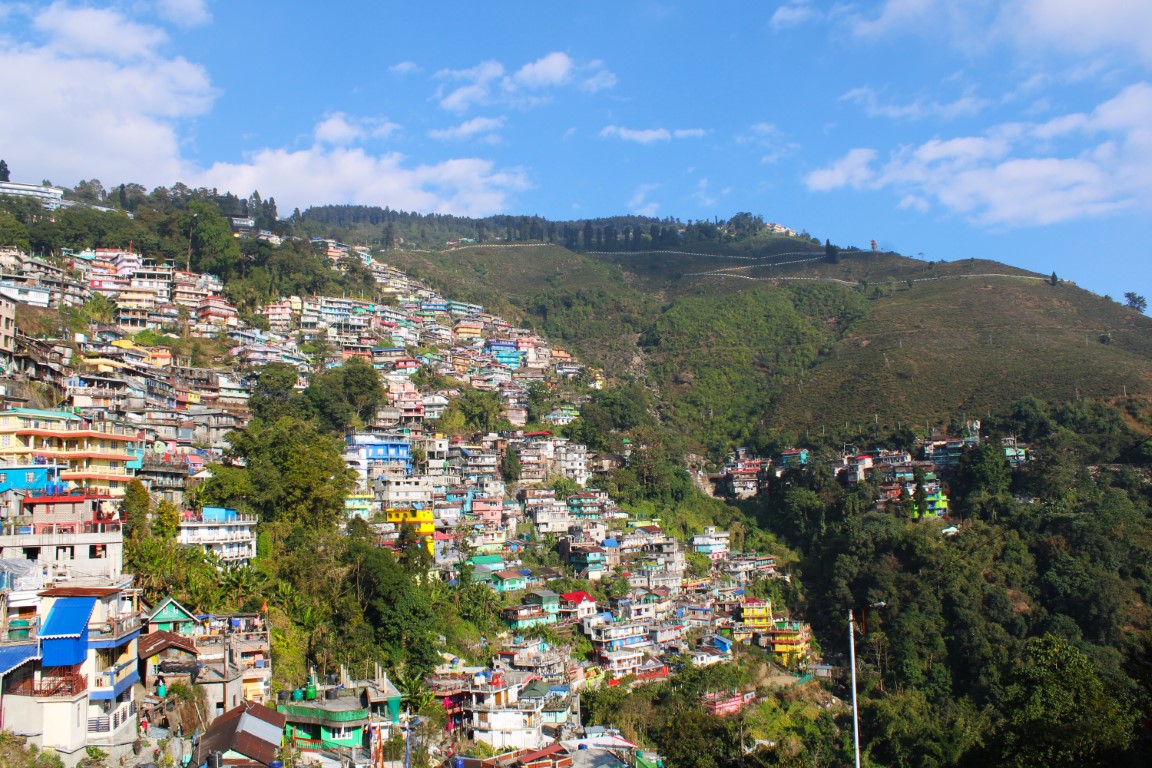
Color Town [Lai]

a colorful town -
no beige, gray, or brown -
flows wide

flows river-like down 
that soft, rolling moun-
tain side

watching sun go down
from the old playground,
i slide

DAILY PHOTO: Kangchenjunga, Two Views

Taken in December of 2021 from Darjeeling
Taken from the Batasia Loop, Darjeeling

Jaguar [Tanka]

even at rest,
the jaguar looks fast -
as long as
its eyes are focused
& its feet pad the ground