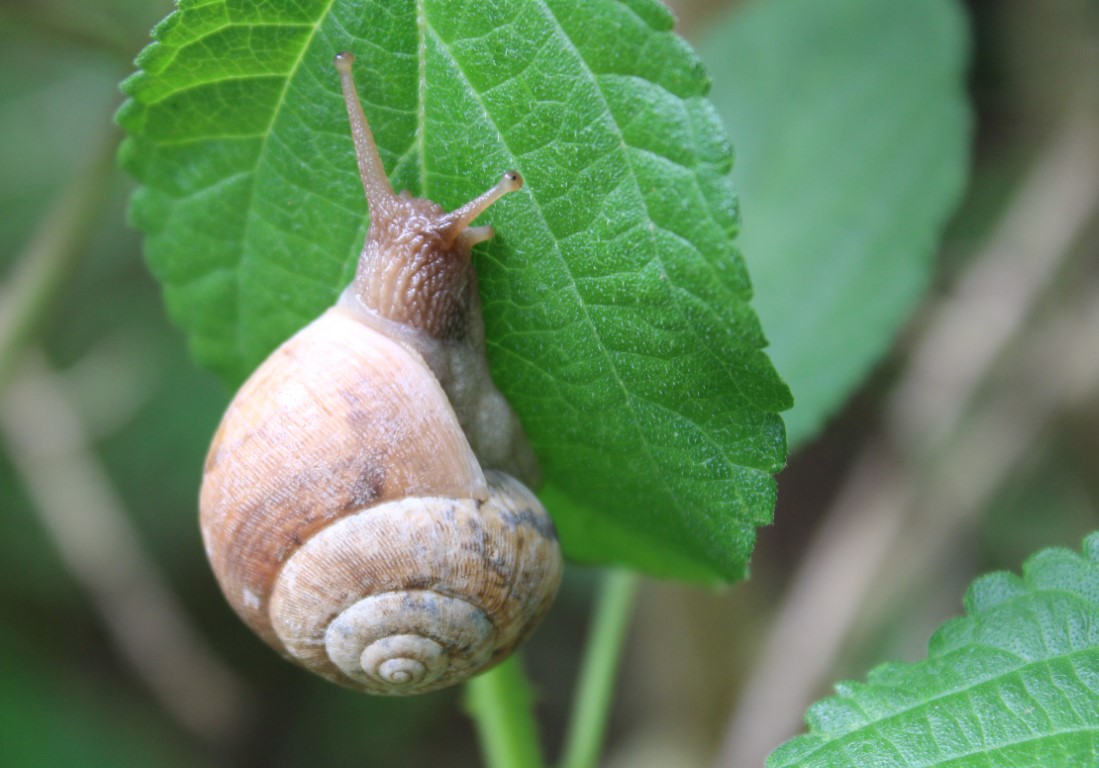
a snail dangles,
 on a leaf, in its house,
   effortlessly.

A for Albatross:
   "An Albatross around one's neck" is usually used by those who never read the opium-addicted Romantic's poem, and -- more importantly -- who don't have the foggiest what an "albatross" is.

B for Birds [and Bees]:
   If you were really taught about "the birds and the bees," you are NOT prepared to have sex.

C for Cat:
   A "cat nap" is a short sleep. I had a cat. It slept eighteen-hours a day, usually for several hours at a time. [Also, "'til the cows come home" means when you put the feed out. They will reliably show up. If your cows are coming home late, that's on you.]

D for Duck:
   Re: "having your ducks in a row." Baby ducks naturally follow in a line. If you're having to man-handle your ducks into rows, you should learn wu wei - the Taoist principle of effortless action.

E for Elephant:
   If there's "an elephant in the room," it is definitely not a good time to talk matters over. Get the hell out, now!

F for Fish:
   "Fish out of water" may be fine, but -- to be fair -- "man in water" is just as accurate. A little waddling Gentoo Penguin could outswim Michael Phelps in the 400m and be finishing its kipper snacks while Phelps was still slogging through his first length. And Phelps is among the fastest our species can put in water. If the average human were dropped in the ocean, he'd thrash around until he got a lungful of water and died...and that's a kilometer offshore.

G for Goose:
    With respect to a "wild goose chase"... fun fact: if you chase a goose, it might well chase you back. I once read a book on the most dangerous animals (for humans) and, to my surprise, the goose was in it. They don't kill many, but they put their fair share of people in the hospital with beak-cracked shins.

H for Horse:
    So, about "straight from the horse's mouth." If you got your information from a talking horse and are proud that it was 'right from the source,' you might want to consider cutting your acid blotters into smaller pieces.

I for Indian:
    Not sure how the term "Indian burn" came to be, but I've lived in India for almost a decade and have never known anyone to induce a friction burn by twisting the forearm of another person. You may be saying, "Well, it's meant as in, 'Native American burn.'" But I still don't see any evidence for that. [Don't get me started on 'Indian giving' as an insult against someone who has the gall to want their stolen shit back.] Now, if you called it the "shitty little American schoolboy burn," that -- I would totally buy.

J for Jackal:
    Jackals are, like anyone who's ever eaten at McDonald's, opportunistic omnivores, but to make them out to be the exemplars of "exploiting situations' is a bit harsh. For example, did you know a Jackal won't cheat on its spouse, even when an opportunity falls right in its lap.

K for Kangaroo:
    I don't know who came up with "kangaroo courts" but I don't think we know enough about marsupial jurisprudence to cast aspersions upon the Kangaroo legal system. I think it is -- like many instances on this list -- simply deflecting.

L for Leopard:
   Why would a leopard even want to change its spots? Certain humans (frequenting the Wal-Mart) go to great lengths to appropriate leopard spots. If they are fashionable for a plus-sized woman's stretch pants, why would the leopard think any differently.

M for March Hare:
   They say "mad as a March Hare" because March is mating season. I think the saying should be "Horny as a March Hare." Alliteration intact.

N for Nightingale:
   I suspect ninety-nine percent of those who use "sings like a nightingale" couldn't pick a nightingale's song out of an audio lineup of bird noises.

O for Oyster:
   "The world is your oyster" is supposedly a great thing. But when I elaborate by saying, "The world is your slimy raw foodstuff that has a twenty percent chance of making you vomitously ill," it doesn't sound like a good thing.

P for Pony:
    We need to stop people from bitching about the fact that their pony only knows one trick. It's a fucking pony. You should be grateful it knows the one trick.

Q for Quail:
   To "quail at ______" means to be timid in the face of some stimulus. I don't think it's particularly fair. If you were considered a delicacy, you'd be a bit skittish, too.

R for Rat:
    If you "smell a rat," it's definitely dead, and -- ergo -- will not be plotting against you.

S for Sheep:
    I shouldn't have to point out that a "wolf in sheep's clothing" is completely naked.

T for Turkey:
    A "Turkey voting for Christmas" is said to be acting against its own interests, but since everybody eats turkey for Thanksgiving and many people have ham for Christmas, I'd say the turkey knows exactly what it's doing. Even if it's one of the unlucky Christmas turkeys, it still got another month of living. Hell, there are humans who rack up million-dollar medical bills for the same outcome.

U for Underdog:
   The first use of the term "Underdog" was in 1859, long before the cartoon from my youth. Is there an "Uber-dog" or an "Overdog?" How did this even enter someone's mind?

V for Viper:
   "A nest of vipers," is another bit of anthropomorphizing. The premise of the idiom is that it's a group of nasty people getting together. Whereas the snakes in a viper's nest are as likely to be as good as any.

W for Weasel:
    When someone uses ambiguous words to obscure their meaning, we say they're using "weasel words." But as far as I can see, weasels have the good sense to keep their mouths shut. (Unlike those secret-betraying horses.)

X for XYZ:
   People say, "for XYZ reasons" when they mean for an extensive list of reasons that no one seems to know.

Y for Yak:
   Somehow, we use "yak" for the act of being relentlessly chatty, and -- once again -- I must say that I've found yaks to be less than gabby.

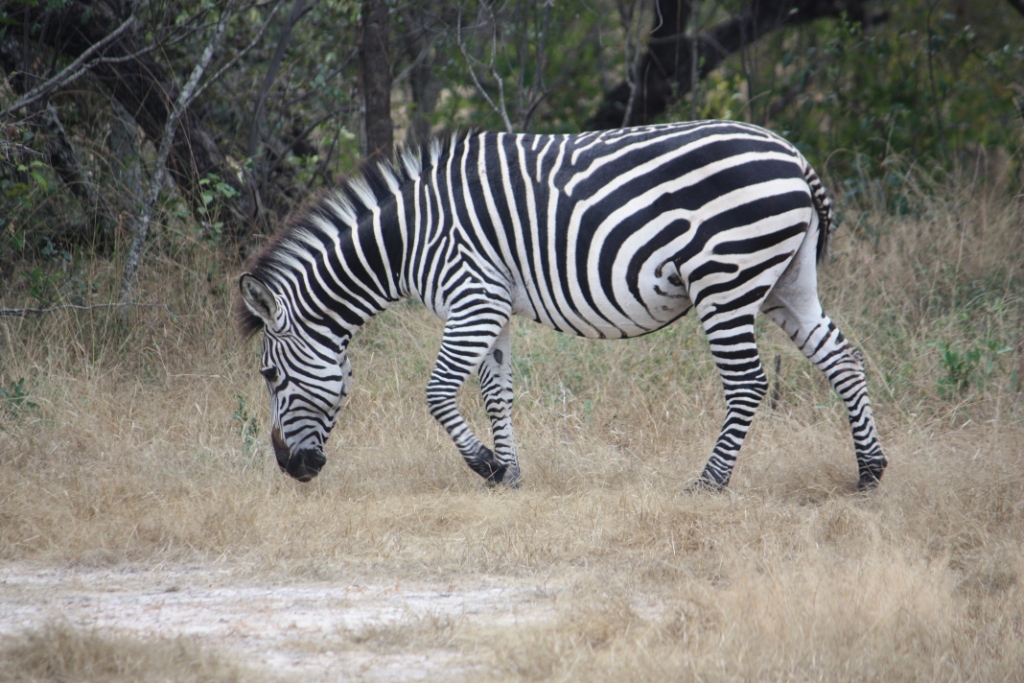
Z for Zebra:
    "A zebra can't change its strips." See: "L for Leopard."
don’t debate dolts
they’ll remain half-wits
after you’re spent
flex in wind
and rebound in calm
all in time
glide to dive
the hawk’s fearsome show?
gravity’s work
wise farmers
wait to do watering
eyes to clouds
mute traders
get extra carrots
for silence
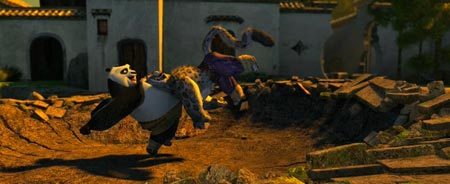
5.) Po’s Wu Wei: In his fight against Tai Lung at the end of the first film, Po takes a hard hit from his Snow Leopard nemesis, and through ripples of undulating flab returns a devastating strike that sends Tai Lung flying. While I wouldn’t recommend one try it at home as demonstrated in animated form, the idea of not resisting, but rather redirecting forces is an old school approach. It also reflects the ancient Taoist wisdom of wu wei, effortless action.
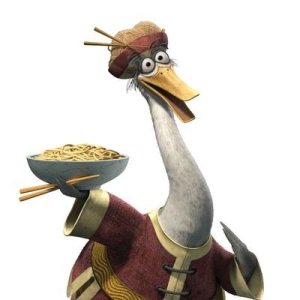
4.) “But I realized having you in Po’s life doesn’t mean less for me. It means more for Po.” In the third movie, there’s a scene in which Mr. Ping (Po’s avian dad by adoption) explains to Po’s panda dad, Li, how he came to grips with Li’s presence (which at first made Mr. Ping insecure and envious.) The lesson is to be careful in assigning a situation zero-sum status (one person’s gain requires another’s loss) without having reason to believe it reflects the reality of the situation.

3.) “There is just news. There is no good or bad.” This bit reflects an old Taoist story about a farmer and his neighbor. One day the neighbor sees the farmer has a beautiful new horse. The farmer tells the neighbor that it’s a wild horse that the farmer found at the back of his property. The neighbor says, “That’s good news.” The farmer says, “Good news? Bad news? Who’s to say?” The next day when the neighbor stops by the farmer tells him how his son got a broken arm trying to break in the wild horse. “That’s bad news,” says the neighbor. “Good news? Bad news? Who’s to say?” The next day the army comes by, conscripting young men, but the farmer’s son is not forced to go to war because the young man has a broken arm. The story goes on like that.
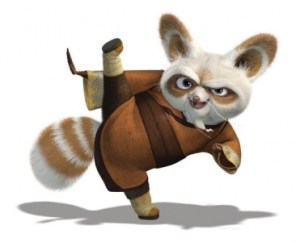
2.) “If you only do what you can do, you’ll never be more than you are.” In the third movie, after Master Shifu explains to Po how he knew that Po would fail on his first day as a teacher, the Master utters this bit of wisdom. It’s a warning to avoid loitering in one’s comfort zone.
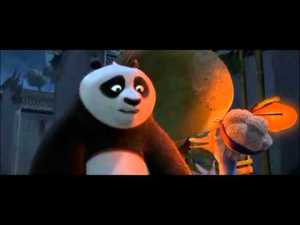
1.) “The secret ingredient of my secret ingredient soup…. The secret ingredient is … nothing… To make something special you just have to believe it’s special.”: For some reason, people love to get attached to trappings and secret wisdom, even to the point of losing sight of what’s important.
It reminds me of a story about Dr. Herbert Benson. Benson famously wrote a book entitled, “The Relaxation Response“ about the effects of relaxation on health. Back in the sixties, students of the Maharishi Mahesh Yogi (famously, the Beatles’ guru) asked Benson to do a study of the health effects of their teacher’s system of meditation. The Maharishi taught transcendental meditation, an approach in which students focused on mentally repeating a mantra that is “given” to them personally by the teacher. (I put the word “given” in quotes because the Maharishi actually charged a significant amount of money for these mantras.) Anyhow, after much badgering, Benson agreed to do the study. One has to realize that, while today such a study would be considered quite respectable, in those days a study of the effect of meditation on health would have been akin to a study of voodoo.
So, Benson conducted the study and — lo and behold — he found that patients who practice meditation do have better recoveries and less ill effects. The Maharishi and his people now love Herbert Benson. They sing his praises. But Benson is interested in science and couldn’t care less whether any particular guru’s system of meditation is validated. So he repeats the study with all participants using the word “one” as their mantra, and he gets the same result. Subsequently, other forms of meditation are studied, and with similar outcomes. Needless to say, the transcendentalists love affair with Dr. Benson was short-lived.
NOTE: I already did a post of the books published in 2017 that had the most profound effect on me. That post can be seen here. This one is about books I read in 2017, most of which weren’t published this year. The hyperlinks go to my GoodReads review of the respective book.

5.) Narconomics by Tom Wainwright: This is a look at how drug cartels have been drawing from the playbooks of successful multinational corporations to make their operations more efficient and profitable. It contains gripping journalism and–for an economics wonk such as myself–it hits the spot with regards to scholarly curiosity as well.

4.) The Man Who Wasn’t There by Anil Ananthaswamy: Neuroscience has been converging on a conclusion drawn by Buddhists long ago (though not necessarily sharing identical explanations /mechanisms) that the self is an illusion. Ananthaswamy considers the neuroscience of self by examining how nervous system ailments and injuries have challenged common explanations about what the self is based on what it feels to be a self. (e.g. Out-of-body experiences can be induced with electrodes. Some people deeply feel they are dead, or that they either have limbs that aren’t present or that limbs that are don’t belong to them.)
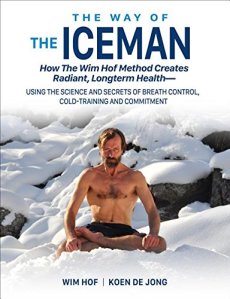
3.) The Way of the Iceman by Wim Hof and Koen De Jong: Any book that can get one to start taking cold showers has to be pretty persuasive. Wim Hof is known for his cold endurance “stunts,” but his argument in this book is that anyone can do it and that there are health benefits to doing so. The authors report on the science of said benefits as well as offering a program to start one’s way on such a program.

2.) Trying Not to Try by Edward Slingerland: Slingerland brings a fresh look at the ancient Chinese concept of wu-wei (apparently pronounced “ooo-way.”) Wu-wei is variously translated as “actionless action” or “to do without doing,” and–while that may sound like meaningless bumper-sticker wisdom–it reflects a state of effortless action that requires an elusive but powerful state of mind. Slingerland presents varied Taoist and Confucian approaches to the subject, but also relates the idea to modern ideas such as Mihaly Csikszentmihalyi’s “Flow.”

1.) How Enlightenment Changes Your Brain by Andrew Newberg and Mark Waldman: A neuroscientist and a positive psychologist team up to explain the common routes to the enlightened states of mind described in both Eastern religious / spiritual traditions and the mystic branches of Western religions (i.e. Jewish Kabbalah, mystic Christian sects, and Sufi Islam,) as well as their scientific underpinnings.
 Trying Not to Try: The Art of Effortlessness and the Power of Spontaneity by Edward Slingerland
My rating: 5 of 5 stars
This book’s paradoxical title is perfect for its paradoxical subject matter, which is famously expressed in such quotes as, “When nothing is done, nothing is left undone” [ver. 48 of the Tao Te Ching.] Slingerland lays down the ancient Chinese wisdom of wu-wei and de, but provides something novel by putting it in the context of the positive psychology and neuroscience of today. Wu-wei literally means “no doing,” but can be more meaningfully defined as “effortless action.” De (pronounced “duh”) is a charisma seen in people who have mastered the effortlessness and spontaneity of wu-wei.
While the book is built around the varied approaches of four Chinese philosophers—two Confucians (i.e. Confucius and Mencius) and two Taoists (i.e. Laozi and Zhuangzi)—the author relates this philosophy to the present-day thinking found in Daniel Kahneman’s “Thinking, Fast and Slow,” Mihaly Csikszentmihalyi’s conception of Flow, and the neuroscience of the subconscious.
The book consists of eight chapters. The introduction and the first two chapters outline the concepts of wu-wei and de using both Chinese and Western stories and examples to help clarify these arcane ideas and put them in the context of the social and spiritual spheres. Chapter 1 offers an extensive discussion of the operation of the brain as it relates to the discussion of effortlessness and spontaneity.
Chapters three through six make up the core of the book, and present the approach and thinking of Confucius, Laozi, Mencius, and Zhuangzi, respectively. This “boy-girl-boy-girl” Confucian-Taoist organization offers the reader sound insight into the varied approaches and allows one to see the evolution of thinking. Confucius gets the first cut, but his approach to effortlessness and spontaneity involves a great deal of effort and planning. It might seem that Laozi’s approach–which does away with effort and planning–might be more apropos, but it’s hard to imagine anything of benefit actually being spawned by such a loosy-goosy approach. The more nuanced approaches of Mencius and Zhuangzi offer additional insight, but do not eliminate the paradox. It’s this paradox that’s the subject of chapter seven.
The final chapter examines what the reader can take away–given that the paradox of wu-wei seems inescapable. The author proposes that, paradox or not, there is value in pursuit of effortlessness and spontaneity, and progress can be made by understanding and accepting said paradox.
The book has no graphics, but is annotated and has a bibliography–as well as an appendix table that summarizes the various approaches to wu-wei.
I enjoyed this book and found it fascinating. It’s highly readable, having humor and a wide range of examples from ancient myths to pop culture. The book offers a great value-added by considering the relevance of modern science and psychology to this ancient concept. I’d highly recommend this for individuals interested in Chinese / Eastern philosophy, as well as anyone hoping to bring a little more effortlessness and spontaneity into his or her life.


 Tiger Riding for Beginners