If babel fish existed or I could have access to a fluid translator, then perhaps Drukpa Kunley, (or, alternatively, Hanshan or Ikkyu,) because I would like to know how that level of freedom is achieved (and whether it’s all it’s cracked up to be.)
If I was on my own for language, maybe Thoreau or Whitman. (For largely the same reason.)
1.) love; 2.) a glorious turn of phrase; 3.) discovery; 4.) walking; 5.) swimming; 6.) stumbling upon an interesting and / or novel idea; 7.) movement; 8.) travel; 9.) street food; 10.) quiet; 11.) health; 12.) recognition that when things are at their very worst, they must get better — because everything is impermanent; 13.) an intense stretch; 14.) Whitman’s “Leaves of Grass;” 15.) undiscovered country; 16.) the hanging moment; 17.) a mystery-laden world; 18.) a moment of flow; 19.) a mountain path; 20.) a clear stream; 21.) the way of non-adversariality; 22.) a thing stripped to its simplest form; 23.) the moment breath turns the tide; 24.) animals being animals; 25.) a brief instant of free fall; 26.) the recognition that something that used to cause me angst or fear no longer does; 27.) when body, movement, and the world fall into alignment; 28.) first contact with someplace / something new; 29.) connection; 30.) the first sign that the struggle is paying off.
Centre of equal daughters, equal sons,
 All, all alike endear’d, grown, ungrown, young or old,
 Strong, ample, fair, enduring, capable, rich,
 Perennial with the Earth, with Freedom, Law and Love,
 A grand, sane, towering, seated Mother,
 Chair’d in the adamant of Time.
List three books that have had an impact on you. Why?
Steven Kotler’s The Rise of Superman changed the way I looked at mind-body development.
Water Margin [a.k.a. Outlaws of the Marsh] convinced me a sprawling epic could be worth reading if it was done well, it kicked my love of Chinese Literature into high gear, and it started me on the path of learning Chinese.
Self-Reliance and Other Essays by Ralph Waldo Emerson had a major influence on my early philosophical development — especially the titular essay.
Now, I’m thinking I should’ve pushed one of these out for Leaves of Grass by Walt Whitman, but perhaps another time.
If plays count as books, then most of Shakespeare’s plays. I’ve already reread a number of them (e.g. Hamlet, Macbeth, Merchant of Venice, and A Midsummer Night’s Dream.)
I’ve read Whitman’s Leaves of Grass, a couple times in full (and segments of it many times over) and expect to get to it again. I’ve read Voltaire’s Candide a couple times.
I could definitely see rereading Journey to the West, Water Margin, and Romance of the Three Kingdoms, but at this point I’m hoping my Mandarin will get good enough to read them in Simplified Chinese.
I’ve read a number of nonfiction texts multiple times — e.g. Sunzi’s Art of War, Miyamoto Musashi’s Book of Five Rings, Laozi’s Dao De Jing, and Emerson’s Selected Essays.
I’m generally not a fan of rereading books because there is so much awesome stuff out there to be read a first time. For all the reading I’ve done, there is still a massive number of classics that I have yet to touch. Usually there has to be a good reason for a reread, e.g. a new translation that promises to be improved / simplified, the book is just so potent as to still have lessons packed in after the first read, it’s a challenging read and the first go leaves a lot on the table, or — like The Little Prince — its enjoyment-to-time investment ratio is high.
Sometimes with one I love I fill myself with
   rage for fear I effuse unreturn'd love,
 But now I think there is no unreturn'd love,
   the pay is certain one way or another
 (I loved a certain person ardently and my
   love was not return'd,
 Yet out of that I have written these songs).
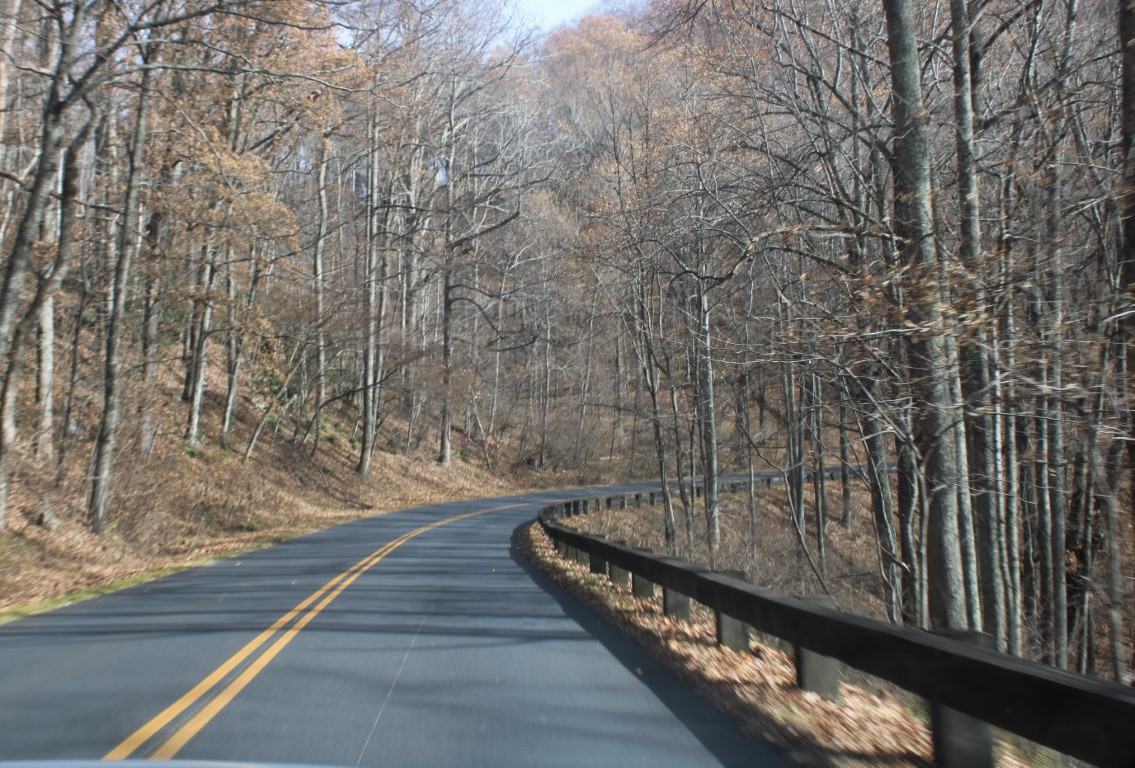
Allons! the road is before us!
 It is safe -- I have tried it -- my own feet have
   tried it well -- be not detain'd!

Let the paper remain on the desk unwritten,
   and the book on the shelf unopen'd!
 Let the tools remain in the workshop! let
   the money remain unearn'd!
 Let the school stand! mind not the cry of
   the teacher!
 Let the preacher preach in his pulpit! let the
   lawyer plead in the court, and the judge
   expound the law.

Camerado, I give you my hand!
 I give you my love more precious than
   money,
 I give you myself before preaching or law;
 Will you give me yourself? will you come
   travel with me?
 Shall we stick by each other as long as we
   live?
Allons! through struggles and wars!
 The goal that was named cannot be
   countermanded.

Have the past struggles succeeded?
 What has succeeded? yourself? your nation?
   Nature?
 Now understand me well -- it is provided in
   the essence of things that from any
   fruition of success, no matter what, shall
   come forth something to make a greater
   struggle necessary.

My call is the call of battle, I nourish active
   rebellion,
 He going with me must go well arm'd,
 He going with me goes often with spare
   diet, poverty, angry enemies, desertions.
Allons! to that which is endless as it was
   beginningless,
 To undergo much, tramps for days, rests of
   nights,
 To merge all in the travel they tend to, and
   the days and nights they tend to,
 Again to merge them in the start of superior
   journeys,
 To see nothing anywhere but what you may
   reach it and pass it,
 To conceive no time, however distant, but
   what you may reach it and pass it,
 To look up or down no road but it stretches
   and waits for you, however long but it
   stretches and waits for you,
 To see no being, not God's or any, but you
   also go thither,
 To see no possession but you may possess it,
   enjoying all without labor or purchase,
   abstracting the feast yet no abstracting
   one particle of it,
 To take the best of the farmer's farm and the
   rich man's elegant villa, and the chaste
   blessings of the well-married couple, and
   the fruits of orchards and flowers of
   gardens,
 To take to your use out of the compact
   cities as you pass through,
 To carry buildings and streets with you
   afterward wherever you go,
 To gather the minds of men out of their
   brains as you encounter them, to gather
   the love out of their hearts,
 To take your lovers on the road with you,
   for all that you leave them behind you,
 To know the universe itself as a road, as
   many roads, as roads for traveling souls.

All parts away for the progress of souls,
 All religion, all solid things, arts,
   governments -- all that was or is apparent
   upon this globe or any globe, falls into
   niches and corners before the procession
   of souls along the grand roads of the
   universe.

Of the progress of the souls of men and
   women along the grand roads of the
   universe, all other progress is the needed
   emblem and sustenance.

Forever alive, forever forward,
 Stately, solemn, sad, withdrawn, baffled,
   mad, turbulent, feeble, dissatisfied,
 Desperate, proud, fond, sick, accepted by
   men, rejected by men,
 They go! they go! I know that they go, but I
   know not where they go,
 But I know that they go toward the best --
   toward something great.

Whoever you are, come forth! or man or
   woman come forth!
 You must not stay sleeping and dallying
   there in the house, though you built it, or
   though it has been built for you.

Out of the dark confinement! out from
   behind the screen!
 It is useless to protest, I know all and expose
   it.

Behold through you as bad as the rest,
 Through the laughter, dancing, dining,
   supping, of people,
 Inside of dresses and ornaments, inside of
   those wash'd and trimm'd faces,
 Behold a secret silent loathing and despair.

No husband, no wife, no friend, trusted to
   hear the confession,
 Another self, a duplicate of every one,
   skulking and hiding it goes,
 Formless and wordless through the streets of
   the cities, polite and bland in the parlors,
 In the cars of railroads, in steamboats, in the
   public assembly,
 Home to the houses of men and women, at
   the table, in the bedroom, everywhere,
 Smartly attired, countenance smiling, form
   upright, death under the breast-bones,
   hell under the skull-bones,
 Under the broadcloth and gloves, under the
   ribbons and artificial flowers,
 Keeping fair with the customs, speaking not
   a syllable of itself,
 Speaking of any thing else but never of
   itself.
Allons! after the great Companions, and to
   belong to them!
 They too are on the road -- they are the
   swift and majestic men -- they are the
   greatest women,
 Enjoyers of calms of seas and storms of seas,
 Sailors of many a ship, walkers of many a
   mile of land,
 Habituès of many distant countries,
   habituès of far-distant dwellings,
 Trusters of men and women, observers of
   cities, solitary toilers,
 Pausers and contemplators of tufts,
   blossoms, shells of the shore,
 Dancers at wedding-dances, kissers of
   brides, tender helpers of children, bearers
   of children,
 Soldiers of revolts, standers by gaping
   graves, lowerers-down of coffins,
 Journeyers over consecutive seasons, over
   the years, the curious years each emerging
   from that which preceded it,
 Journeyers as with companions, namely
   their own diverse phases,
 Forth-steppers from the latent unrealized
   baby-days,
 Journeyers gayly with their own youth,
   journeyers with their bearded and well-
   grain'd manhood,
 Journeyers with their womanhood, ample,
   unsurpass'd, content,
 Journeyers with their own sublime old age
   of manhood or womanhood,
 Old age, calm, expanded, broad with the
   haughty breadth of the universe,
 Old age, flowing free with the delicious
   near-by freedom of death.








 Tiger Riding for Beginners