PROMPT: Everyone Should Know

Daily writing prompt
What’s something you believe everyone should know.

While any individual’s ability to substantially change the world is minimal, one’s ability to change how one experiences the world is vast. Cultivate the dispassionate witness. #Sakshi Bhava

Also, how to swim, change a tire, and juggle while riding a unicycle.

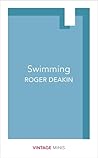
BOOKS: “Swimming” by Roger Deakin

Swimming: Vintage MinisSwimming: Vintage Minis by Roger Deakin
My rating: 5 of 5 stars

Publisher Site – Vintage Minis

This book contains a collection of excerpts from the book Waterlog by Roger Deakin. It’s one volume from a series of short books that contain essays, stories, poems, or book excerpts that is put out by Penguin under the imprint “Vintage Minis.” The book describes the author’s experiences of wild swimming throughout Britain. The description of nature and of the exhilarating experience of wild swimming are beautifully composed, and it’s an all-around pleasant read.

If you’re interested in wild swimming, I’d recommend this book.

View all my reviews

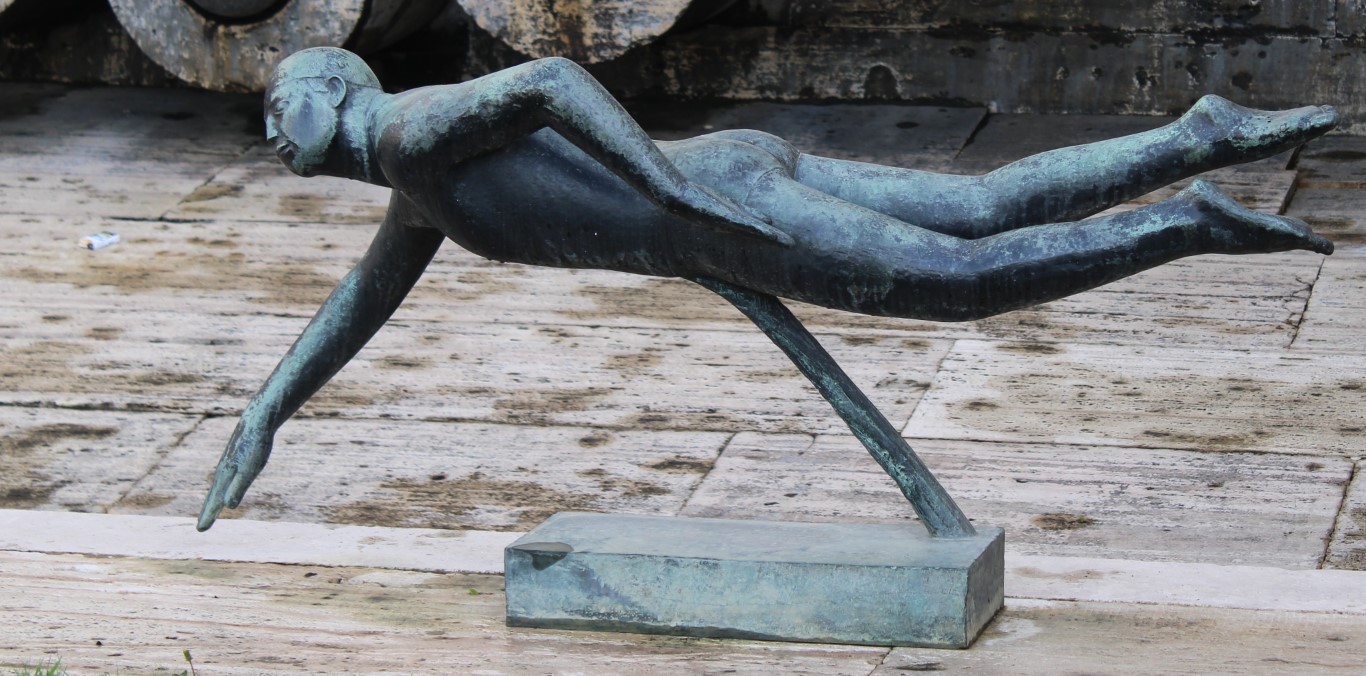
Swimmingly [Free Verse]

Swim through the world
- effortlessly -
Don't crave speed;
Maximize the glide.

With each stroke,
Sail as far as the limbs
will send one.

Don't thrash. Don't splash.
Don't gasp.

Feel the catch. Feel the pull.
Don't let short, wild motions
exhaust one.

Breathe!

Be wary of drag.
Put less effort
into propulsion,
And more into streamlining --
Shoot through the void,
without struggle.

Never lose sight of the value
of a good glide.

BOOKS: “Swimming: Made Easy” by Terry Laughlin

Swimming Made Easy: The Total Immersion Way for Any Swimmer to Achieve Fluency, Ease, and Speed in Any StrokeSwimming Made Easy: The Total Immersion Way for Any Swimmer to Achieve Fluency, Ease, and Speed in Any Stroke by Terry Laughlin
My rating: 4 of 5 stars

Google Books Page

I learned a lot from this book’s emphasis on how to smooth out and lengthen one’s strokes. The author describes his approach as teaching “fishlike” swimming, and effortlessness is emphasized.

The book covers all four of the strokes one sees in competitive swimming (i.e. crawl [a.k.a. freestyle,] backstroke, breaststroke, and butterfly.) For each stroke one learns how to improve balance, stroke length, and fluidness, as well as a bit about breath and coordination.

The book is presented in two parts. The first is the more theoretical bit and the second describes drills one can use to improve one’s technique. Part one is longer, more detailed, and written in more readable prose. Part two is shorter, more picture-laden, and tends to stick to bullet points. Photos are monochrome, mostly from above water level, and of varying degrees of clarity / informational value.

My biggest peeve with the book is that it frequently breaks into advertisement for other products (i.e. DVD’s [dates the book, as I’m pretty sure no one has an operational DVD player anymore] and gear.)

I’d recommend this book for readers interested in learning to swim more efficiently. The book is geared toward competitive swimmers interested in shaving time, rather than recreational swimmers who are just interested in a move pleasant experience (e.g. if one swims for fun, one will probably not be running a sequence of drills as that kind of defeats the fun of the activity.)

View all my reviews

PROMPT: Walk or Run

How often do you walk or run?

Every day. And sometimes I crawl, and – if there are monkey bars – I swing.

BOOK REVIEW: Mindfulness in Wild Swimming by Tessa Wardley

Mindfulness in Wild Swimming: Meditations on Nature & Flow (Mindfulness series)Mindfulness in Wild Swimming: Meditations on Nature & Flow by Tessa Wardley
My rating: 4 of 5 stars

Amazon.in Page

Release Date: June 13, 2023

As the title suggests, this is a book about combining mindfulness and swimming in natural bodies of water. It’s part of a large series of “Mindfulness and …” books, and this particular volume is a re-release of a title that came out a couple years back.

While the book does provide an overview the basic methods and considerations for both mindfulness meditation and wild swimming, it’s largely a peptalk or enticement to take up wild swimming as a means to improve awareness (as well as to bolster physical health and mental well-being.) That said, some of this peptalk is artfully, almost poetically, written, and the book is a pleasure to read.

The book discusses solo swims versus those in a group, and it even explores using onshore experiences to bolster mindfulness — e.g. using the sensory experience of the water as a focal point for practicing awareness. The around- (v. in-) water discussions are probably in part because the book uses seasons as a secondary mode of organization, and long and leisurely winter swims in lakes and rivers aren’t an option for people in many parts of the world.

I picked up some interesting food-for-thought in the book, and — as I say — it made for enjoyable reading.

View all my reviews

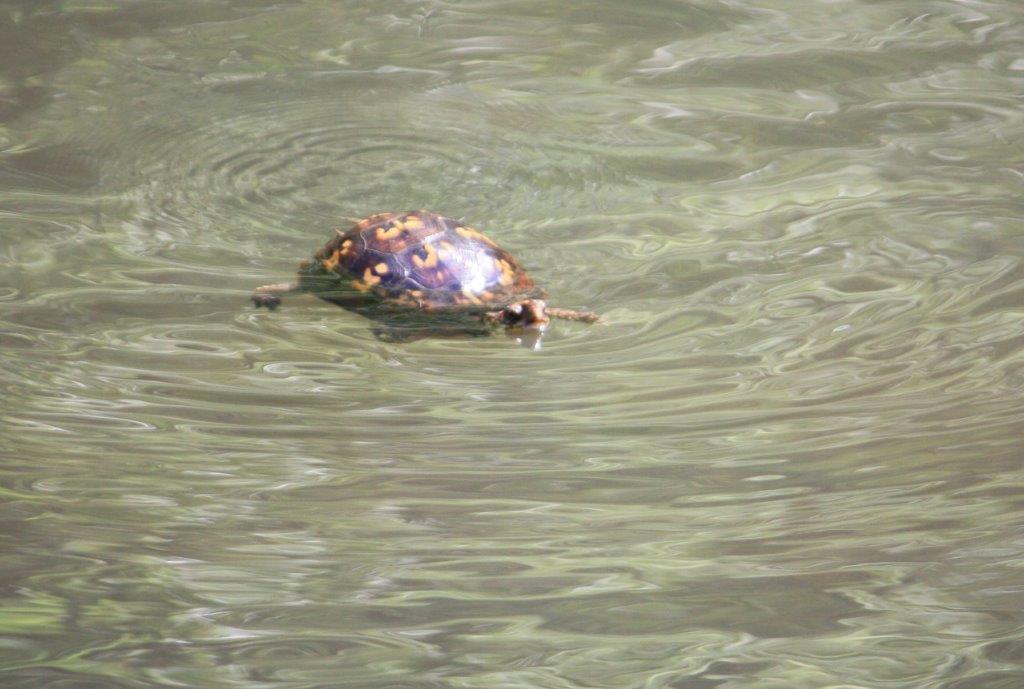
Swimming Turtle [Haiku]

on a fine spring day,
 a turtle swims leisurely
  in sun-warmed waters.

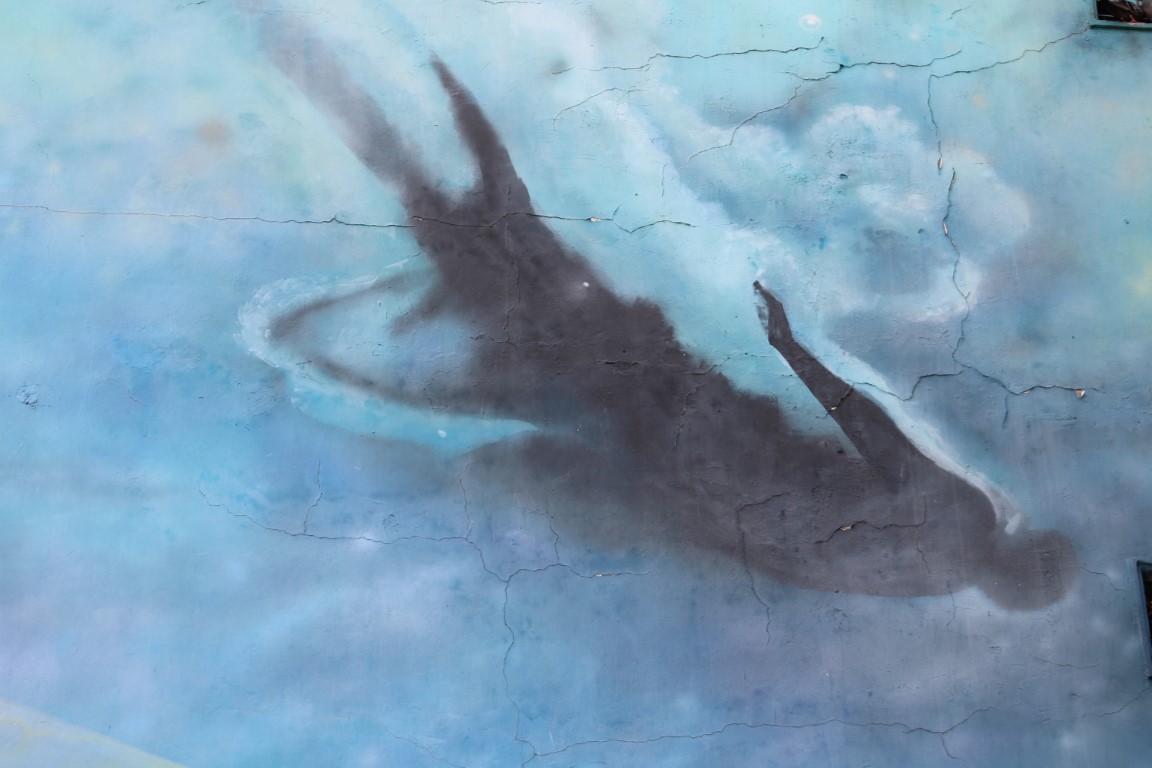
Submerge! [Free Verse]

a solid, black silhouette
sinks

submerge!
submerge!

it struggles to plunge
&
not be kicked back up --
to not bob like a wine cork
in the dark sea

but it seems to have
no mass to sink

but the right mass
to fly