BOOKS: “The Varieties of Religious Experience” by William James

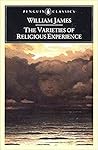
The Varieties of Religious Experience: A Study in Human NatureThe Varieties of Religious Experience: A Study in Human Nature by Dr. William James
My rating: 5 of 5 stars

Project Gutenberg — Free Online

This book is now more than 120 years old and yet is still widely read and is still provoking thought about the nature of religious experiences and how they should be considered by academia. The book is a write-up of a series of twenty lectures that the famous American Philosopher-Psychologist, William James, delivered at the University of Edinburgh in 1901-02.

There are a few things that impressed me about this book. First, James was skilled with language and clever in conveying ideas, resulting in a good bit of quotable material and stimulating ideas.

Second, James’s writings about Eastern practices and philosophies were impressively clear and faithful. In those days, there wasn’t a lot translated from Sanskrit, Pali, etc. and what had been translated was frequently done by outside academicians with no firsthand experience with Eastern systems — e.g. Hinduism or Buddhism. This meant that the writings about Eastern Philosophy and practices from those days were often contorted by a Western / Abrahamic frame in a way that distorted the true nature of those traditions. James seems to have gained at least some of his understanding from someone with enough practical experience to produce accurate descriptions. Furthermore, James avoids spewing myths and misapprehensions by being humble in stating what is merely his understanding. It should be noted that James does write much more about Abrahamic traditions (as one would expect given his direct experience,) but it’s hard to plumb the depths of mysticism without looking to the East where such practices reached such advanced states.

Finally, I was impressed with James’s ability to walk the line of believer and scholar in a way that was fair both to religion and the religious but also to the scientifically-minded rational sceptic. So much of what I read on the subject takes a vitriolic tone of strict opposition and often unfairly depicts the positions of the other side (to be fair, usually this seems to be because the critic doesn’t understand the views of the other side and so produces an interpretation of the opposing ideas conforming to their own worldview, rather than just lying to win.) [As was attributed to James as well as others, “…people think they are thinking when they are merely rearranging their prejudices.”]

I’d highly recommend this book for readers interested in philosophy of religion and the psychology of religious experience.

View all my reviews

BOOKS: “The Secret of the Golden Flower” ed. / trans. by Thomas Cleary

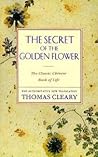
The Secret of the Golden Flower: The Classical Chinese Book of LifeThe Secret of the Golden Flower: The Classical Chinese Book of Life by Lü Dongbin
My rating: 4 of 5 stars

Online – Archive.org

This is a manual on Taoist inner alchemy practices, particularly a meditative practice called “turning the light around.” The book has been attributed to Lü Dongbin, said to be an immortal who lived during the Tang Dynasty, though there are differing views about the manual’s actual origins. While it is nominally a Taoist manual, it also discusses the Buddhist approach extensively (and Confucian ideas to a lesser extent) such that it could be considered a Buddhist teaching as much as a Taoist one.

The Cleary translation seems to exist not merely to provide an English translation of this Chinese manual, but to combat the misunderstandings perpetrated by the earlier English translation, that of Richard Wilhelm, a translation famously associated with the psychoanalyst Carl Jung. Neither Wilhelm nor Jung had any depth of understanding of Taoist and Buddhist methods and philosophy, and Wilhelm’s grasp of the Chinese language, itself, seems to have been fairly rudimentary. (At least the Chinese of the 1600’s, which is when the edition that Wilhelm is believed to have worked from is dated.) Thus, there is a lot of peddling of the notion that the ideas of this manual were in line with twentieth century psychotherapy in ways that were really not true — either because Wilhelm was mistaken or wanted them to be true or some combination, thereof.

The translation, itself, is quite short and makes up less than half of the text length of this book. More than half consists of extensive notes as well as an Afterward. While I have complained many times about publishers padding out pamphlet length publications to make them salable at book prices, in this case I believe the “ancillary” matter is helpful to achieving a better understanding of the text. The translation itself is not only sparse but features a bit of Taoist and Buddhist arcana that is likely to be unfamiliar — even to those with some understanding of the traditions. The notes and afterward help one to comprehend this book’s ideas much better.

If you’re interested in Taoist inner alchemy or Buddhist meditative practices, this book is worth checking out. That said, it can be a bit of a tedious read, flipping between the translation and the notes to make sense of ideas that don’t readily translate.

View all my reviews

“Some keep the Sabbath going to Church –” (236) by Emily Dickinson [w/ Audio]

Some keep the Sabbath going to Church --
I keep it, staying at Home --
With a Bobolink for a Chorister --
And an Orchard, for a Dome --

Some keep the Sabbath in Surplice --
I, just wear my Wings --
And instead of tolling the Bell, for Church,
Our little Sexton -- sings.

God preaches, a noted Clergyman --
And the sermon is never long,
So instead of getting to Heaven, at last --
I'm going, all along.

BOOKS: “Tranquil Sitting” by Yin Shi Zi

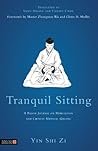
Tranquil Sitting: A Taoist Journal on Meditation and Chinese Medical QigongTranquil Sitting: A Taoist Journal on Meditation and Chinese Medical Qigong by Yin Shih Tzu
My rating: 4 of 5 stars

Publisher’s Site

This manual is an English translation of a work earlier published in Chinese. It is nominally on Taoist meditation and is written by a Taoist author, but it does include discussion of Buddhist practices as well (specifically Mahamudra.) Also, part of the author’s declared intent with this text is to write in a manner approachable to a wider audience, and because of this sect is rendered less important. So, for example, the book employs more scientific and physiological modes of explanation as opposed to meridians and other conceptual approaches from Traditional Chinese Medicine.

The book is presented in two parts. I found the first part much more beneficial and productive. Said first part is a general guide to meditation. It discusses fundamentals, theory, physiology, and how to align one’s living with a meditative practice (i.e. how diet, breathwork, sleep, etc. influence one’s practice.)

The second part consists of long and fairly detailed descriptions of the author’s experiences with both Taoist and Mahamudra meditation. I didn’t find this part useful, and I believe it may be counterproductive. Discussion of the author’s subjective experience may lead readers to get hung up on chasing identical experiences to the detriment of just practicing. It may give false ideas about “correct” and “incorrect” experiences of the meditation.

Overall, it’s a fine guide to meditation, particularly the first (i.e. larger) part. I can’t say that it breaks a lot of ground. A reader well-versed in meditation may not gain much insight from this book, but it’s as good as any to get started.

View all my reviews

BOOKS: “Taoism: An Essential Guide” by Eva Wong

Taoism: An Essential GuideTaoism: An Essential Guide by Eva Wong
My rating: 4 of 5 stars

Publisher Site

This book offers the reader clarity about the scope of Taoism, a daunting challenge given Taoism’s long history and how it overlaps with other schools of philosophy as well as with Traditional Chinese Religion, more broadly. The book is divided into three parts: history, specialties (magic, divination, ceremony, inward training, and karma yoga,) and practices (meditation, somatic practices [e.g. qi gong and taijiquan,] and rituals and ceremonies.) The history section covers a period from pre-Taoist shamanic practices of 5,000 years ago, practices that would inform early Taoism, to a period during which Taoism became entwined with Buddhism and Confucianism. The specialties and practices sections attempt to give the reader a broad overview while avoiding discussion of “how-to.”

I found this book to be informative and interesting. It did feel more effectively geared toward someone with an interest in Taoism as religion rather than Taoism as a philosophy. The discussion does sometimes get into the weeds on issues like ceremonies and talismans (again, not in a how-to fashion, but with some arcane detail nevertheless,) but — at the same time — besides some discussion of the teachings of the Tao Te Jing and some exploration of Taoist metaphysics in the Divinational Taoism chapter, there’s not a lot of insight into Taoism as philosophy. That said, it does end each chapter with a “Further Reading” section that can point readers interested in a specific topic elsewhere.

If you’ve ever been overwhelmed at one of those bright and complicated Chinese temples and would like some insight into what Taoists do and how it’s different (or not different) from what Confucianists, Traditional Chinese Religion practitioners, and Zen Buddhists do, this is a good book to check out. If you’re solely interested in Taoism as a school of philosophy or otherwise have a specific focus such as qi gong and breathwork practices, you can probably find books that are better tailored to your needs.

View all my reviews

PROMPT: Spirituality

Daily writing prompt
How important is spirituality in your life?

If by “spirituality” one means some kind of attachment to the supernatural, then not at all important. If by “spirituality” one means experiencing the world with a sense of awe, wonderment, and unmitigated bliss, then very important.

BOOKS: “Teachings of the Christian Mystics” ed. by Andrew Harvey

Teachings of the Christian Mystics (Shambhala Pocket Library)Teachings of the Christian Mystics by Andrew Harvey
My rating: 5 of 5 stars

Acquired at Blossom Bookhouse

This book gathers a collection of short writings (mostly paragraph to a few page excerpts as well as a few poems) on mystic Christianity from the time of the Gospels through the twentieth century. While the bulk of the pieces are (if not from scriptures) the work of clergymen and / or theologians, there are some by individuals known elsewise (e.g. poets William Blake and Gerard Manley Hopkins.) The book is arranged somewhat, but not perfectly, chronologically — enough that all the Biblical excerpts are lumped together at the beginning to form about the first quarter of the selections. While there are a number of one-off contributors, there are several pieces from each of: Gregory of Nyssa, the Desert Fathers, Saint Symeon the New Theologian, Saint Bernard of Clairvaux, Saint Teresa of Avila, and Eckhart von Hochheim.

One nice feature of this book is that it does include selections from a wide range of sources (Roman Catholic, Orthodox Catholic, and Protestant) over a range of time periods, and from scriptures both canonical and “apocryphal.” So, there are many varied ideas of the mystical experience and the path thereto. The flipside of this fact is that there doesn’t seem to be a lot of cohesiveness to the collection. It isn’t always clear why Harvey (the editor) thought a given excerpt was representative of mystic teachings versus of mainstream Christianity. There is a substantial introduction, but otherwise the selections are left to speak for themselves.

Still, it was a quick read, dense with insights, and I found — particularly some of the scriptural selections — to be among the most profound statements of Christian philosophy that I’ve seen.

View all my reviews

BOOK: “The Perennial Philosophy Reloaded” by Dana Sawyer

The Perennial Philosophy Reloaded: A Guide for the Mystically-inclinedThe Perennial Philosophy Reloaded: A Guide for the Mystically-inclined by Dana Sawyer
My rating: 4 of 5 stars

Amazon.in Page

Release Date: July 9, 2024

The good news is that this book does a thorough, clear, and balanced job of discussing Perennial Philosophy along a number of dimensions including metaphysics, psychology, theology, and aesthetics. The bad news is that it can lead one to believe there IS NO Perennial Philosophy, just a hodge-podge of (often disparate) assumptions about the grand metaphysical questions of life, the universe, and everything, assumptions that are usually Eastern, mystical, or both and which appeal to the kind of person who likes to say, “I’m spiritual, but not religious,” but which are all over the place, intellectually speaking. We learn more about the varied metaphysical perspectives that can be lumped under rubric Perennial Philosophy, than we learn of any internally consistent set of beliefs which distinguish the Philosophy from others. Sawyer does acknowledge that there is not a unified worldview that is Perennial Philosophy and that, instead, one must think in terms of “family resemblance.” The problem is that Perennial Philosophy displays the kind of family resemblance seen in a foster home. One can believe in a god or not, believe in a soul / persistent self or not, one can hold any number of beliefs about time, causation, creation, and other aspects of metaphysics. Sawyer does solidly distinguish Perennial Philosophy from Materialism, but it’s not clear why we needed it, given we already had various permutations of Idealism.

The book does provide a lot of food-for-thought, if often frustratingly so. The most important thing it does is lay out the various questions at the fore of Perennial Philosophy, how they’ve been addressed by different thinkers, and the crux of discord.

I did find myself disturbed by the arguments on occasion. A prime example is when Sawyer writes about students who describe themselves as non-spiritual but who enjoy going hiking. Because Sawyer couches the experiences that are had on a good hike in spiritual terms, he believes the students are wrong to describe themselves as “non-spiritual.” However, it’s far from clear why they need to twist their interpretations into line with his worldview. I suspect that his “non-spiritual” students, like me, see in “spiritual” types a need to escape the surly bonds of nature, to have magic exist in their worlds, something above and beyond nature. I see “spiritual” people as having a craving like the proverbial true-believer / flood victim whose neighbors come by in a truck and a boat to rescue him (and then rescue services come by with a helicopter,) but he turns them all down because “God Will Save Me!” Then he dies and goes to heaven and berates God for letting him drown, to which God says, “I sent a truck, a boat, and a helicopter. What do you want from me?” Well, he wanted a divine golden light to levitate him not some mundane solution based in the natural world; he wanted magic, rapturous rescue.

If you are interested in the various debates between Materialism and Idealism, this book is well worth reading, and if you describe yourself as “Spiritual, but not religious,” you’ll probably really love it.

View all my reviews

BOOKS: “One Hundred Poems of Kabir (1915)” Translated by Rabindranath Tagore

One Hundred Poems of KabirOne Hundred Poems of Kabir by Kabir
My rating: 4 of 5 stars

Amazon.in Page

Kabir was a fifteenth century Indian poet and mystic. This collection was translated by the Bengali Indian Nobel Laureate Rabindranath Tagore, and Tagore’s stylistic imprint is felt in these poems. The poems are overwhelmingly of a mystic / spiritual nature. Kabir was non-sectarian but extremely oriented towards mystic belief. He references the Koran and Vedas alike, but is more likely to communicate in secular, if mystical, terms.

How much the godly emphasis works for the reader will vary greatly. For me it was a bit excessive, often reading more like prayers than poems, but your results may vary.

The only thing I found actually disturbing was the repeated romanticization of sati, a practice in use during Kabir’s lifetime in which widows would be burned alive on their husband’s funeral pyre. Kabir repeatedly writes of sati as if it was always a completely voluntary act of raw passion and connection and was never motivated by being old and destitute (not to mention being societally pressured or, even, physically forced into it.)

The poems are well composed and engaging, and if you can get past the periodic sati propaganda, it’s a pleasant, almost euphoric, read.

View all my reviews

BOOK REVIEW: The Pocket Chögyam Trungpa by Chögyam Trungpa

The Pocket Chogyam TrungpaThe Pocket Chogyam Trungpa by Chögyam Trungpa
My rating: 5 of 5 stars

Amazon.in Page

This pocket-sized guide consists of 108 excerpts drawn from the writings of Chögyam Trungpa, a prolific — if controversial — teacher of Tibetan Buddhism. Chögyam Trungpa may have been most famous in the West for coining the English term “Crazy Wisdom,” and for founding Naropa University in Boulder, Colorado. [Note: while he coined the term “Crazy Wisdom,” he didn’t originate the concept, which existed already – arguably in multiple forms — in Vajrayana Buddhism from olden times.] Beyond basic Buddhist philosophy, he wrote extensively on Buddhist Psychology, Tantric Buddhism, and the Buddhist conception of warriorship.

The book is designed to be picked up at any point. There isn’t a formal grouping of concepts, but rather the book meanders around, revisiting ideas such as Enlightenment, Emptiness, emotional intelligence in multiple locations throughout the book. The entries are between a paragraph and a page long in most cases.

I found a great deal of food-for-thought in this book and would highly recommend it for those wishing to dip a toe into the teachings of Chögyam Trungpa.


View all my reviews