


My wonkish need to analyze the train wreck that is our present state of governance and social discourse.
PROMPT: Harmony
Reply

My wonkish need to analyze the train wreck that is our present state of governance and social discourse.
Being a traveler, I’m not even sure what my community would be. So, whatever it is, it’s probably not enough. I go to events (festivals, cultural performances, and such) but typically as an [alien] observer.
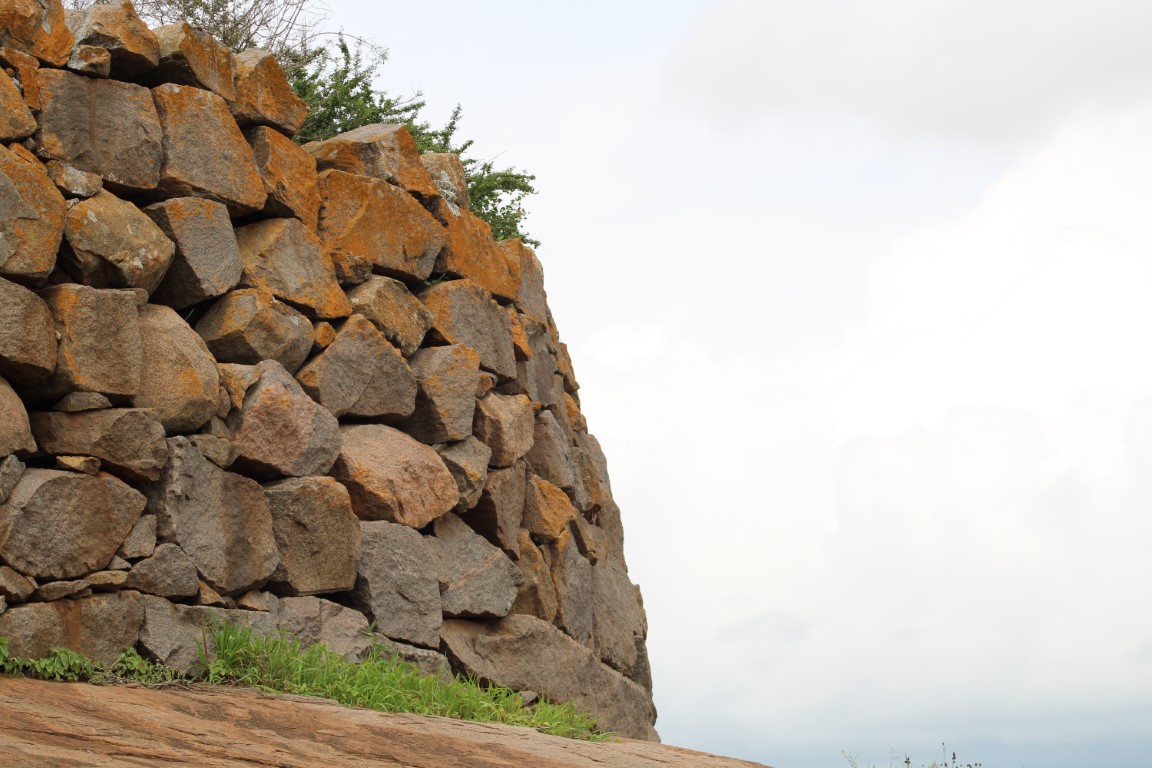
Something there is that doesn't love a wall,
  That sends the frozen-ground-swell under it,
  And spills the upper boulders in the sun;
  And makes gaps even two can pass abreast.
The work of hunters is another thing:
  I have come after them and made repair
  Where they have left not one stone on a stone,
  But they would have the rabbit out of hiding,
  To please the yelping dogs. The gaps I mean,
  No one has seen them made or heard them made,
  But at spring mending-time we find them there.
 I let my neighbor know beyond the hill;
  And on a day we meet to walk the line
  And set the wall between us once again.
 We keep the wall between us as we go.
 To each the boulders that have fallen to each.
 And some are loaves and some so nearly balls
  We have to use a spell to make them balance:
  'Stay where you are until our backs are turned!'
  We wear our fingers rough with handling them.
 Oh, just another kind of out-door game,
  One on a side. It comes to little more:
  There where it is we do not need the wall:
  He is all pine and I am apple orchard.
 My apple trees will never get across
  And eat the cones under his pines, I tell him.
 He only says, 'Good fences make good neighbors.'
 Spring is the mischief in me, and I wonder
  If I could put a notion in his head:
  'Why do they make good neighbors? Isn't it
  Where there are cows? But here there are no cows.
 Before I built a wall I'd ask to know
  What I was walling in or walling out,
  And to whom I was like to give offense.
 Something there is that doesn't love a wall,
  That wants it down.' I could say 'Elves' to him,
  But it's not elves exactly, and I'd rather
  He said it for himself. I see him there
  Bringing a stone grasped firmly by the top
  In each hand, like an old-stone savage armed.
 He moves in darkness as it seems to me,
  Not of woods only and the shade of trees.
 He will not go behind his father's saying,
  And he likes having thought of it so well
  He says again, 'Good fences make good neighbors.'
That’s a tough one because while I see value in communities, I’m also concerned that there is a rising trend toward tribalism and nationalism that will not be good for anyone — not to mention a shift toward virtual communities where anonymity and disconnect lead to people to act as though they were raised by hyenas. (I do know that, in reality, that’s an insult to the marvelous hyena, but I think it makes a sort of point for the non-hyena expert.)
I’ve been amazed at how India manages to have an intense sense of community in such a vastly super-tribal environment. (I’m using “supertribe” in Desmond Morris’s sense — i.e. a community which is too big for everyone to know everyone else, and which has a group dynamic that reflects that fact.) But it’s not as though there isn’t a dark side to this intensity of community — patriarchy, sectarian conflict, disempowered societal segments, etc.
America, by comparison seems to be experiencing a dearth of true community, which is driving people toward virtual “communities,” and in virtual communities people seem to fall into the shittiest versions of themselves. Not to mention the lack of community’s contribution to what I’ve heard called a “mental health crisis.”
I guess my preferences would be that community be: 1.) real and not virtual. 2.) that it exploit the advantages of diverse membership instead of wallowing in homogeneity and group think. 3.) that it doesn’t create overclasses and underclasses. And that, 4.) Community norms minimally negate individual freedoms.
That said, I’m not at all sure that the above criteria can be reconciled. Maybe the tradeoffs are too strong. Maybe – in our super-tribal world – the closest-knit society will always be the most xenophobic [fearful / disliking of outsiders,] and maybe tolerance and egalitarianism will always be accompanied by societal degradation. I have observed a strong inclination for people to think of compassion as a zero-sum game.
As I said, a tough one.
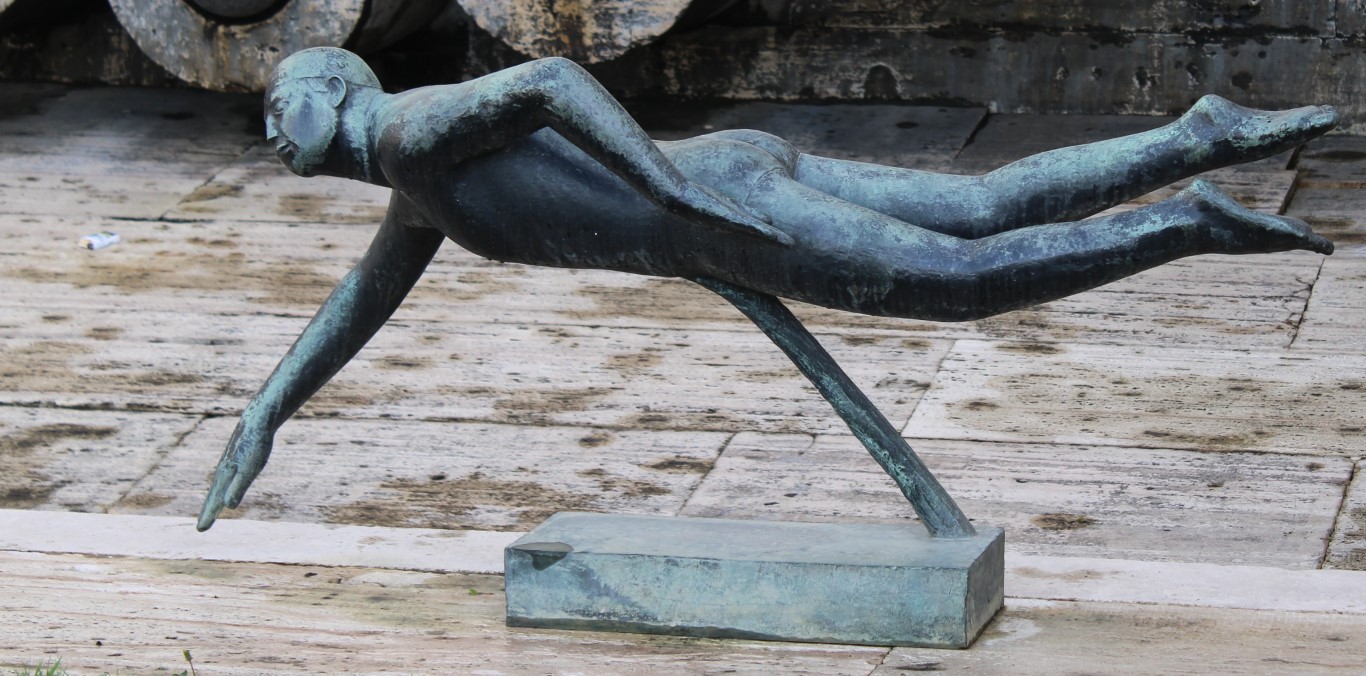
No man is an island,
 Entire of itself;
 Every man is a piece of the continent,
 A part of the main.

If a clod be washed away by the sea,
 Europe is the less,
 As well as if a promontory were:
 As well as if a manor of thy friend's
 Or of thine own were.

Any man's death diminishes me,
 Because I am involved in mankind.
 And therefore never send to know
    for whom the bell tolls;
 I tolls for thee.

Much Madness is divinest Sense --
   To a discerning Eye --
 Much Sense -- the starkest Madness --
   'Tis the Majority
 In this, as all, prevail --
 Assent -- and you are sane --
 Demur -- you're straightway dangerous --
   And handled with a Chain --
Modern mankind traded a life of struggle with occasional moments of terror (e.g. saber-tooth tiger attack) for a life of comfort with constant nagging anxiety (e.g. 40-, 60-, 80-hour work weeks and constant deadlines,) and hasn’t adapted well in the process. As such there are more mental health problems, inability to deal with adversity (or even conflicting ideas,) and an inability to exploit the freedom available. (i.e. The Enlightenment and subsequent liberal movements ensured that government and employers can’t exert undue influence over individuals’ lives, but still most people remain heavily constrained in their pursuit of self-betterment / self-realization by their exhaustion, comfort-addictions, or anxieties.)
There are two interrelated changes that I think would make for a much healthier society. First, education needs to put back some Socratic learning in education — i.e. active engagement of students with thinking and questioning [versus memorizing and skill practicing.] Presently, we have people graduating from colleges who may or may not be prepared for a job of corporate minionship, but who – upon hearing an idea that they find disagreeable – are unable to do anything but be angry or scared or anxious [i.e. from an idea.] An education that challenged students to contend with ideas (be they ideas that seem uncomfortable or feel reprehensible) through dialogue and critique, would convey some of the emotional intelligence (the lack of which has hamstrung our species, a species that may have intellectual intelligence out the wha-zoo.)
Second, we should have some sort of true coming-of-age ceremony of the variety only a few indigenous / tribal societies still do. I don’t mean a Bar Mitzvah or Quinceañera where the child is thrown a party and then they collect envelopes of cash. I mean the kind in which one goes out in the woods for seven days and stays alive solely of one’s own abilities. It’s true that we would have fewer human children, but the ones who came back would not only be more capable but would also be more in command of their emotional and mental selves. [And, to be perfectly frank, the last thing this planet needs are more humans running around — especially ones who need a vast carbon footprint to merely stay alive.]
Finally, we all need an intervention for phone / computer addiction: maybe two weeks in which there is no internet availability, whatsoever.
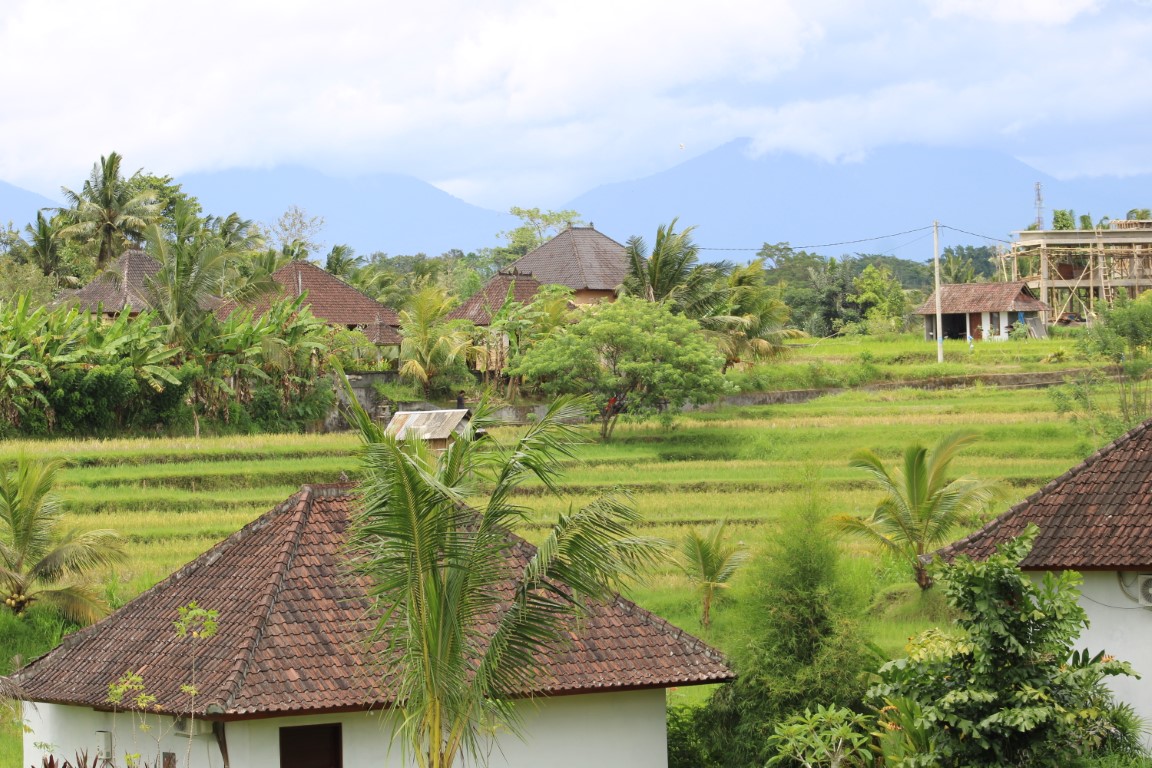
A construction worker once told me -
    for a building to last -
 depends not so much on
    its materials,
    nor even on its foundations,

but rather on the building being
    in balanced strain throughout.

A building stays up when its
    parts press into each other firmly,
    or pull at each other strongly,
    but never too out of balance.

This web of unseen forces
    allows the building stand solid
    against any huffing, or puffing,
    the world might throw its way.

A democratic society works the same.

It must have an establishment.

It must have a counterculture.

And these two elements must
    constantly pull at each other
    or mash into each other:
    tension & compression,
    compression & tension,
    tug-of-war & sumo.

If one side is unopposed, or too weak,
    the state will crumble into some kind of
    authoritarianism by another name.

Destroy your enemies at your own peril.
 Social and Cultural Anthropology: A Very Short Introduction by John Monaghan
 Myth: A Very Short Introduction by Robert A. Segal


