BOOKS: “The Activist” by Daniel Fried

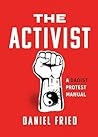
The Activist: A Daoist Protest ManualThe Activist: A Daoist Protest Manual by Daniel Fried
My rating: 4 of 5 stars

Publisher Page — Prometheus Books/

Release date: March 3, 2026

Taoist philosophy has been applied to many a subject over the centuries, from war to business to governance to relationships, but this is the first time I’ve seen it applied to activism in a substantive way. The book caught my eye because I’ve long recognized the central truth behind Fried’s work, which is that the tactics and mindsets of protesters often does them no favors and may even ensure failure (if one presumes the objective to be to change behavior and attitudes on a given topic into line with the protesters’ stance.) The problem is that protesters are often angry and combative, characteristics which may keep the choir (preaching to itself) warm and feeling self-righteous, but which seldom brings in new converts from among the undecided [let alone from the opposing side.] And if you didn’t need converts to your side, you wouldn’t have to protest in the first place. Given this tendency, Taoism could be argued to be an ideal source of strategy. Taoism proposes going with the grain, not leading with a fight, and avoiding useless activity.

This book provides interesting food-for-thought about how protesters might have more impact by adopting fewer belligerent and self-serving tactics. Unfortunately, the book also has stretches of stream-of-consciousness writing that — while perhaps consistent with the Taoist love of spontaneity — can be a bit of a strain on the reader’s ability to follow. This mostly takes place in the latter chapters.

I found this book to be intriguing. I can’t say that I came away from it having answered the question of whether Taoist philosophy is reconcilable with activism on a practical level. Taoism asks one to let the natural unfold, while protest movements want to guide a society in a particular direction (notably one by definition at odds which that which has fallen into place organically.) It’s not for lack of discussion that I haven’t reached a conclusion, but rather that questions remain for me on the pragmatic level (rather than the level of theory.) That said, I found the book well worth reading, despite a few points of low readability.

View all my reviews

BOOK: “Tell My Horse” by Zora Neale Hurston

Tell My Horse: Voodoo and Life in Haiti and JamaicaTell My Horse: Voodoo and Life in Haiti and Jamaica by Zora Neale Hurston
My rating: 5 of 5 stars

Author’s Book Site — Zora Neale Hurston Trust

This is a beautifully written and fascinating look at Jamaica, Haiti, Voodoo, Zombies, and the sinews that run between them. The first half of the book reads largely like a travelogue of, and introduction to, Jamaica and Haiti, respectively. In this half, Voodoo is only mentioned here and there as an aside. There is much more discussion of culture, race, and politics, notably the disheartening politics of Haiti. (I should point out for those unfamiliar with Harlem Renaissance figures, this book dates to the 1930’s — so current affairs are not addressed, but — unfortunately — Haiti has a long history of troubles.) The second half of the book delves much more intensely into Voodoo and the supernormal happenings broadly connected to it. Hurston’s exploration is neither as a tried-and-true believer, nor as a hardcore sceptic; rather she takes a more journalistic objectivity.

The language of this book is splendid, and Hurston produces many a quotable line. It is true that the subject matter, Voodoo, is extremely compelling, but this book is more than just a collection of tales of magic, superstition, and the weird. It also offers depth of insight into the cultures of these countries and their peoples. Hurston frequently mentions the differences between classes on the matter of Voodoo, the upper-class rejecting it as mere superstition and the lower classes often engaging with it as a way of life.

I’d highly recommend this book, not only for those interested in learning more about Caribbean Voodoo practices, but also for travelers with an intense curiosity about culture.

View all my reviews

PROMPT: Alternate Universe

Daily writing prompt
Describe your life in an alternate universe.

There are flying cars here. I fear my death will be by chucked beer bottle.

PROMPT: Modern Society

Daily writing prompt
What would you change about modern society?

In short, I think we need to foster emotional intelligence and not just academic intelligence, and we need to rebuild social interaction in a super-tribal world (i.e. a world too big for everyone to know everyone else.) [But do the latter without the xenophobia.]

To elaborate:

First, I think we need some true coming-of-age experience that facilitates a sense of self-empowerment. This would not just be collecting envelopes of cash and dancing a dance or reciting a prayer, but something more akin to being dropped in the woods for a week. Of course, this would require engaged parenting and skill acquisition and not just leaving kids with video games and social media. It seems like a lot of our present problems result from people with no sense of empowerment or the emotional intelligence that comes therefrom. Such people may have passed all the tests but still have “imposter syndrome” and the like.

Second, we need some sort of way to build tribal-scale groups in which people interact with a small group of others repeatedly — in person and face-to-face. The challenge is that this needs to be done without increasing xenophobia, which is already trending the wrong way. I think there is a problematic tendency to be virtually engaged but not personally engaged with others in humanity. Even in I, who am intensely introverted, the social impulse remains, but we live in a world where people can successfully dropout.

Some people get one or both of these experiences in any number of ways, but it seems like an ever-increasing segment of the population lacks confidence (even if they had a 4.0 gpa the whole way through their formal education,) and lacks human interaction (even if they have 2000 social media “friends.”)

PROMPT: Harmony

Daily writing prompt
What could you let go of, for the sake of harmony?
My wonkish need to analyze the train wreck that is our present state of governance and social discourse.

PROMPT: Community

Daily writing prompt
What do you do to be involved in the community?

Being a traveler, I’m not even sure what my community would be. So, whatever it is, it’s probably not enough. I go to events (festivals, cultural performances, and such) but typically as an [alien] observer.

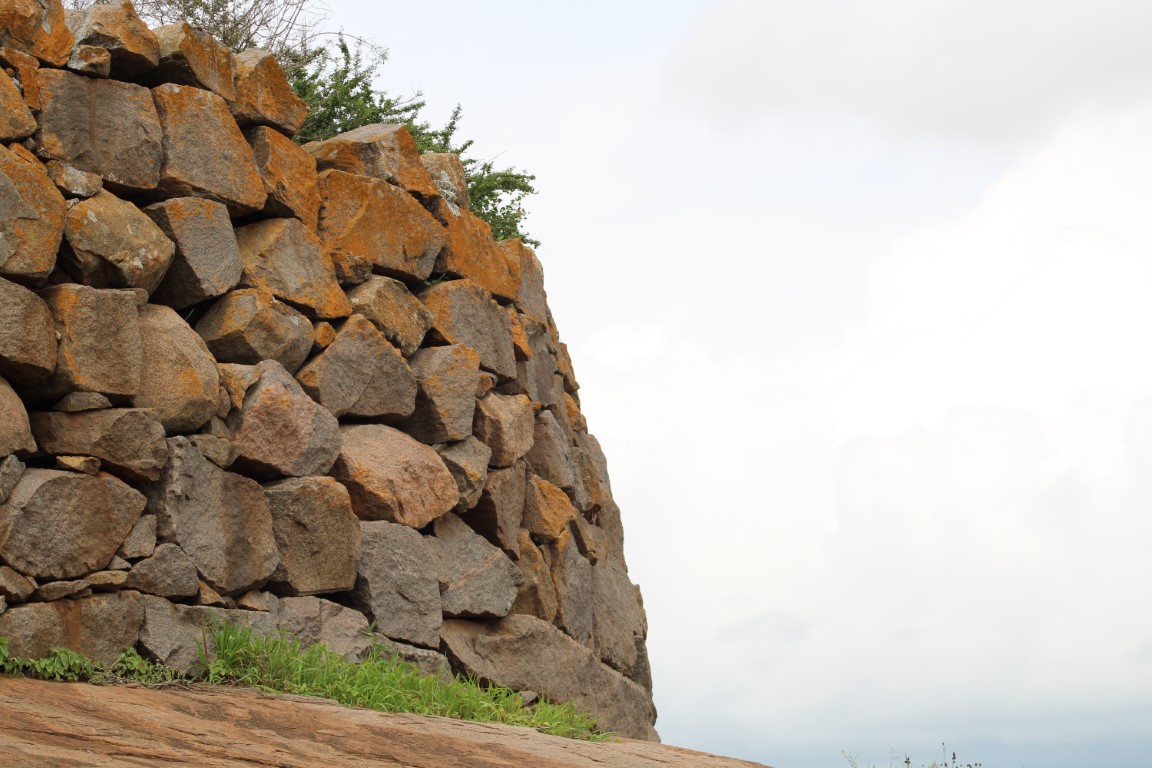
“Mending Wall” by Robert Frost [w/ Audio]

Something there is that doesn't love a wall,
That sends the frozen-ground-swell under it,
And spills the upper boulders in the sun;
And makes gaps even two can pass abreast.
The work of hunters is another thing:
I have come after them and made repair
Where they have left not one stone on a stone,
But they would have the rabbit out of hiding,
To please the yelping dogs. The gaps I mean,
No one has seen them made or heard them made,
But at spring mending-time we find them there.
I let my neighbor know beyond the hill;
And on a day we meet to walk the line
And set the wall between us once again.
We keep the wall between us as we go.
To each the boulders that have fallen to each.
And some are loaves and some so nearly balls
We have to use a spell to make them balance:
'Stay where you are until our backs are turned!'
We wear our fingers rough with handling them.
Oh, just another kind of out-door game,
One on a side. It comes to little more:
There where it is we do not need the wall:
He is all pine and I am apple orchard.
My apple trees will never get across
And eat the cones under his pines, I tell him.
He only says, 'Good fences make good neighbors.'
Spring is the mischief in me, and I wonder
If I could put a notion in his head:
'Why do they make good neighbors? Isn't it
Where there are cows? But here there are no cows.
Before I built a wall I'd ask to know
What I was walling in or walling out,
And to whom I was like to give offense.
Something there is that doesn't love a wall,
That wants it down.' I could say 'Elves' to him,
But it's not elves exactly, and I'd rather
He said it for himself. I see him there
Bringing a stone grasped firmly by the top
In each hand, like an old-stone savage armed.
He moves in darkness as it seems to me,
Not of woods only and the shade of trees.
He will not go behind his father's saying,
And he likes having thought of it so well
He says again, 'Good fences make good neighbors.'

PROMPT: Community

Daily writing prompt
How would you improve your community?

That’s a tough one because while I see value in communities, I’m also concerned that there is a rising trend toward tribalism and nationalism that will not be good for anyone — not to mention a shift toward virtual communities where anonymity and disconnect lead to people to act as though they were raised by hyenas. (I do know that, in reality, that’s an insult to the marvelous hyena, but I think it makes a sort of point for the non-hyena expert.)

I’ve been amazed at how India manages to have an intense sense of community in such a vastly super-tribal environment. (I’m using “supertribe” in Desmond Morris’s sense — i.e. a community which is too big for everyone to know everyone else, and which has a group dynamic that reflects that fact.) But it’s not as though there isn’t a dark side to this intensity of community — patriarchy, sectarian conflict, disempowered societal segments, etc.

America, by comparison seems to be experiencing a dearth of true community, which is driving people toward virtual “communities,” and in virtual communities people seem to fall into the shittiest versions of themselves. Not to mention the lack of community’s contribution to what I’ve heard called a “mental health crisis.”

I guess my preferences would be that community be: 1.) real and not virtual. 2.) that it exploit the advantages of diverse membership instead of wallowing in homogeneity and group think. 3.) that it doesn’t create overclasses and underclasses. And that, 4.) Community norms minimally negate individual freedoms.

That said, I’m not at all sure that the above criteria can be reconciled. Maybe the tradeoffs are too strong. Maybe – in our super-tribal world – the closest-knit society will always be the most xenophobic [fearful / disliking of outsiders,] and maybe tolerance and egalitarianism will always be accompanied by societal degradation. I have observed a strong inclination for people to think of compassion as a zero-sum game.

As I said, a tough one.

“No Man Is an Island” by John Donne [w/ Audio]

No man is an island,
Entire of itself;
Every man is a piece of the continent,
A part of the main.

If a clod be washed away by the sea,
Europe is the less,
As well as if a promontory were:
As well as if a manor of thy friend's
Or of thine own were.

Any man's death diminishes me,
Because I am involved in mankind.
And therefore never send to know
for whom the bell tolls;
I tolls for thee.

“Much Madness is divinest Sense” (620) by Emily Dickinson [w/ Audio]

Much Madness is divinest Sense --
To a discerning Eye --
Much Sense -- the starkest Madness --
'Tis the Majority
In this, as all, prevail --
Assent -- and you are sane --
Demur -- you're straightway dangerous --
And handled with a Chain --