What makes a good neighbor?
Neither a borrower, nor a lender be… plus, has good judgment about when to call the cops.

What makes a good neighbor?
Neither a borrower, nor a lender be… plus, has good judgment about when to call the cops.
 Rental Person Who Does Nothing by Shoji Morimoto
Dogmatic thinking and the humor blindspots that correspond.
Right mind, healthy body, and good company.
What quality do you value most in a friend?
The ability to converse intelligently on a wide range of subjects.
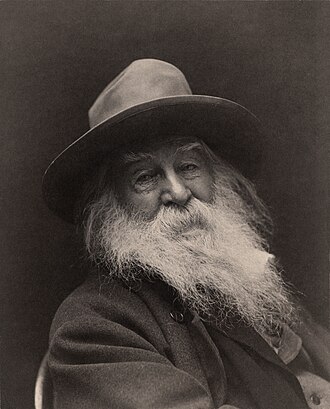
Are you the new person drawn toward me?
 To begin with, take warning, I am surely far
   different from what you suppose;
 Do you suppose you will find in me your
   ideal?
 Do you think it so easy to have me become
   your lover?
 Do you think the friendship of me would
    be unalloy'd satisfaction?
 Do you think I am trusty and faithful?
 Do you see no further than this facade,
    this smooth and tolerant manner of me?
 Do you suppose yourself advancing on real
   ground toward a real heroic man?
 Have you no thought, O dreamer, that is
   may be all maya, illusion?
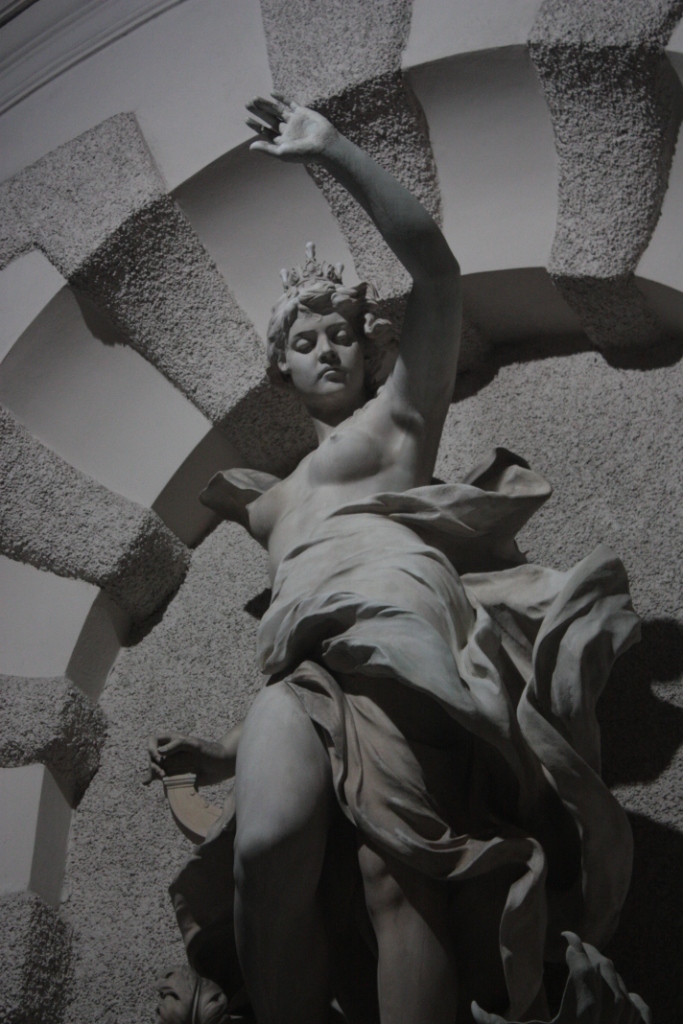
I have perceiv'd that to be with those l like
   is enough,
 To stop in company with the rest at evening
   is enough,
 To be surrounded by beautiful, curious,
   breathing, laughing flesh is enough,
 To pass among them or touch any one, or
   rest my arm ever so lightly round his or
   her neck for a moment, what is this then?
 I do not ask any more delight, I swim in it
   as in a sea.

There is something in staying close to men
    and women and looking on them, and in
    the contact and odor of them, that
    pleases the soul well,
 All things please the soul, but these please
    the soul well.

I was angry with my friend;
  I told my wrath, my wrath did end.
 I was angry with my foe:
  I told it not, my wrath did grow.

And I watered it in fears,
  Night & morning with my tears:
 And I sunned it with smiles,
  And with soft deceitful wiles.

And it grew both day and night.
  Till it bore an apple bright.
 And my foe beheld it shine,
  And he knew that it was mine.

And into my garden stole,
  When the night had veild the pole;
 In the morning glad I see;
  My foe outstretched beneath the tree.
I’ve often been surprised how little intuitive grasp people have of basic mathematical or statistical ideas or relationships, even when they have had the education to understand with a little effort.
One example of this is what I call “unilateral mathematics” where people fixate on one term or side of an equation while ignoring that changing a term changes the equation’s other side (or to keep the other side static, something else has to give.) For example, I hear people getting so excited by the new salary they will earn when they move to a new place. Then they get to the new locale only to find that the cost of living is so much higher that even their hefty pay boost supports only a diminished quality of life. One sees this tendency a great deal in people’s policy discussions when someone will say, “just set a maximum (or minimum) price” without understanding that shortages or surpluses will come along for the ride. [The Law of Unintended Consequences is another good answer to this prompt.]
We all saw flaws in statistical thinking during the pandemic when people said things like, “See, she got the vaccine and then she got COVID, so obviously the vaccine doesn’t work!” I’m convinced this is because people don’t have good intuition for statistical thinking and — instead — they want to treat a low probability as an impossibility and a high probability as a certainty.
By the way, you see this from people of all persuasions, including those who are highly educated, conservatives, progressives, believers, atheists, etc. One can see the universality of the flaw most commonly in climate change comments. You’ll hear one person say, “See, it’s the hottest day on record, that’s evidence global warming is real!” Another person will say, “See, it’s the coldest day on record, global warming is obviously hokum!” Somehow, even with diametrically opposed viewpoints, these two manage to both be wrong because one day’s WEATHER is not instructive of what is happening to the CLIMATE. In other words, a sample of one provides no insight into state changes in the population. [Maybe it’s more appropriate to use Wolfgang Pauli’s terms and say the two are “not even wrong.”]
I cannot be one.
 I cannot be lost.
  I cannot buy my entry
      at a payable cost.

I cannot be three.
 I cannot be boss.
  I cannot isolate: diamonds
      from the dross.

I think I can be two,
 just the me & you.
  our two could be one,
      like two planks form a cross.


 Tiger Riding for Beginners