BOOK: “Tell My Horse” by Zora Neale Hurston

Tell My Horse: Voodoo and Life in Haiti and JamaicaTell My Horse: Voodoo and Life in Haiti and Jamaica by Zora Neale Hurston
My rating: 5 of 5 stars

Author’s Book Site — Zora Neale Hurston Trust

This is a beautifully written and fascinating look at Jamaica, Haiti, Voodoo, Zombies, and the sinews that run between them. The first half of the book reads largely like a travelogue of, and introduction to, Jamaica and Haiti, respectively. In this half, Voodoo is only mentioned here and there as an aside. There is much more discussion of culture, race, and politics, notably the disheartening politics of Haiti. (I should point out for those unfamiliar with Harlem Renaissance figures, this book dates to the 1930’s — so current affairs are not addressed, but — unfortunately — Haiti has a long history of troubles.) The second half of the book delves much more intensely into Voodoo and the supernormal happenings broadly connected to it. Hurston’s exploration is neither as a tried-and-true believer, nor as a hardcore sceptic; rather she takes a more journalistic objectivity.

The language of this book is splendid, and Hurston produces many a quotable line. It is true that the subject matter, Voodoo, is extremely compelling, but this book is more than just a collection of tales of magic, superstition, and the weird. It also offers depth of insight into the cultures of these countries and their peoples. Hurston frequently mentions the differences between classes on the matter of Voodoo, the upper-class rejecting it as mere superstition and the lower classes often engaging with it as a way of life.

I’d highly recommend this book, not only for those interested in learning more about Caribbean Voodoo practices, but also for travelers with an intense curiosity about culture.

View all my reviews

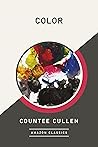
BOOKS: “Color” by Countee Cullen

Color (AmazonClassics Edition)Color by Countee Cullen
My rating: 5 of 5 stars

Available on Project Gutenberg

This excellent collection of lyric poetry is by one of the greats of the Harlem Rennaissance. The poems include a range of forms and sizes from single quatrain epitaphs to poems of several pages, with those in between (including a number of sonnets) being most common. Like Dickinson, Cullen had a fondness for common meter (a.k.a. hymn meter,) and it is prevalent throughout. The topics include serious matters, such as race and death, but there is no lack of whimsicality within these pages.

The book is divided into four sections: “Color,” “Epitaphs,” “For Love’s Sake,” and “Varia.” The first is the most serious of tone. (Interestingly, the epitaphs and other poems on death often take a lighthearted, even humorous, tone.)

I’d highly recommend this collection for poetry readers. It’s fun to read, and the poems are skillfully crafted.

View all my reviews

Spring Green [Haiku]

grass, shaggy & green,
sprawls across the valley;
swallows race & jink.

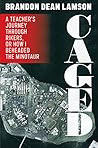
BOOK: Caged by Brandon Dean Lamson

Caged: A Teacher's Journey Through Rikers, or How I Beheaded the MinotaurCaged: A Teacher’s Journey Through Rikers, or How I Beheaded the Minotaur by Brandon Dean Lamson
My rating: 5 of 5 stars

Amazon.in Page

In Caged, Brandon Dean Lamson tells the story of his time teaching inmates on Rikers Island, finding himself in conflict both with students and with the guards. There is definitely a unique culture to the world of incarceration. I found myself thinking about the Stanford Prison Experiments in which ordinary people were randomly assigned to play either inmate or guard. The subjects’ behavior changed during the short period of the experiment, guards becoming more domineering and sadistic and inmates becoming more scheming and duplicitous than these people were in their regular lives. One sees evidence of this strange power dynamic and the resulting unusual behavior throughout the book. Lamson and the other teachers and staff involved with the school often saw the guards as vicious fascists, but – at the same time — they couldn’t trust the prisoners because learning was never an inmate’s top priority but rather was a combination of survival and maintenance of status.

As interesting as the story inside the wire is, it’s equally fascinating to learn what happens with Lamson outside his workday. The author is forthright about changes in his own psychology as he developed a need to work out his own violent tendencies as well as uncharacteristic sexual behavior. Lamson describes time spent in a boxing gym and S&M dungeon in service of these changes.

The book also offers some insight into what teaching methods worked or didn’t. Some of this pedagogical insight might be exclusively applicable to jails and prisons, but some would likely be of use to regular teachers, particularly in dealing with troubled or challenging kids. Lamson is also forthright about his own teaching missteps and failures, while offering the reader insight to what he learned from those teachers who seemed to be unusually effective.

I found this to be a fascinating book. It’s well-written and thought-provoking. I’d highly recommend it for readers of nonfiction.


View all my reviews

BOOKS: Echo & Critique by Florian Gargaillo

Echo and Critique: Poetry and the Clichés of Public SpeechEcho and Critique: Poetry and the Clichés of Public Speech by Florian Gargaillo
My rating: 4 of 5 stars

Amazon.in Page

Out Now (May 10, 2023)

This book examines seven poets’ attempts to halt the proliferation of clichés, euphemisms, doublespeak, etc., words and phrases that not only corrupt the language but are often used to disguise bad behavior or to camouflage dismaying truths. It focuses on a technique, echo and critique, in which the poet employs one or more of these disconcerting words or phrases (or clever variants of them,) but does so in a way that reveals the chicanery within them.

The poets whose work is discussed are: Auden, Randall Jarrell, Langston Hughes, Claude McKay, Robert Lowell, Josephine Miles, and Seamus Heaney. These poets go head-to-head with cliché and doublespeak in the form of bureaucratese, propaganda, political speak, and business talk — with particular emphasis on war, race, and politics.

The book makes some interesting points. There are more readable discussions of the subject of corruption and manipulation of the English language, though none that I’m aware of on this particular approach to combating it. This volume is largely aimed at scholars, and not so much the popular readers. That said, I found it well worth reading.

View all my reviews

BOOK REVIEW: Introducing Cultural Studies: A Graphic Guide by Ziauddin Sardar

Introducing Cultural Studies: A Graphic GuideIntroducing Cultural Studies: A Graphic Guide by Ziauddin Sardar
My rating: 4 of 5 stars

Amazon.in Page

Get Speechify to make any book an audiobook

Culture is a deep and fascinating topic, but a dirty little secret of academia is that there are two words used to signal subjects and courses for the not-so-bright kids: one is “Studies” and the other is “for.” (As in “Math FOR Economists,” a course that I once took that was – I’m sure of it – greatly dumbed down from what Math majors learned. “Economics FOR Business Majors” is a more widely known example; it’s Economics for people who are afraid of equations and who can’t figure out which way is up on a supply and demand curve.) So, I wasn’t sure what to expect from a guide to “Cultural Studies,” as opposed to a book about, say, Cultural Anthropology, which I believe is the big-boy pants version of the discipline under discussion.

The author is forthright that cultural studies is a bit amorphous and that it struggles to find its place amid the established disciplines that touch upon culture from varying perspectives (i.e. psychology, philosophy, anthropology, etc.) The book begins before there was a “Cultural Studies,” per se, discussing competing definitions of culture and related precursor disciplines, e.g. semiotics. It then describes the evolution of the subject and its varied points of focus and ideas across its major epicenters: Europe, North America, Australia, and South Asia. It investigates colonization and its influence on indigenous cultures, and it looks at how a range of concepts intersect with culture, including: science, technology, race, gender, sexuality, and media. It concludes by reflecting on globalization and the discontents who wish to end or replace this homogenizing force.

I did learn quite a few new things from this book, and if you’re looking to understand culture as a landscape of academic study, it’s worth having a look at it.


View all my reviews

BOOK REVIEW: Born a Crime by Trevor Noah

Born a Crime: Stories From a South African ChildhoodBorn a Crime: Stories From a South African Childhood by Trevor Noah
My rating: 5 of 5 stars

Amazon.in Page

As a rule, I don’t read books by celebrities. This is the first one I can remember reading. My reasoning is rooted in publishers’ beliefs that such books will sell no matter what, and anything that doesn’t have to be good is unlikely to be.

And yet, I’m glad I made an exception for this book. Perhaps, because it’s not a book about Noah’s rise to fame, there are only a few off-hand references to his early career successes in South Africa. This book is about his youth in South Africa as a mixed-race child under Apartheid (hence the title, as such interracial progeny were illegal.) The book focuses heavily on race and the bizarre logic of South African governance during those days, as well as how rulers set groups against each other to make their own misbehavior less conspicuous. However, it’s also a very personal story, telling of his close relationship with his mother, the abuse he and his mother suffered from his drunkard stepfather, and the challenges that compelled him to adapt to survive loneliness and the awkwardness of youth.

Given Noah’s comedic merits, it will come as no surprise that the book is humorous, despite the tonal burden of its subject matter – i.e. racism, poverty, and abuse. Often, the subject matter makes the humor dark and bitter, but it’s nevertheless amusing.

If you’re curious about life under apartheid, or in an abusive household, you’ll likely find yourself in the grips of this tense and hilarious memoir.


View all my reviews

BOOK REVIEW: The Atheist in the Attic by Samuel R. Delany

The Atheist in the AtticThe Atheist in the Attic by Samuel R. Delany
My rating: 5 of 5 stars

Amazon.in Page

The first two-thirds of this book is the titular novella. It’s a cerebral work of historical fiction that will be loved by readers interested in philosophy and history, but which will be dry and claustrophobic to those expecting a gripping tale. It’s not that there are no stakes. The story is about a clandestine meeting between Leibniz and Spinoza during a turbulent time in the Dutch Republic. That said, the bulk of the story is discussion and internal monologuing about philosophic ideas. Leibniz speaks with Spinoza, but also with household staff – offering insight into his psychology. In short, for perspective into the psychology and philosophy of the time, it’s intriguing, but it’s no thriller.

The last one-third of the book consists of two nonfiction pieces. The first, there’s an essay that Delany wrote on racism in science fiction. In it, he discusses some hostility he was subjected to at a Hugo Award ceremony early in his career. He also describes how he is repeatedly put on panels with other black writers (whose work is different from his own) rather than with those whose work is most closely related to his. It’s an interesting look at the varied faces of racism from blatant through well-intentioned to accidental. The last piece is an interview that rambles over a wide expanse of topics touching on Delany’s career.

I enjoyed this book a great deal. That said, I’m an admitted philosophy nerd. I think someone who only read the cover blurb might expect the novella to be more story driven and less character- and philosophy-centric. The essay on race features both stories from Delany’s career and his views on racism as a system. If you like cerebrally-engaging reading, check it out.

View all my reviews