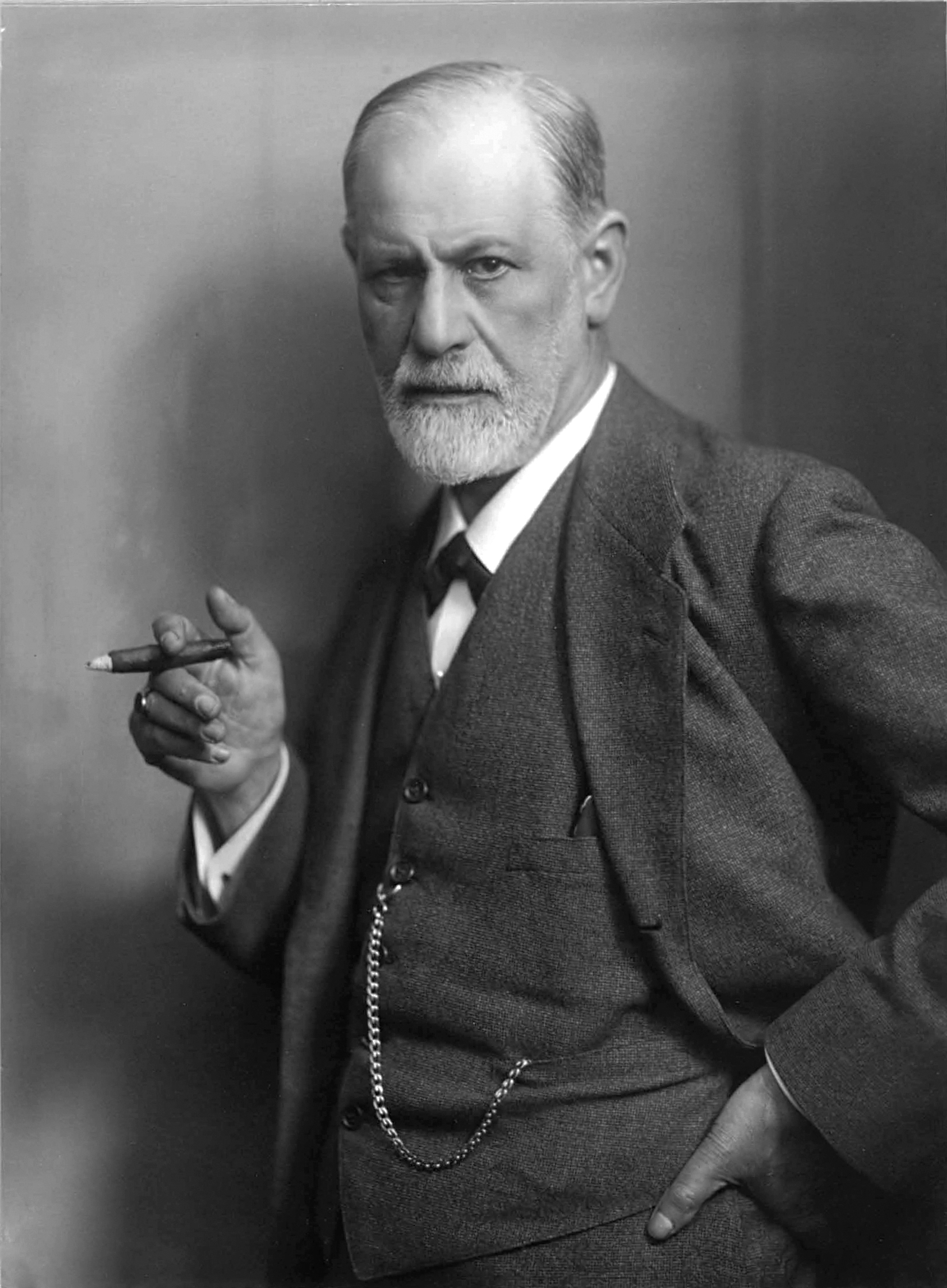
There once was a psychiatrist named Freud who thought all were obsessed with filling a void... a void in the pants! Though some looked askance, and those whose cigars weren't cigars were annoyed.
Tag Archives: Psychology
PROMPT: Quote
Do you have a quote you live your life by or think of often?
Four, actually:
Be kind, for everyone you meet is fighting a hard battle.
Plato (attributions vary)
There is nothing either good or bad, but thinking makes it so.
William Shakespeare (in HamLet)
Contentment comes not so much from great wealth as from few wants.
Epictetus
If you reject the food, ignore the customs, fear the religion, and avoid the people, you might better stay home.
James a. Michener
The Most Important Lesson in All of Human Living [DAILY PROMPT]
Describe something you learned in high school.
A Psych teacher told us a story of what he called “a gestalt of expectations.” A man from a city in the East is driving out West, and he passes a gas station – despite being low on fuel. (He’s used to gas stations being everywhere.) Anyhow, he runs out of fuel. He can’t see anything around except desolate desert bisected by a line of asphalt. He decides to walk back to the gas station he passed ten miles back. There is no one traveling on this remote stretch of desert road. As he’s walking in the intense heat, it comes to his mind that the employee at the service station is really going to gouge him on the price of gas and a jerry can. As he walks and walks, skin prickling with the heat, he keeps thinking about how he’s going to get screwed by the gas station attendant and also how he’ll be chided and ridiculed for running out of gas in the middle of the desert. He imagines it in great detail. Finally, bedraggled and with heaving breaths, he arrives at the station. The gas station attendant rushes out to help this poor man, and the man punches the attendant square in the nose (for all the offenses taking place solely in the man’s mind.)
In a broader formulation, I think this is the most important lesson any human can learn. Our personal perception of what we experience is not equal to what it is that we experience (the exterior world.) This is why some people dealt a crappy hand can turn it into a wonderful life, and also why some people who seem to have it all commit suicide in the prime of life.
I could be angered or dismayed that the single most important lesson I learned in secondary school was via off-curriculum ramblings during an elective class, but I choose not to. Instead, I’ve been trying all my life to make that bit of knowledge into wisdom.
BOOK REVIEW: The Meaning of Life: A Very Short Introduction by Terry Eagleton
The Meaning of Life by Terry EagletonMy rating: 5 of 5 stars
Amazon.in Page
“What is the meaning of life?” This is the question thrown at anyone accused of being a philosopher – professional or lay – though mostly in jest. In the present day, that is. In centuries past, large portions of the population took for granted that it was a question that had a knowable answer (one dictated by religion.) But as that answer became decreasingly satisfying to an increasing portion of the populace, people began to see the question as both fundamentally unanswerable and as a means to chide / test individuals who claimed wisdom or had the claim thrust upon them.
In this concise guide, Eagleton takes on the question, beginning with consideration of whether it is even a sound question. (Or, is it a question like: “What is the meaning of cabbage?” or “What color is a hypothesis?”) After considering many of the problems with the question, from the meaning of “meaning” to the presumptions about what a life has (and what it is) the book also considers some of the post-Nietzschean answers to the question and the challenges that confront them. [One that I hadn’t thought much about criticizes that many of these recent attempts are individualist (i.e. find your own meaning, one consistent with the peculiarities of your own unique life.) Is it reasonable to think that the question can only be answered at the level of granularity of the individual? Maybe, it can only be, but I did appreciate that it gave me something to think about.]
It should be pointed out that Eagleton doesn’t consider himself a philosopher. He’s primarily a critic and English literature professor. This had its advantages. First, Eagleton drew upon works of literature that explore the question, which both made for some interesting insights while also breaking up dense tangles of philosophizing. Second, much of the book deals with linguistic issues. Are the words and grammar of the question, “What is the meaning of life?” useful, and – if so – how do we understand the nature and limits of the question?
I found this book intriguing and provocative. It does have thickets of dense language, but also has its fun moments as well.
View all my reviews
BOOK REVIEW: Talking to Strangers by Malcolm Gladwell
Talking to Strangers: What We Should Know About the People We Don’t Know by Malcolm GladwellMy rating: 5 of 5 stars
Amazon.in Page
This book uses a model that Gladwell has employed to great success in many books. That model goes like this: 1.) find some research findings that are counter-intuitive or otherwise in opposition to the consensus view (and preferably not well-known outside academia;) 2.) carefully select some fascinating real-world cases that seem to highlight said findings; 3.) skillfully present the cases in a highly readable and evocative narrative form, making surprising reveals for maximum effect.
In this case, the beating heart of the book is research by a University of Alabama, Birmingham professor, Timothy Levine, that shows that people are bad at catching liars because we are wired to accept statements as true and that some portion of population present appearances out of kilter with their truthfulness. (i.e. Some people come across as liars — even when telling the truth, and others appear truthful with pants ablaze.) This contradicts earlier research that suggests liars always have tells. [Interestingly, if true, Levine’s research upends studies Gladwell used in his previous book “Blink,” research by Paul Ekman that suggested that liars have “leakage” of “micro-expressions” that reveal their true emotional state. Gladwell admits his views have changed on the Ekman work. It’s the price of dealing with ground-breaking counter-intuitive research: sometimes, it’s not going to validate as well as one would like – not unlike the controversy about the Anders Ericsson’s “10,000-hour rule” that is the core of Gladwell’s 2008 book “Outliers,” and which seems much less robust in light of subsequent research.)
Gladwell employs a number of compelling stories to show how even individuals who should be the best of us at telling truth from lies (e.g. counter-intelligence officers, industry experts, and veteran law enforcement officers) do dismally at spotting lies and at grasping the true nature of what strangers hold in their hearts. [It should be noted that people are better truth detectors than lie detectors because of the aforementioned truth bias.] Readers also learn quirky facts such as why the sitcom “Friends” is insanely popular in many non-native English-speaking countries. (e.g. In Vang Vieng, Laos, I witnessed this myself, with several cafes and restaurants playing “Friends” on a loop all day every day.) The book also presents discussion of research overturning the idea that facial expression of emotions is universal.
I found this book to be an intriguing read and would highly recommend it for those interested in learning why it’s impossible to “read” strangers. I don’t know how well the ideas will validate, but the cases are interesting and compelling.
View all my reviews
BOOK REVIEW: Extreme Survival by Michael Tougias
Extreme Survival by Michael TougiasMy rating: 4 of 5 stars
Amazon.in Page
Release Date: December 6, 2022 This book presents lessons from survival under intense, life-threatening turns of events. It focuses on the psychology of a survival mindset. The author has expertise in maritime survival, and a large portion of the cases explored involve survival at sea. Though the author did seek to include some variety, including concentration camps, home invasions, climbing accidents, etc. However, the maritime focus is worth noting because it’s in contrast to competing books which tend to give roughly equal discussion to a variety of different threats to survivorship.
There are three books I’ve read in recent years on extreme survival – i.e. Kamler’s “Surviving the Extremes,” Ashcroft’s “Life at the Extremes,” and Ripley’s “The Unthinkable.” Of these, the book that is most similar to Tougias’s is Ripley’s. The first two books focus much more on the physiology of survival in extreme environments. However, Ripley’s book also focuses on the psychological / mindset dimension of survival, though through a more diverse set of disasters.
The maritime focus didn’t bother me for three reasons. First, I’d rather have a person with expertise focus in that area than stumble about in lesser-known fields. It allowed Tougias to focus more on the stories of those with whom he’d conducted first-hand interviews. [The author did engage in a variety of stumbling in Chapter 8 [on the sunk cost fallacy] when he discussed the sunk cost fallacy as a separate but similar situation to those survival scenarios he’d already described [which were also cases of sunk costs] – i.e. it sounded like Tougias believes the sunk cost fallacy only applies to financial costs, which isn’t how economists look at the matter.] Second, survival at sea is one of the most intense scenarios I can imagine facing (i.e. I’m not concerned about survival in space, and I feel more experienced, competent, and -thus- less viscerally responsive to survive on terra firma – e.g. high elevation, deserts, etc.) Thirdly, since the book was on mindset, it didn’t need to be as diverse as the Kamler and Ashcroft books which examined the physiology of challenges presented by varied environments.
That said, I’d give a slight edge to the Ripley book, if you could choose only one. Still, this was a solid book on the subject, and did a great job with narrative examples and explanation of lessons. My criticisms are small. For example, like many books, chapters begin with quotations, but I felt they were the wrong quotations. Opening quotes are a widespread and fine approach when the quote is one that taps into the theme of the chapter. However, often the quotes in this book were from people involved in cases that were later presented within the chapter, and so the quotes often lacked context. If the quotes were meant to be hooks, some landed better than others. (A few simply left me befuddled.) On the other hand, the author did an excellent job with summaries at the end of the chapters.
All in all, this was a well-written book on survival, and I learned a great deal from reading it. If you don’t plan on reading multiple books on the subject, you might look into others first, but it’s certainly worth reading. And it’s a topic that gets one interested in reading more.
View all my reviews
BOOK REVIEW: Identity: A Very Short Introduction by Florian Coulmas
Identity: A Very Short Introduction by Florian CoulmasMy rating: 5 of 5 stars
Amazon.in Page
This book explores the slippery metaphysical concept of identity — not only as it’s presented in philosophy, but also in psychology, law, politics, anthropology, and literature. It begins with individual identity and expands outward to encompass gender, political, socio-economic, and linguistic identities. The aforementioned slipperiness of identity stems from the fact that we all have an intuitive grasp of identity that could be leading us astray. It tends to make us believe that aspects of identity are inherent features of the universe, when – in fact – they may be arbitrary designations – in which case, a given criterion or classification of identity may be chopped up in different ways than a given culture happened to glom onto.
I learned a great deal from this Introduction, and feel it was well organized and presented. How we see various dimensions of group identity (as well as how we weight them) has a lot to do with our social tensions and strife, and the issues around identity are worth dissecting — despite the fact that it might seem like a dry academic topic at first blush.
If you’re interested in learning more about identity, selfhood, and how various group identities feature in an individual’s overall identity, this book is worth investigating.
View all my reviews
BOOK REVIEW: Comedy: A Very Short Introduction by Matthew Bevis
Comedy: A Very Short Introduction by Matthew BevisMy rating: 5 of 5 stars
Amazon.in Page
This introductory guide examines comedy in a broad fashion, covering literary, historical, philosophical, and – to a limited degree – its psychological dimensions. The book investigates the shifting meaning of the word “comedy” and the changes in media and mechanisms through which it’s been conveyed. So, if you’re concerned (or hoping) that this book is simply an accounting of comedy as the literary genre counter to tragedy, that’s not the case. It discusses not only literature and drama, but also standup comedy and other devices by which humor is conveyed, and it uses “The Simpsons” as well as “Candide” and “Don Quixote” as examples to get points across.
This VSI guide does have a little bit of overlap with the “Humour: VSI,” but where that book focuses heavily on the theory of what makes something humorous, this book addresses that subject in a much more superficial way. On the other hand, this book spends more time looking at comedy from ancient times onward and how its ways have changed since the age of the classics. This guide also peers more beyond the cognitive and philosophical aspects of humor to how elements such as physicality, persona, and even death play into comedy.
It is a scholarly introduction, so one shouldn’t expect a laugh riot, but it is a more entertaining read than if it only looked at comedy as the literary mode opposed to tragedy. If you wish to develop further insight into the many facets of comedy, it’s worth checking out.
View all my reviews
BOOK REVIEW: Ten Days in a Mad-house by Nellie Bly
Ten Days in a MadHouse: The Original 1887 Edition by Nellie BlyMy rating: 5 of 5 stars
Amazon.in Page
Free Public Domain Version Here
This late 19th century work of immersion journalism tells the tale of Nellie Bly getting herself put into (the aptly nefarious sounding) Blackwell’s Island Insane Asylum for ten days (after which time her editor got her released.) Unlike the famous Rosenhan Experiment in 1973, in 1887 Bly had to get herself committed, and had her editor not gotten her released she might have been institutionalized indefinitely. Disturbingly, yet fortunately for Bly, it took no great acting skills to convince the authorities that she was mentally ill, pretending to be poor and having no husband got her at least 90 percent of the way to being institutionalized. Like the Rosenhan Experiments, Bly’s story showed that nobody seems to have any great capacity for determining sanity from insanity, not even the people with advanced degrees and board certifications on the subject.
At first, I wasn’t sure how skewed Bly’s account would be. She does show some bias in practically deifying journalists. She was confident that no psychiatrist would be able to discover her ploy, but she seemed sure that any journalist could out her through the briefest of conversations. So, when she complained the food was “inedible,” I considered that the same has always been said about any institutional food – from military mess halls to college cafeterias, and usually it’s perfectly adequate. That said, one of the asylum staff members did acknowledge the food was pretty horrific. Ultimately, I think the story was probably accurate because, sadly, it rings true. Bly had intended to get herself put in the violent ward, but had second thoughts after hearing and seeing what she did, being concerned that she might be seriously injured by the rough treatment those patients received.
This short book is riveting. If you enjoy nonfiction, this piece is definitely worth reading.
View all my reviews
BOOK REVIEW: Introducing Game Theory: A Graphic Guide by Ivan & Tuvana Pastine
Introducing Game Theory: A Graphic Guide by Ivan PastineMy rating: 5 of 5 stars
Amazon.in Page
This book is meant to provide a non-mathematical introduction to the basics of game theory, using examples that make the subject readily intuitively grasped. With this objective in mind, the book does a great job. Game Theory is an interdisciplinary subject that seeks to explain behavior in strategic games, a strategic game is one in which all players make decisions that can influence the outcome of the game. Let’s clarify, using a literal “game.” In chess, it’s meaningless to ask what the best move is without considering what the opponent has done and is likely to do – i.e. one’s best move must always take into account what the other player has done. This is in contrast to games of skill or chance (like a running race or roulette, respectively,) in which one doesn’t really need to respond / adapt to what the opponent has done (or will do) in order to win.
The reason I mention using an example that is literally a game is that Game Theory is used in a wide variety of domains, from military to business strategy, most of which don’t involve “games” in the common use of that word. The book draws from many disciplines, usually the ones where the concept at hand was initially developed – e.g. nuclear weapons strategy or marketing. While the book is a bit more heavily loaded with examples from the business world, it doesn’t ignore contributions from other sectors. Many of the games discussed will be familiar to the general reader at some level from the outset (e.g. the Prisoner’s Dilemma, Chicken, Battle of the Sexes, etc.) but one should finish reading with a better understanding of ideas like payoffs, equilibria, efficiency, sequential play (v simultaneous,) and coordination – all of which are crucial to applied strategic decision-making.
If you are interested in a starter book about strategic decision-making, this one is worth reading.
View all my reviews