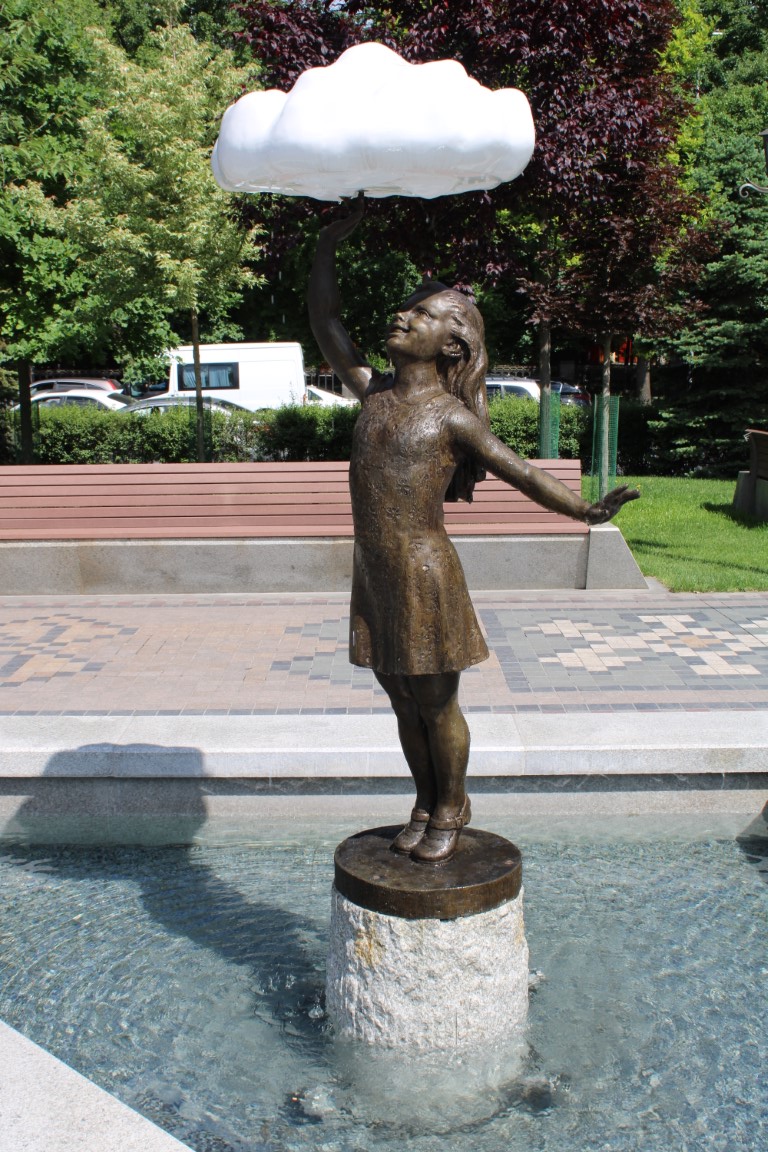
PROMPT: Kid at Heart

Daily writing prompt
What does it mean to be a kid at heart?
Embrace play, go hog wild with imagination, and have a short memory for adversity.

PLAY: “A Streetcar Named Desire” by Tennessee Williams

A Streetcar Named DesireA Streetcar Named Desire by Tennessee Williams

My rating: 5 of 5 stars

Available online – Internet Archive

I’ve never seen the play, nor the movie. Of course, this is one of those works that has so scrawled itself across pop-culture that it’s impossible to go in without some reference from it kicking around in one’s brain, be it the pained shout of “STELLA!” or character names like “Blanche DuBois” or “Stanley Kowalski.” Even the name of the plantation on which the fallen socialite sisters grew up, Belle Reve, has been lent to a prison for supernatural villains in the world of DC Comics.

At the play’s heart are two sisters raised in a wealthy Southern family. One, Stella, has adapted well to the family’s fall from grace. Stella has married a fellow who is rough around the edges (to say the least,) Stanley, but Stella is satisfied that Stanley is a dependable provider — even if he does rough her up a bit now and again. The other sister, Blanche, hasn’t coped nearly so well. Blanche lies perpetually to try to shield herself from reality — and to present a more appealing reality to others. It is when Blanche, having nowhere else to go, moves into the small New Orleans apartment of Stanley and Stella that the tension is set to form the play’s story.

I enjoyed reading this play. It’s well-paced and effectively mixes comedy and drama. It’s in character building where the play shines. The main characters are well-defined and behave quite believably within the context of each one’s neuroses and vices. The constant conflict between Blanche and Stanley drives the story.

I’d highly recommend this for readers of plays and / or of American Literature.

View all my reviews

FIVE WISE LINES [May 2025]

It is a happy talent to know how to play.

Ralph waldo emerson

Just living is not enough… one must have sunshine, freedom, and a little flower.

Hans christian andersen

Don’t abandon kindness, mercy, and sympathy in an emergency.

Qiānzì wén [千字文], Ch. 3

Logic will take you from A to B. Imagination will take you everywhere.

albert Einstein

You must live in the present, launch yourself on every wave, find your eternity in each moment.

Henry david thoreau
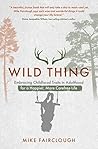
BOOKS: “Wild Thing” by Mike Fairclough

Wild Thing: Embracing Childhood Traits in Adulthood for a Happier, More Carefree LifeWild Thing: Embracing Childhood Traits in Adulthood for a Happier, More Carefree Life by Mike Fairclough
My rating: 4 of 5 stars

Publisher Site — Hay House

This short self-help guide aims to encourage adults to recapture some of the bliss-inducing traits of children. Over six chapters, it examines the virtues of play, rule-breaking behavior, imagination, resilience, gratitude, flow, daydreaming, discovery, exploration, and awe.

Each chapter, in true self-help fashion, ends with a bulleted set of practical tips and practices. The book has an Introduction and Afterward, but no other ancillary material.

I felt the book was at its strongest when the author was discussing his personal experiences. Otherwise, the book can dip into the “no-duh” plight common among self-help style books — where it seems to state the obvious without adding depth of insight.

I enjoyed reading this book. It’s a nice, short pep-talk — though it’s unlikely to leave readers with any burning revelations or new insights.

View all my reviews

PROMPT: Everyday Things

Daily writing prompt
What are 5 everyday things that bring you happiness?

My wife, movement, new & interesting ideas, play, and epiphanies.

[I’m presuming we’re using the word “thing” in the broadest possible sense — as a stand in for any noun. If it is meant in the narrower common usage of trinkets, gewgaws, baubles, and tchotchkes, then I’ve got nothing.]

BOOKS: “Pygmalion” by George Bernard Shaw

PygmalionPygmalion by George Bernard Shaw
My rating: 5 of 5 stars

Available on Project Gutenberg

Pygmalion is a play about class and human connection, and is probably the best-known work of George Bernard Shaw, having been adapted into a popular movie entitled My Fair Lady.

Henry Higgins, an expert on accents and dialects, bets his friend, Col. Pickering, that he can train a poor Cockney flower girl (Eliza Doolittle) to pass as a duchess at a soiree with genteel elites. Higgins is educated and of upper-crust upbringing but is neither refined nor does he have much in the way of people skills. Pickering is a personable and mannerly gentleman. Eliza is on a journey of transformation and her interaction with the two men offers insight into how those of different classes view dignity. (Besides examining class differences, some insight into how men and women differently view human interactions is generated.)

Beginning the last act (Act V,) it felt like the earlier acts hadn’t done the work required of them to motivate the last act behavior / discussions, but — I must admit — that feeling went away by the time the dialogue was complete. (Also, I give benefit of the doubt to the fact that good acting may have conveyed inklings to an audience that couldn’t be garnered from reading dialogue and stage directions.)

There was an Afterword that sketched out what happens in the lives of the characters after the events of the play. I didn’t care for it. There is a certain level of ambiguity in the ending, and I was good with that. I understand that many readers / viewers are not, however. (If you watched Christopher Nolan’s Inception and the spinning top ending drove you batty, you’d probably appreciate this Afterword. I believe the movie (My Fair Lady) tweaks the ending to make it more definitive.)

At any rate, this is a witty and evocative play and is well worth reading (or seeing.)

View all my reviews

“The quality of mercy is not strained” by William Shakespeare [w/ Audio]

The quality of mercy is not strained;
It droppeth as the gentle rain from heaven
Upon the place beneath. It is twice blest;
It blesseth him that gives and him that takes:
'T is mightiest in the mightiest; it becomes
The throned monarch better than his crown;
His sceptre shows the force of temporal power,
The attribute to awe and majesty,
Wherein doth sit the dread and fear of kings;
But mercy is above this sceptred sway;
It is enthroned in the hearts of kings,
It is an attribute to God himself;
And earthly power doth then show likest God's
When mercy seasons justice.
Therefore, Jew,
Though justice be thy plea, consider this,
That, in the course of justice, none of us
Should see salvation: we do pray for mercy;
And that same prayer doth teach us all to render
The deeds of mercy. I have spoke thus much
To mitigate the justice of thy plea;
Which if thou follow, this strict court of Venice
Must needs give sentence 'gainst the merchant there.

From The Merchant of Venice (Act IV, Scene I.) Spoken in a court of law by Portia while she is disguised as a lawyer, Balthazar.

PROMPT: Hobby or Pastime

Daily writing prompt
What is your favorite hobby or pastime?

I don’t collect favorites. I like reading, hiking, writing, swimming, playing, exercise, traveling, cooking… each in its due time for its due time.

Five Wise Lines [May 2024]

Play is a state of mind, rather than an activity.

Stuart brown in PLay: How it shapes the brain, opens the imagination, and Invigorates the soul

My sins are running out behind me, and I do not see them, and today I come to judge the sins of another!

From Sayings of the Desert Fathers
(A Senior Monk’s reply upon being asked to Judge a younger monk’s actions)

Ye have heard that it hath been said, An eye for an eye, and a tooth for a tooth! But I say unto you, That ye resist not evil: but whosoever shall smite thee on thy right cheek, turn to him the other also.

Matthew 5: 38&39

I have no scepter, but I have a pen.

Voltaire to Fredrick the great

If a man is born to error, let us wish him virtuous errors.

Voltaire; ON Superstition

BOOKS: “Play” by Stuart Brown

Play: How It Shapes the Brain, Opens the Imagination, and Invigorates the SoulPlay: How It Shapes the Brain, Opens the Imagination, and Invigorates the Soul by Stuart M. Brown Jr.
My rating: 4 of 5 stars

Amazon.in Page

Why does biology encourage play? Why does it stop encouraging play at some point? Should play end, or should one maintain a dedication to play throughout life? These are principal questions addressed by this book.

Brown explores the advantages of leading a playful life, and he doesn’t restrict himself to childhood play. In fact, the book doesn’t restrict itself entirely to human play, but also presents insights derived from the study of other playful species. One of the most profound lessons from the book comes from a story about a sled dog that has repeated playful interactions with a polar bear — a hungry polar bear, at that.

The book is presented more like an essay or a collection of essays than the usual popular science or pop psychology book. That is to say, it is not annotated and lacks a bibliography. The author sites the occasional book or study in the text, but it’s in the manner one would see in journalism or essays. This approach has its advantages, but the flipside of those advantages are the disadvantages. On the positive side, the author is able to communicate more freely, including the ability to discuss more speculative possibilities than one would expect from scientific reporting (with its usual “just the facts” approach.) Of course, the extensive speculation will be frustrating to readers who want to know what evidence has been produced for the proposed benefits. Furthermore, it often feels like the speculation in question is of the “when you’re a hammer every problem is a nail” nature — i.e. when one is a play researcher, one may be inclined to see play as a panacea for all the ills facing humanity (it surely is for some, but probably not all.) [To be fair, the book is almost fifteen years old, and I suspect it was / is probably harder than pulling teeth to get academic funding for play research outside of early childhood development, and so part of what the book was probably trying to do was build enthusiasm for supporting this kind of research, which necessitated talking about possibilities that were outside the known.]

The book does have a chapter on “the dark side of play.” It deals with compulsive behaviors like gambling and video game playing addiction (i.e. not people who like playing video games once in a while, but those who go 48 hours without sleep and who live in cave-like darkness to limit screen glare.) Much of the chapter argues that, while those problems are real and of concern, the activities aren’t play, not as per the definition presented early in the book.

This book does make a sound case for a number of benefits of play and for not abandoning play in one’s youth. If you’re interested in how play can help one to cope in a world of uncertainty, to keep one’s mind and body healthy, and to maintain or grow one’s capacity for imagination, this book is well worth reading.

View all my reviews