BOOK REVIEW: The Book of Massage by Lucinda Lidell

The Book of Massage: The Complete Step-By-Step Guide to Eastern and Western TechniquesThe Book of Massage: The Complete Step-By-Step Guide to Eastern and Western Techniques by Lucy Lidell

My rating: 4 of 5 stars

Amazon page

I picked up this book because I recently began studying Thai Yoga Bodywork (TYB.) While The Book of Massage doesn’t specifically deal with Thai massage, as a neophyte, I figured some general reading was in order, and there aren’t a lot of widely available books that deal with Thai massage specifically (at least not where I currently reside.)My first testimonial of this book is that I looked through over a dozen books on massage at my local bookstore, and this is the one with which I walked home.

I found Lidell’s book to be a valuable resource. The book covers three approaches to massage: oil massage, shiatsu, and reflexology. As the subtitle suggests, this book addresses both Eastern and Western approaches to massage. The section labeled simply “Massage” is one that deals largely in the Western approach, as it’s suggestive of the Swedish style of massage. This involves oil, no / few clothes on the recipient, and a variety of strokes that are delivered over relatively broad areas (as opposed to the deeper acupressure approach of the latter methods.) The oil massage chapter begins with an overview including what type of oil to use and the basic strokes, and then provides a sequence before delving into specific techniques for various body parts or groups of body parts.

Shiatsu is a Japanese form of massage that is based on the concepts of Traditional Chinese Medicine (TCM.) I found this style to be much closer to what I’ve learned in TYB. Like TYB, both patient and recipient are clothed, there is no oil, acupressure is the norm, it requires no table, and there is a match up between what are called “energy lines” in TYB and “meridians” in Shiatsu. Shiatsu even employs similar stretching techniques to those that are the hallmark of TYB. I can imagine these systems having a common ancestral art.

The order of the shiatsu chapter is basically the same as the chapter on Massage. First, there’s necessary background information. This consists of a couple of pages on the basic Taoist concepts on which TCM is based (e.g. Chi, Yin & Yang, and the five elements) and related vocabulary like “tsubo” (pressure points) and meridians. The section then goes on to address basics of posture and bodily tools (palms, thumbs, elbows, knees, etc.), the sequence of the massage, and then the specifics of various body parts.

Reflexology massages only the feet and hands in the belief that points on these appendages map to other parts of the body. In other words, practitioners believe one can increase wellness throughout the body by working points on only the feet or hands. It’s said that the roots of reflexology may be ancient and that it may have been practiced in Egypt in 2300BC, but the modern school was developed by an American physician in the early 20th century. TYB does borrow from reflexology (though not necessarily the modern form of it), so some of this was also similar to what I learned in TYB. Again, the order of this section went from the generic information one needs toward the specifics of how to apply a given technique on a particular part of the foot or hand.

In addition to the three core sections, there were chapters before and after that provide the reader with useful information. Some of this was banal but obligatory (e.g. a brief history of massage and a discussion of the importance of touch among the human species), but some of it was essential practical information such as how to create the proper environment and how to center oneself before delivering a massage. There was also information that will be useful for some about massages involving babies, expectant mothers, the elderly, athletes, and oneself.

Perhaps the most beneficial of the “supplementary” chapters was one that dealt with the subject of how to read bodies. This may seem like an odd topic. However, it’s useful to be able to recognize where an individual holds his tension or where her posture is off–a problem that can create many muscular difficulties. There’s a short overview of anatomy, which I found useful, and a shorter overview of “chakras and auras,” which I personally didn’t find useful but can see where others might.

There are several strengths and relatively few weaknesses to this book. I found the organization to be logical. The graphics are a combination of photos and line drawings, and they work well together. I thought it was great that the author explained that Shiatsu is to be done in comfortable, loose-fitting clothing and that the only reason the graphics display the masseuse in a skin-tight body suit was so that the baggy clothing wouldn’t inhibit the reader’s view. Also, I found the written descriptions worked well with the graphics. One often needs a written cue as to where to find a certain point or line, and just showing it in a picture can be misleading given the wide variety of body types as well as the granularity of the graphic in contrast to the specificity of a point one may need to hit.

I suppose I should warn the easily mortified and / or very religious that there are full and partial frontal nude photographs in the section on oil massage. [I doubt such people are a major demographic for giving or receiving massage, but one never knows.]

I don’t have a lot of complaints. As it’s set up like a workbook, a spiral binding might have been nice, but I recognize the huge challenges of that. Plus, I’m not certain that one can or should learn massage from a book. Rather one should look at it as information to support study with a skilled teacher–or to experiment with once one has already developed some skill. The sections early and late in the book that talk about the importance of human touch didn’t add much, but they were also brief.

If you’re looking for a book on massage that covers a broad set of bases, but yet gives adequate detail for learning, I think this book is a good choice. I’d say it piqued my interest in learning Shiatsu.

View all my reviews

BOOK REVIEW: How to Meditate by Lawrence LeShan

How to Meditate: A Guide to Self-DiscoveryHow to Meditate: A Guide to Self-Discovery by Lawrence LeShan

My rating: 3 of 5 stars

Amazon page

LeShan’s book offers a secular and scientific guide to meditation. By secular, I don’t mean to suggest that it’s devoid of mention of religion. On the contrary, How to Meditate delves into a wide variety of meditation styles that have roots in religion, and it quotes from spiritual teachers across a range of religions–including the mystic branches of Christianity and Islam. I mention the latter because the book seems tailored to bringing individuals into meditation that do not normally think meditation as being their bag, which could include atheists, secular humanists, or those whose religious practices don’t involve a mystical component. I just mean that the book is secular in that it doesn’t advocate a specific religion or suggest that one needs to hold any particular spiritual beliefs to benefit from meditation.

Also, by scientific I don’t mean to suggest that the book gets bogged down in the minutiae of EKG’s or the like. How to Meditate is readable to the general reader, except perhaps for chapter 11, which deals with using meditation in psychotherapy. [However, by the author’s own admission, one can skip that chapter with no great loss if you aren’t a therapist.] What I do mean to say is that LeShan takes an approach to meditation that is grounded in real-world, observable results. He tells the reader of the mental and physical benefits of meditation as they are discussed in the scientific literature.

In other words, if you think that meditation is only for hippie-types who believe in auras and astral planes, this book may convince you otherwise. On the other hand, if you’re one who believes in auras, astral planes, or the idea that only one true guru / path exists, you’ll probably be miffed by this book. There are a couple of chapters devoted to ideas that people believe that both have little evidence of grounding in reality and which detract from meditation. This includes ESP, auras, strange maps of reality, and guru-worship.

The core of the book is chapter 8, which explains how to do meditations of eleven different kinds. The book addresses single-point awareness, breath counting, thought watching, bodily awareness (specifically, Theravada Buddhist style meditation), word association (1,000-petaled lotus), mantra meditation, meditation on “I”, movement meditation (particularly Sufi-style), sensory awareness, safe harbor meditation, and unstructured meditation. The first ten are all types of structured meditation, and an earlier chapter is devoted to distinguishing structured from unstructured approaches to meditation. There is also an earlier chapter that discusses a broad taxonomy of meditation and sub-classes of meditation.

The book is logically arranged for the most part. It begins with a chapter on why one should meditate. This first chapter sets up two chapters that deal with the psychological and physiological effects of meditation. There is one oddity of organization. The core “how-to” chapter is bookended by a chapter on ESP and one on various pitfalls of spiritualism. It would seem these two chapters should go together as they both deal with things that detract from meditative practice, and not with the central chapter wedged between them.

The last couple chapters and the Afterword aren’t as beneficial for the general reader as the first 3/4ths of the book or so. One of those chapters is the aforementioned chapter for psychotherapists and the other deals with the social significance of meditation. The last chapter before those that I found superfluous, however, is one addressing the question of whether one needs a teacher to learn meditation. This pro and con discussion seems like a good way to end this book.

There is a long afterword by Edgar N. Jackson that adds a perspective on what we should take from LeShan’s book. I suspect that if page count were not a concern the book would have ended on the chapter that talks about decisions about a teacher. The last two chapters and the Afterword seem to have been added for the twin-fold purpose of hitting a target page count and to add a couple of niche audiences—namely students of psychology and fans of Edgar N. Jackson (i.e. Christians with an interest in mystical approaches to their religion.)

Overall, I’d recommend this book for those who are new to meditation, those who are seeking to expand their practice to new types of meditation, and those who are interested in the mind in general. As I mentioned, if you think of meditation as a route to see the glow of chakras or to commune with the dead, this probably isn’t the book for you—you’re likely to find its disregard for such otherworldly endeavors to be unappealing.

View all my reviews

Shame List: 25 books I should have read by now

To force myself to get cracking on more of the best books, I’m baring my shame. Below is a list of some of the books that it’s downright appalling I’ve failed to read as of yet. This is by no means a complete list. In fact, the initial list I compiled was about three times as long. (And it still wasn’t all-inclusive.)

I had to apply a few selection criteria to get to a reasonably-sized list. Some of these criteria are unique to a particular book, and will be noted under the book’s listing. However, there are also general criteria. If a book is commonly referred to in pop culture and I haven’t read it, that’s a cause for concern. In other words, if I’m not getting the literary references on The Simpsons, I’m a little embarrassed.  (Or pop science references made on Big Bang Theory.)

Also, I believe that one should read broadly and outside one’s comfort box. This means that one should read the counter arguments to what one believes, so as to not be happy stewing in one’s ignorance. This is part of becoming wiser and trading one’s narrow view of the world for one which is broader.

Some of these choices are idiosyncratic to myself– as opposed to being classics or masterpieces. For example, I was trained as a Social Scientist, so books on that subject might not make most people’s “essential reads” list. Also, I’m a martial artist, so my bonus picks are tied to that interest.

So, in alphabetical order, without further ado:


Brief history of time

1.) A Brief History of Time by Stephen Hawking

This may be an odd choice as I’m fairly certain I wouldn’t understand anything Hawking says beyond the Acknowledgements page. I once read that this book had the distinction of being “the most unread book on everybody’s bookshelf.” (I don’t know whether that’s urban legend or established fact– but I can believe it.) An Engineering PhD student from a very prestigious technical university once admitted to me that he couldn’t make heads nor tails of it. I did read The Universe in a Nutshell, which has a lot of pictures and, thus, is more my speed; it was kind of “A Brief History of Time … for Dummies.”


Confederacy of Dunces

2.) A Confederacy of Dunces by James Kennedy Toole

The backstory behind this book is fascinating and has an important moral. Toole killed himself, presumably because he couldn’t get it published. Then, posthumously, it became a critically-acclaimed hit after his mother took it around and forced literary types to read it. NEVER GIVE UP!


Farewell to Arms

3.) A Farewell to Arms by Ernest Hemingway

I’m a big Hemingway fan. I’ve read a few of his novels, many of his short stories, and even some of his non-fiction. This is my elusive great white Hemingwhale.


As I lay dying

4.) As I Lay Dying by William Faulkner

I was a late comer to Faulkner. I’d always heard that his writing was wordy and that it straggled. As those are bad habits of my own, I figured I should feed myself more Hemingway-esque writing. However, after reading several of Faulkner’s stories and his novel Sanctuary, I developed a man-crush on his use of language.


Beloved

5.) Beloved by Toni Morrison

Like many books on my list, I’ve got a copy of this on my bookshelf, and I even started it once. I’m not sure what distracted me. I picked it up originally to see how Morrison wrote accented dialogue. This is part of my advice to self to read outside my own history and experience.


cloud atlas

6.) Cloud Atlas by David Mitchell

I like cross-genre books. Furthermore, I’ve heard good things about the organization of this as a series of incomplete stories that are tied together in the final part.


crime and punishment

7.) Crime and Punishment by Fyodor Dostoevsky

This is another one that is on my bookshelf and that I started. It’s not that I didn’t like the opening (though like most all literature of its era is not exactly punchy.) Rather, it’s that I tend to end up with too many books up in the air at once. Therefore, if one takes over, the others get dropped.

I hope I don’t have a subconscious aversion to Russian literature, but–I must admit–I’ve read far too little Tolstoy, Dostoevsky, Pushkin, Turgenev, and (to a lesser extent) Chekhov. (I’ve read quite a few Chekhov short stories.)


Don quixote

8.) Don Quixote by Miguel de Cervantes

Again, I own this one. I don’t believe that I ever started it. However, anything with a sense of humor is a winner in my book.


GunsGermsSteel

9.) Guns, Germs, and Steel by Jared Diamond

While doing my Masters in International Affairs, I almost took a course  that used this as a textbook, but I had a conflict with a required course. The question of how some civilizations progress (when others don’t) is fascinating to me–as is the subject of Diamond’s more recent book Collapse, which looks at why certain civilizations unravel.


Heart of Darkness

10.) Heart of Darkness by Joseph Conrad

This one is particularly sad because: a.) I own it. b.) I’ve started it on more than one occasion. c.) It really does seem like a fascinating story, and d.) [the kicker] It’s extremely short. It’s not even properly called a novel, but more a novella or–maybe even–a long short story.


Les Miserables

11.) Les Misérables by Victor Hugo

I hate to admit that I might have some subtle anti-French bias because I’ve never read any Hugo or Camus.


Leviathan

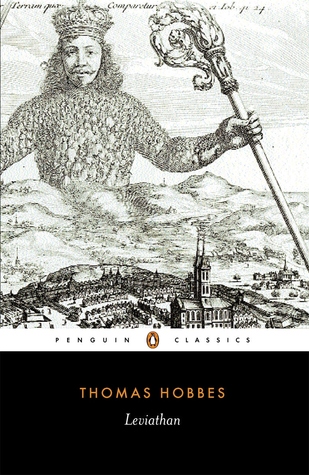
12.) Leviathan by Thomas Hobbes

This is another one that is about balanced reading. I’ve always tended toward a libertarian view of governance. So I’ve read John Locke and many other arguments for why government should stay small and limited. Leviathan is the granddaddy of counter claims. It’s about why the government must be involved in everything. I’ve read a lot of commentary on the Hobbes-Locke divide, but not this book. While I may not agree with Hobbes, that’s exactly why I should have read him. I have read Marx and others who’ve made more modern arguments for the primacy of governing over the governed.


Life of Pi

13.) Life of Pi by Yan Martel

I read the cover blurb of this when it came out and thought it would be interesting. When the movie was coming out, I thought about it again, but I just haven’t gotten around to it.


Lolita

14.) Lolita by Vladimir Nabakov

I saw the 1962 movie, but have never read this book. This is one that is often cited in pop culture. I know the general premise, but it would be good to read it.


Meditations

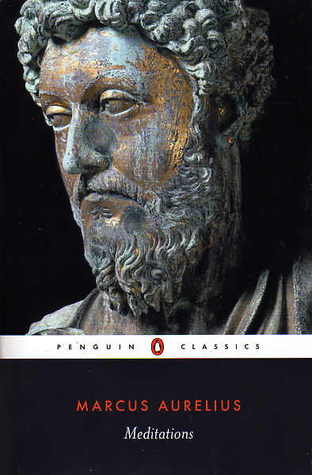
15.) Meditations by Marcus Aurelius

I’ve read quotes from this book, and I once started it from the beginning. I agree with the life philosophy espoused in it, so I should have finished it by now. I particularly like the quote, “It is not death that a man should fear, but he should fear never beginning to live.”


lives of a cell

16.) The Lives of a Cell by Lewis Thomas

I began it once, and it’s tiny. So double shame on me for not finishing this one yet.


Origin of species

17.) The Origin of Species by Charles Darwin

I’ve read a lot of commentary on Darwin’s ideas, but not this book– at least not in full. I include it because it’s one of the seminal works on the biological world as we know it. It contains many ideas that should be considered when reflecting on the nature of man and animal alike.


Satanic Verses

18.) The Satanic Verses by Salman Rushdie

Any writing that makes someone take a hit out on the author must be powerful stuff. Enough said.


The Stranger

19.) The Stranger by Albert Camus

This is one whose pop culture references, I suspect, elude me.


things they carried

20.) The Things They Carried  by Tim O’Brien

I’ve just heard that his is an outstanding and very readable book. It’s supposedly a great example of a sparse but evocative style. I’m interested in the literature of war, so it’s right up my alley.


Tipping point

21.) The Tipping Point by Malcolm Gladwell

This is really a stand-in for a number of pop social science titles by Gladwell that examine the behavior and decision making of individuals and groups. Blink might have been a choice as well, but I’m a little more interested in the tipping point phenomena.  I’ve read vast troves on behavioral economics and related fields, but Gladwell is such a household name that I should probably be more familiar with his work.


The Trial

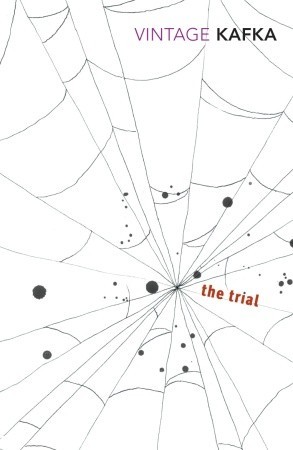
22.) The Trial by Franz Kafka

Another one that I own, I’ve started, which has many pop culture references, but which I’ve never gotten through.


wisdom of crowds

23.) The Wisdom of Crowds by James Surowiecki

This is sort of a counter claim social science book. I once read an old book entitled Extraordinary Popular Delusions and the Madness of Crowds by Charles MacKay. MacKay suggests (as Tommy Lee Jones did in Men in Black) that in groups otherwise intelligent people are stupid and panicky.


to kill a mockingbird

24.) To Kill a Mockingbird by Harper Lee

Again, there are tons of pop culture references out there on this one. I’ve heard it’s a well-crafted book, but–for whatever reason– I’ve never read it.


Ulysses

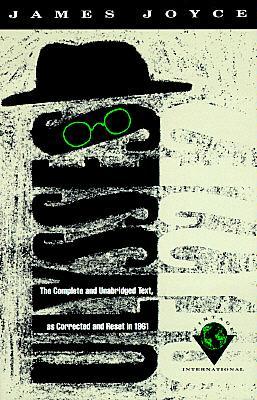
25.) Ulysses by James Joyce

I have no illusions that this would be fun reading, but some consider it the best English language novel of all time. Also, I have read some of James Joyce’s shorter stuff, and I dig his use of language. My fear is that it will be like “the greatest American novel,” Moby Dick, which I did read and would rate far lower.


Bonus Shame Picks

I just realized that my list was appallingly Western-centric, and so I’ve added a couple bonus picks  to rectify this because I’m too lazy to go back and cut a couple of the others.


Tale of genji

26.) The Tale of Genji by Murasaki Shikibu

Written in the 11th century, this Japanese work is considered by many to be the world’s first novel–or at least the first modern novel.


Water Margin

27.) The Water Margin by Shi Nai’an

This 14th century Chinese novel is one of the four classics of ancient Chinese literature. It also supposedly contains a lot of kung fu flick elements.


Your turn. Come on,  confession is good for the soul. What books are you ashamed that you haven’t gotten around to reading yet?

BOOK REVIEW: Buddha by Karen Armstrong

BuddhaBuddha by Karen Armstrong

My rating: 4 of 5 stars

Amazon page

Karen Armstrong’s book is a biography of Siddhatta Gotama (a.k.a. Siddhartha Gautama), the man who became the Buddha. However, in the process of telling this man’s life story, she introduces the reader to the basic tenets of the religion he inspired.

Siddhatta’s story is an interesting one that many non-Buddhists know the gist of from the Herman Hesse novel entitled Siddhartha. As a boy, the Buddha-to-be was the son of a wealthy, high-caste man who attempted to shelter his child from all the ugliness of the world, e.g. poverty, disease, and death. Despite these attempts, the young man eventually sees the true world and realizes that he has been living an illusory life. Ultimately, the young man abandons his comfortable life in search of an enlightened view-point.

The Buddha’s life is what one might call “novel-shaped.” That is, the arc of Siddhatta’s life as we know it is ideally suited to being conveyed as a story. It’s a warrior’s quest tale, but one of the mind rather than physical adventure. Armstrong’s book takes advantage of this arc and is arranged accordingly. The six chapters of the book are:1.) Renunciation; 2.) Quest; 3.) Enlightenment; 4.) Dhamma (the doctrines or teachings); 5.) Mission; 6.) Parinibbana (the final rest.)

Renunciation refers to Siddhatta’s abandonment of the world he knew. The quest describes his life as he strikes out in an attempt to become enlightened. The third chapter outlines how he came upon enlightenment. This might have been the conclusion of the story of the man, but that’s when the story of the Buddhist religion becomes entwined with the story of the Buddha. Chapters 4 and 5 deal largely with how the religion spread.

If one is looking for a good overview of Buddhism, Armstrong’s book is a good place to start. It’s readable, and, by tying teaching into the Buddha’s life story, interesting as well.

View all my reviews

CLASSIC WORKS: Bushidō by Inazo Nitobe

Bushido: The Soul of JapanBushido: The Soul of Japan by Inazo Nitobe

My rating: 4 of 5 stars

Amazon page 

On the whole, people are ambivalent about feudal times. On the one hand, it was a horrible time to be alive for 99.5% of the population. Chances are that if you’d lived during that time you’d be toiling ceaselessly on the land with no hope of improving your lot in life. Everything was determined by heredity, with merit having little to do with anything. This added insult to injury because that person you’d have had to suck up to was as likely to be putz as not.

On the other hand, there is widespread nostalgia for those times because one can’t help but feel that they were the golden days of virtue. As Ralph Waldo Emerson said, we think that society is ever advancing, but, in reality, we advance like a wave–losing as much on the backside as we gain on the front.

Inazo Nitobe’s book gives us an accounting of the chivalric virtue practiced by the samurai, the warrior class of feudal Japan. Bushidō means the way of the warrior. Nitobe lived after Japan’s feudal era, in the late 19th and early 20th centuries. Nitobe was an educator, and the book has a feel of erudition. Interestingly, the author was a Quaker and received education in the West, and, therefore, is able to contrast the Japanese worldview with that of Westerners.

The book is built around discussion of the seven virtues of bushido: justice, courage, benevolence, politeness, sincerity, honor, and loyalty. Each of these virtues has a chapter devoted to it (Ch. 3 through 9.) But first the book introduces bushido as an ethical system, and then it explains the effect that Buddhism, Shintoism, and Confucianism played in the development of this system.

Later chapters outline the education and training of a samurai, the importance of stoicism, the institution of suicide (seppuku), the symbolism of the sword in Japanese society, the role of women, the role of bushido as an ethical system in the present-day (his present), and its proposed role in the future. It is interesting that the book begins by discussing those things that influenced the development of bushidō, and it ends with discussion of how bushidō influences the larger world.

Our views of virtue have changed, but at some level remain consistent. The seven virtues are all still considered virtuous, but we don’t regard them in the same way today. In some cases we are undoubtedly better off with today’s views, but that’s not always the case.

Consider the seventh precept, loyalty. We still value loyalty, but in today’s world the rule of loyalty has an ever-present Shakespearean addenda: “to thine own self be true.” In other words, we no longer believe in loyalty that is blind as was valued in the days of old.

Sincerity, by which Nitobe generally means honesty, is also seen in a different light today. As depicted in the Jim Carey movie, Liar Liar, there’s a widespread view that it’s better to fib and make someone feel better than it is to tell the truth and hurt that person’s feelings.

One of the most intriguing chapters is the one that deals with seppuku. This is a concept that has never been well-understood in the West, and it’s a major point of cultural disconnect. While the Japanese have tended to see suicide as a means to restore honor that was lost in failure, in the West we tend to see it as a more pathetic and cowardly affair. I’ve recently been reading Ian Fleming’s You Only Live Twice, and this is one of many points of diverging attitudes between “Tiger” Tanaka and James Bond.

Bushidō is definitely worth a read. It’s thought-provoking, and is one of those books to be read slowly and conscientiously.

View all my reviews

BOOK REVIEW: Smile When You’re Lying by Chuck Thompson

Smile When You're Lying: Confessions of a Rogue Travel WriterSmile When You’re Lying: Confessions of a Rogue Travel Writer by Chuck Thompson

My rating: 4 of 5 stars

Amazon page

Smile When You’re Lying gives the reader an insider’s view of the deceit rife in travel writing. In the process, Chuck Thompson tells a story of life on the vagabonding circuit. Instead of being a story of idyllic and pristine white sand beaches, it’s the story of drug- and booze-riddled expats and the prostitutes they frequent.

Thompson lived a colorful life. He tells of how his interest in Thailand began when he heard stories while in a jail in Alaska. He introduces cast of characters, such as Shanghai Bob, many of who are even more colorful than he. It’s this wild living that makes the book an interesting read, but, ironically, it also makes such stories impossible to sell to any of the travels magazines–all of which make money off of advertiser dollars, advertisers who have an interest in making travel seem safe, clean, and family-friendly.

Thompson tells of how he began teaching English in Japan, a common point of origin for expats taking to Asia. Japan has a large and well-developed program, called JET, that brings native English speakers to Japan to teach language or work in government offices as translators.

In addition to the intro on Thailand, a chapter on his Alaskan youth,and one on his JET days, there are chapters on Latin America, the Caribbean, the Philippines, and Eastern Europe. Furthermore, there is a chapter that lends travel advice for aspiring travel writers and one about what travel mags don’t want readers to know. It should be noted that besides having written for such magazines, Thompson did a stint as an editor as well.

Thompson also devotes a chapter to countering the myth that Americans are–on the whole–bigger travel bastards than the people of other Western nations.

If you are interested in travel writing or vagabonding, this is a worthwhile read.

View all my reviews

BOOK REVIEW: It’s Getting Better All the Time by Moore & Simon

It's Getting Better All the Time: 101 Greatest Trends of the Last 100 YearsIt’s Getting Better All the Time: 100 Greatest Trends of the Last 100 Years by Stephen Moore

My rating: 3 of 5 stars

Amazon page

The title says it all. The authors, Stephen Moore and Julian Simon, discuss 100 trends in 20th century America that give one reason to be optimistic about the future. These trends are grouped into the following areas: health, nutrition, wealth, poverty, children’s issues, labor, leisure, housing, transportation & communications, innovation, information technology, education, safety, environmental protection, natural resources, socio-cultural indicators, sports, women’s issues, racial issues, and freedom & democracy.

One of the co-authors, Julian Simon, died before publication of this book, but is famous for a bet that he made with Paul Ehrlich. The bet was that any five commodities of Ehrlich’s choosing would decline in price over the subsequent decade. Ehrlich, author of The Population Bomb, was a doomsayer, and believed the five commodities and most others would become more expensive. In other words, Ehrlich was betting resources would become more scarce as they were used up, but Simon believed our technological advances in discovery and extraction would outstrip our consumption. Simon won the bet. All five commodities became cheaper, though some have pointed out that if they had gone double or nothing over another decade the tables would have turned.

The authors attribute the world’s 20th century success to three technologies: electricity, vaccines/medicines, and the microchip. In answer to the question of why the United States did particularly well, the authors point to freedom as the main driver. Neither of these hypotheses are systematically evaluated in this work; they’re just presented with anecdotal support. I say this not so much as harsh criticism, but so as to make the reader aware that it is not that kind of book. The bulk of the book is one page of text for each trend, plus a line or bar graph to visually depict the trend.

This book makes some excellent points. People have a tendency towards pessimism, hence all the dystopian, zombie, nuclear holocaust literature. There’s also a common fallacy that there was once a golden age of humanity in the past that is never to be surpassed. One may find it hard to believe that it’s getting better all the time, but one can’t argue with the numbers. Life expectancy is up. Infant mortality is down. Housing is less crowded. We have more symphonic orchestras. On a host of issues, the quality of life of Americans has risen.

The previous paragraph notwithstanding, there’s room for criticism. While one can’t argue with the numbers, in some cases one might find oneself asking whether they are the right numbers or whether they tell the whole story. For example, the section on disease shows a strong decline across a range of diseases. However, it doesn’t cover any of the many chronic disease that arose in the 20th century and disproportionately affect wealthy countries such as diabetes and crohn’s disease. It’s hard to know how much of the trends represented are a function of data availability (covering so much ground, they had to rely on second-hand data) and how much reflects selection bias intended to support their argument. As implied in the preceding paragraph, some of the measures are undeniably the right ones. However, the reader may find themselves wondering about others.

It would be interesting to see an update to the study. For example, GDP growth is shown to be higher on average among the freest nations. However, with countries like China and Vietnam rocketing upward in GDP in recent years, it would be interesting to see if this trend has held.

There’s a CSPAN Book TV program with Moore available here.

Even though this book is 13 years old, I’d still recommend it. Given all the doom and gloom as of late, it might be a particularly good time to pick it up.

View all my reviews

BOOK REVIEW: The Lone Samurai by Wm. Scott Wilson

The Lone Samurai: The Life of Miyamoto MusashiThe Lone Samurai: The Life of Miyamoto Musashi by William Scott Wilson

My rating: 4 of 5 stars

Amazon page

[Note: this was previously posted in my martial arts blog, Jissen Budōka.]

This is a concise and well-researched biography of one of Japan’s most famous swordsmen. Miyamoto Musashi, however, wasn’t just a swordsman, he was also a writer, a painter, a sculptor, a Zen Buddhist, a poet, a philosopher, and a strategist. In short, he was a renaissance man. While The Lone Samurai focuses heavily on Musashi’s many duels as a traveling warrior, it also describes his artwork as it paints a portrait of a complex and beguiling character.

Musashi holds a curious allure among figures in Japanese history. The Japanese tend to be strictly bound by societal conventions, and being respectful and well-mannered is valued above all else. Musashi flouted convention whenever it served him. He used irreverence for strategic advantage. He was an astute reader of men. He often showed disrespect in order to get into his opponent’s head. This is most famously exemplified in his Ganryu Island duel with Sasaki Kojiro.

Musashi adopted a life of musha shugyo, or warrior errantry, though he could have been much wealthier and more comfortable had he chosen to be. He enjoyed simplicity, and only owned a few possessions. In his travels, he engaged in over 60 duels, and is usually credited with being undefeated [Note: I’ve heard some dispute the outcome of his second duel with Muso Gonnosuke. Wilson calls it a draw, but I’ve heard it called Musashi’s only defeat as well.] He fought as a samurai in battle at Sekigahara as well, but his adulthood was a relatively peaceful time.

One fascinating, but controversial, claim is that Musashi had no teachers–neither in swordsmanship nor in any of the fine arts he practiced. Musashi said this himself, but some historians dispute it. If true, it really takes being an extraordinary person up a notch. It should be noted that Musashi was only 13 when he had his first duel.

There is much about Musashi that is lost to the ages, but this book does a great job of pulling together what is known and weaving it into a portrait of the man.

There is an extensive series of appendices providing background information, notes, a glossary, and even a collection of pop culture (e.g. movie and novel) depictions of Musashi.

It’s well worth the read if you’re interested in strategy, history, or the biographies of incredible people.

View all my reviews

BOOK REVIEW: Night by Elie Wiesel

Night  (The Night Trilogy #1)Night by Elie Wiesel

My rating: 5 of 5 stars

Amazon Page

Nobel Prize Winner Elie Wiesel’s book, Night, tells his story as a boy caught in the Holocaust. A Jew from Sighet in Transylvania, Wiesel was evacuated from the ghetto as a teenager and shipped off to Auschwitz–later to be moved to Buchenwald.

At little over 100 pages, this thin book is tragedy distilled and condensed.

A few of Wiesel’s experiences stick with one because they are just so gut wrenching. One such story is about a woman in the train car who hallucinates fire and flames. Her insanity no doubt spurred by hearing of the massive crematoria. Her delusions were prophetic for all too many of those packed in that cattle-car.

Another key moment came after their train rolled into Auschwitz. Both Elie Wiesel and his father followed advice to lie about their ages, he to make himself older and his father to become younger. This got them both directed to the left; the people who would live for the time being– though they didn’t know that at the time.

The climactic portion of the book deals with the boy’s attempts to cope with his father’s severe illness. On the one hand, his father was all he had. On the other hand, he feared that he would not survive if he had to keep looking after the ill elder. Wiesel is quite frank about the dilemma that clouded his mind. His father’s death would make his own survival more likely. The guilt caused by these thoughts tormented him. This kind of guilt is a prevailing theme in genocide literature. It reminds me of Viktor Frankl’s comment in Man’s Search for Meaning in which he says that the sad truth survivors must live with is that, “the best of us did not return.”

I will end my review by suggesting that you read this book. It’s quick and–while not painless–insightful. I’d intended to ramble on with some personal experiences and observations, but have decided to make that its own post entitled <em>The Bullets that Bore no Name: or, the Burden we all Bear</em>.

If you’re just here for the Night review, thanks for visiting and Godspeed in your journeys through cyberspace.

If you’re at all curious about what I have to say, grab your mint julep and join me on the veranda. The veranda is this way.

View all my reviews

BOOK REVIEW: Bones of the Master by George Crane

Bones of the Master: A Journey to Secret MongoliaBones of the Master: A Journey to Secret Mongolia by George Crane

My rating: 4 of 5 stars

I’m a sucker for a tale of the sage next door. In an unwise world, it’s nice to believe that the wise exist, and that they walk among us. That they are not relegated to secluded retreats, but live in suburban subdivisions. In Bones of the Master a quirky Asian man drops in on his neighbor. The neighbor turns out to be the author of this book, poet George Crane. The visitor is Tsung Tsai, a Cha’an monk who trekked from Inner Mongolia to Hong Kong in 1959 in order to ensure the teachings of his monastery would survive.

The two men strike up a friendship, collaborating on poetry translation and eventually making a journey together back to Tsung Tsai’s home. The first part of the book tells of their meeting and describes Tsung Tsai’s 1959 journey to freedom. The second part deals with the two men’s mid-1990’s return trip. The monk’s ambitious plan is to find the bones of his master, cremate them, and relocate them in accord with the dictates of his religious tradition. He also wants to rebuild the temple that was razed by the Red Guard during the cultural revolution. As this is nonfiction, it’s not all happy endings. Not everything works out as they’d like it to. A brief third part tells of their return to the states with an interesting stopover in Hong Kong.

Much of the appeal of the book stems from how the monk’s worldview rubs off on the author. The monk assumes matter-of-factly that they will be able to sell the book for a sufficient advance to pay for the trip and a monument to his teacher. As one can imagine– particularly anyone who knows a bit about publishing– Crane is suitably skeptical, but ultimately buys into the plan. The monk often tells Crane that he worries too much. However, most of us would worry about these daunting challenges. For example, how to get a one ton statue from New York to Inner Mongolia, or–more importantly–whether the aged and ailing monk will be able to complete the trip alive.

There are tidbits of insight as well as poetry scattered throughout the book.

View all my reviews