BOOK: Caged by Brandon Dean Lamson

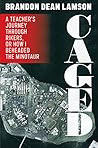
Caged: A Teacher's Journey Through Rikers, or How I Beheaded the MinotaurCaged: A Teacher’s Journey Through Rikers, or How I Beheaded the Minotaur by Brandon Dean Lamson
My rating: 5 of 5 stars

Amazon.in Page

In Caged, Brandon Dean Lamson tells the story of his time teaching inmates on Rikers Island, finding himself in conflict both with students and with the guards. There is definitely a unique culture to the world of incarceration. I found myself thinking about the Stanford Prison Experiments in which ordinary people were randomly assigned to play either inmate or guard. The subjects’ behavior changed during the short period of the experiment, guards becoming more domineering and sadistic and inmates becoming more scheming and duplicitous than these people were in their regular lives. One sees evidence of this strange power dynamic and the resulting unusual behavior throughout the book. Lamson and the other teachers and staff involved with the school often saw the guards as vicious fascists, but – at the same time — they couldn’t trust the prisoners because learning was never an inmate’s top priority but rather was a combination of survival and maintenance of status.

As interesting as the story inside the wire is, it’s equally fascinating to learn what happens with Lamson outside his workday. The author is forthright about changes in his own psychology as he developed a need to work out his own violent tendencies as well as uncharacteristic sexual behavior. Lamson describes time spent in a boxing gym and S&M dungeon in service of these changes.

The book also offers some insight into what teaching methods worked or didn’t. Some of this pedagogical insight might be exclusively applicable to jails and prisons, but some would likely be of use to regular teachers, particularly in dealing with troubled or challenging kids. Lamson is also forthright about his own teaching missteps and failures, while offering the reader insight to what he learned from those teachers who seemed to be unusually effective.

I found this to be a fascinating book. It’s well-written and thought-provoking. I’d highly recommend it for readers of nonfiction.


View all my reviews

Five Wise Lines from Chōmei’s Hōjōki

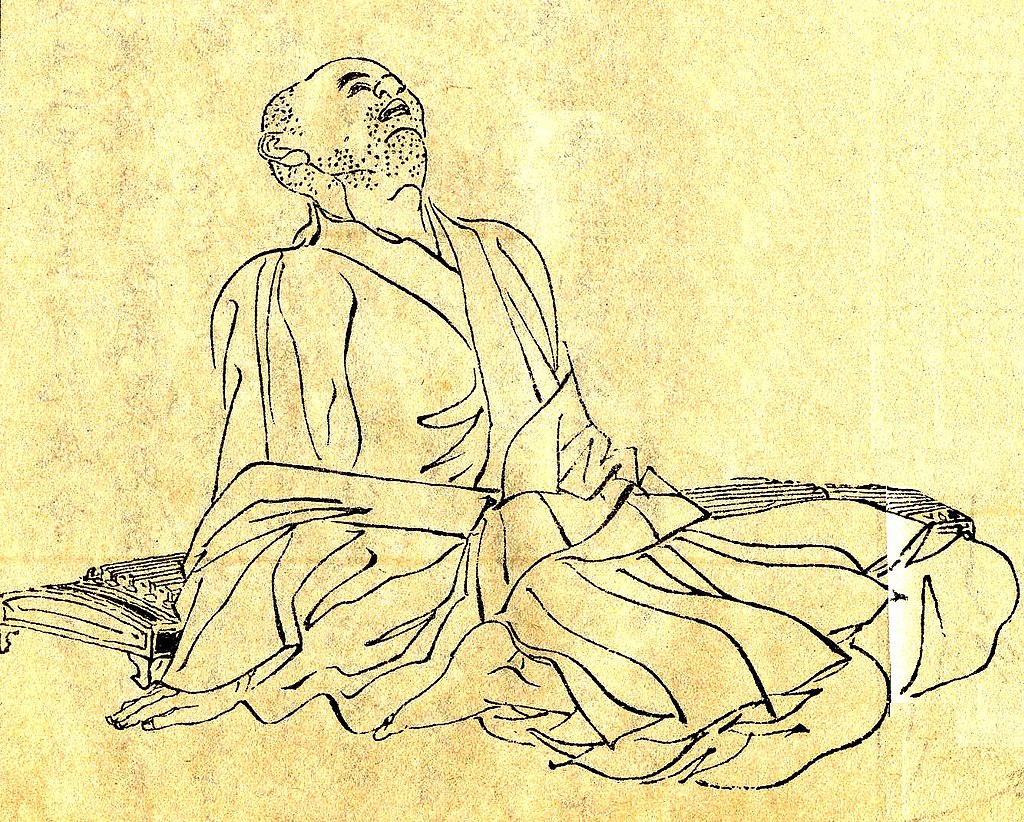
drawing by Kikuchi Yōsai

On flows the river ceaselessly, nor does its water ever stay the same.

 Kamo no Chōmei, Hōjōki

No one owns a splendid view, so nothing prevents the heart’s delight in it.

Kamo no Chōmei, Hōjōki

Knowing what the world holds and its ways, I desire nothing from it, nor chase after its prizes. My one craving is to be at peace; my one pleasure is to live free from troubles.

Kamo no Chōmei, Hōjōki

These days, I divide myself into two uses — these hands are my servants, these feet my transport.

Kamo no Chōmei, Hōjōki

When I chance to go down to the capital, I am ashamed of my lowly beggar status, but once back here again I pity those who chase after the sordid rewards of the world.

Kamo no Chōmei, Hōjōki

Reference: Saigyō Hōshi, Kamo no Chōmei, Yoshida Kenkō. 2021. Three Japanese Buddhist Monks. New York: Penguin Books. 112pp.

Available Here

BOOK REVIEW: Asimov’s Foundation and Philosophy ed. by Heter Joshua & Josef Thomas Simpson

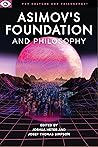
Asimov's Foundation and PhilosophyAsimov’s Foundation and Philosophy by Heter Joshua
My rating: 5 of 5 stars

Amazon.in Page

Release Date: August 24, 2023 [Paperback; ebook is out]

When I was a budding social science grad student, I learned that Asimov’s “Foundation” series was impetus for many young nerds of the previous generation to enter fields like Economics and Poli-Sci. The reason? At the heart of the story is a fictional discipline called Psycho-history, a mathematical field that’s premised on the idea that [while one can’t reliably forecast what an individual (or even small groups) will do,] given a large enough population one can make grand over-arching predictions about what will happen to society as a whole. It’s an idea that Asimov drew from his education in Chemistry, a field where one couldn’t say much about individual molecules but you could accurately model collective parameters (e.g. temperature.) It turns out that humans and their interactions are more complicated than gas molecules and so Psycho-history only works as a powerful plot device (a fact that Asimov discovered himself, supposedly driving mid-course corrections in the limited space he had to make them.) Anyhow, the idea that one might predict the unfolding of societal, economic, and international events was a powerful scholarly aphrodisiac for individuals who might otherwise have dismissed study of the social world as hopelessly and absurdly chaotic.

With that background generating curiosity and having read a number of Asimov’s books, I was eager to investigate this book that explores the philosophic underpinnings of Asimov’s fictional world. I was not disappointed. The imaginative “Foundation” series of books provides plenty of situations and ideas to which one can apply the lens of philosophy, from the limitations of reason and symbolic logic as tools to solve humanity’s problems to the morality of manipulation and questions of transparency that follow from it to what kind of free will — if any — can exist in a universe where Psycho-history works. This anthology of essays considers questions of mind, logic, morality, free will, identity, and existence, as well as various ideas from the Philosophies of History, Religion, and Science. The twenty-one essays are grouped into six parts by philosophic subdiscipline.

There are so many of these “pop culture meets philosophy” books out there, but I think this one does better than most because Asimov’s creative mind really offered such a rich assortment of ideas upon which to reflect.

View all my reviews

BOOK REVIEW: Mindfulness in Wild Swimming by Tessa Wardley

Mindfulness in Wild Swimming: Meditations on Nature & Flow (Mindfulness series)Mindfulness in Wild Swimming: Meditations on Nature & Flow by Tessa Wardley
My rating: 4 of 5 stars

Amazon.in Page

Release Date: June 13, 2023

As the title suggests, this is a book about combining mindfulness and swimming in natural bodies of water. It’s part of a large series of “Mindfulness and …” books, and this particular volume is a re-release of a title that came out a couple years back.

While the book does provide an overview the basic methods and considerations for both mindfulness meditation and wild swimming, it’s largely a peptalk or enticement to take up wild swimming as a means to improve awareness (as well as to bolster physical health and mental well-being.) That said, some of this peptalk is artfully, almost poetically, written, and the book is a pleasure to read.

The book discusses solo swims versus those in a group, and it even explores using onshore experiences to bolster mindfulness — e.g. using the sensory experience of the water as a focal point for practicing awareness. The around- (v. in-) water discussions are probably in part because the book uses seasons as a secondary mode of organization, and long and leisurely winter swims in lakes and rivers aren’t an option for people in many parts of the world.

I picked up some interesting food-for-thought in the book, and — as I say — it made for enjoyable reading.

View all my reviews

BOOKS: The Mind of Adi Shankaracharya by Y. Keshava Menon

The Mind of Adi ShankaracharyaThe Mind of Adi Shankaracharya by Y. Keshava Menon
My rating: 4 of 5 stars

Amazon.in Page

This book does a good job of that at which the title hints, offering the reader insight into the philosophy of Adi Shankaracharya. Along the way, Menon presents clear descriptions of Indian philosophical concepts such as Maya, Avidya, Antahkarana, etc., and also compares and contrasts Shankaracharya’s philosophy with those of other philosophers (from both the East and West) as a means to clarify ideas that can be subtle and complex.

That said, what the book isn’t is an unbiased and objective look at Shankaracharya’s ideas. While Menon doesn’t go as far as to support the supernatural myths of Shankaracharya’s life (which are only discussed in the Appendix,) and he skirts that 800-pound gorilla of Hindu philosophic controversy, caste, he does present the philosophy as an advocate for Shankaracharya rather than as an indifferent scholar who merely wishes to deliver arguments and ideas while inviting thought among his readers.

While the book deals with epistemology, ethics, and various aspects of metaphysics, the biggest single subject is Self. I found the explanation of this topic to be fascinating. I had previously understood that among the major differences between Shankaracharya and Buddha was on this question. While I still find the Buddhist approach to Self (or, more properly, lack of Self — i.e. Anatta) to be the more compelling and parsimonious explanation, I feel that I was provided with about as clear an explanation of the Hindu (generally) and Shankaracharyan (specifically) views on Self as one could wish for.

I’d recommend this book. If you’ve come away from reading about subjects like “Maya” (Is it illusion? Is it NOT illusion?) this book can definitely help offer clarification, and (as books on philosophy go) it’s readable and not too jargon-laden. That said, if one is looking for a book that is not advocating a philosophy but, rather, objectively providing ideas and contrasting explanations, this book may bias your views.

View all my reviews

BOOKS: The Slow Traveller by Jo Tinsley

The Slow Traveller: An intentional path to mindful adventuresThe Slow Traveller: An intentional path to mindful adventures by Jo Tinsley
My rating: 4 of 5 stars

Amazon.in Page

Out: June 13, 2023

This book, gorgeously illustrated with photographs, consists of a series of essays on a different approach to travel, an approach familiar to travelers but not so much to tourists, an approach that is the antithesis of leaping from one postcard panorama to the next, packing a couple weeks’ vacation with maximum sights seen.

Most of the chapters / essays look at a specific mode of travel – i.e. the road trip, hiking / pilgrimage, train travel, and water travel. However, a few of the chapters tack from different angles to look at local food-centric travel, sheltering with permanent structures like bothies and teahouses, and urban slow travel.

There are some interesting insights in this book, it has stunning photography, and I even picked up some book recommendations. If you’re interested in changing your approach to travel to go deeper / less broad, this book is worth reading.

View all my reviews

Orwell’s Politics and the English Language

Politics and the English LanguagePolitics and the English Language by George Orwell
My rating: 5 of 5 stars

Available online at The Orwell Foundation

In this essay, Orwell decries a scourge of weak writing in the English language, writing marked by cliched phrases, imprecise descriptors, meaningless words, and pretension. In short, he tells us that writing is becoming simultaneously more verbose and less meaningful.

While the essay isn’t as fun to read as George Carlin’s rants on the same subject, it’s a clear and well-organized discussion of this flaw. Orwell presents the problem, offering examples of random unreadable passages and discussion of where each goes awry. He also contrasts a clear and concise Biblical passage with how its message would sound translated into this corrupt modern form of the language. (That’s the most comedic portion of the essay.) Next, Orwell offers writers simple questions they might apply to making their writing less bloated and more impactful. The key insight of the essay is that thought corrupts language, but language also corrupts thought.

The essay is almost eighty years old, but the problem persists — particularly among politicians, a class of people who love to both sound impressive but without saying anything definitive, anything that might pin them down. That said, since Orwell we’ve developed new linguistic afflictions unique to the internet age, and the essay could probably use updating. Still, it’s an excellent place to start one’s reflection on what’s going wrong in the English language.

View all my reviews

The Good, the Bad, and the Bat-Shit Crazy of The Republic by Plato

INTRODUCTION: The Republic is the most read and discussed of the Socratic dialogues written by Plato, and for good reason. It offers some intriguing ideas that have influenced philosophy, politics, religion, and even science fiction to this day. That said, the book isn’t without its stinkers, and many people have reasonably asked whether a state or nation employing all of Plato’s guidance wouldn’t be more dystopian than utopian. To avoid the error committed by many religious people regarding scriptures (and probably by a few scholars regarding Plato’s work,) we shouldn’t ignore the parts that are — let’s say…, complete lunacy, and also shouldn’t contort language and reason to make the questionable ideas palatable. With that in mind, we’ll start with a couple of The Republic‘s banana ideas before examining a few that have stood the test of time.

PLATO’S WAR AGAINST POETRY & THE ARTS: In The Republic, Plato goes on a tirade against the arts on the basis that they aren’t truthful and that they encourage readers and viewers to behave from the lesser elements of their “soul” – the emotional and desirous bits. Plato’s condemnation of art is informed by two of his major teachings. First, the “tripartite soul” in which reason is king and emotion and desire are lesser elements of humanity that should be checked by reason. Ergo, he doesn’t like that reading Homer makes people weepy or riled up. Second, in Plato’s conception of forms, for any given thing under the sun there’s an ideal form that was made once by god, then there are actual items made by craftspeople, and then there are the imitations made by artists. In Plato’s mind, this leads to a warped situation in which the craftsmen stray from the ideal by copying what artists presented, rather than seeking the divine ideal, and Plato is all about the pursuit of the ideal.  

Plato would grant artists the opportunity to prove that their works are of service to the state, but barring their demonstration that the art advances reason and is truthful it would be outlawed. To me, it sounds a lot like the Soviet Union where art was mostly jingoistic pieces that encouraged a Stakhanovite effort. At any rate, I’ve got to give this one to Aristotle who saw the cathartic value of art and poetry. There is value in the existence of a wide variety of modes of expression and ways of thinking about the world. It allows us to break new ground. I was just reading a book by Yeats in which he wrote: “Everything exists, everything is true, and the earth is only a little dust under our feet.” This may not seem like sound thinking in our rational age, but I like that such a counterweight exists.

THE SHARING OF WIVES & CHILDREN BY THE RULING CLASS: Plato’s Republic would be ruled by a philosopher-king, and it requires the ruling class to be specially educated and controlled to avoid pursuit of wealth and comfort. One such control is that the aristocrats can only have kids (unaborted ones, at least) under certain conditions, but the children wouldn’t know who their biological parents were.

Plato is no fan of democracy. In fact, democracy is the stage right before tyranny in Plato’s model of political devolution. [It starts with Plato’s ideal, Aristocracy, which devolves into Timocracy with the declining character of leaders (because they’re not well-trained philosophers.) Timocracy devolves into Oligarchy as the lesser quality ruling class becomes obsessed with wealth. This leads to Democracy because people get fed up with the oligarchs having all the money and they revolt. But since anyone can become leader, a tyrannical type will eventually rise to the top and use an iron-hand to maintain power.]

There’s a reason why, to my knowledge, this approach has never been tried, despite the immense popularity of Plato and The Republic. It relates to a previously mentioned point as it pertains to Plato’s ineptitude with regards to human psychology. Plato [like several other philosophers of the ancient world] believes one can kill emotion and desire through the power of pure reason. Reason maybe our smartest mental activity, but it’s neither fastest nor particularly capable of steering the ship. At any rate, this joint parentage scheme makes me think of the Harry Harlow experiments in which baby monkeys were put either with a wire mesh or cloth-covered “mother surrogate.” We’ve learned a lot about how psychopaths are made since the days of Plato. I think Plato’s guardian class would be chock-full of lunatics.

THE SUPREME IMPORTANCE OF GEOMETRY: I love a triangle as much as the next fellow, but I think Plato may have gone a little overboard with his views about the transcendent value of geometry.

WHAT PLATO GOT RIGHT: There are definitely ideas in The Republic that continue to contribute to humanity’s understanding of itself and the world. Here are a few good reasons to read The Republic — despite all that junk mentioned above.

THE ALLEGORY OF THE CAVE: Because of sci-fi works such as The Matrix, this is probably the most widely cited bit of The Republic. However, it’s not just a fictional or hypothetical idea anymore. One will also see references to Plato’s cave in nonfiction works of neuroscience and physics that deal with how our perceived world doesn’t equate to the objectively real world. Plato offers a very clear thought experiment in Book VII.

PLATO’S GENDER PROGRESSIVISM: In The Republic, Plato argues that women can be guardians of the state as well as men, and that women must receive the same education in order to do so. Lest the feminist jump all-in on Plato, it should be noted that he maintained some pretty misogynist / patriarchal views (e.g. women being like children,) as well as some bizarre ones (e.g. the wandering womb hypothesis.) However, in at least that one regard, Plato was ahead of his time.

KNOWLEDGE ACQUIRED UNDER COMPULSION OBTAINS NO HOLD: Given that Plato’s Republic would feature some harsh limitations of individual freedom, from lack of artistic expression to inability to know one’s own mom, it’s nice to see that he held some freedom-loving views, as well.

COURAGE IS STAYING SPIRITED IN ONE’S DECISIONS IN THE FACE OF PLEASURE OR PAIN: Much of The Republic is an attempt to define and distinguish the cardinal virtue of justice. In fact, in many Socratic dialogues, the primary objective is to understand virtues, and they’re often discussed at length, not always resulting in a firm conclusion. I like the definition of courage provided in The Republic. One makes a decision based on the virtuous path, and sticks with it even when pleasure or pain might divert one.

THE TENDENCY TOWARD DIMINISHING EFFECTIVENESS IN POLITICS: While I share neither Plato’s enthusiasm for aristocracy nor his pessimism about democracy (there’s a reason the world has abandoned the former in preference for the latter,) I do think there’s a potential grain of truth in his model of political devolution that’s mentioned in Books VIII & IX. I think there can be a proclivity towards weaker and less effective leaders over time under certain systems of governance. One can see this in the Soviet Union, and arguably in North Korea. It seems possible that there are systemic causes for devolution of political effectiveness, at least under certain approaches to governance. (I’d argue this is one of the reasons that democracy is best, because it can fully overturn the apple cart of governance rather than struggling with whatever continuity issues contribute to declining effectiveness.)

READ THE REPUBLIC, both for its great and for its dystopian ideas, because even when it’s bad, it’s stimulating.

BOOK REVIEW: The Abolition of Man: Deluxe Edition Carson Grubaugh, et. al.

The Abolition of Man: The Deluxe EditionThe Abolition of Man: The Deluxe Edition by Carson Grubaugh
My rating: 4 of 5 stars

Amazon.in Page

Release Date [for Deluxe Ed.]: July 25, 2023

This is marketed as the first comic book illustrated by an AI. That makes it a very different beast from the usual graphic novel or comic book, and it means the purpose for reading it is entirely different. If I were to rate this for someone who wanted to read an entertaining story (the usual purpose of a graphic novel,) I would rate it “horrible,” “worst-ever,” “unreadable,” – zero stars. However, if you bothered to read the book blurb, you probably aren’t still considering this book for the purposes of entertaining story.

What other reasons might one have for reading this book? I can think of two: one major and one minor. The major purpose is to see what an AI does with illustrations, how it “thinks” (for lack of a better word,) and how it fails. For this purpose, I’d say the book was fascinating to peruse. As a complete neophyte to both AI and graphic arts, I was struck by the “glimpse-comprehensible / close look-grotesque” nature of the illustrations. That is, if one just took a quick look, there tended to be something that felt like it made sense in the panel, but then when you looked closer it was a cabinet of curiosities freak show.

The minor reason for reading this is because one has an interest in the philosophy of mankind in the modern world, a topic that informs the first and last issues (or the philosophy of information, which informs the appendiceal essays.) In this regard the book made some thought-provoking points.

The base text the AI was fed to come up with illustrations varied across the five issues. The first was the eponymous C.S. Lewis book — i.e. “The Abolition of Man.” While this didn’t present the Lewis text word-for-word, it was certainly the most readable portion of the book. The second and third comics drew on text from a comic written by Grubaugh. I assume the AI processed this text somehow because the text presented was often incomprehensible, was full of typos (or what seemed like them,) but had a couple amusing lines by virtue of what I can only assume was unintended sexual innuendo. The fourth issue is almost textless, but what few text bubbles exist were supposedly composed by AI (they don’t have much information value.) [FYI- this penultimate issue is the stuff of nightmares. In places, it looks like a guide to fatal birth defects.] The final issue is a philosophy essay on the role of human dignity in privacy expectations. It’s an interesting enough read, but the graphics are like a PowerPoint by someone who took, but failed, a course on PowerPoint graphic design.

If you’re curious about how close AI is to drawing graphic novels and have an interest in philosophy of humanity and / or information, you’ll find this book to be a worthwhile read. If you’re expecting an interesting story, you’ll be sadly disappointed. If you’re a budding Andy Warhol, looking for a way to make the next artistic breakthrough requiring little effort or creativity on your own part, you might see the next big thing.


View all my reviews

BOOK REVIEW: Invention and Innovation by Vaclav Smil

Inventions and Innovations: A Brief History of Infatuation, Overpromise, and DisappointmentInventions and Innovations: A Brief History of Infatuation, Overpromise, and Disappointment by Vaclav Smil
My rating: 5 of 5 stars

Amazon.in Page

Release Date: February 14, 2023

This book is about technological failures, the various ways in which technologies fail, and what lessons can be learned from these failures when hearing about new “world-changing breakthroughs.” The author explores nine technologies in depth, three for each of three varieties of technology failure.

The first group are those technologies that came online as promised, fixing a major problem, only to later be discovered to have side-effects deemed disastrous. The examples used are: leaded gasoline, DDT pesticide, and CFC (Chlorofluorocarbon) refrigerant. These technologies have come to be associated with health defects, air pollution, ecological collapse, and ozone depletion.

The second group (like the first) came online, but then never became competitive with existing technologies. The technologies presented as examples are: airships, nuclear fission for power production, and supersonic flight. Airships died out not only because of the Hindenburg disaster, but also because people preferred airplanes to a craft with the combined slowness of a boat and the crash potential of a plane. Nuclear fission became untenable for new commercial power plants due to a risk premium on build costs even though it doesn’t contribute to global warming and (once powerplants are paid for) is exceedingly cheap per kilowatt-hour. Supersonic flight was just too costly and short-ranged to compete with subsonic flight.

The final group are those technologies that failed to come online at all, despite intense efforts. These include travel by vacuum tube (i.e. Hyperloop, and, yes, like at the bank but with people inside) nitrogen-fixing grains (negating the need for fertilizer,) and nuclear fusion. Despite the celebrity billionaire love of Elon Musk and Richard Branson, hyperloop isn’t advancing because of challenges of maintaining vacuum over large distances. Making cereal grains that feature the nitrogen-fixing capabilities of legumes has also proven more difficult than expected. Nuclear fusion recently experienced a moment in the sun when, for the first time, they got more energy out of it than was needed to achieve it. (This wasn’t written about in the review copy I read, but I suspect will be mentioned in the finished book. At any rate, it doesn’t negate the author’s point as it’s still just one breakthrough of several that would be needed for the technology to be commercially viable.)

In the last chapter, the author gets into a number of other technologies with shorter discussions that are meant to illustrate specific issues with excessive technological optimism. He also investigates some technologies that he believes need to come down the pike, given our present and expected future challenges.

I found this book fascinating. The author seems to love being contrarian (he not only contests popular optimism by those overestimating technological progress but also contests the pessimism regarding the first group of failed technologies, so it appears that he enjoys pointing out how mass opinion [or the opinion of another smart person] is wrong.) That said, there’s a great deal of thought-provoking information in the book. And, I think it can help people more critically consider claims about up-and-coming technologies.


View all my reviews