PROMPT: Physical Exercise

What is your favorite form of physical exercise?

I’m a big fan of them all. I like to move it, move it.

Each in its time.

Though the less special equipment I need access to, the better. I’m a firm believer that one needs only the body and mind to keep a fit body. It’s all a matter of how, how often, how intensely, and how safely one moves one’s body. Gadgety fitness can become too fetishist, and not build integration of the body as much as is ideal.

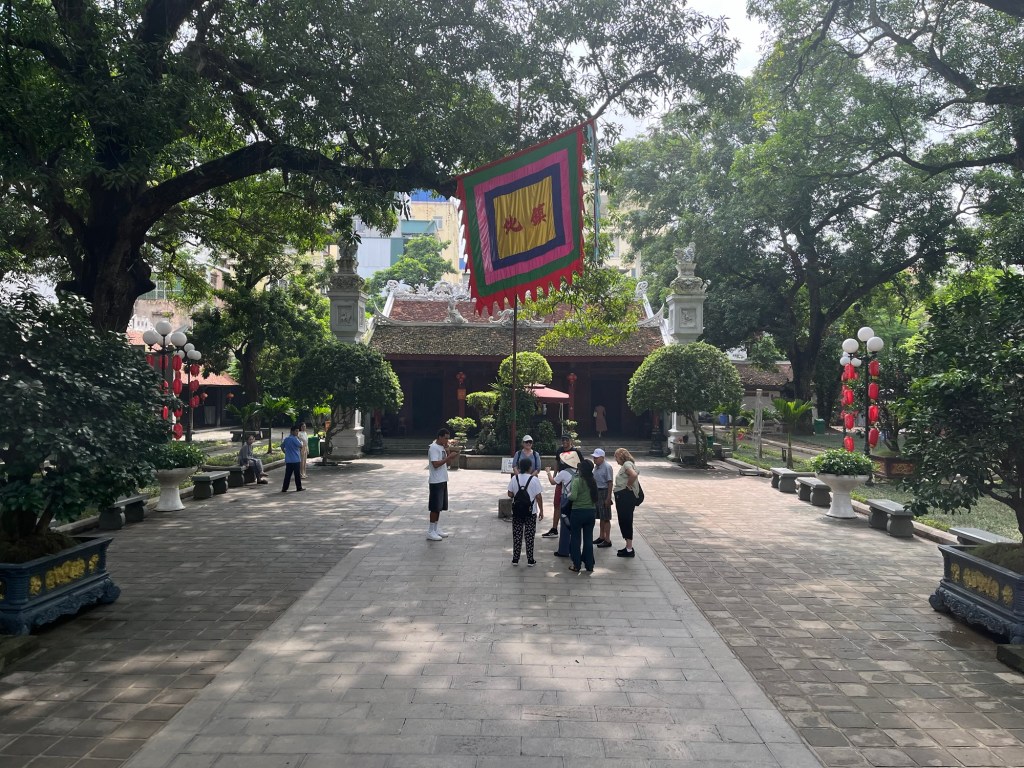
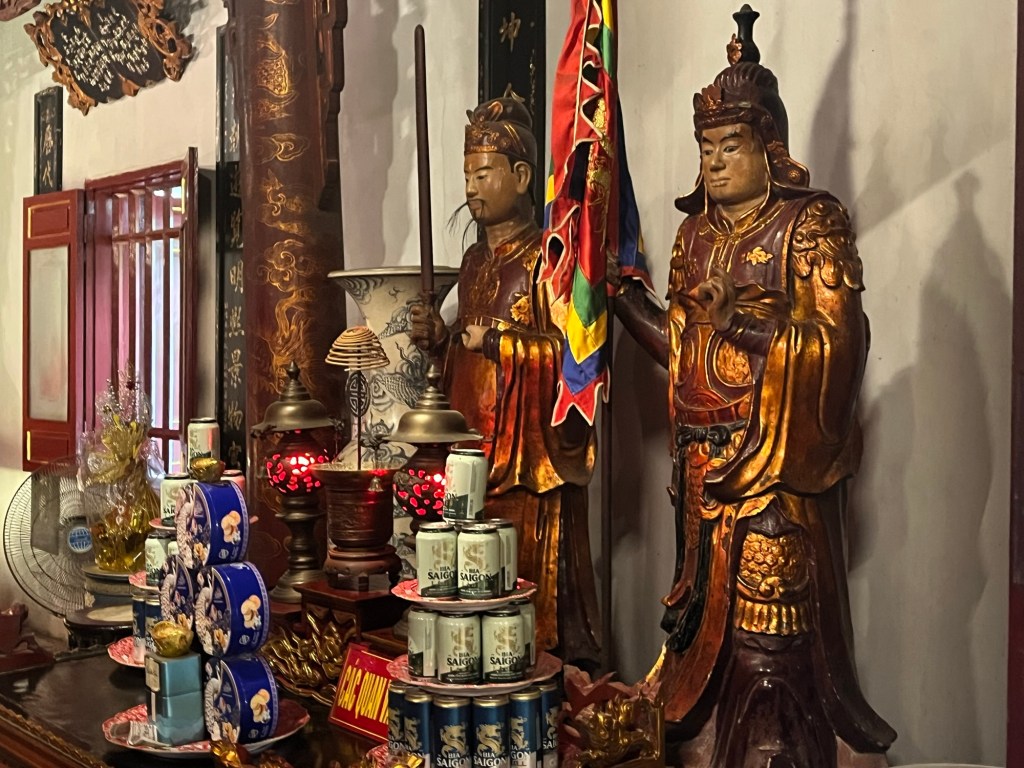
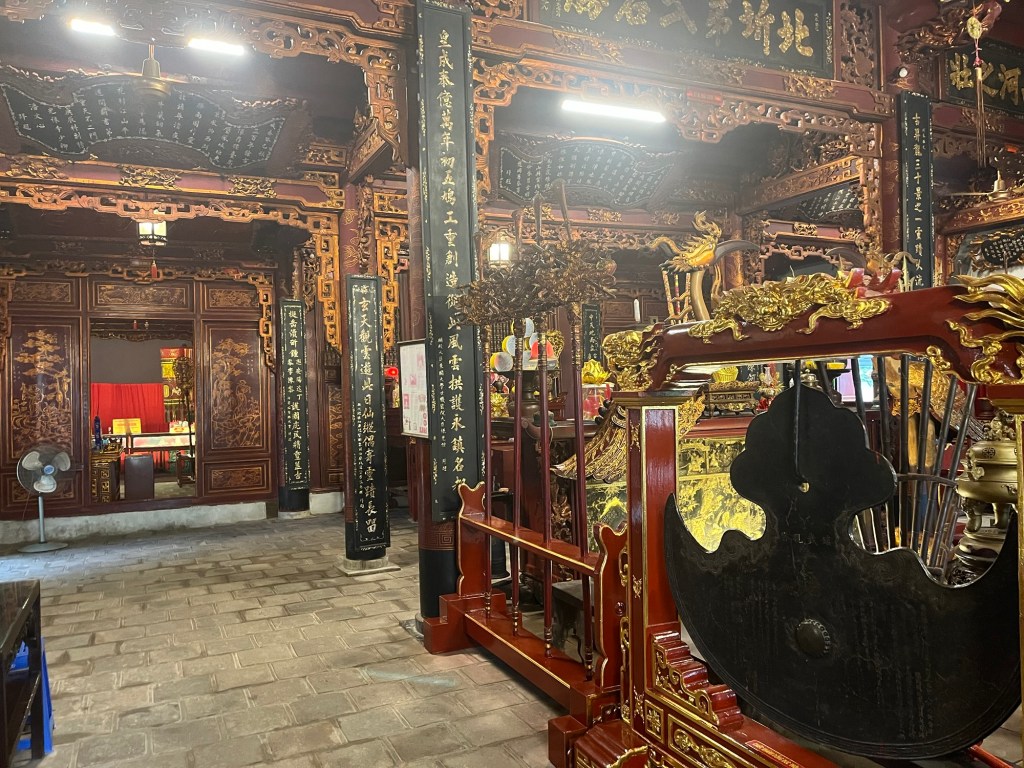
DAILY PHOTO: Quán Thánh Temple, Hanoi

PROMPT: Athletes

Daily writing prompt
Name the professional athletes you respect the most and why.

Muay Thai fighters. To survive careers spanning of hundreds of fights, taking knees and elbows, is a feat. While they might not be fighting as often these days, you still probably have to go through a period of a fight per week to raise up to the point where you can have a more sensible rest-to-fight ratio.
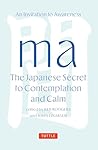
BOOK: “Ma” ed. by Ken Rodgers & John Einarsen

Ma: The Japanese Secret to Contemplation and Calm: An Invitation to AwarenessMa: The Japanese Secret to Contemplation and Calm: An Invitation to Awareness by Ken Rodgers
My rating: 5 of 5 stars

Publisher Site – Tuttle

Release date: October 27, 2025

My introduction to the concept of ma came as a young martial arts student, where it was thought of as distancing, but not distancing in a static sense — rather in a way that incorporated timing as well [so, more of an interval in space-time.] I would later hear the term applied to domains such as joke telling in which perfection of pause could be as critical to a laugh as the words that comprised the joke. This book expanded my understanding to numerous realms I’d never much considered before such as architecture, photography, and gardening. (Incidentally, this book does contain a chapter addressing the martial arts aspect of ma, though not the comedic ramifications of the concept.)

I haven’t seen any other books that focus entirely on this concept. Ma is often mentioned in books on Japanese philosophy and aesthetics but rarely with such depth and singular attention. If there are other books that drill down into the concept in this way, I doubt they are as readable as this one (that is, I suspect such a book would be intensely philosophic and scholarly.) So, this book seems to have a solid niche.

There were a couple chapters that took my thinking on the subject to entirely new places. One was on ma in the domain of virtual reality. This raised interesting metaphysical considerations. Another was about the Heart Sutra and how the translations used have led to longstanding misunderstandings of that work.

If you are interested in art and or philosophy, I’d highly recommend this book.

View all my reviews

BOOK: “Seven Animal Postures” by Jeogun [Trans. by Dowon]

Seven Animal PosturesSeven Animal Postures by Jeogun
My rating: 4 of 5 stars

Publisher Information – Sunmudo Daegeumgangmun Foundation

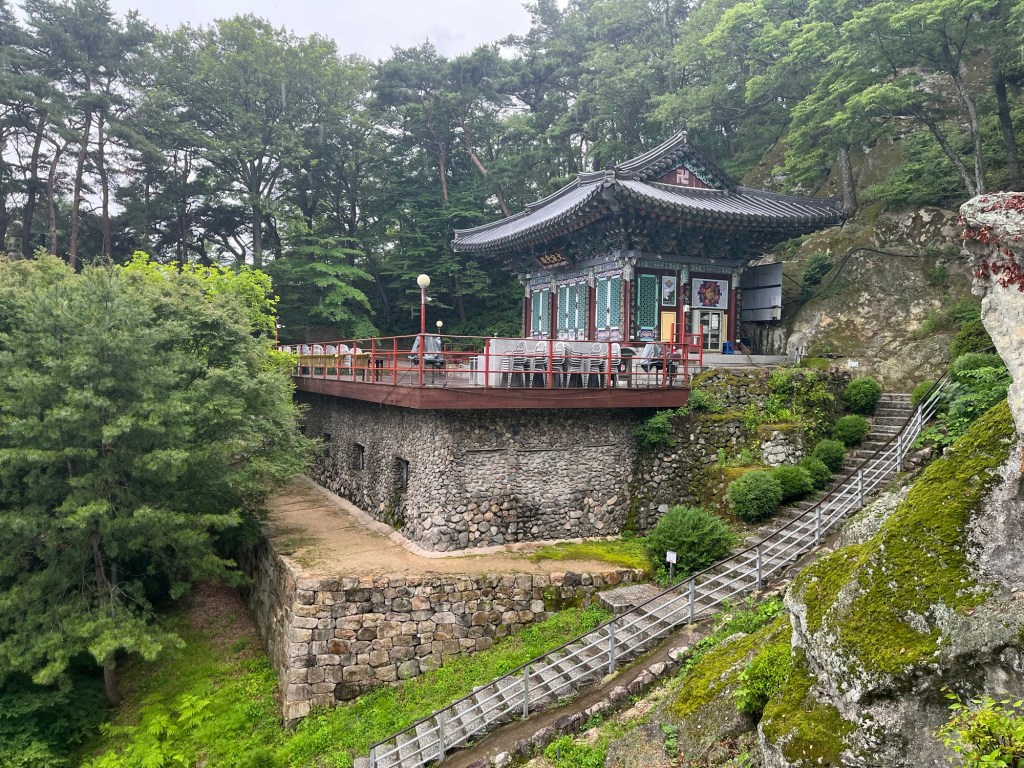
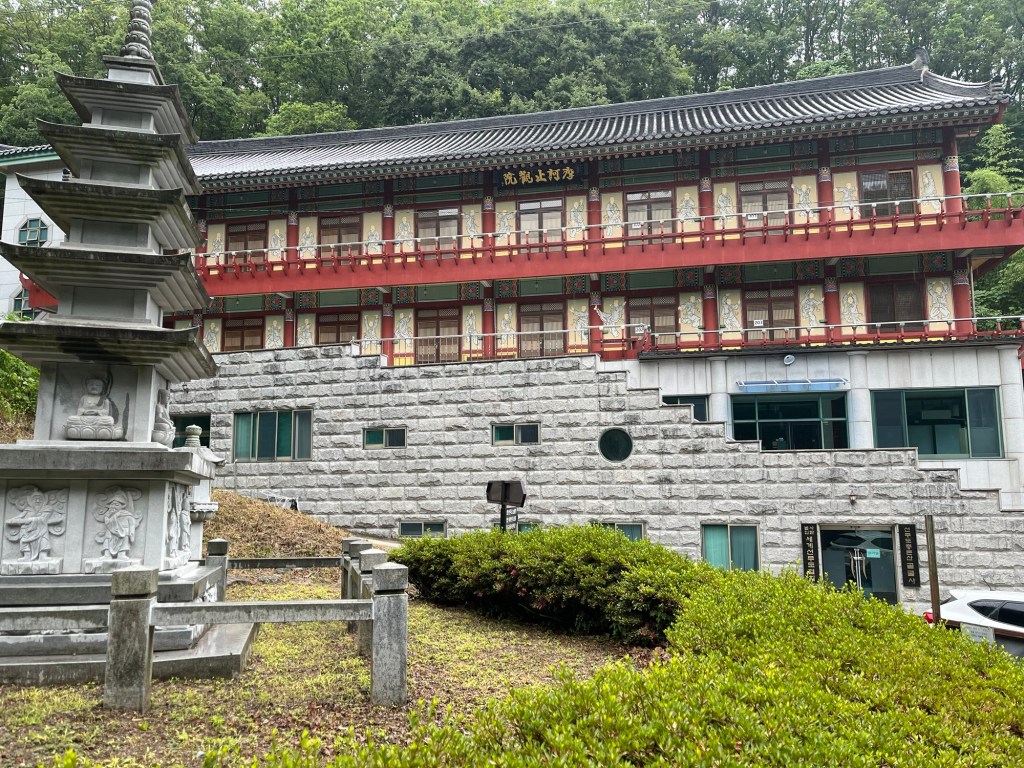
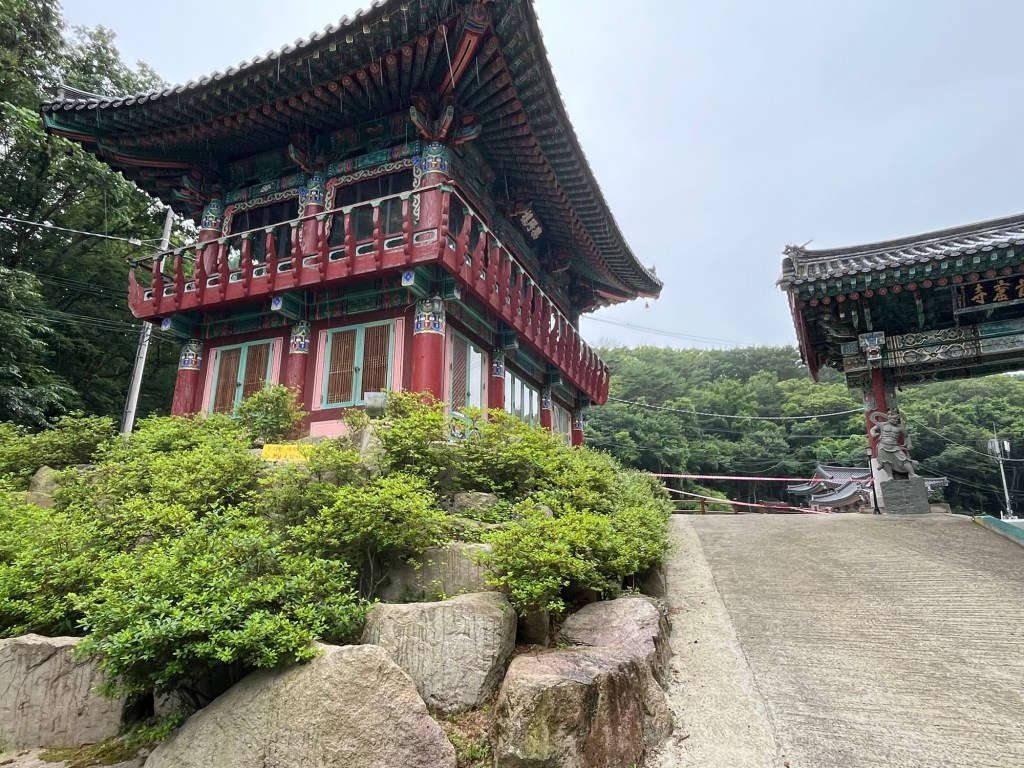
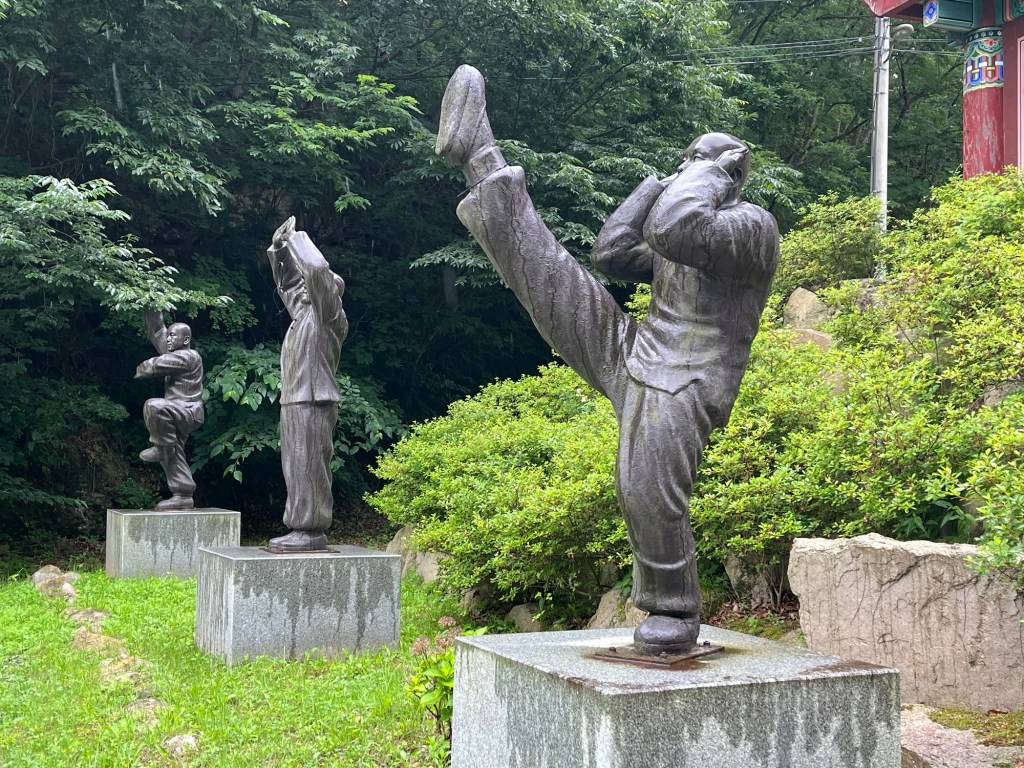
I bought this book in the gift shop of Golgulsa Temple [i.e. Stone Buddha Temple,] in the countryside outside of Gyeongju, South Korea. Golgulsa is a fascinating place. It’s sort of the Shaolin Temple of Korea, teaching martial arts and qigong (energy work) alongside meditation and Buddhist philosophy. The Korean Buddhist martial art is called Sunmudo, and I’d never heard of it before traveling to Korea.

At any rate, this book is a 35-page guide to a set of qigong practices known as the “Seven Animal Postures” (or Yeongdongipgwan.) It’s a set of exercises that are similar to qigong practices like the Eight Pieces Brocade, and not greatly dissimilar to yogasana (i.e. yoga’s postural practices.) [FYI: The animals of these exercises are Tiger, Dragon, Deer, Monkey, Bear, Turtle, and Crane.]

The book offers a little bit of background on Sunmudo and the benefits of it, but is mostly a guide to the movement, breath, and postural details of these seven exercises. It has line drawings to help elaborate upon the text. My only gripe would be that the paper the book is printed on to make it more visually interesting has blocks of darker color that make it a little harder to read than is necessary.

If you are interested in qigong or yogic practices that are a bit more off the beaten path, you may find this one interesting.

View all my reviews

DAILY PHOTO: Golgulsa: The Korean Shaolin

PROMPT: Risk

Daily writing prompt
Describe a risk you took that you do not regret.

I don’t know that I’ve ever regretted taking a risk. I’ve taken some bruises for them on occasion but not felt regret.

I did once try to block a staff strike with an ill-positioned / ill-timed wooden sword. I got a mild concussion that time, but still — I don’t think — regret (but I’m a bit fuzzy on the details, maybe it damaged the part of my brain that is capable of regret.)

I’m with Miyamoto Musashi, who wrote: “我事におゐて後悔を/せず” [“I will not regret my deeds.”] in his Dokkôdô [“Way of Walking Alone.”] Of course, he probably suffered his share of concussions as well.

PROMPT: Technology

Daily writing prompt
How has technology changed your job?

Technology has changed everything, for good and for ill. It’s the source of our vast growth in productivity, but also at the heart of our modern crises (e.g. I’m almost certain that no caveman ever experienced “imposter syndrome.” But like other crises of modernity, I suspect that technological dependence and an ever-continuing trend toward ultra-specialization are its cause.)

I count myself fortunate to be of an age to (probably) miss the (rapidly approaching) day when machines and artificial intelligence do all “productive tasks” better, faster, and with far less energy consumption than a human being. I don’t think most of humanity will be prepared for that day, and it will – in all likelihood – go down catastrophically. [I think we’re seeing the cracks in the dam already.]

I spend more and more time with the only technology-proof sector of which I’m aware: building a more capable human being.

I believe if every person spent some time learning skills like primitive living (sustainable wilderness survival skills) or unarmed martial arts (that train against armed opponents) society would be much better off. I pick these two as examples of skill sets that give practitioners a deep confidence in themselves [not in themselves + technologies that they can’t build, can’t fix, and which they don’t really understand.] I suspect that the core self-empowerment that would result would ease away much of the general shittiness of character we are increasingly prone to see in the world, shittiness that — like all shittiness — is ultimately rooted in fear.

BOOKS: “Shaolin: How to win without fighting” by Bernhard Moestl

Shaolin: How to win without fightingShaolin: How to win without fighting by Bernhard Moestl
My rating: 4 of 5 stars

Publisher Site

This is a self-help book that nominally draws on the philosophy of Shaolin Kung fu and its Chan Buddhist underpinnings, but – more broadly – employs quotes and examples from many, mostly Eastern, sources. For example, the ideas and stories of Miyamoto Musashi are perhaps as common as any source (Musashi was Japanese, not Chinese, and was not noted for being Buddhist. In his own words, he respected the gods and buddhas, but didn’t expect their help.)

The book offers a fine discussion of Eastern philosophic thought in action, particularly that which arose from warrior sources, but it isn’t particularly ground-breaking in any way. For those who like homework, the book does include many exercises to make the reading a more interactive experience.

I enjoyed reading this book well enough, but it didn’t distinguish itself and will soon fall into the mind-space of a fuzzy amalgamation of similar books I’ve read over the years.

View all my reviews

BOOKS: “How to Fight Tough” by Jack Dempsey

How to Fight ToughHow to Fight Tough by Jack Dempsey
My rating: 5 of 5 stars

Read online at Archive.org

This book was put out by the Coast Guard during World War II as a commando fighting manual. The lead on the project was heavyweight boxing champion Jack Dempsey, aided by a small team of others — all with varied bona fides in Combatives.

This is a fun book to read. It’s loaded with 1940’s slang, over-the-top reminders to fight tough and mean, and jokes that — while dated — still amuse with their quirky language. Seriously, the voice in my head was playing in Trans-Atlantic dialect (1940’s radio announcer voice) or as James Cagney playing a gangster the whole time I was reading this book.

That said, while the text was campy, the actual techniques are solid. The book consists of eighteen lessons that are built on well-established grappling and submission techniques such as hadaka jime (rear naked choke.) Also, while there is often only one (or — at most — a few) photos per technique, they seemed to put some effort into doing them conscientiously. (And they are almost full-page shots, so one can actually see a bit of detail.) The techniques include: unarmed v. various unarmed attacks, unarmed v. knife, unarmed v. gun (holstered, and front and rear approaches,) and unarmed v. bayonet.

I’d highly recommend reading this book. It’s a quick and amusing read with some useful techniques inside.

View all my reviews