“Untitled” [Pronunciation Poem] by Anonymous* [w/ Audio]

I take it you already know
Of tough and bough and cough and dough.
Others may stumble, but not you,
On hiccough, thorough, lough and through.
Well done! And now you wish, perhaps,
To learn of less familiar traps.

Beware of heard, a dreadful word
That looks like beard and sounds like bird.
And dead -- it's said like bed, not bead.
For goodness sake, don't call it deed!
Watch out for meat and great and threat.
They rhyme with suite and straight and debt.

A moth is not a moth in mother,
Nor both in bother, broth in brother,
And here is not a match for there,
Nor dear and fear for pear and bear.
And then there's dose and rose and lose
Just look them up -- and goose and choose.

And cork and work and card and ward.
And font and front and word and sword.
And do and go, then thwart and cart.
Come, come I've hardly made a start.

A dreadful language? Man alive,
I'd mastered it when I was five!

* This poem has come to be attributed to a T.S. Watt with a date of 1954. However, the broad divergence of titles and lack of other publication information suggest the alternate possibility that attribution was invented after the fact and has just been mindlessly copied across the internet. I don’t wish to cheat T.S. Watt, if he or she was an actual person who wrote this clever poem, but I also don’t wish to contribute to the spread of false information that happens regularly across the internet. Hence, this note.

“A Poison Tree” by William Blake [w/ Audio]

I was angry with my friend;
I told my wrath, my wrath did end.
I was angry with my foe:
I told it not, my wrath did grow.

And I watered it in fears,
Night & morning with my tears:
And I sunned it with smiles,
And with soft deceitful wiles.

And it grew both day and night.
Till it bore an apple bright.
And my foe beheld it shine,
And he knew that it was mine.

And into my garden stole,
When the night had veild the pole;
In the morning glad I see;
My foe outstretched beneath the tree.

Sword-Lion Inquiry [Lyric Poem]

I see this lion, swords in teeth,
And find myself in disbelief,
Am I to believe this wild cat
Swallowed two men, coats, belts, and hats,
But the swords got stuck?

Note to Self [Lyric Poem]

Allow me to make a
Socratic suggestion:
That you pursue the lowly
Art of the question.

Showing you love knowing
More than you love learning
Shows only that you're not
Discerning, and lack requisite
Yearning to find the Truth.

“Second Fig” by Edna St. Vincent Millay [w/ Audio]

Safe upon the solid rock the ugly houses stand:
Come and see my shining palace built upon the sand!

Jungle [Common Meter]

They say jungles are chaotic.
I find them as silent
As the world that is aquatic...
Though no less violent.

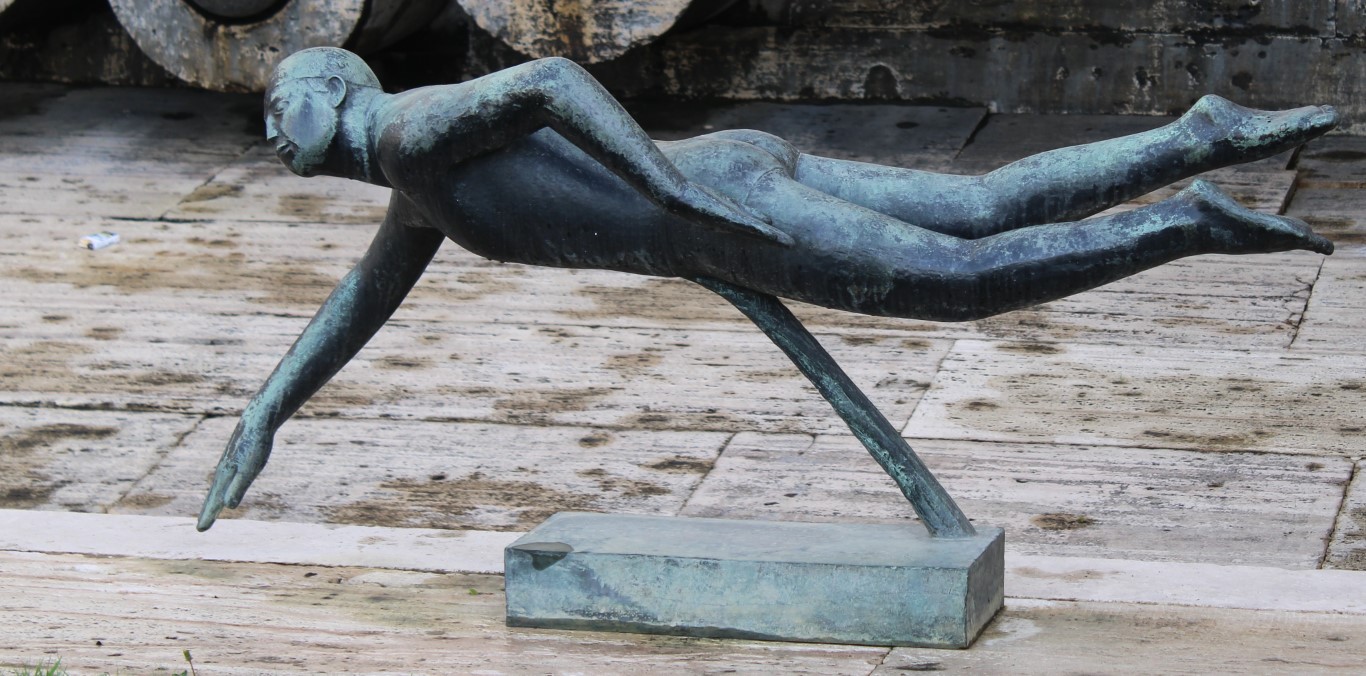
Swimmingly [Lyric Poem]

Moving at a glide --
No strain, no effort,
Rolling side to side,
No lord or escort.

Things are going SWIMMINGLY.

“Absolute” [Poetry Style #1] by Sikong Tu [w/ Audio]

With wear you will decay outside,
But inside resides the vital force.
Approach the Absolute through the Void:
One's strength will grow, and vim will course.
You can know the world and its Way,
Across space and time -- to the Source.
To desolation range hang dark clouds,
Air still as latitudes of the horse,
Move beyond all one knows by sight,
And gain the Center -- but not by force --
Hold onto this strength by hook or crook,
And flow the Endless by watercourse.

NOTE: The late Tang Dynasty poet, Sikong Tu (a.k.a. Ssŭ-k‘ung T‘u,) wrote an ars poetica entitled Twenty-Four Styles of Poetry. It presents twenty-four poems that are each in a different tone, reflecting varied concepts from Taoist philosophy and aesthetics. Above is a crude translation of the first of the twenty-four poems. This poem’s Chinese title is 雄浑, and its translated titles include: “Energy – Absolute” [Giles] and “Vigorous.”

Spine [Lyric Poem]

The spine is not a line.
It likes to twist and twine.
Bend it, stretch it, coil it;
Just don't bake, fry, or boil it.

“You know where you despise” by Alexander Pope [w/ Audio]

You know where you despise
(Tother day) my little Eyes,
Little Legs, and little Thighs,
And some things, of little Size,
You know where.

You, tis true, have fine black eyes,
Taper legs, and tempting Thighs,
Yet what more than all we prize
Is a Thing of little Size,
You know where.