“In the Desert” by Stephen Crane [w/ Audio]

In the desert
I saw a creature, naked, bestial,
Who, squatting upon the ground,
Held his heart in his hands,
And ate of it.
I said, "Is it good, friend?"
"It is bitter -- bitter," he answered;

"But I like it
"Because it is bitter,
"And because it is my heart."

“West River Moon” by Su Shi [w/ Audio]

Wavelet on wavelet glimmers by the shore;
Cloud on cloud dimly appears in the sky.
Unsaddled is my white-jadelike horse;
Drunk, asleep in the sweet grass I'll lie.
My horse's hoofs may break, I'm afraid,
The breeze-rippled brook paved by moonlit jade.
I tether my horse to a bough of green willow.
Near the bridge where I pillow
My head on arms and sleep till the cuckoo's song awakes
  A spring daybreak.

Translation: Xu Yuanchong [translator]. 2021. Deep, Deep the Courtyard. [庭院深深.] Cite Publishing: Kuala Lumpur, p. 238

Four Seasonal Haiku of Yosa Buson [w/ Audio]

SPRING*

The spring sea;
gently, quietly,
 all day long.

SUMMER

what a joy!
wading through summer rivers,
 sandals in hand.

AUTUMN

vacant teahouse,
atop the mountain:
 a harvest moon.

WINTER

neighbors detest me
for my whistling kettle:
 a cold winter night.

* Translation by: Wilson, William Scott. 2023. A Beginner’s Guide to Japanese Haiku. Tuttle Publishing: North Clarendon, VT.

“Jerusalem” by William Blake [w/ Audio]

And did those feet in ancient time
Walk upon England's mountains green?
And was the holy Lamb of God
On England's pleasant pastures seen?

And did the Countenance Divine
Shine forth upon our clouded hills?
And was Jerusalem builded here
Among these dark Satanic Mills?

Bring me my Bow of burning gold:
Bring me my Arrows of desire:
Bring me my Spear: O clouds unfold!
Bring me Chariot of fire.

I will not cease from Mental Fight,
Nor shall my Sword sleep in my hand
Till we have built Jerusalem
In England's green and pleasant Land.

“The Gardener – 85” by Rabindranath Tagore [w/ Audio]

Who are you, reader, reading my poems my poems an hundred years hence?
I cannot send you one single flower from this wealth of the spring,
  one single streak of gold from yonder clouds.
Open your doors and look abroad.

From your blossoming garden gather fragrant memories
  of the vanished flowers of an hundred years before.
In the joy of your heart may you feel the living joy that sang one spring morning,
  sending its glad voice across an hundred years.

BOOKS: “Hōjōki” by Kamo no Chōmei; Trans. by Matthew Stavros

Hojoki: A Buddhist Reflection on Solitude: Imperfection and Transcendence - Bilingual English and Japanese Texts with Free Online Audio RecordingsHojoki: A Buddhist Reflection on Solitude: Imperfection and Transcendence – Bilingual English and Japanese Texts with Free Online Audio Recordings by Kamo no Chōmei
My rating: 5 of 5 stars

Amazon.in Page

Release Date: May 7, 2024 [for Tuttle’s bilingual edition]

This is the Japanese Walden, except that it was written several hundred years before Thoreau’s essay and was predominantly philosophically informed by Buddhism rather than Transcendentalism. (Though those philosophical systems do agree on a number of points, most relevantly that materialism is not a sound route to happiness.) Like Walden, Hōjōki is an autobiographical promotion of the hermitic lifestyle. Both works sing the virtues of life in a simple, rustic cabin in a natural setting, a life of minimalism and subsistence living.

There are many translations of this work available, and so I’ll spend the remainder of this review on what differentiates this edition from the two others that I’ve read. First and foremost, the other versions I’m familiar with were presented as prose essays. This edition is presented in verse, which I understand to be the form that the original Japanese work employed. I should say that in some places the work comes across as poetic in the conventional sense, though in others it seems like a versified essay.

Secondly, this edition has a few handy ancillary features. One is that it is bilingual. Romanized Japanese allows the reader to experience the sound quality of the original. This edition also has graphics in the form of maps, artwork, and photographs. Some of the graphics support or expand upon the information delivery while others seem to be more a matter of creating atmospherics. Also, there are explanatory endnotes that help readers unacquainted with Kamakura Period Japan to understand some of the book’s references that might otherwise remain unclear.

I enjoyed and benefited from reading this edition, even having read others. If you are looking for insight into the ascetic life, I’d highly recommend it.

View all my reviews

“On His Blindness” by John Milton [w/ Audio]

When I consider how my light is spent,
 Ere half my days, in this dark world and wide,
 And that one Talent which is death to hide
 Lodged with me useless, though my Soul more bent
To serve therewith my Maker, and present
 My true account, lest he returning chide,
 "Doth God exact day-labour, light denied?"
 I fondly ask. But patience, to prevent
That murmur, soon replies, "God doth not need
 Either man's work or his own gifts; who best
 Bear his mild yoke, they serve him best. His State
Is Kingly. Thousands at his bidding speed
 And post o'er Land and Ocean without rest:
 They also serve who only stand and wait."

NOTE: This poem is sometimes called “Sonnet 19,” sometimes “On His Blindness,” and sometimes “When I Consider How My Light Is Spent.”

“Rooms” by Charlotte Mew [w/ Audio]

I remember rooms that have had their part
  In the steady slowing down of the heart.
The room in Paris, the room at Geneva,
The little damp room with the seaweed smell,
And that ceaseless maddening sound of the tide --
  Rooms where for good or for ill -- things died.
But there is the room where we (two) lie dead,
Though every morning we seem to wake and might just as well seem to sleep again
  As we shall somewhere in the other quieter, dustier bed
  Out there in the sun -- in the rain.

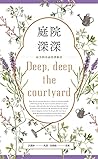
BOOKS: “Deep, Deep the Courtyard” [庭院深深] trans. by Xu Yuanchong

庭院深深:最美的宋詞英譯新詮 (Traditional Chinese Edition)庭院深深:最美的宋詞英譯新詮 by 吳俁陽(賞析)
My rating: 5 of 5 stars

Publisher Website

This is a bilingual (Chinese / English) anthology of Song Dynasty poetry. It features more than 140 poems by almost fifty poets of the Song Dynasty, but a few of the Song poetic rockstars are particularly well represented (e.g. Su Shi, Qin Guan, Ouyang Xiu, and Xin Qiji.) The principal language of the book is Chinese (Mandarin) and so, while the poems themselves appear in English as well as Chinese, the ancillary matter is only in Chinese. Said ancillary matter includes notes, contextual information, bio-blurbs on the poets, and brief front and back matter.

I learned after reading the translations, that the translator was Xu Yuanchong and that he was (i.e. he’s now deceased) a very big deal as a translator, translating classical Chinese poetry into both English and French. All in all, I enjoyed the translations and found them to be sound as poems in their own right. That said, my personal preference would have been to have had less effort put into maintaining rhyme. I suspect a closer transmission of the ideas of the originals could have been achieved without the forced constraint of rhyme. Furthermore, while in many cases metering was attended to, sometimes it was not, leaving those poems to have a doggerel quality. [I come to this conclusion by comparing a few of the poem’s translations to those by other translators as well as to literal translations.] That said, the translator was clearly no slouch, and his stylistic choices were likely informed by what was popular during his career.

This book is part of a series. Other volumes include: In the Thick Woods a Deer Is Seen at Times (Tang Dynasty poems) and A Pair of Swallows Fly (from The Book of Songs, a.k.a. The Classic of Poetry.) I picked this book up in Taipei’s Zhongshan Book Street (Eslite Bookstore,) and don’t know how widely available the books of this series are outside of Taiwan, but if you are interested in Classical Chinese poetry and can find a copy, I’d recommend it.

View all my reviews

“Curtain” by Paul Laurence Dunbar [w/ Audio]

Villain shows his indiscretion,
Villain's partner makes confession.
Juvenile, with golden tresses,
Finds her pa and dons long dresses.
Scapegrace comes home money-laden,
Hero comforts tearful maiden,
Soubrette marries loyal chappie,
Villain skips, and all are happy.