PROMPT: Vacation

Describe your most memorable vacation.

That’s a tough one, but I have to go with a trip to the Peruvian Andes about twelve-ish years ago. As a person from Northwest Indiana (where anthills appear on topographic maps,) it was my first time in the Very High Altitude range. We hiked through the Salkantay Pass (15,000+ft / 4500+m) on the second day of a trek with me vomiting (water, as my stomach was long devoid of other contents) every couple switch-backs. I’m told I was literally green, but can’t confirm for lack of mirrors. But I trudged through, one glacial step at a time.

At the end of our trip, we were in Arequipa and needed to get back to Cuzco for our flight out. After buying bus tickets, we discovered that the road from Arequipa to Cuzco would be shut down by a transportation strike, and that everyone was honoring the strike as they sometimes turned violent. After a day of frustration, we surrendered to the situation, traded in our Arequipa-Cuzco tickets for Arequipa-Lima tickets, and we got into Lima (where we had a layover) early enough to arrange to join the flight there.

The reason this stands out as such a wonderful trip (besides all the beautiful sights: Titicaca, Machu Picchu, the Andes, all the Incan ruins and old Spanish churches; not to mention the delicious food) is the powerful life lessons it taught me. First, I’ve never felt closer to death than crossing through Salkantay Pass, and yet one step at a time got me through. Second, I learned not to butt heads with changing circumstance, but rather flow over, around, or under. Lastly, trips where things go wrong produce the dividend of great stories. Nobody cares about your trip to Paris where everything went smoothly, but they can’t get enough about the trip to Zaire where you got Malaria and were caught up in an insurrection or the cruise where passengers started turning to zombies.

PROMPT: Self-Care

Daily writing prompt
How do you practice self-care?

1.) Move my body often and with vigor. 2.) Eat my veggies. 3.) Rest as though it’s an essential part of the process of living (i.e. not as though it’s goofing off between “doing stuff.”) 4.) Drop anything without value, making personal development as much a process of stripping away as it is of adding to.

Out of Joint [Blank Verse Sonnet]

My days are out of joint and shuffled up,
 and memories are pictures cast upon
  the floor, and rummaged through 'til chaos reigns, 
 and I pick random recollections out
  of all the events ever to transpire.

They seem no more my life than another's:
 a glance, a glimpse, a blank firing of mind,
 a wicked hope that truth will come to me.

But all I see are monochrome mindscapes
 that could've been wrenched out of another mind,
  or made from AI's collage artistry
 to serve some distant master's deep wish to
  learn what hot-injected time does to a soul,
  and if shuffled scene stacks can make one whole?

PROMPT: Good Life

Daily writing prompt
What are the most important things needed to live a good life?

1.) Good company; 2.) studiousness; 3.) a sense of humor, and 4.) the capacity to let go of that which has no value.

The Most Important Lesson in All of Human Living [DAILY PROMPT]

Describe something you learned in high school.

A Psych teacher told us a story of what he called “a gestalt of expectations.” A man from a city in the East is driving out West, and he passes a gas station – despite being low on fuel. (He’s used to gas stations being everywhere.) Anyhow, he runs out of fuel. He can’t see anything around except desolate desert bisected by a line of asphalt. He decides to walk back to the gas station he passed ten miles back. There is no one traveling on this remote stretch of desert road. As he’s walking in the intense heat, it comes to his mind that the employee at the service station is really going to gouge him on the price of gas and a jerry can. As he walks and walks, skin prickling with the heat, he keeps thinking about how he’s going to get screwed by the gas station attendant and also how he’ll be chided and ridiculed for running out of gas in the middle of the desert. He imagines it in great detail. Finally, bedraggled and with heaving breaths, he arrives at the station. The gas station attendant rushes out to help this poor man, and the man punches the attendant square in the nose (for all the offenses taking place solely in the man’s mind.)

In a broader formulation, I think this is the most important lesson any human can learn. Our personal perception of what we experience is not equal to what it is that we experience (the exterior world.) This is why some people dealt a crappy hand can turn it into a wonderful life, and also why some people who seem to have it all commit suicide in the prime of life.

I could be angered or dismayed that the single most important lesson I learned in secondary school was via off-curriculum ramblings during an elective class, but I choose not to. Instead, I’ve been trying all my life to make that bit of knowledge into wisdom.

A Life Improbable [Free Verse]

Each of us lives a life improbable,
 the gift of an ancestor who struggled 
 through some terror which killed others.

We each have an iron impulse 
 to maintain a cracking grip on life,
 but some won't ever be pried away,

growing like the stunted pine
 that juts from the mountainside:
 gnarled but indestructible.

Live improbably 
 with your life improbable. 

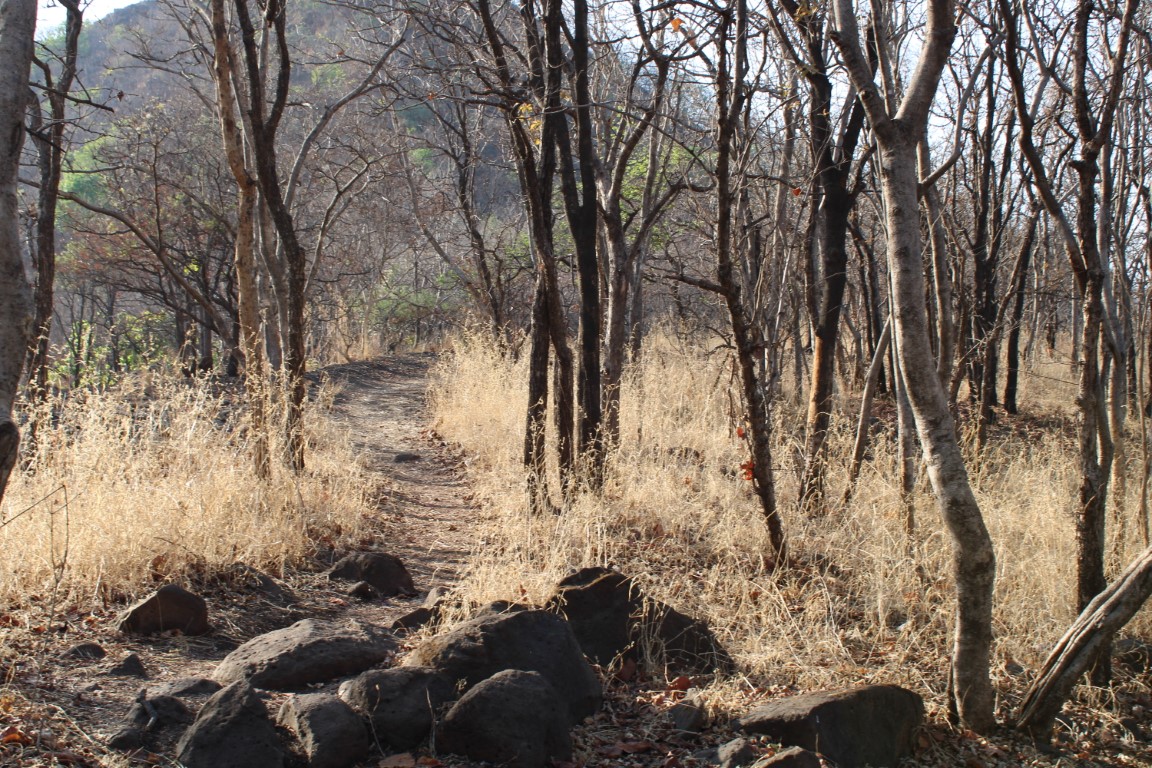
The Autumn Trail [Haiku]

the autumn woods -
 leafless & grass matted - is
  rife with life, unseen

Note to Self: A Sonnet

Don't fill your vaults with glowing, shiny stones.
It's invitation to all cheats and thieves. 
Don't know by mind what you don't know by bone.
Make sure you've lost before you up and grieve.

Then when you grieve, take time to fully feel.
Don't let your mind write stories so untrue
that they turn melancholy like a wheel
that gathers and grows with each turn anew. 

Be kind and true, but not so kind and true
so as to kill with gifts or a mean tongue.
Don't do what would be best that you not do,
and only sing of those heroes unsung.

Oh, every piece of wisdom has its day,
so don't hitch so tight that you're led astray.

BOOK REVIEW: The Meaning of Life: A Very Short Introduction by Terry Eagleton

The Meaning of LifeThe Meaning of Life by Terry Eagleton
My rating: 5 of 5 stars

Amazon.in Page

“What is the meaning of life?” This is the question thrown at anyone accused of being a philosopher – professional or lay – though mostly in jest. In the present day, that is. In centuries past, large portions of the population took for granted that it was a question that had a knowable answer (one dictated by religion.) But as that answer became decreasingly satisfying to an increasing portion of the populace, people began to see the question as both fundamentally unanswerable and as a means to chide / test individuals who claimed wisdom or had the claim thrust upon them.

In this concise guide, Eagleton takes on the question, beginning with consideration of whether it is even a sound question. (Or, is it a question like: “What is the meaning of cabbage?” or “What color is a hypothesis?”) After considering many of the problems with the question, from the meaning of “meaning” to the presumptions about what a life has (and what it is) the book also considers some of the post-Nietzschean answers to the question and the challenges that confront them. [One that I hadn’t thought much about criticizes that many of these recent attempts are individualist (i.e. find your own meaning, one consistent with the peculiarities of your own unique life.) Is it reasonable to think that the question can only be answered at the level of granularity of the individual? Maybe, it can only be, but I did appreciate that it gave me something to think about.]

It should be pointed out that Eagleton doesn’t consider himself a philosopher. He’s primarily a critic and English literature professor. This had its advantages. First, Eagleton drew upon works of literature that explore the question, which both made for some interesting insights while also breaking up dense tangles of philosophizing. Second, much of the book deals with linguistic issues. Are the words and grammar of the question, “What is the meaning of life?” useful, and – if so – how do we understand the nature and limits of the question?

I found this book intriguing and provocative. It does have thickets of dense language, but also has its fun moments as well.


View all my reviews