BOOKS: “Wen-Tzu” Trans. by Thomas Cleary

Wen-TzuWen-Tzu by Lao-Tzu
My rating: 5 of 5 stars

Publisher Site – Shambhala

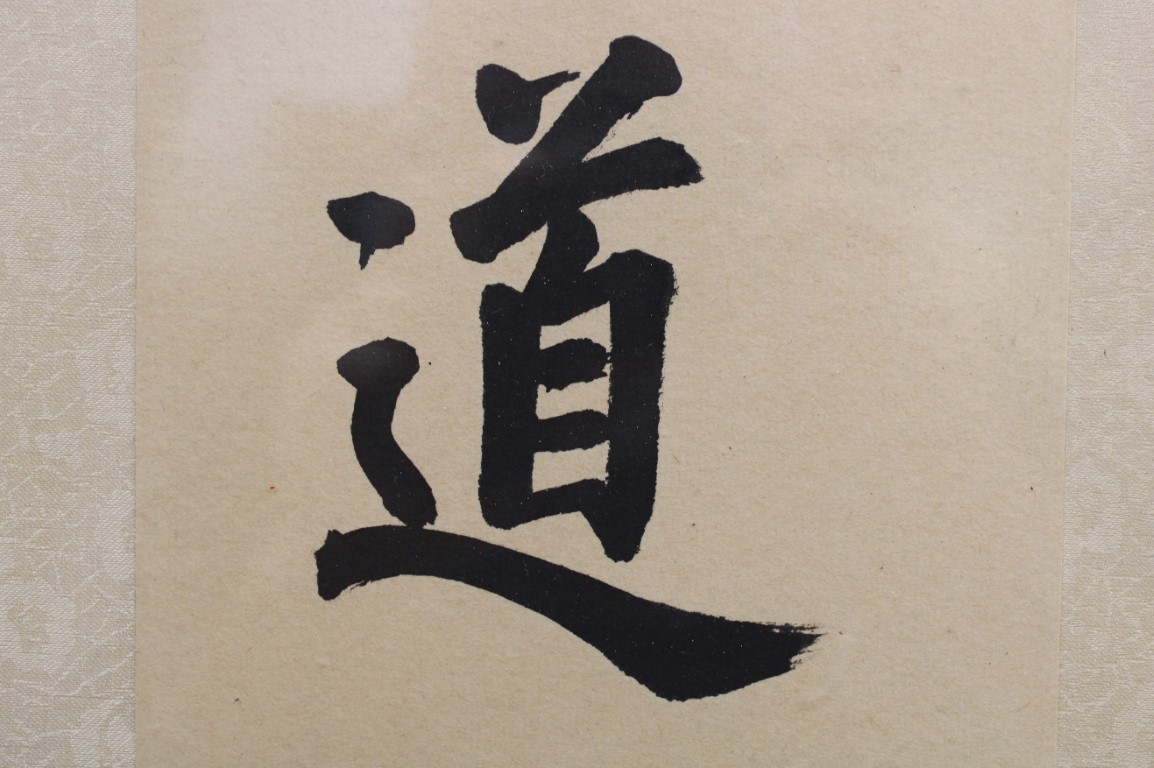
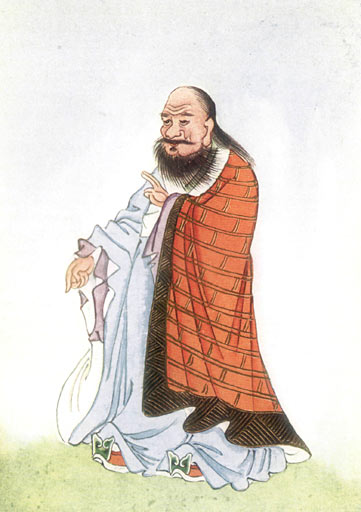
This work is presented as “further thoughts of Laozi [老子].” Readers of the Dàodé jīng [道德经] will recognize many a familiar statement of that work, but this book is much more extensive and detailed. I say “presented as” because scholars no longer believe this was a product of Laozi and his lifetime (if such an individual ever existed.) For one thing, the book seems more syncretic than the Dàodé jīng, that is to say there are points at which it sounds strikingly Confucian — rather than purely Taoist.

As with the Dàodé jīng the Wénzǐ [文子] covers a lot of ground from metaphysics to individual ethics to political philosophy, but this book has more room to sprawl on each subject.

As with other Cleary translations, it’s a pretty readable translation.

I’d recommend it for readers interested in Chinese Philosophy.

View all my reviews

PROMPT: Reread

Daily writing prompt
What book could you read over and over again?

If plays count as books, then most of Shakespeare’s plays. I’ve already reread a number of them (e.g. Hamlet, Macbeth, Merchant of Venice, and A Midsummer Night’s Dream.)

I’ve read Whitman’s Leaves of Grass, a couple times in full (and segments of it many times over) and expect to get to it again. I’ve read Voltaire’s Candide a couple times.

I could definitely see rereading Journey to the West, Water Margin, and Romance of the Three Kingdoms, but at this point I’m hoping my Mandarin will get good enough to read them in Simplified Chinese.

I’ve read a number of nonfiction texts multiple times — e.g. Sunzi’s Art of War, Miyamoto Musashi’s Book of Five Rings, Laozi’s Dao De Jing, and Emerson’s Selected Essays.

I’m generally not a fan of rereading books because there is so much awesome stuff out there to be read a first time. For all the reading I’ve done, there is still a massive number of classics that I have yet to touch. Usually there has to be a good reason for a reread, e.g. a new translation that promises to be improved / simplified, the book is just so potent as to still have lessons packed in after the first read, it’s a challenging read and the first go leaves a lot on the table, or — like The Little Prince — its enjoyment-to-time investment ratio is high.

BOOKS: 道德经 by 老子 [a.k.a. Daodejing by Laozi]

老子道德经校释(简体中文版): 中华传世珍藏古典文库 (Chinese Edition)老子道德经校释(简体中文版): 中华传世珍藏古典文库 by 王弼
My rating: 5 of 5 stars

Available in Traditional & Simplified Chinese [w/ multiple translations] at YellowBridge

Packed into the 81 brief chapters of this book is the core Taoist philosophy on life, human relationships, governance, and war. Most often, it offers a wisdom that turns conventional wisdom on its head, advocating for inaction over action, less over more, simplicity over complication, and for recognizing the usefulness of what isn’t.

Some of the book’s central ideas are captured in these quotes:

上善若水。水善利万物而不争. “The greatest good is like water. It benefits all without fighting.” [Ch. 8]
金玉满堂,莫之能守 “A house full of jade and gold cannot be guarded.” [Ch. 9]
知人者智,自知者明。胜人者有力,自胜者强。“He who knows others is smart; he who knows himself is enlightened. He who conquers others has power; he who conquers himself is mighty.” [Ch. 33]
柔胜刚,弱胜强。“Softness overcomes hardness; weakness overcomes strength.” [Ch. 36]
道常无为而无不为。“The Dao is constant inaction, yet nothing is left undone.” [Ch. 37]
善者,吾善之;不善者,吾亦善之;德善。“The good, I treat well; the bad, I also treat well. Yeah Virtue!” [Ch. 49]
知者不言,言者不知。“He who knows does not speak; he who speaks does not know.” [Ch. 56]
千里之行,始于足下。“The journey of a thousand li (“miles”) begins with a single step.” [Ch. 64]
天之道,不争而善胜 “The way of heaven is to win without fighting.” [Ch. 73]
信言不美,美言不信。“True words aren’t pleasing; pleasing words aren’t true.” [Ch. 81]

I think this is one of those works that should be read and reread. It may help rewire your brain in useful ways.

View all my reviews

FIVE WISE LINES [November 2024]

Inspiration enters at the border between hard work and laziness.

Lu juren in “Poets’ jade splinters” [Trans. by Barnstone and Ping in The ART Of Writing]

I will not own anything that will one day be a valuable antique.

Miyamoto musashi in “My way of walking alone” [Dokkōdō] (Trans. by Teruo machida)

A house full of gold and jade can’t be guarded.

Laozi in the DAo De jing [Ch. 9]

Writing is a struggle between presence and absence.

Lu ji in The ART of Writing [Trans. by Barnstone and ping]

The best leaders remain unknown; the next best are praised; the next best are feared, and the worst are mocked.

Laozi in dAo de Jing [Ch.17]

A Taipei Taoist’s Limerick

There once was a Taoist from Taipei,
Who knew all one could know of the Way.
When asked for directions,
He'd state his objections,
"The way that can be stated is not The Way."

Five Wise Lines (March 2024)

We are pattern seekers, believers in a coherent world, in which regularities appear not by accident but as a result of mechanical causality or someone’s intention.

Daniel kahneman; Thinking, Fast and slow

If you win, do not boast of your victory; if you lose, do not be discouraged. When it is safe, do not become careless; when it is dangerous, do not fear. Simply continue down the path ahead.

Kanō Jigorō; Founder of Jūdō

A writer makes new life in the void, knocks on silence to make a sound, binds space and time on a sheet of silk and pours out a river from an inch-sized heart.

Lu Ji; Wen Fu (261 – 303)

The worst kind of Virtue never stops striving for Virtue, and so never achieves Virtue.

Laozi

Moonlight floods the whole sky from horizon to horizon. // How much it can fill your room depends on its windows.

Rumi

“On Laozi” by Bai Juyi [w/ Audio]

"The ignorant speak, while the wise keep silent."
I read the words of Laozi.
But if Laozi knew the Way,
Why did he write those five thousand characters?

BOOK REVIEW: Dao De Jing: A Minimalist Translation by Lao Zi [Trans. Bruce R. Linnell]

Dao De Jing: A Minimalist TranslationDao De Jing: A Minimalist Translation by Lao Zi
My rating: 5 of 5 stars

Available Free on Project Gutenberg

The Dao De Jing presents the core philosophy of Taoism, a philosophy that values simplification, non-action, naturalness, spontaneity, and recognition of opposites in [and their influence on] each other. There are numerous editions (this is the Wang Bi / “standard” ed.) and English translations of this Daoist tract, and the translation matters because the Dao De Jing is at once simply stated and arcane. I liked what Linnell did with this translation, which – as the subtitle suggests – he aimed to make simple and straightforward.

One nice feature of this translation is that each of the 81 chapters has four segments: the original Chinese text, a readable English translation, a word-for-word literal translation, and notes. Having the Chinese, a literal translation, and notes can be helpful when one has trouble deciphering the more cryptic passages. Another nice feature is an appendix in which the author discusses another scholar’s hypothesis that the chapters of the Dao De Jing were composed in layers, and Linnell re-orders the chapters as suggested by this hypothesis. Finally, the book ends with a Jefferson Bible-esque excerpt collection that takes all the places where Lao Zi wrote “Thus the sage:” and builds a single composition describing a wise person.

If you’re interested in Taoist philosophy, you may want to read this translation, whether you’re new to the Dao De Jing or you’ve read other translations or editions in the past.


View all my reviews

BOOK REVIEW: The Path by Michael Puett

The Path: A New Way to Think About EverythingThe Path: A New Way to Think About Everything by Michael Puett
My rating: 5 of 5 stars

Amazon page


This book is organizationally and conceptually similar to a book by Edward Slingerland that I reviewed recently entitled “Trying Not to Try.” I’ll first discuss how the books are alike before differentiating them as I believe they are both worth reading. First, both books essentially look at how the ideas of ancient Chinese philosophers—both Confucian and Taoist—can be put into practice to improve one’s life in the modern world. Second, the heart of each work consists of chapters devoted to the thinking of one particular philosopher and how the ideas of said philosopher compare and contrast to those of the others.

That said, both books create their own space in a way that justifies each’s existence. While Slingerland focuses heavily on the notion of wu-wei (effortless action) and de (the charisma of effortless action,) Puett and Gross-Loh consider a broader swath of human activity. That may make it sound like this book is more rambling and unfocused, but there is a central theme that cuts across the chapters. That theme rejects the simple and straightforward ideas given credence by modern Western society (as well as by the Chinese Mohists–i.e. followers of Mozi.) It suggests that the self is not a fixed entity but rather a collection of patterns. One needs to accept that these are just ruts that can be negated and to behave accordingly if one hopes to achieve an enjoyable life in a world that can be capricious and chaotic.

The first couple chapters of the book look at the problems of the modern world and how ideas from traditional societies—such as the China of past centuries—differed. With that context set, each but the last chapter examines an aspect of the human condition from the perspective of a particular Chinese philosopher.

Chapter three offers Confucius’s ideas about rituals and how they can be used to cultivate virtuous behavior. Chapter four presents the ideas of Mencius with regards how to live life in a world that is capricious and arbitrary.

The fifth chapters shifts from Confucianism to Taoism as it explores Laozi’s ideas about how one can influence others not by brute force but by moving in accordance with “the Way,” and how eliminating illusory distinctions is the key to developing this soft power.

The sixth chapter focuses not on the ideas of a particular author but a particular work, “The Inward Training.” This manual describes how one can increase one’s vitality (readers maybe familiar with the idea of “chi” or “qi,” as in “tai chi” or “qi gong”) by a mystical approach that cultivates the divine within one.

Chapter seven is about Zhuangzi’s ideas about accepting that our world is constantly in flux and to battle this fact is as futile as it is exhausting. The ideas discussed echo the aforementioned concept of “wu-wei” as well as modern concepts of positive psychology such as Czikszentmihalyi’s Flow and ecstasis.

The penultimate chapter returns to a Confucian philosopher, one by the name of Xunzi, who believed that humans create the patterns we live under and it’s up to us to get past said patterns and not to accept them as a given. The last chapter circles back around to propose how the ideas presented throughout the book might allow us to remake the modern world in a happier form.

The book has no graphics, but does have a small section of resources and readings.

I found this book to be enjoyable and informative. The authors use modern stories and cases to make these ideas understandable and relevant to the reader as well as to supplement stories of ancient history. The book provides food for thought and—as I said—it creates its own niche. I’d recommend it for readers interested in how ancient Chinese wisdom can relate to present-day living.

View all my reviews

BOOK REVIEW: Trying Not to Try by Edward Slingerland

Trying Not to Try: The Art of Effortlessness and the Power of SpontaneityTrying Not to Try: The Art of Effortlessness and the Power of Spontaneity by Edward Slingerland
My rating: 5 of 5 stars

Amazon page


This book’s paradoxical title is perfect for its paradoxical subject matter, which is famously expressed in such quotes as, “When nothing is done, nothing is left undone” [ver. 48 of the Tao Te Ching.]  Slingerland lays down the ancient Chinese wisdom of wu-wei and de, but provides something novel by putting it in the context of the positive psychology and neuroscience of today. Wu-wei literally means “no doing,” but can be more meaningfully defined as “effortless action.” De (pronounced “duh”) is a charisma seen in people who have mastered the effortlessness and spontaneity of wu-wei.

While the book is built around the varied approaches of four Chinese philosophers—two Confucians (i.e. Confucius and Mencius) and two Taoists (i.e. Laozi and Zhuangzi)—the author relates this philosophy to the present-day thinking found in Daniel Kahneman’s “Thinking, Fast and Slow,” Mihaly Csikszentmihalyi’s conception of Flow, and the neuroscience of the subconscious.

The book consists of eight chapters. The introduction and the first two chapters outline the concepts of wu-wei and de using both Chinese and Western stories and examples to help clarify these arcane ideas and put them in the context of the social and spiritual spheres. Chapter 1 offers an extensive discussion of the operation of the brain as it relates to the discussion of effortlessness and spontaneity.

Chapters three through six make up the core of the book, and present the approach and thinking of Confucius, Laozi, Mencius, and Zhuangzi, respectively. This “boy-girl-boy-girl” Confucian-Taoist organization offers the reader sound insight into the varied approaches and allows one to see the evolution of thinking. Confucius gets the first cut, but his approach to effortlessness and spontaneity involves a great deal of effort and planning. It might seem that Laozi’s approach–which does away with effort and planning–might be more apropos, but it’s hard to imagine anything of benefit actually being spawned by such a loosy-goosy approach. The more nuanced approaches of Mencius and Zhuangzi offer additional insight, but do not eliminate the paradox. It’s this paradox that’s the subject of chapter seven.

The final chapter examines what the reader can take away–given that the paradox of wu-wei seems inescapable. The author proposes that, paradox or not, there is value in pursuit of effortlessness and spontaneity, and progress can be made by understanding and accepting said paradox.

The book has no graphics, but is annotated and has a bibliography–as well as an appendix table that summarizes the various approaches to wu-wei.

I enjoyed this book and found it fascinating. It’s highly readable, having humor and a wide range of examples from ancient myths to pop culture. The book offers a great value-added by considering the relevance of modern science and psychology to this ancient concept. I’d highly recommend this for individuals interested in Chinese / Eastern philosophy, as well as anyone hoping to bring a little more effortlessness and spontaneity into his or her life.

View all my reviews