READING REPORT: February 20, 2015

This week’s Reading Report will be short. I didn’t complete any books this week.


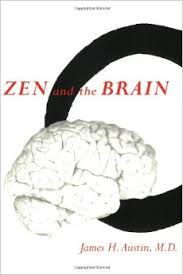
Most of my reading was divided between two books that I’ve mentioned in earlier reports. The first is Zen and the Brain by James H. Austin. This is probably the most expensive book that I’ve purchased since the ridiculously overpriced textbooks of college. While I’ve been known to pan decent books for being overpriced (e.g. most recently Zen Mind, Strong Body by Al Kavadlo), I will say that I’ve found this book to be worth it. There are vast numbers of books on the fascinating findings of neuroscience research. Also, there is a vast canon on Zen, meditation, and the quieting and mastering of the mind. However, there are only a small (though growing) number of books that deal with the intersection of these two subjects, and none covers the subject in as much depth as Austin’s work–as far as I’ve seen. The chapters I’ve been reading of late deal with emotions, visceral drives, and memories–all relevant issues for one who is seeking personal development in a scientifically-minded manner. The next chapter will deal with GABA. I’m looking forward to this because I know there is scientific evidence that yoga can reduce depression through its effect on GABA levels, and I look forward to having a better understanding of how this works.
Zen&Brain


The second book that’s consumed a lot of my time over the past week is The Pyjama Game. I’m about 2/3rd of the way through this book and will finish it in the upcoming week. It is in part a micro-history of judō and in part an account of what it’s like to be a practitioner of the martial art of judō. While the micro-history chapters are chronological, they’re interspersed with chapters that are more of a personal accounting of the author’s experience (and the experience of individuals with which he interacted with first-hand–i.e. other amateurs.)  The era that was covered in my reading of the past week was an interesting one. It chronicled judō’s shift from a time in which Japan completely dominated the sport to one in which Russians, Europeans, and Americans started to make headway and—in some ways–unique contributions to the art. This includes judō‘s rise to Olympic status, and how the sport has progressed since that time.

pyjamagame


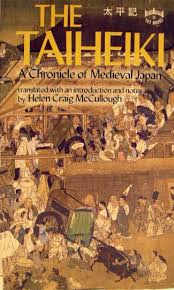
There were another couple of books that I read substantial parts of as research for the novel I’m writing. The first of these is The Taiheikiwhich is–as was the style in medieval Japan–a mix of part history and part literature. It tells the story of Emperor Go-Daigo’s retention of power, largely through the efforts of valiant loyalist warriors–most notably the famous Kusunoki Masashige.
Taiheiki


The second research work is entitled Fighting Techniques of the Oriental World: AD 1200 – 1860As my novel takes place partly in 14th century Japan, China, and Southeast Asia, this reference comes in handy for learning about the activities of warriors across several nations.

FightingTechniquesOrientalWorld


I purchased three books this week. In a way, I was successfully (and happily) suckered. For those who haven’t realized, Amazon is very clever. If you look at a book once or twice, the price will often rise a little when you go back. This drives a few suckers to buy it at a higher price before it rises to some imagined peak price. I’ve noticed this on enough occasions to believe that it’s not just coincidence. Furthermore, as one trained as an economist, I know this is a sound pricing strategy. What I’d not yet experienced is that if one keeps periodically checking on the books–but not buying–the prices will creep back down to a new low, probably only a tiny bit under the first price you saw. I bought three books that I’ve been looking for both on Kindle and at my local bookstore, but which have stayed above my reservation price.


The first, and most expensive, was Buddha’s Brain, which is along similar lines to the aforementioned Zen and the Brain. The book is by a neuroscientist who specializes in neuroplasticity, and who examines how one can go about “rewiring” one’s brain to be happier and more well-adjusted.

BuddhaBrain


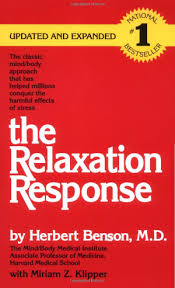
The second book is called The Relaxation Response. It was the cheapest book of the three and is much older than the book Buddha’s Brain. In it Dr. Benson (Harvard MD) describes the relaxation response as the body’s counterpoint to “fight or flight” mode. In this state of relaxation, the body–among other things–goes to work on repairing what ails it. There’s a lot of evidence that a human body can repair most of what can ail it if it gets enough rest–i.e. sufficient break from stress.
Relaxation Response


My final purchase was A Confederacy of Dunces. This book is considered to be one of the best comedic novels in American literature. It’s also a book that all depressed writers (which is to say all writers struggling to get things published) should read for the cautionary tale of the novel’s tragic back story. The author, John Kennedy Toole, committed suicide (at least in part) because he couldn’t get it published. His mother then took up the torch, shopping it around. It took her seven years, but she finally got it published after convincing the novelist Walker Percy to look at it, and having achieved his recommendation. In 1981 it won the Pulitzer Prize for fiction.
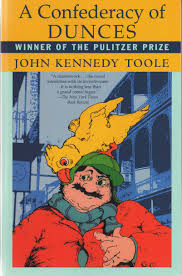
confederacy of dunces

BOOK REVIEW: Pirate of the Far East by Stephen Turnbull

Pirate of the Far East: 811-1639Pirate of the Far East: 811-1639 by Stephen Turnbull

My rating: 3 of 5 stars

Amazon page

Unfortunately, the first thing one notices about this book is what seems like a typo in the title. Instead of “Pirates of the Far East,” it’s Pirate of the Far East, which suggests piracy wasn’t so much of a problem in the region because there was only the one pirate—and that the author isn’t a fan of either definite or indefinite articles. I’m sure this was done intentionally, but it does read oddly and sounds tinny.

This slim book is a typical edition of the Osprey military history series. All of these books are less than 100 pages, illustrated, and focus on a specific class of warfighter over a defined period. In this case, the book presents a class of pirates called wako for the period from 811 to 1639. Wako literally refers to Japanese pirates, but–in fact–these marauders of the high seas were often mixed nationality crews. The book also provides information about counter-piracy activities and those groups of warriors, such as Shaolin monks, who fought against piracy back in those days.

This book covers a range of topics including: the life of a pirate, pirate ships, strategy, tactics, and weapons—as well as the history of these groups. The book has five actual chapters, but there are short units providing important information that would usually be appendices, e.g. a chronology, a discussion of museum exhibits, and an annotated bibliography.

The illustrations are mostly drawings, but include maps and photographs as well. Some of the art is drawn in the present-day by the illustrator Richard Hook, but some are historic pieces from art collections. The photographs also include some present-day photos of locations that were once bases of piracy, as well as photos of museum exhibits (e.g. topographic and other models.) The graphics are helpful in showing how pirates dressed/armored and were armed. The maps and drawings are particularly helpful.

I’d recommend this book, but I do think it’s overpriced at full price. At a mere 64 pages—a pamphlet more than a book–paying $10 or more seems a bit pricey despite the useful graphics and the fact that the author is among the most renowned authorities on Japanese warriors and medieval military tactics. All that said, there are relatively few books on the topic, and it’s not easy to get this information from other sources.

View all my reviews

BOOK REVIEW: The Warrior’s Path James Sidney (ed.)

The Warrior's Path: Wisdom from Contemporary Martial Arts MastersThe Warrior’s Path: Wisdom from Contemporary Martial Arts Masters by James Sidney

My rating: 5 of 5 stars

Amazon page

My upfront apology: Having drafted this review, I noticed that the book comes off sounding like a bunch of old folks being curmudgeonly about the current generation. As I read this book, that wasn’t the feeling I got. Therefore, it may be a matter of the points that resonated with me, and be more reflective of myself than the martial arts sensei (teachers) who have chapters in the book. [That being said, young readers be forewarned that your generation does get blasted upon not only in this review, but by the sensei in question.]

Fifteen prominent martial arts teachers offer their insights in this book. The group is in many ways homogenous. All fifteen teachers are practitioners of Japanese gendai budō (the modern-day martial arts that developed after the Meiji Restoration [1868]; as contrasted with kobudō or koryū bujutsu, i.e. old school martial arts). All of these martial artists were born in the 1910’s and 20’s and began their study of martial arts in first half of the 20th century.

These teachers are a bridge between the founders of these arts and the arts as we know them today. In a few cases, they are also bridges between kobudō and modern martial arts. For example, Hiroshi Tada was a student of Morihei Ueshiba, the founder of aikido. While we think of O-sensei (Ueshiba) as a gendai budō practitioner because he founded a modern school, he was brought up on kobudō. Furthermore, students of Gichin Funakoshi (the Shotokan karate founder), Jigorō Kanō (the Kodokan judō founder), Hironori Ōtsuka (the Wadō-ryū karate founder), and Dōshin Sō (the founder of Shōrinji Kempō) are represented.

This book is particularly important in that several of the teachers in it have passed away since the book was published. Time is receding for this generation’s thoughts to be saved for posterity. A cursory google search revealed that at least four of these teachers have passed away: Hidetaka Nishiyama (2008), Tatsuo Suzuki (2011), Keiko Fukuda (2013), and Ron Nobuto Omoto (2013.) However, some were more well-known internationally than others, so there may be a few others that passed on without attracting the attention of English-language websites. However, the youngest of them is 84 (the oldest believed living is 97), and so it’s safe to say there may not be many more chances to hear these people’s wisdom.

I’ve pointed out the homogeneity of this group, but there’s also a diversity about them. Practitioners of karate, judō, aikidō, shōrinji kempō, kendō, kyūdō, and Atarashii Naginata are represented. Despite the notoriously male-dominated nature of Japanese martial arts, at least there are two women’s voices in the mix. While all of the artists are of Japanese ancestry, they’re not all Japanese by citizenry. There are two Americans and two Canadians among the bunch, and one individual who was born in China. There are also individuals who were born in Japan but moved abroad to places like France and Brazil to spread their art.

There are a few themes common across multiple of the commentaries. It might be tempting to dismiss some of these points as the “back-in-my-day” sentimentality of the aged, but their experiences are sometimes too similar to lack veracity.

First, several of the teachers said there was much less doggedness in recent generations than in their era. People come into the dōjō (a martial arts school), dabble a little, and–if they’re not constantly entertained by new and fancy techniques–they quit. As a result, there are many practitioners who possess a vast repertoire of technique, but they aren’t skilled in any of it—and even more who get nowhere. The theme was that there is no fast-track to success in budō, one has to work at it day in and day out. It should be noted that all of these individuals were born before 1930, and yet were still teaching / training in 2003 when the book was published.
Second, this generation devoted considerable effort to developing the mind as well as the body. With the availability of better nutrition, training equipment, and sport science, young martial artists may be physically fitter than ever on average (I’m talking about competitors not those using martial arts as a fat camp), but they are also mentally weaker than ever—with limited attention spans and emotional control. Present-day martial arts students often give little credence to the value of training the mind or carrying a martial arts mindset outside the dōjō. Several of the teachers in this book mentioned practicing Zen or some other form of mental exercise, and some emphasized the importance of carrying the clarity and intention of the dōjō about everyday life.

The problem with this is that the martial arts become a young man’s game, and there becomes a lack of experience. A student does a martial art for a few years and then abandons it because his or her physical athleticism isn’t going to increase. This decreasing physical capacity translates into becoming a weaker martial artist. The only way to grow in the long-run is to become mentally stronger, more self-confident, and having better emotional control.

The problem is that this mental strength and confidence often becomes confused with arrogance or cockiness. But as Nobuyuki Kamogawa (kyūdō) points out, the problem with arrogance is that one can’t see one’s weaknesses—and, thus, can’t grow. While Japanese arts may seem overly-formal (and there can be truth to that), it shouldn’t be forgotten that part of what this formality does is (potentially) build mental discipline and humility.

I think Toshiro Daigo best summed up the problem of not living the art. He said, “But to young Japanese people, judō becomes judō when you put on your judō costume. So without the costume, judō doesn’t exist.”

Third, judō, karate, and kendō teachers bemoaned a shift away from the pursuit of victory by decisive technique (e.g. the the ippon.) Over time, there has been an increased reliance on building up a win by minor points. In judō this may mean trips instead of throws; in kendō it means going for the forearm rather than the head. In other words, competitors have become more risk-averse and less bold. Concern about this is two-fold. For one thing, there’s a worry about the dilution of these arts, but there’s also concern about the sport becoming less interesting to watch and thus losing its following.

Related to the previous two criticisms is a concern about training to build champions, while forgetting to forge good students. This was emphasized not only by some of the sport-oriented art teachers, but also by Hiroshi Tada. Tada, as an aikidō practitioner, is in the unique position being the only one of the teachers to practice a non-sport martial arts system.

Fourth, several sensei suggested the importance of learning for oneself. One of the teachers, Rod Nobuto Omoto, was an uchi deshi (live-in student), and he—as in the old days—spent a lot of time doing chores while getting little to no training. The point is not so much to criticize the younger generation, but to inform them that they must take the reins of their martial arts practice. This may come to a surprise because the educational experiences they are most used to is having information handed to them in as learnable a form as possible.

Fifth, there was a general disdain for the idea of thinking of one’s art as being inherently superior to all others. Masao Takahashi (judō) and Mitsusuke Harada (karate) both made this point. Harada proposed that abject faith in the superiority of one’s art encourages the development of martial artists who cannot defend themselves. If you think your system is inherently best, you may begin to rely on that illusion of superiority rather than on the advancement of your own skill.

Sixth, the importance of mutual benefit was emphasized throughout. Of course, for the judo practitioners, the idea of jita kyoei (self-perfection, mutual benefit) is one of the two Kodokan budōkun (martial arts maxims.) [The other being seiryoku zenyo, or maximum efficiency.] Shigeru Uchiyama said that the belief in Shōrinji Kempō (whose practitioners are also Kongo Zen pupils) is that of “…living half of your life for yourself and half for others.”

A couple of other points that caught my attention were brought up by individual teachers.
Keiko Fukuda expressed concern about women being trained in the same manner as men, and, thus, using too much strength. The 9th dan was concerned about injuries resulting from this over-reliance on strength. This is an interesting point which I hadn’t given much thought. No doubt it’s a controversial point as well. It’s hard for me to comment about whether Fukuda is just old-fashioned and a product of her time and culture (which is, I’m afraid, highly misogynistic) or whether her point is valid. However, I’d be willing to give her the benefit of the doubt as she was an extremely impressive woman.

Lest one think that these are all just traditionalists trying to keep the traditions alive, consider a quote by Yoshimitsu Takeyasu that speaks otherwise. “Not all traditions are good but we have to identify the ones that should be kept.” Rod Nobuto Omoto said simply, “Tradition is not important.” However, I think Omoto’s point is more nuanced than it seems (and perhaps more Taoist) in that what he seems to be saying is that if you make the tradition important it becomes about the tradition and not the what lies beneath the tradition (e.g. values, etc.)

Omoto also offered a great deal of thought-provoking insight into death. It was clearly a topic that he’d reflected on not only as someone coming to the end of his life, but also as one who practices budō.

I think this is an important book for martial artists of all stripes. However, I think that even non-martial artists might learn a thing or two from the insights of these old masters.

View all my reviews

BOOK REVIEW: Rashōmon and Other Stories by Ryūnosuke Akutagawa

Rashomon and Other Stories (Tuttle Classics)Rashomon and Other Stories by Ryūnosuke Akutagawa

My rating: 5 of 5 stars

Amazon page

Six stories make up this brief collection. All six are intriguing, well-written, and shine a light onto the dark side of mankind. The works of Akutagawa collected herein are all morality tales, but aren’t written in a moralistic tone. In fact, it’s not clear that the author wishes to convey lessons on virtue and vice as he’s intrigued with the instant at which an ordinary person turns bad. That instant, and the inflamed passions that often inspire it, is a prevailing theme throughout most of this small anthology. Akutagawa beats AMC by the better part of a century in showing us how bad breaks.

The first story is entitled In a Grove. This is a murder mystery in which we are given conflicting accounts of a man’s murder through the process of the investigation of the act. The final account that we are offered is that of the victim himself–as presented by a psychic medium. [Only two of these stories contain supernatural elements–this one and the last. Most of the collection involves realist premises. One must remember that Akutagawa was writing in the early part of the 20th century, and scientific rationality hadn’t yet gotten as strong a hold as it does today.] In this case, the use of a psychic is really just a plot device to give the reader insight into a truth which couldn’t otherwise be revealed. Having heard the perspectives of the murder and the dead man’s wife, one is left with questions owing to the self-serving nature of those statements. Of course, the final section reveals a twist–that I won’t spoil.

The second story is the title story, Rashōmon. The title is the name of a gate in Kyōto, the largest gate of Kyōto, in fact. However, Kyōto has fallen on hard times, and our protagonist is a newly masterless samurai who has sought the gate’s shelter from the rain. There, he contemplates whether he should take up a life of crime, which seems to be his only means of survival in the current economy given his skill set. The gate has become a repository for the corpses that are amassing as victims of the hard times accumulate. Within the gate, he finds an old hag who loots bodies for a living. His interaction with the old woman helps him to decide his own destiny.

The third story is called Yam Gruel. While “yam gruel” (or anything with the word gruel in it) might not sound appealing given today’s usage, a fact one must know is that during the time of the story it was a highly-prized and rare dish. The story follows a milquetoast administrator who leads a rather pathetic life in which he has but one ambition, to eat his fill of yam gruel. As a member of the samurai class, he’s invited to an Imperial banquet each year. However, because of his low status and the high-value of yam gruel, he never gets more than a taste. One year he openly bemoans the fact that he never gets his fill. A powerful samurai overhears this complaint, and it puts a seed of mischief in his mind. While this tale isn’t about breaking bad, it is about inflamed passions.

The fourth story sticks out as different from the others. While the bulk of the stories center on that moment at which a more-or-less good person goes bad, The Martyr tells us about a protagonist that never goes bad, despite having every right to. This might seem like a sea change in theme, but in reality it’s just another way of shining a light on the dark seed that resides in people. Only this time it does it by way of contrast. All of the other characters are deeply flawed, and we see that most vividly when contrasted against the one who always behaves virtuously. In this case, that virtuous character is Lorenzo, a novice monk who is accused of a severe breach of good conduct. Lorenzo becomes an outcast and a vagrant due to these allegations. Yet, despite all this, he acts heroically–even to assist those who’ve betrayed him.

In the fifth story we revisit the theme of breaking bad. In Kesa and Morito we are presented with two regret-filled accounts of the instant at which an adulterous couple decides to kill the husband of the woman involved in the affair. Each member of the cheating couple thinks that the other desperately wants the killing to go forward. In reality, both consider it a foolish decision driven by a brief moment of passion. This is another tale about letting one’s passions get out of control.

The final work is a retelling of the story of a monk named Hanazō who decides to prank his fellow monks because they chide him about his huge nose. Hanazō sets up a sign that says a dragon will appear from the local lake at a certain time and day to fly up into the heavens. The joke doesn’t turn out at all as the monk intended. I won’t go into the moral of the story to avoid giving too much away, but suffice it to say there is a moral.

I highly recommend this collection. As I’ve suggested, the collection isn’t just a disparate collection of tales, but has an integrating theme. Akutagawa was truly one of the masters of the short story. He wrote 150 stories before dying at the age of 35 in a suicidal drug overdose.

For those who like to see how literature is portrayed in, below one can watch the film version of Rashōmon.

View all my reviews

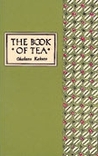
BOOK REVIEW: The Book of Tea by Kakuzo Okakura

The Book of TeaThe Book of Tea by Kakuzō Okakura

My rating: 4 of 5 stars

Amazon page

This book is neither about tea the drink nor tea the plant; it’s about tea the experience. It’s about what the author refers to as “Teaism,” which is akin to Taoism and Zen and which extols the virtues of simplicity, purity, and humility. Teaism is a philosophy that exists around–and in conjunction with–so many familiar philosophies, but is not subsumed by any of them.

The book is divided into seven parts: I.) The Cup of Humanity; II.) Schools of Tea; III.) Taoism and Zennism; IV.) The Tea Room; V.) The Art of Appreciation; VI.) Flowers; and VII.) Tea Masters.

Part I gives us an overview of what Teaism is. One may get a better feel for the author’s view of Teaism through a few choice quotes than from my rambling description. (I’ll take advantage of the book’s 1906 birth date–and, hence, public domain status–to quote heavily from it.)

“Those who cannot feel the littleness of great things in themselves are apt to overlook the greatness of little things in others.”

“It’s [The Tea cult’s] very spirit of politeness exacts that you say what you are expected to say, and no more.”

“For Teaism is the art of concealing beauty that you may discover it, of suggesting what you dare not reveal.”

“Let us dream evanescence, and linger in the beautiful foolishness of things.”

The first part also devotes considerable space to contrasting East and West. The author defends the Eastern ways, which include an exacting and meticulous approach to tea, as not being backwards–as suggested by some in the West.

It should be noted that her commentary, while sometimes sharp in tone, isn’t an attack on the West so much as a defense of the East. It’s interesting to me that there was such conflict as Teaism sprang from Taoism, which is the individualistic strain of Southern China. There is much in common between the values of Taoism and Western liberal thinking. Both share irreverence for tyranny and authoritarianism, and a dislike of that which is forced on one by dictate.

The second part gives a mini-history of the development of tea, but soon sows more of the philosophy of tea in what becomes a lead-in to the following chapter. A couple more choice quotes:

“Perhaps we reveal ourselves too much in small things because we have so little of the great to conceal.”

“Teaism was Taoism in disguise.”

The third part is the core chapter. It discusses the like mind of Taoism and Zen, and how these systems made fertile soil for the growth of Teaism. It is the heart of the book, as it reveals most vividly what Teaism is by explaining the concepts of nothingness and duality.

“One who could make himself a vacuum into which others might freely enter would become a master of all situations.”

“In jujutsu one seeks to draw out and exhaust the enemy’s strength by non-resistance, while conserving one’s own strength for victory in the final struggle.”

“Truth can be revealed only through the comprehension of opposites.”

“The followers of Zen aimed at direct communion with the inner nature of things, regarding their outward accessories only as impediments to a clear perception of truth.”

Part IV describes the place in which the tea ceremony takes place. The key points are: The tea room should be small and simple, and emulate a Zen monastery. The entryway should be less than three feet high, so that all–Shogun or shepherd alike–can be reminded of the need for humility. The first requisite of being a tea master is the ability to sweep and clean. Earlier, Okakura mentions how the most senior monks in a Zen monastery do the most arduous tasks, rather than the novices. This point translates to Teaism. By becoming a master, one doesn’t escape the requisites of modest tasks, but must carry them out all the more skillfully.

Part V, on the art of appreciation, was summed up for me by the quote, “We classify too much and enjoy too little.”

Part VI is where the author goes a little astray in my opinion. She seeks to address the co-development of flower arranging with tea ceremony. She begins by bemoaning the waste of so many flowers–even more-so in the West than the East. “Why were the flowers born so beautiful and yet so hapless.”

Interestingly, she never bemoans the plucking of tea. She anthropomorphizes flowers–not, apparently, because they are living–but because they are beautiful. She imagines that they must feel the excruciating pain of being wrenched from a stem in a way that a rather lackluster looking tea-bud cannot. It’s her deference to the consensus of beauty as represented by the flower as opposed to the simple tea-bud in which she performs the greatest sin against her own philosophy.

Furthermore, she says, “The man of the pot is far more humane than the man of the scissors.” Failing to recognize that the flower planter and the flower harvester are, in most cases, one in the same person.

She eventually explains how those whose philosophy so despised the destruction of life and beauty came to engage in flower arranging. “We shall atone for the deed by consecrating ourselves to purity and simplicity.”

The final part tells us about the nature of the tea master–a monk of leaf and beverage, if you will.

“The tea-masters held that real appreciation of art is only possible to those who make of it a living influence.”

“He only who has lived with the beautiful can die beautifully.”

I recommend giving this thin book a read. I packs a lot of food for thought into a small package. The language is excellent. (The book was originally written in English, and directed toward a Western audience. Hence the extensive defense of Eastern thinking up front.Therefore, there is no worry about getting a particular translation.)

View all my reviews

The Force of Nature

This video begins on the peaceful banks of a river in a nondescript Japanese town. The first minutes of footage is unremarkable except that the water level is quite low, but as it might be in dry season or low tide. Then there is a shrill siren and an urgent warning by loudspeaker–events that will replay periodically throughout the video. Twenty-five minutes later, the camera is fixed on throngs of people trapped on a rooftop across the river. Dawn slinked in and it would be too dark to see these rooftop refugees, but they are silhouetted by the glow of the fires that rage in the background. In the footage in between, one sees houses and ships being carried by the water as if they were a child’s toys washed away by an overturned bucket of water–but brown, debris-laden water that is roiling and churning. Eventually, we see the river reverse its flow.

Someone posted this on Facebook yesterday. I watched all 25 minutes of it. Who watches 25 minutes of shaky, hand-shot home movie? Not me, normally, but I was compelled by the force of nature. They say that one of the things that differentiates humans from even our closest primate brethren is that humans routinely achieve the identical physiological state emotionally from remembering tragedy as from experiencing it first hand–or sometimes even through being exposed to them remotely.

I thought about this force of nature, at first in the literal sense–a pedestrian bridge swept away and freighters swept up a normally unnavigable river. Then I wrote the first 1,000 words or so on a short story entitled The Ghost Ship Onryō that was inspired by watching the tsunami and remembering the news stories it triggered. The story is quite dark, as matched my mood for much of yesterday. Such is the force of nature, to compel me to change my plans and to morph my emotional state through ripples that continue to expand years after the event.

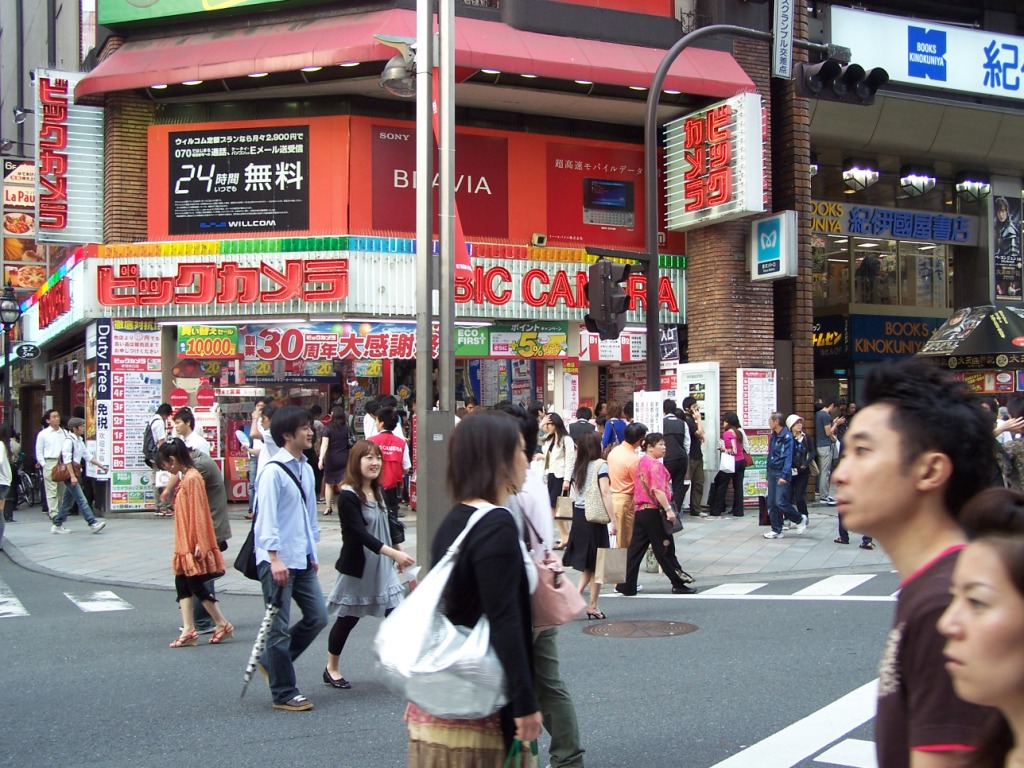
DAILY PHOTO: Tokyo Streetscene

Taken in 2008

Taken in 2008


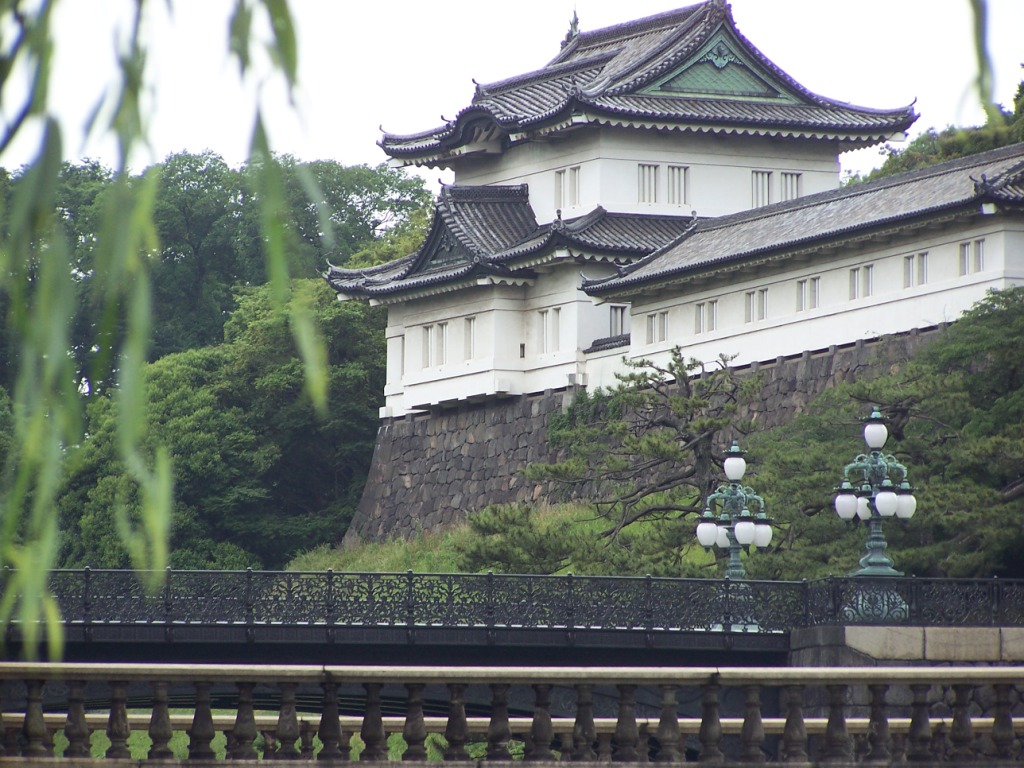
DAILY PHOTO: Imperial Palace Tokyo

Taken in July of 2008

Taken in July of 2008

The Good and Ugly of Olden Times

This was posted in my martial arts blog, Jissen Budoka, as well.

I’ve been doing a lot of reading about Japan’s past recently. In my spare time, I’m working on rewrites for a novel in which 14th century Japan features prominently. Being my first foray into historical fiction, I’m finding the need to go back and do a lot of research about the time because the quick and dirty draft I wrote needs a lot of gussying up. I just finished reading Charles Dunn’s Everyday Life in Imperial Japan,  which is about a later period but one which would have shared much in common when it comes to everyday life. Presently, I’m reading The Taiheiki–which is about the 14th century, but which blends fact and fiction.

Doing such research encourages one to consider what it meant to live during that time. We all build constructs of the world to adjust for our limitations in knowledge. Some of these constructs hold up better than others, but they’re all simplifications. When one reflects upon a time before one’s experience–and particularly regarding a place with which one has limited familiarity–there are two major forms of fallacious reasoning that can take hold:

1.) The Golden Age Fallacy: This is the thought that everything was better back in the day–back before humanity started slouching toward craptasticness.

2.) The Outhouse Fallacy: This is the idea that any society that couldn’t manage indoor plumbing couldn’t possibly be worthy of emulation.

Of course, these simplifications are both true and false in some regard, and–as absolute statements–are absolutely false. The truth is something more like what Ralph Waldo Emerson suggested in Self-Reliance. Emerson described society as a wave, receding on one side as quickly as it advanced on the other. In other words, changes maybe seen as progress, but they also bring about the destruction of valuable knowledge. In martial arts terms, the spear becomes obsolete and the art of spear-fighting dies.

LastSamuraiThe movie entitled The Last Samurai revolves around this premise. Of course, in Hollywood fashion the forces of modernity are made entirely villanous and our heroes, the samurai, are entirely virtuous. In a way the movie is perverse in that it suggests we root for the medieval approach over our own.

When considering feudal Japan, Golden Agers point to it as a time during which virtue was paramount, craftsmanship was exquisite, and much culture flourished. They are right; but don’t set your time machine just yet because Outhouse Agers are also correct when they say that it was a time during which most of the population had no rights, wars ravaged the country, and in which farmers were not allowed to partake of many of the products they produced–but rather had to feed and cloth their families with inferior substitutes.

One should be careful to neither romanticize nor vilify the samurai. We should keep what is of value of the old ways without being a slave to the worst ways of our predecessors’ nature. One shouldn’t abandon everything old on the assumption that by definition everything abandoned to the past is refuse.

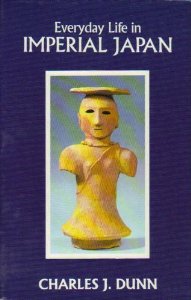
BOOK REVIEW: Everyday Life in Imperial Japan by Charles Dunn

EverydayLifeImperialJapanEveryday Life In Imperial Japan by Charles J. Dunn

My rating: 4 of 5 stars

Amazon page

This interesting little book is invaluable for anyone researching what life was like for people in Japan before the Meiji Restoration. While it’s an essential volume for a writer of historical fiction, those interested in Japan more generally will find it readable and packed with interesting tidbits of information. For example, I would recommend it for those who study traditional Japanese martial arts (i.e. kobudō)to get a better insight into the art they study through knowing the society from which it sprang.

This type of work is relatively rare, but is a writer’s dream come true. It’s not a history book, but–as the title implies–tells one how people of various classes and occupations lived day in and day out. That is, its approach is more anthropological than historical.

The range of occupations in Japan’s pre-modern period were far fewer than in society as we know it, and so the book takes broad job classes as its primary unit of organization. It begins with the group that undoubtedly draws the most interest, the samurai. It proceeds to the occupation which is most numerous in any pre-modern society, the farmers. Beyond that, it covers the lives of skilled craftsmen, merchants, courtiers, priests, doctors, intellectuals, actors and outcasts. The concluding chapter looks specifically at life in the city, and–in particular–life in Edo. Edo is the city that would become known as Tokyō, and which became the capital of the Shogunate in 1603 and eventually the nation’s capital.

Japan’s relative isolation throughout its early history has made for many intriguing national peculiarities. It’s true that Japan’s literary, religious, and philosophical systems were greatly influenced by China, but–in all cases–these cultural elements were forged into a uniquely Japanese form. This uniqueness provides many “ah-ha” moments while reading.

One learns why warriors were required to wear extra long hakama (a very billowy form of pleated pants that look like a long skirt–though having individual pant legs.)One learns about how one got around on the early highway system in a time when infrastructure (e.g. bridges) were minimal, and who was allowed to use the roads–such as the famous Tōkaidō road. The book tells how police went about arresting armed samurai. The roles played by women in society are discussed. While this was obviously a patriarchal society, women weren’t locked entirely outside the domain of power.

This was a feudal society with the samurai owning the land and the farmers toiling in hopes of having a little left over to support their families. While farmers made silk, they were, by law, not allowed to wear it. Farmers sometimes resorted to selling daughters to brothels to make ends meet.

There were many types of craftsmen from saké brewers to carpenters to makers of lacquer-wares. Japan has a long history of appreciation for master craftsmanship as is most apparent in sword-making. The Japanese sword was the cutting weapon perfected. Its folded steel design offered a flexible spine with a hard edge that could be honed to razor sharpness.

Merchants were a class that was both looked down upon and increasingly powerful during this period. Samurai were often barely making a living then, but merchants were beginning to flourish. Japan’s first indigenous money wasn’t introduced until 1636. Prior to that Chinese coins were used, much in the same way that some present-day countries use US dollars for currency–thus avoiding inflation that would be inevitable if they had their own currency and governance. There is an extensive discussion of the early sea trade.

Some of the most interesting careers were those more peripheral. Doctors practiced something akin to Traditional Chinese Medicine. There were wandering street performers and holy men of a wide variety.

I’d recommend this book for anyone interested in Japan’s history, and would call it indispensable for a writer addressing pre-Meiji Restoration Japan.

View all my reviews