BOOK: Sát Thát by Lê Vân [Illustrated by Nguyễn Bích]

Sát ThátSát Thát by Lê Vân
My rating: 4 of 5 stars

Publisher Site – Kim Dong Books

This illustrated book tells the story of the Vietnamese (Tran Dynasty) victories over the invading Yuan Dynasty (Mongolian-controlled China.) It’s a quick read with only a few lines of text per page, while the bulk of each page is a line-drawn monochrome illustration. The illustrations themselves are sufficiently clear and detailed to allow one to follow the general flow of the story.

I used a translator and don’t know how accurate it was or –more particularly — how true to the original it was, except to say that the translator produced a coherent story that seemed to be consistent with other sources.

This book focuses entirely on the military campaigns and takes a bit of a jingoistic tone. As I understand it, it doesn’t tell the whole tale as many consider the Mongol incursions to have been successful because they exacted a tribute from the Vietnamese (which was their ultimate goal,) despite the Mongols’ lack of military success. That said, it was an impressive set of military victories for the Tran Dynasty, and the Vietnamese have every right to take pride in them.

I discovered this book in the publisher’s bookstore in Hanoi and thought it was a small enough text with sufficiently detailed illustration to give me some insight into the story, even without any real grasp of the language. I did find reading the book to be informative and interesting and would recommend it for readers military history.

View all my reviews

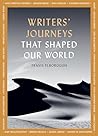
BOOKS: “Writers’ Journeys That Shaped Our World” by Travis Elborough

The Writer's Journey: In the Footsteps of the Literary Greats (Journeys of Note, 1)The Writer’s Journey: In the Footsteps of the Literary Greats by Travis Elborough
My rating: 4 of 5 stars

Publisher Website

This book discusses important travel events in the lives of thirty-five prominent writers and poets. Some of these were long international travels and some entirely domestic, some aborted and others completed. All of these trips in some way influenced the subsequent works produced by these writers. In some cases, it was just for a scene, as with Sir Arthur Conan Doyle’s use of Reichenbach Falls to kill off his widely beloved (but personally soul-sucking) character, Sherlock Holmes. In others, the trip became the basis of a book, as with Joseph Conrad’s travels on the Congo River. And in yet others, the trip would become the basis of multiple works, such as Jack London’s travels in the Klondike. Of course, there were some travels that had more indirect influence on the writers’ works by way of shifts in worldview and life experience.

The graphics for this book are excellent and include a simple route map for each trip as well as photos from key locations, as well as a few relevant historic artworks. The maps and pictures help to give one a feel for the appeal of these places, and — in some cases — to better understand literary works once read.

If you are a traveler, are interested in literary history, or are both, this book is well worth investigating.

View all my reviews

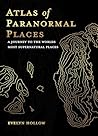
BOOKS: “Atlas of Paranormal Places” by Evelyn Hollow

Atlas of Paranormal Places: A Journey to the World's Most Supernatural PlacesAtlas of Paranormal Places: A Journey to the World’s Most Supernatural Places by Evelyn Hollow
My rating: 4 of 5 stars

Publisher Site

While I’m not much of a believer in the paranormal, I am always curious to learn more about the beliefs, folklore, and backstories of various destinations. Such information, even when immensely interesting, often remains hidden from the casual traveler. For example, had a not read this book I wouldn’t have known that Siquijor Island in the Philippines (a place I’ve been to) had a thriving witch market. I read this book not only because of an interest relevant to places I’ve been and also places I intend to go (e.g. Bhangarh Fort,) but — most importantly — to learn about new and fascinating locations that were not yet on my radar. The book did not disappoint.

The almost forty entries in this atlas are divided among six categories (ghosts, witches, sacred, mythic, nature, and cryptid/creatures.) It is a broad and varied selection of locations from around the world and will most certainly offer even vagabonds some new sites for their “to travel” lists.

I appreciated the thoughtfulness of this book. I noticed this with the discussion of Báthori Erzsébet, a Hungarian noblewoman who was accused of mass murder and – literal – blood baths. Many paranormal authors, either out of an intense need to believe strange things or because of a desire to sell more books, would ignore the extensive evidence that Báthori was framed for purely political motives. Hollow presents said evidence despite the fact that it kind of undercuts her argument that Cachtice Castle is a locus of supernatural happenings.

I found this book compelling, well-written, and illustrated with fine maps and photographs. If you’re interested in the folklore and ghost stories of various locations, I’d check it out.


View all my reviews

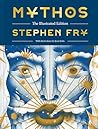
BOOKS: “Mythos: The Illustrated Edition” by Stephen Fry

Mythos: The Illustrated Edition: The Illustrated Edition (Stephen Fry's Greek Myths)Mythos: The Illustrated Edition: The Illustrated Edition by Stephen Fry
My rating: 5 of 5 stars

Publisher Site

This book offers a humorous telling of many stories from Greek Mythology. One gets the well-known tales such as Prometheus, Sisyphus, and Pandora, but also the myths involving a number of lesser-known characters: god, demi-god, and mortal. As these myths are being told, there is also a substantial amount of nonfiction information presented by footnotes and such — e.g. how later authors (Shakespeare, for example) presented these myths or tales built upon them, how the myths inform popular culture and language to this day, and how Greek and Roman mythology related.

The art is nice, though I can’t say that it added much to the reading experience for me, personally. The art is done in a consistent style throughout and is colorful and visually interesting, though I couldn’t say much else about it in an intelligent fashion. It somewhat reminded me of William Blake’s art and somewhat of Soviet posters.

I enjoyed this book. It is light-hearted and even humorous without detracting from the tone of the myth and is a highly readable way to learn more about Greek Mythology.

View all my reviews

BOOKS: “A Child’s Garden of Verses” by Robert Louis Stevenson

A Child's Garden Of VersesA Child’s Garden Of Verses by Robert Louis Stevenson
My rating: 5 of 5 stars

Amazon.in Page

Until recently, I was only acquainted with Stevenson as a novelist, but I had a powerful experience with his poem “The Hayloft” (included in this collection.) I was intrigued by how a poem written by a nineteenth century Scot could prove so nostalgia-inducing for me, having been a 20th century American farm-boy. So, I read the collection, and found that “The Hayloft” was only one of many examples that had such an effect. Others include: “Land of Counterpane,” “Block City,” and “Land of Nod.” The nostalgic power of the poems derives from the fact that Stevenson does a phenomenal job of capturing a child’s enthusiasm for play, and in that regard I’m sure the collection will resonate more broadly than just I, or even than just farm kids.

Afterall, there’s a lot of Stevenson’s experience that is dissimilar to mine. Besides his era and his nationality, his mentions of nurses, gardeners, and cooks is surely much different from my own upbringing, being devoid of household staff. But the book only needs to draw upon that love of play and imagination to take one back.

For a work from the nineteenth century, this collection of 50+ lyric poems has aged well. There is the occasional word like “gabies” or “whin” to send one to a dictionary, but those archaic or obsolete terms are rarities. Furthermore, the lyricism of the poems makes them easily read or sung.

I’d highly recommend this collection for poetry readers, particularly children or those looking to reexperience childhood.

View all my reviews

BOOK REVIEW: I Escaped a Chinese Internment Camp by Zumrat Dawut & Anthony Del Col

I Escaped a Chinese Internment CampI Escaped a Chinese Internment Camp by Zumrat Dawut
My rating: 5 of 5 stars

Amazon.in Page

Release Date: April 11, 2023

This short but evocative graphic novella tells the story of a Uyghur woman who is sent away to a reeducation camp and who is also sterilized against her will. It shows the brutality of China’s totalitarianism at its most oppressive. It’s easy to see China as a fairly benign – if autocratic – regime until one learns about the Orwellian nightmare that exists for some minorities deep within the country.

FYI – This book won the 2022 Pulitzer Prize for “Illustrated Reporting and Commentary.”

I’d highly recommend reading this work as it shines a light deep down the rabbit hole of Chinese governance.


View all my reviews

BOOK REVIEW: Twain Illustrated: Three Stories by Mark Twain by Mark Twain [Ed. by Jerome Tiller]

Twain Illustrated: Three Stories by Mark TwainTwain Illustrated: Three Stories by Mark Twain by Mark Twain
My rating: 4 of 5 stars

Amazon.in Page

This collection gathers three pieces of Twain’s short fiction and presents them in an edited and illustrated volume. The stories are edited from the original published editions. My understanding is that the editing was confined to making the volume more readable to a present-day audience (and probably to younger readers, specifically.) As far as I can tell, that’s the case.

The three stories have in common that Twain, himself, features as a character. [This is less explicit for the second story than for the first and third, it being merely written in first person while the others reference Twain by name.] The first story, “Emerson, Holmes, and Longfellow,” is essentially a roast of those three important 19th century American poets. The story is written as though Twain is traveling on walkabout and happens upon a miner’s household where, as luck would have it, the three titular poets had stopped in previously. Supposedly, this was first a speech given in Boston at a celebration for another poet, John Greenleaf Whittier, and it went down like a lead balloon.

The middle story, “The Facts Concerning the Recent Carnival of Crime in Connecticut,” is about a mysterious visitor who comes calling who seems to know about all the narrator’s misdeeds. It turns out that said visitor is the narrator’s conscience. This personification of conscience is a clever plot device and makes for a hilarious story.

The final story is entitled “Running for Governor,” and it shows that fake news is far from a new phenomenon in American politics. It imagines Twain running for governor of New York and the one news story after the next presenting outlandish, contrived claims that begin to stick as Twain ignores them. This reminded me of the Twain essay that disabused me of the popular notion that we are [at any given time] in uniquely contentiously partisan times for American politics.

I enjoyed this collection. I would probably have preferred an unedited text, but it’s readable, engaging, and humorous as is. The illustrations are line-drawn, and many are cartoonishly jocular while others are more realistic caricatures. It’s certainly an entertaining read.


View all my reviews

BOOK REVIEW: Arsene Lupin, Gentleman Thief by Maurice Leblanc

Arsene Lupin, Gentleman ThiefArsene Lupin, Gentleman Thief by Maurice Leblanc
My rating: 4 of 5 stars

Amazon.in Page

Out: July 5, 2022

This is a beautifully illustrated edition of the first collection of stories featuring the fictional burglar-extraordinaire, Arsène Lupin. While some of the nine stories reference others, they each read standalone.

Arsène Lupin is the Sherlock Holmes of crime. Like Holmes, he’s extremely intelligent, gifted in observation, with deep insight into human nature, and with a range of practical skills from hand-to-hand combat to disguise, but Lupin puts these talents to use for the purpose of theft. While one might think of Prof. Moriarty as “the Sherlock Holmes of crime,” Lupin operates by a code, eschewing senseless violence, carefully targeting his victims, and returning items he feels inappropriately taken. (Mirroring how Holmes occasionally lets a [technically] guilty party go free due to extenuating circumstances.) Besides cameo references to Holmes in multiple stories, the final story pits England’s greatest detective against France’s greatest burglar (though in a way that mostly allows each to retain an unblemished record and mutual admiration.)

I found these stories to be enjoyable to read, and generally clever, but – having been forced to make the comparison due to the repeated references to Holmes – I couldn’t help but see their inferiorty to the stories of Sir Arthur Conan Doyle. Lupin is more one-dimensional and fantastical than Holmes. In Holmes, one recognizes that one is unlikely to get extreme intelligence without some sort of countervailing cognitive challenges – e.g. Holmes is an addict who needs to fill his days with work lest he fill them with heroin, and for all his great observational skills, Holmes frequently doesn’t recognize when he’s offending others with his brusque nature and sense of superiority. Lupin can come off as an arrogant jerk (he recognizes that he’s being narcissistic, but doesn’t care) but it seems we’re supposed to conclude that he’s just that good. Lupin is a fantastical mix of super intelligence, preternatural charm, and zero weaknesses – i.e. a perfect being made for pure escapism.

The stories are enjoyable and the art is beautifully rendered, and if you can avoid comparing it to Sherlock Holes and take it as mere escapism, you’ll likely find this book pleasing.

View all my reviews

BOOK REVIEW: Iphigenia in Aulis Adapted by Edward Einhorn [from Euripides]

Iphigenia in Aulis: The Age of Bronze EditionIphigenia in Aulis: The Age of Bronze Edition by Edward Einhorn
My rating: 5 of 5 stars

Amazon.in Page

This illustrated play is an adaptation of Euripides’ drama of the same name. The title character, Iphigenia, is the daughter of King Agememnon and she’s lured to Aulis by her father to be a human sacrifice, but under the fraudulent claim that she’s to be married to Achilles. [Because, you know, people tend to not show up if you invite them to be murdered, but they’re much more amenable if you invite them to marry a hunky half-god.]

It’s a simple and straightforward story, but one that is never-the-less evocative and dramatic. Agememnon’s will to kill his daughter falters for a time and when his wife, Klytemnestra, scores Achilles’ support for the cause of saving her daughter, it’s unclear how things will unfold. It’s a story that encourages one to reflect upon fate and the virtue of sacrifice, while showing that different chains of causality applied to the same event can radically alter the perception of justness. When Iphigenia’s death is seen as the means to get back Helen (who eloped with Paris to Troy,) it’s vile and despicable. However, when it is viewed as the means to get the fleet moving in order to restore the honor of those assembled nations pledged to fight, that’s a different matter.

I found this play to be compelling and well worth reading.


View all my reviews

BOOK REVIEW: The Storyteller’s Handbook by Elise Hurst

The Storyteller's HandbookThe Storyteller’s Handbook by Elise Hurst
My rating: 5 of 5 stars

Amazon.in Page

Out: June 14, 2022

This is a book, but not one that one reads but rather one that one writes. It contains more than 50 imaginative and fantastical artworks intended to help creative parents build their own stories, while helping their children learn to become storytellers. There is a forward by Neil Gaiman (who has worked with the artist on previous occasions) and an introduction by Hurst, but otherwise there’s almost no text.

The animate subjects of the book are children and animals, but not just any animals. They are mis-sized, misplaced, mythical, imaginary, anthropomorphized, and extinct creatures in search of a clever explanation for their existence and behaviors. The usual suspects of our beloved stories are most well-represented: bears, lions, foxes, rabbits, birds, and fish – for example. But there are also less well-known creatures: mollusks, a mantis, kangaroo, koala, and armadillo. The settings are also designed to fuel the imagination: oceans, hot air balloons, impossibly floating places of all sorts, cities of gothic and fantastical architecture.

If you’re looking for a storybook where you have a graphic prompt to trigger your own story, this is a beautifully illustrated example of such a work.


View all my reviews