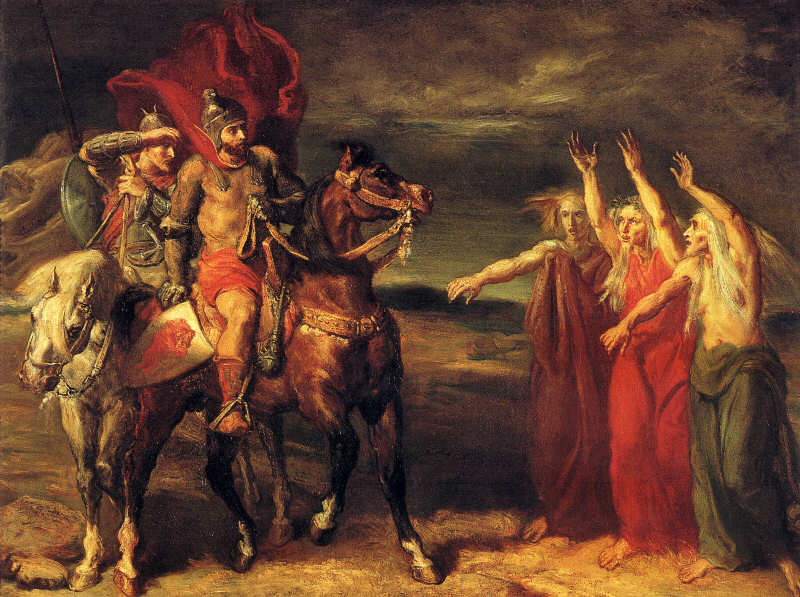
Macbeth & Banquo Encounter the Witches by Theodore Chasseriau
“There’s no art to find the mind’s construction in the face.”
Duncan in Act I, Scene 4
“Bloody instructions, which, being taught, return to plague the inventor.”
Macbeth in Act I, Scene 7
“when our actions do not, our fears do make us traitors”
Wife of Macduff in Act IV, Scene 2
“Then the liars and swearers are fools, for there are liars and swearers enough to beat up the honest men and hang them up.”
Son of Macduff in Act IV, Scene 2
“Life ‘s but a walking shadow, a poor player, that struts and frets his hour upon the stage and then is heard no more. It is a tale told by an idiot, full of sound and fury signifying nothing.
Every source of information is flawed and / or of limited value as a source of truth.
There is beauty everywhere (but to see it one has to let go of one’s compulsion to attach value judgements to everything.)
People who know more things for certain are wrong about more things.
A better life comes of being content with less than of having more.
There is a force, we’ll call it gravity, that keeps my feet to the floor (or insists that I either fall or expend energy to break the surly bonds.)
With respect to that which one can’t know for certain, it’s closer to truth to remain ignorant than to be deluded.
The world that I perceive isn’t the world, itself.
All else being equal, a diverse group of people is stronger, smarter, better looking, and more effective than a homogenous one.
If the same level of effort were put into fostering emotional intelligence as is put into mental intelligence… what a wonderful world it would be.
One who hands you knowledge but tells you to drop it like a hot rock if it doesn’t stand up to your own experience and rationality is more trustworthy than one who hands you knowledge and insists you hold onto it with white-knuckled intensity.
Nietzsche said:
“And if thou gaze long
into an abyss,
the abyss will also
gaze into thee.”
I must admit
the first several times
that I read this quote,
I couldn’t tell if it was wise,
or just had the patina of
wisdom that comes from
parallel sentence structure.
Crisscrossing subject and object
lends a ring of sagacity.
“If you can’t take
Mohammad to the mountain,
the mountain must come to
Mohammad.”“Ask not what your country
can do for you,
but what you can do
for your country.”“If you can’t get the carrots
out of the refrigerator,
get the refrigerator
out of the carrots.”
Yes, that last one is nonsense,
but it’s not nonsense like:
“The banana pirouetted fuchsia
all over the underside of
an A-sharp chord.”
The carrot quote probably took
your mind some time —
if only milliseconds —
to relegate to the
trash heap.
That’s why this sentence structure
is beloved by godmen &
politicians: because you can
sound wise even if you’re
kind of an idiot.
So, I was ready to classify Nietzsche’s
quote pseudo-wisdom when I realized
that my smartphone was the Abyss,
and it was certainly staring back at me.
It stared through all the data collection &
neuroscientific and psychological
research designed to keep
a person scrolling.
Maybe Nietzsche was on to something
that even he didn't fully understand.
A for Albatross:
   "An Albatross around one's neck" is usually used by those who never read the opium-addicted Romantic's poem, and -- more importantly -- who don't have the foggiest what an "albatross" is.

B for Birds [and Bees]:
   If you were really taught about "the birds and the bees," you are NOT prepared to have sex.

C for Cat:
   A "cat nap" is a short sleep. I had a cat. It slept eighteen-hours a day, usually for several hours at a time. [Also, "'til the cows come home" means when you put the feed out. They will reliably show up. If your cows are coming home late, that's on you.]

D for Duck:
   Re: "having your ducks in a row." Baby ducks naturally follow in a line. If you're having to man-handle your ducks into rows, you should learn wu wei - the Taoist principle of effortless action.

E for Elephant:
   If there's "an elephant in the room," it is definitely not a good time to talk matters over. Get the hell out, now!

F for Fish:
   "Fish out of water" may be fine, but -- to be fair -- "man in water" is just as accurate. A little waddling Gentoo Penguin could outswim Michael Phelps in the 400m and be finishing its kipper snacks while Phelps was still slogging through his first length. And Phelps is among the fastest our species can put in water. If the average human were dropped in the ocean, he'd thrash around until he got a lungful of water and died...and that's a kilometer offshore.

G for Goose:
    With respect to a "wild goose chase"... fun fact: if you chase a goose, it might well chase you back. I once read a book on the most dangerous animals (for humans) and, to my surprise, the goose was in it. They don't kill many, but they put their fair share of people in the hospital with beak-cracked shins.

H for Horse:
    So, about "straight from the horse's mouth." If you got your information from a talking horse and are proud that it was 'right from the source,' you might want to consider cutting your acid blotters into smaller pieces.

I for Indian:
    Not sure how the term "Indian burn" came to be, but I've lived in India for almost a decade and have never known anyone to induce a friction burn by twisting the forearm of another person. You may be saying, "Well, it's meant as in, 'Native American burn.'" But I still don't see any evidence for that. [Don't get me started on 'Indian giving' as an insult against someone who has the gall to want their stolen shit back.] Now, if you called it the "shitty little American schoolboy burn," that -- I would totally buy.

J for Jackal:
    Jackals are, like anyone who's ever eaten at McDonald's, opportunistic omnivores, but to make them out to be the exemplars of "exploiting situations' is a bit harsh. For example, did you know a Jackal won't cheat on its spouse, even when an opportunity falls right in its lap.

K for Kangaroo:
    I don't know who came up with "kangaroo courts" but I don't think we know enough about marsupial jurisprudence to cast aspersions upon the Kangaroo legal system. I think it is -- like many instances on this list -- simply deflecting.

L for Leopard:
   Why would a leopard even want to change its spots? Certain humans (frequenting the Wal-Mart) go to great lengths to appropriate leopard spots. If they are fashionable for a plus-sized woman's stretch pants, why would the leopard think any differently.

M for March Hare:
   They say "mad as a March Hare" because March is mating season. I think the saying should be "Horny as a March Hare." Alliteration intact.

N for Nightingale:
   I suspect ninety-nine percent of those who use "sings like a nightingale" couldn't pick a nightingale's song out of an audio lineup of bird noises.

O for Oyster:
   "The world is your oyster" is supposedly a great thing. But when I elaborate by saying, "The world is your slimy raw foodstuff that has a twenty percent chance of making you vomitously ill," it doesn't sound like a good thing.

P for Pony:
    We need to stop people from bitching about the fact that their pony only knows one trick. It's a fucking pony. You should be grateful it knows the one trick.

Q for Quail:
   To "quail at ______" means to be timid in the face of some stimulus. I don't think it's particularly fair. If you were considered a delicacy, you'd be a bit skittish, too.

R for Rat:
    If you "smell a rat," it's definitely dead, and -- ergo -- will not be plotting against you.

S for Sheep:
    I shouldn't have to point out that a "wolf in sheep's clothing" is completely naked.

T for Turkey:
    A "Turkey voting for Christmas" is said to be acting against its own interests, but since everybody eats turkey for Thanksgiving and many people have ham for Christmas, I'd say the turkey knows exactly what it's doing. Even if it's one of the unlucky Christmas turkeys, it still got another month of living. Hell, there are humans who rack up million-dollar medical bills for the same outcome.

U for Underdog:
   The first use of the term "Underdog" was in 1859, long before the cartoon from my youth. Is there an "Uber-dog" or an "Overdog?" How did this even enter someone's mind?

V for Viper:
   "A nest of vipers," is another bit of anthropomorphizing. The premise of the idiom is that it's a group of nasty people getting together. Whereas the snakes in a viper's nest are as likely to be as good as any.

W for Weasel:
    When someone uses ambiguous words to obscure their meaning, we say they're using "weasel words." But as far as I can see, weasels have the good sense to keep their mouths shut. (Unlike those secret-betraying horses.)

X for XYZ:
   People say, "for XYZ reasons" when they mean for an extensive list of reasons that no one seems to know.

Y for Yak:
   Somehow, we use "yak" for the act of being relentlessly chatty, and -- once again -- I must say that I've found yaks to be less than gabby.

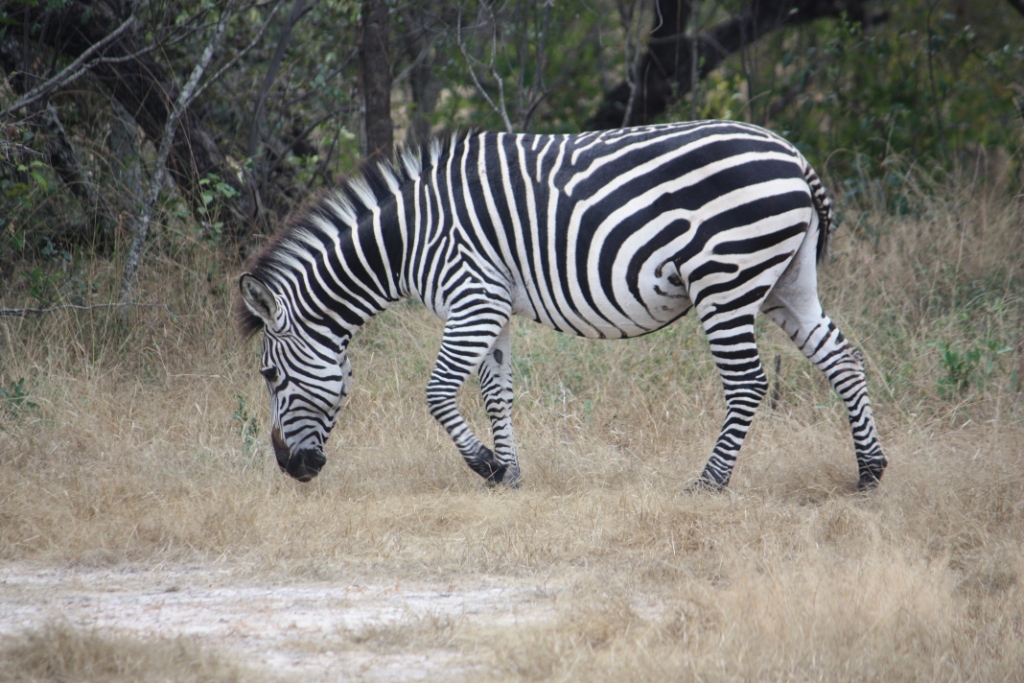
Z for Zebra:
    "A zebra can't change its strips." See: "L for Leopard."
license to speak
           is
license to think.

the jester can say,
 apparently in jest,
 what he feels to be real,

and, if he does so with
 sufficient linguistic dexterity
  to not be murdered by the monarch,

he has fool's wisdom.
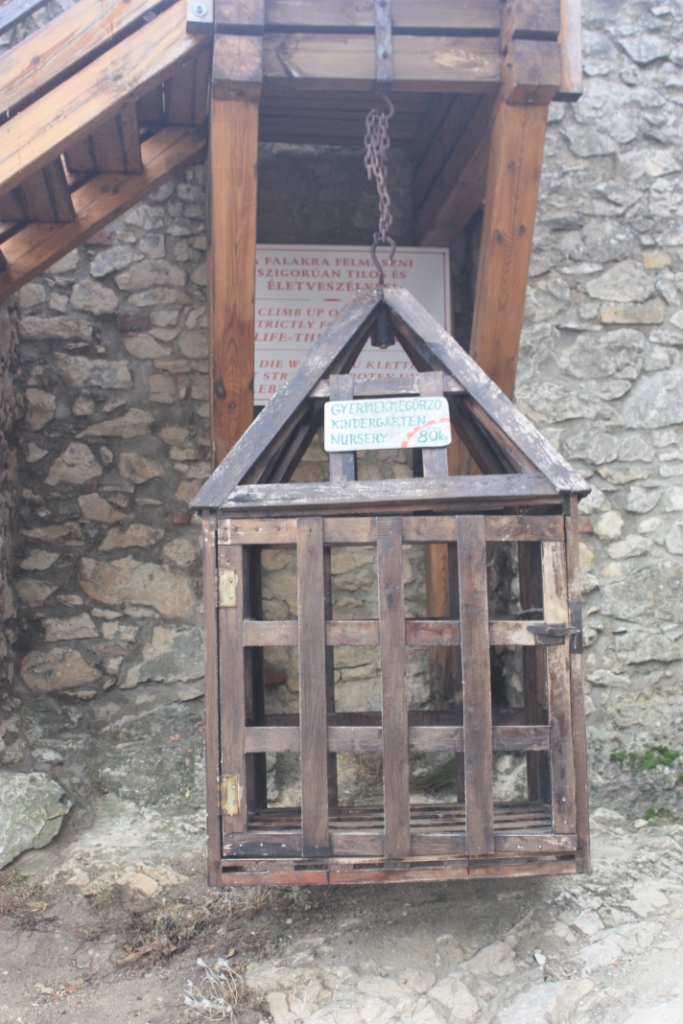
bars at your back,

and their stripes
 permanently etched
  into one's field of vision.

so much so,
 that you feel they're
  a ubiquitous feature
   of the world beyond.

the cage should be a hated place,
 but one can grow to love the cage.

the cage is shelter.

the cage is delivery address
 for food & water disbursements.

the cage forms rollbars --
  like on a dune buggy --
   protection in the event
    of a sudden & unexpected crash.

the cage offers one a range --
 narrow as it might be --
  of distances at which one's captor
   may be kept,

and, as long as the cage is shut,
 that gives one a delightful
  illusion of control.

what a hated place a cage should be,
 and yet how conflicted are the captives?
Are we Makers?
     Yes. We are!

And damn good ones at that.

We can turn a planet
      into plastic trinkets.

We can use every last morsel
      to make stuff:
           bright & shiny
                     or
            loud & colorful.

We can even make ideas:
       good or bad,
       true or false,
 but always 100% believable.

We're the ones who invented Evil.

Yes, that whole toxic notion
       is brought to you by us.

And Left-Wing & Right-Wing...

It used to be just a bunch of people
       trying their best to understand
       and to get by.

But we built mental / conceptual corrals,
        corrals good enough that we
        could no longer recognize each other
        as part of the same species.

We are Makers.
Each of us lives a life improbable,
 the gift of an ancestor who struggled
 through some terror which killed others.

We each have an iron impulse
 to maintain a cracking grip on life,
 but some won't ever be pried away,

growing like the stunted pine
 that juts from the mountainside:
 gnarled but indestructible.

Live improbably
 with your life improbable.
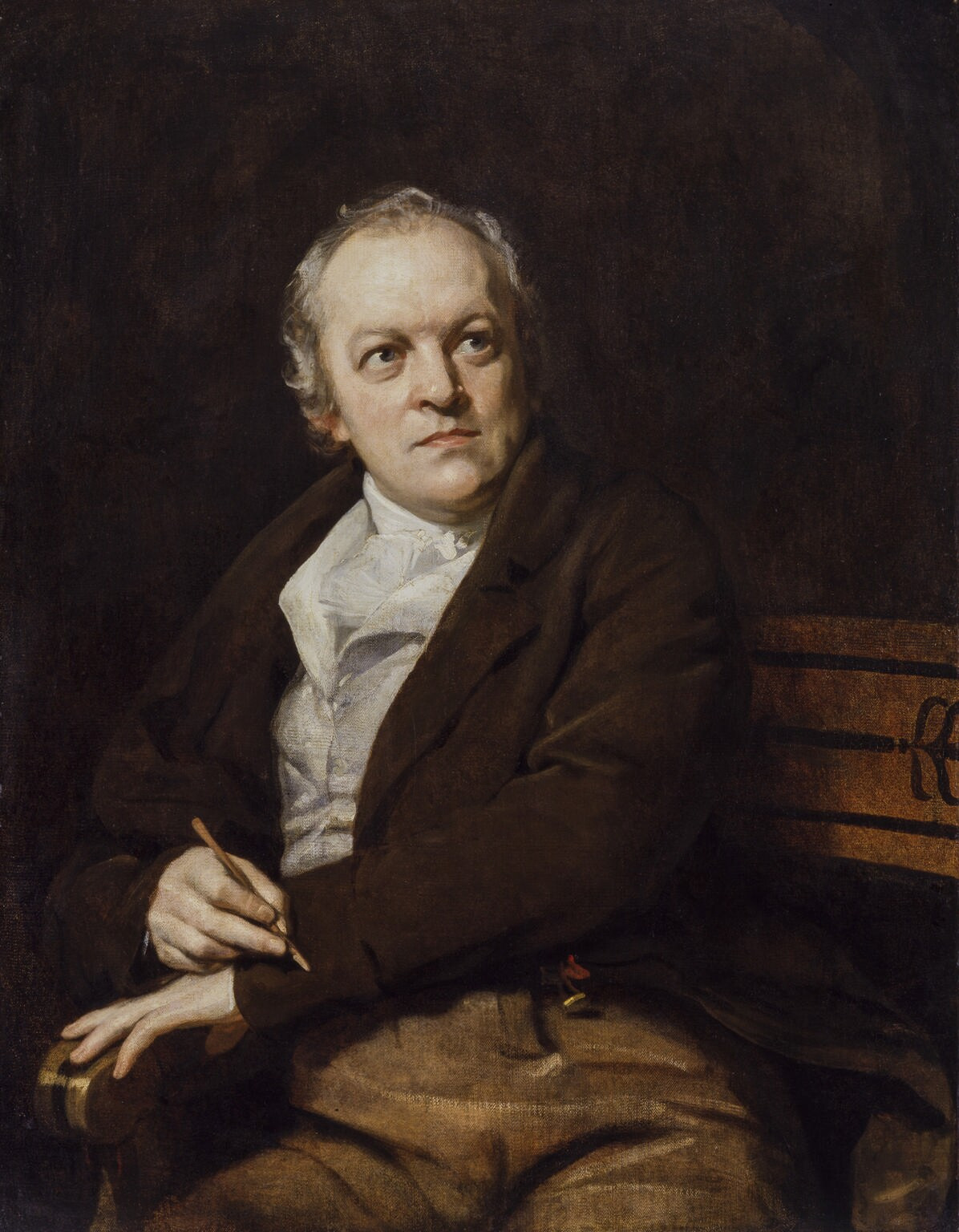
No bird soars too high, if he soars with his own wings.
william blake
The road of excess leads to the palace of wisdom.
William blake
Prisons are built with stones of Law, Brothels with bricks of Religion.
William Blake
The fox condemns the trap, not himself.
William Blake
Exuberance is Beauty.
William blake
Without Contraries is no Progression. Attraction and Repulsion, Reason and Energy, Love and Hate, are necessary to Human existence.
William Blake
If the doors of perception were cleansed, everything would appear to man as it is, infinite.
William blake
The man who never alters his opinion is like standing water, and breeds reptiles of the mind.
William Blake
I also asked Isaiah what made him go naked and barefoot three years. He answer’d: ‘The same that made our friend Diogenes, the Grecian.’
William Blake
The most sublime act is to set another before you.
William blake
NOTE: William Blake’s “The Marriage of Heaven in Hell” is available in many collections of his poetry, and is in the public domain and available via Project Gutenberg at: https://www.gutenberg.org/ebooks/45315