Mountain Crumbles [Haiku]

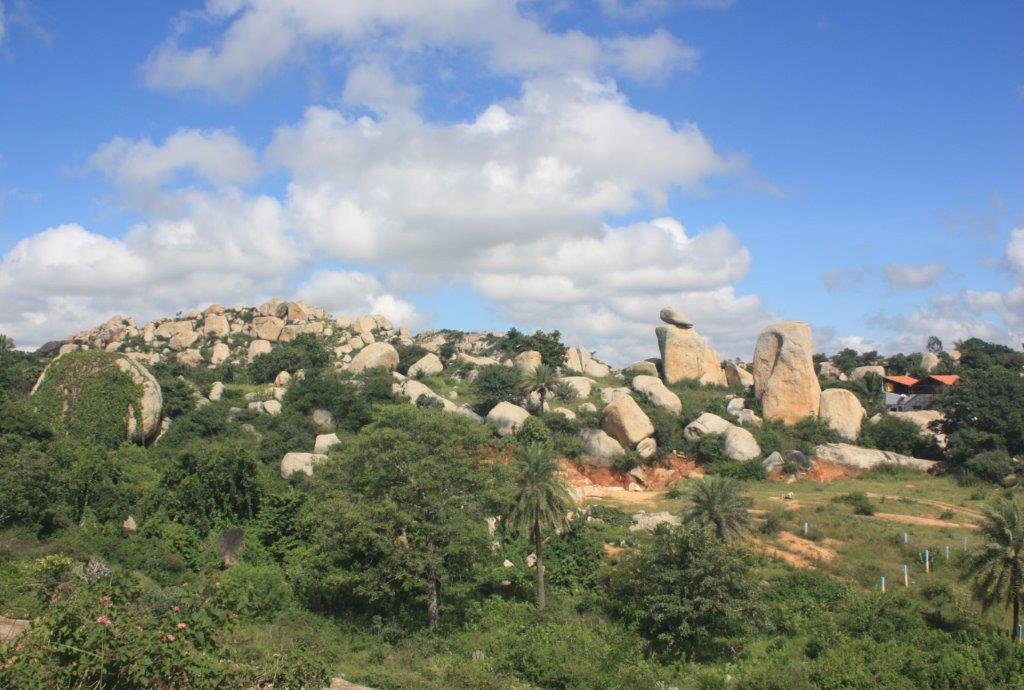
once a mountain,
now just boulders; someday
not a hill will remain.

PROMPT: 10 Things

List 10 things you know to be absolutely certain.

1.) Nothing is permanent.

2.) The world is not what it seems.

3.) One’s subjective experience is not determined by the state of the world.

4.) Nobody grasps enough truth to be intolerant.

5.) Uncertainty is the root of all fear.

6.) Fear is the root of all hatred.

7.) Hatred is a subjective experience (See #3.) Also, uncertainty is the root of all hatred (by the transitive property,) hence the benefit of travel.

8.) Any who: a.) has suffered a string of hardships; b.) allows themselves to believe that some “other” is wholly responsible for said hardships; and c.) who lacks a sufficient sense of self-empowerment to avoid surrendering entirely to a group identity can (and likely will) become a Nazi (or the equivalent of their day.)

9.) No one can predict the future. [Regardless of how much we all love to try. (See #5.)]

10.) Entropy increases (ultimately, in a closed system.)

NOTE: I remain ready to abandon any certainty in the face of better information.

Raising Chaos [Free Verse]

Raise chaos:
That's the job of intelligent life,
to make nice & orderly things
so they can crack and shatter
and eventually end up pulverized
to dust --
A fine, granular dust that will blow
across the universe.

First, the bowl must be made:
Some potter must shape and glaze
and fire it with care,
Turning sandwiches into art...
and waste heat --
entropy slow and fast.

All so someone can crack or chip it
(with ease and lack of intention,)
starting it on a path to being sand
grains a world away.

“Crumbling is not and instant’s Act” (1010) by Emily Dickinson [w/ Audio]

Crumbling is not an instant's Act
A fundamental pause
Dilapidation's processes
Are organized Decays --

'Tis first a Cobweb on the Soul
A Cuticle of Dust
A Borer in the Axis
An Elemental Rust --

Ruin is formal -- Devil's work
Consecutive and slow--
Fail in an instant, no man did
Slipping -- is Crashe's law --

The Beauty of the Ancient [Free Verse]

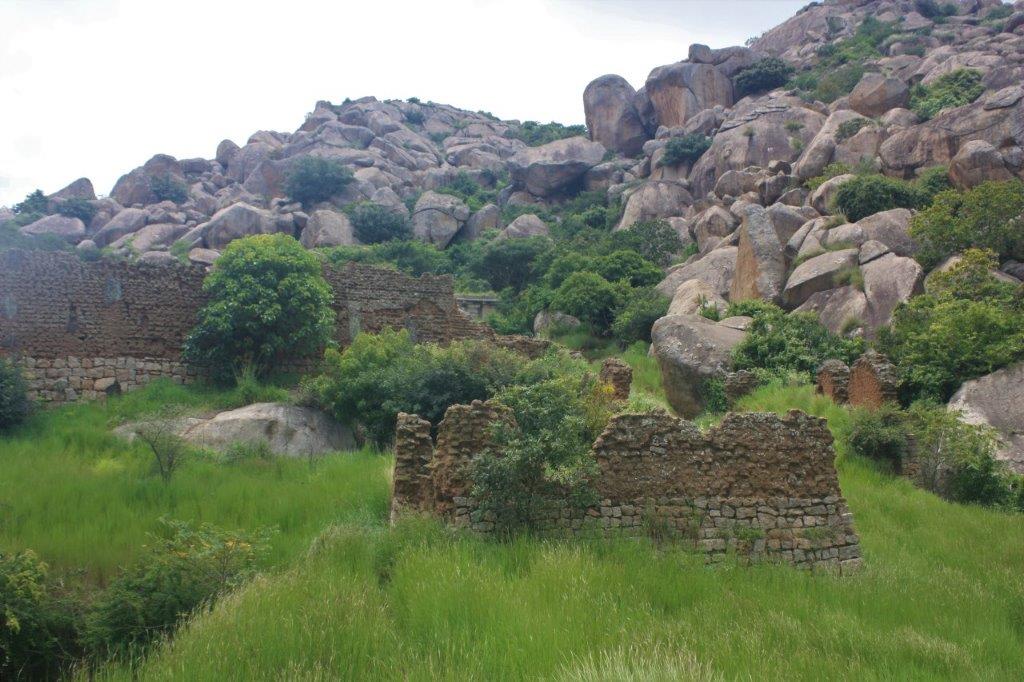
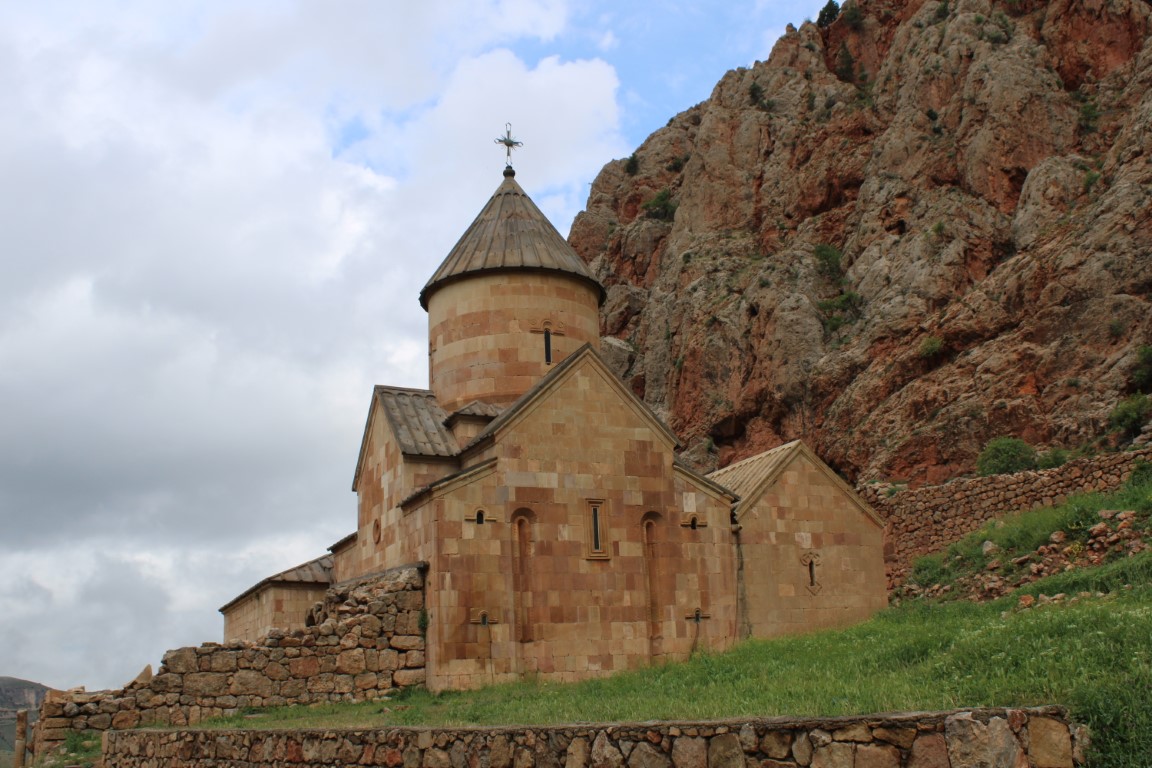
There's something beloved about
an ancient place.

Entropy increases.
Nature devours.
Nothing lasts forever.

Nothing of man can be built of stone
sturdy enough or steel resistant
enough to become ancient
by mere persistence.

It must be loved.
Someone must clean the grass
from the cracks, must scrub
moss & mold, must replace
pieces that slough off...
(& must do it all with tender
craftsmanship.)

I suspect anything ancient
that's higher than my knee
is a Theseus's ship:
rebuilt stone by stone through the ages
until only a wafting idea of the place
remains ancient.

BOOKS: The Second Law by Stephen Wolfram

The Second Law: Resolving the Mystery of the Second Law of ThermodynamicsThe Second Law: Resolving the Mystery of the Second Law of Thermodynamics by Stephen Wolfram
My rating: 4 of 5 stars

Amazon.in Page

This book has an intriguing premise but a bizarre organizational scheme. The book offers insight into the Second Law of Thermodynamics couched as the author’s personal journey of discovery. Put simply, the Second Law says that entropy increases, or the coffee cup next to me can fall and break into many pieces but it can’t / won’t reassemble itself, alternatively, I can mix milk into the coffee in the cup, but not unmix the milk out of it. Of course, this simplification is — in fact — a massive oversimplification and there are a number of definitions of entropy and different ideas on the conditions under which its increase holds and why. This is part of what the book investigates.

Let’s start with the book’s intriguing premise. It is that: a.) the Second Law and its implications are not as well (or fully) understood as the scientific consensus suggests, and b.) the key to understanding entropy’s increase may be found in the concept of computational irreducibility. This all ties to Wolfram’s work with cellular automata and the finding that apparent randomness can come about from a simple set of rules that are non-random. In other words, cellular automata could produce a pattern that can only be determined by re-running said simple set of rules — i.e. there would be no way to compute it. As (apparent) randomness plays an important role in the Second Law, Wolfram proposes a connection that has ramifications for critical issues like reversibility. (Remember we can’t unmix the milk out of the coffee [without expending more energy and within the confines of an open system] or so it’s believed.)

When I say the book’s organization is strange, I do so with the assumption that the intended readership includes those who are scientifically literate but not expert in thermodynamics or physics. The first part of this strangeness is that the body of the book concludes with an overview of the development of the Second Law (arguably this is information a non-expert reader might benefit from having up front.) The second element of strangeness is that much of the latter part of the book is just connective tissue between excerpts of other people’s writing on the subject. This increases the page count tremendously and doesn’t serve readability well.

The book does have a good deal of interesting and informative graphics. It also has copies of scholarly papers and relevant chapters from Wolfram’s previous book, “A New Kind of Science” for those who are capable of, and interested in, taking a deeper dive into the science and mathematics under consideration.

I found this book to be thought-provoking if a bit tedious to read in places. If you’re interested in the Second Law, it’s worth reading and may shed new light on the topic.

View all my reviews

Retrograde [Haiku]

once stately mansion,
weedy & paint peeling:
entropy incarnate.

Burning Sensation [Free Verse]

What's this world?

It's energy playing a game,

  a game whose goal is to be rid
    of an intense burning sensation,

  a burning sensation caused by
     low-entropy energy sitting
     around with nothing else to do
     but burn brightly. 
  
  We, the wasters of energy, are 
     a soothing lotion to the universe,

     expediting the making high-entropy, 
          soothing, tepid energy from 
          all those stars -- 
          i.e. the universe's poison ivy.

BOOK REVIEW: The Laws of Thermodynamics: A Very Short Introduction by Peter Atkins

The Laws of Thermodynamics: A Very Short IntroductionThe Laws of Thermodynamics: A Very Short Introduction by Peter Atkins
My rating: 4 of 5 stars

Amazon.in Page

This book succeeds in systematically exploring the topic, but it fails to do so in a readable fashion for a non-expert reader who’s looking for a rudimentary grasp of the basics. It’s true that the topic is complex and challenging (as the author argues up front,) but I don’t believe the book’s daunting nature all lands on the subject matter. I’ve read up on other difficult topics using this series (VSI,) and found some books much more approachable.

The main problem was a lack of clarity (versus precision) in the language. In other words, the author didn’t want to oversimplify or use analogies, even though those are what’s needed for a neophyte reader to build an intuitively grasp a subject. For example, while the chapters are nicely organized by the laws of thermodynamic and presented in their usual order, there’s no quick and dirty definition of the respective law given at the beginning of each chapter. A simplified definition (incomplete and imperfect as it might be) would allow the reader to gain a basic intuition of the concept. Then, the reader can tweak and expand the concept as they go. But that’s not the approach taken here. Instead, several paragraphs are taken to get around to a statement of the law in question. There was also a lack of analogies and other tools to help the reader gain a foothold based upon what they know. I suspect these tools were avoided because they are all incorrect at some level of precision, and it was the scholarly fear of imprecision that resulted in their teaching effectiveness being abandoned.

This is a great guide for people who think mathematically and / or who are looking for a quick refresher of ideas they once knew. For those who don’t have a background in science and who need verbal explanations that make an effort to be comprehensible, it’s probably not the best one can do.

View all my reviews

Cyclone in a Cup [Free Verse]

coffee flecks swirl
in a steaming cup

cyclonic do-si-dos,
swinging and folding,
merging into clusters

between the cyclones
there are highspeed byways
cutting across the surface

a jitter of the table
seems to stop the dance,
but then it resumes

entropy falls to 
eventually follow its imperative --

entropy rising:
using order
to turn all that energy
into a lukewarm 
cup of joe

this same fluid clockwork
played out in 
primordial soup
to begin the dance of life