DAILY PHOTO: Half a Tree is Better than None

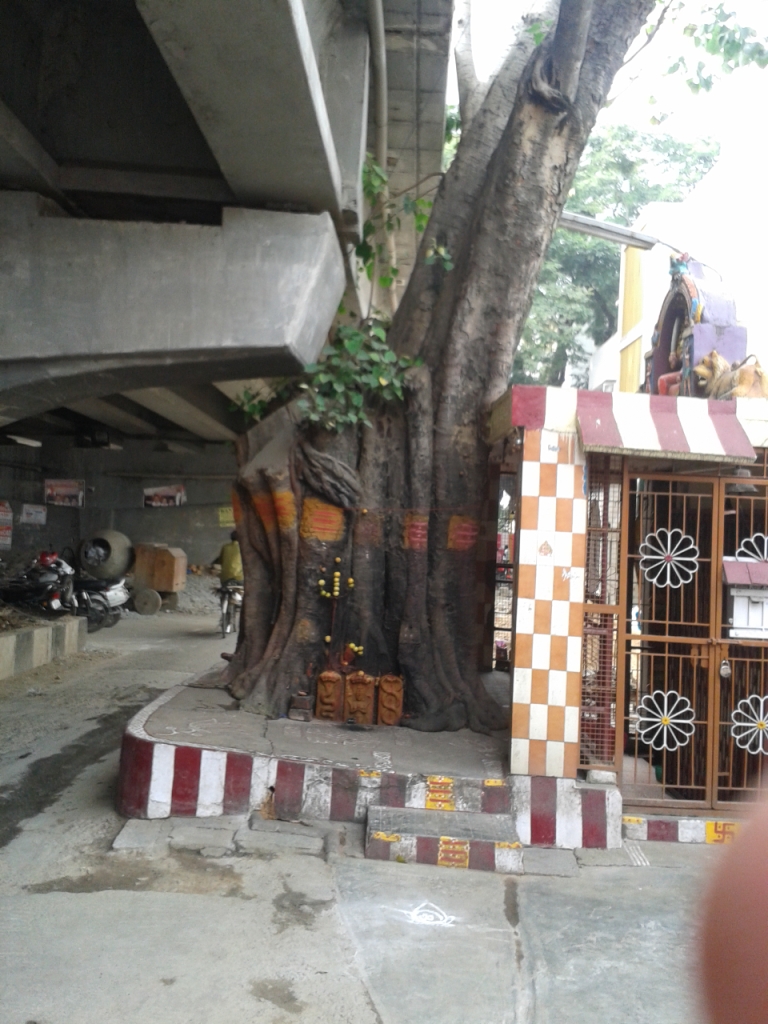
Taken December 7, 2013 in Cox Town.

Taken December 7, 2013 in Cox Town.

I took this photo yesterday in Cox Town as we were walking over to the United Charities Bazaar (a great and highly recommended event.) It’s a tree that juts out into the road next to a small Hindu temple. When they put in a flyover, they cut away quite a bit of the tree, but the part that remains seems to be thriving.

When one moves to a new country, one experiences a wide variety of cultural insights. All of a sudden, this invisible thing called culture becomes visible. There are, of course, many norms that grate on one’s nerves with respect to the culture one has been transplanted into. In the vast majority of cases, there isn’t anything inherently wrong with the new culture–they are just differences, just shocks to one’s system. There are a few cultural proclivities that one can fairly say are objectively inferior, and it’s a testament to India that they are trying to fix these problems (e.g. by outlawing the caste, by trying to prevent killing off of girl children, etc.)

However, if one is honest with oneself, one also gains insight into one’s native culture, and its particular inferiorities.  As I said, we take culture so for granted that we don’t necessarily even see the peculiarities of our own culture. One of the Indian  norms that I find most laudable is the preservation of living things to the extent possible. Put alternatively, one of the norms of my own culture that I’ve come to find most dismaying is the belief that anything that causes a person the least inconvenience must die immediately.

I imagine that some Westerners in India find it to be a pain to have to step out into the street when walking down the sidewalk because there are occasionally ten-foot diameter trees hogging the whole sidewalk. In the US, they’d just cut down the big tree and replace it with a dwarf tree of some sort that would never give them a problem–and if it did, just get out the saw.

BOOK CHAT: Walking by H.D. Thoreau

WalkingWalking by Henry David Thoreau

My rating: 5 of 5 stars

Amazon page

Thoreau paints a portrait of walking in such grandiose terms that one will cease to think of putting one foot in front of the other as one of life’s mundane tasks. He’s not talking about just any walking, however. He’s not talking about the mall walkers who briskly exercise in temples of consumerism. He’s not talking about those who walk through the park with top 40 hits blaring from their iPod ear buds.

Thoreau is talking about those individuals he calls saunterers. To saunter, as to stroll, is to walk in a leisurely and aimless fashion. Thoreau’s walking is that which:
-takes place in nature.
-leaves worldly worries behind.
-is not a trivial time commitment.
-is more an exercise of the mind and spirit than of the body.

To the mall walker, Thoreau would point out the error of a missed opportunity to get away from mankind’s chaos and enjoy nature. As he puts it, “The most alive is the wildest.” and “…all good things are wild and free.” He’s also clear in that walking for exercise misses the point by injecting hurriedness into a time that should be about slowing down.

On those with iPods, cellphones, or other contrivances that distract one from the environs, Thoreau is equally clear, “What business have I in the woods if I am thinking of something outside the woods?”

Thoreau’s essay broadens as it progresses. From a commentary on the virtues of sauntering, the essay turns to the glories of nature, the character of America, and the state of thought in his contemporary society. These may seem like unrelated concepts, but there is a string of logic that connects them.

The connection to nature and the virtue of wildness should be clear. It’s nature that is the optimal backdrop of sauntering. It’s in nature that one can be set free from the troubles of the world of man and obtain a glimpse of god. It’s in nature where creativity breeds with chaos turned down and native brilliance turned up.

Thoreau’s discussion of America is tied to the theme of walking in a couple of ways. The first is as a land made for walkers. For example, he points out that a man could pitch a tent almost anywhere in North America without great risk of becoming a meal. The same couldn’t be said of India or Africa or Siberia, where man isn’t the sole predatory creature. The second is America as a place with room to venture out into uncharted territory. Thoreau points out that we may look to the East for the lessons of our predecessors, but a person should look West for opportunities to grow in one’s own right. Of course, Thoreau’s America was different from today’s America.

The end of the essay broadens out even further. Thoreau comments upon mankind and the state of ideas and thought. He echoes Socrates when he talks about that age-old question of whether it’s better to be ignorant (to know one knows little) or deluded (to think one knows a lot, but be drowning in false knowledge.) A reader may suggest that this is a false dichotomy. Why can’t one know most everything and not have a one’s body of knowledge rife with false knowledge? I can’t say, but all of the evidence suggests that if such a state exists, it’s the domain of God or gods (if such entities exist.)

Thoreau also bemoans what he sees as the decline of thinking man. What does this have to do with walking? I think Thoreau answers in the following quote:
“So it would seem few and fewer thoughts visit each growing man from year to year, for the grove in our minds is laid waste—sold to feed unnecessary fires of ambition, or sent to mill—and there is scarcely a twig left for them to perch on.”

I think that everyone should read this thin book–really an essay and not a full-scale book. The problems Thoreau notes have only gotten worse in our modern age. Far too few take the time to walk, and to acquire the benefits of sauntering.

View all my reviews

BOOK REVIEW: American Gods by Neil Gaiman

American Gods (American Gods, #1)American Gods by Neil Gaiman

My rating: 5 of 5 stars

Amazon page

American Gods is the story of a hapless and gentle brute who goes by the nickname “Shadow.” We meet Shadow as he is being released from prison a few days early because the wife that he loved dearly has passed away. While the description of Shadow’s imposing size and criminal activity might lead us to believe he’s an unsavory character, we find him sympathetic from the outset–though we don’t learn that it was virtue more than vice that landed him in prison until late in the book.

Given that the name of the book is American Gods others who’ve read it may wonder why I say it’s about Shadow instead of being about a war between America’s old gods and its new ones (e.g. technology and mass media.)The latter statement is more likely what one will read on the dust jacket. However, for me it was the character of Shadow that kept me reading. As with any great novel’s main character, Shadow is put in predicament after predicament, and one must see how he’ll handle them. Eventually, we suspect that enough will be enough and he will have to choose to act in his own best interest rather than in the moral manner.

The importance of character in this novel doesn’t mean that it’s lacking a plot. Early on we are given a great hook when Shadow is introduced to the character of “Wednesday.” The hook is that Wednesday seems to know things about Shadow that no one could, and he makes a proposal to Shadow. The reader is thus drawn in and wants to know how Wednesday knows the impossible and whether Shadow will agree to the vague offer. While we don’t know what agreeing will mean for Shadow, we suspect that it’s tailor-made to land him back in hot water.

While Shadow seems to be always ending up with the short end of the stick, what makes things interesting is that he’s not dumb. He doesn’t stumble into these traps unwittingly. Rather, Shadow defies convention and, by some measures, is really quite a sharp man. Often, he sees the folly of his decisions but is compelled by virtue to act in ways that put him at risk.

Shadow is on a journey of self-discovery throughout the book, and what he ultimately discovers about himself is spectacular.

In a way American Gods is Neil Gaiman’s commentary on America, and Shadow represents America at its most virtuous. We see plenty of America’s faults and failings in the process, its vainglory and hunger for power. But in Shadow we see a character who is honor bound to do what he thinks is the right thing–even when it comes at great personal cost and even when he knows he is being manipulated.

I found this novel to be highly readable and would recommend it. It has Gaiman’s characteristic humor, darkness, and dark humor.

View all my reviews

The Deferential Calculus of Being an American in India

Every time I come home, the security man at the desk at our apartment building jumps to his feet and proceeds to stand at attention until I pass. This makes me uncomfortable, as do the many other ingrained acts of deference that occasionally border on obsequiousness. I’ve considered stopping to tell him he can be permanently “at ease” with me, but given the language barrier I’m afraid I’d just confuse the issue–plus have him standing at attention that much more longer. So, when in Rome…

If you’re an American, but not, say… General Pershing, you’d probably find this makes you uneasy as well. I think one of the reasons that Americans have historically excelled at technological development  is that we were in a hurry to have machines do our laundry, wash our dishes, or trim our nose hairs so that we wouldn’t have to have some other human apparently kowtowing to us. (This may be why the 19th century North was considerably more technologically advanced than its Southern counterpart, which had successfully rationalized a subclass of human being.)

There’s a guy who stands at the end of the lane and lifts a swing arm up and down every time a car (or, oddly, a pedestrian such as myself) comes down the lane. The first couple times I walked around the end in hopes of indicating to him that, “Hey, see you don’t really need to swing that thing up, I can just walk right around it, easy as pie.” I think I hurt his feelings, or–perhaps worse–undermined his reason for getting up in the morning. My point is that operating a swing-arm barrier is a perfect example of the type of job that has been completely mechanized in America.

I’m sure that cultural differences are the root of my discomfort. India is coming from the caste system, whereby who you were born to determined your status in a rigidly hierarchical structure. While Indians may have dropped the caste system, the underlying thought process dies hard. I, on the other hand, come from a culture which believes that on a fundamental level we are all equal. Americans are often stymied as to why we are viewed as being arrogant by other cultures. This may be a failure to see things in the same light. It’s not so much that we project that we are better than the average Joe, it’s that we don’t accept that the kings and holy men those cultures hold dear are above us. This is true. I don’t think I’m better than the door man, but I also don’t think the King of [Fill in the blank] is better than me. [OK, the perception of arrogance is also partly that we’re loud and expect a ubiquity of comfort that is simply not available in much of the world. There is that. And the fact that our leaders often think they can fix every problem everywhere, and–given this is not actually true–we have left a lot of chaos in the our wake since our rise to hegemony.]

So the whole culture thing is part of it. However, I also worry that the man who brings my food with a warm smile and a bow is spitting in it. I wonder if the lady who launders my clothes, and then goes the extra mile by ironing them (though they mostly consist of T-shirts and jeans), might be preparing an itching powder attack. I wonder if the security guy standing at attention is just waiting for me to lock myself out of my apartment so that he can exercise some passive aggressive payback. [I suspect this is why Indian bureaucracy is notoriously slow and prickly. It’s a desire to exercise the leg up on has while one is in other ways part of an underclass.] I heard a comedienne of Indian origin say that her mother always flew British Airways just for the delight of bossing a Brit around. All of this consternation is because I worry that they think that I think I’m superior to them, which I don’t.

Yesterday I was eating at an Indian fast food joint called Kaati Zone. It’s one of those places that you order at the counter, get your food at the counter, and take it to one’s table. (FYI- this set up is much less common here except for little holes in the wall where one stands to eat.) When I was done, I pitched my trash in the trash can and put my tray on top, just like one would at a Wendy’s. When I turned around there was a young woman with her jaw agape and eyes wide looking right at me. My first thought was that I had pitched my wallet or my journal in the trash. I did a pat down and found I was alright. As I left, it dawned on me that her surprise may have had something to do with my handling of my own garbage.

DAILY PHOTO: Between the Crosses, Row on Row

Take December of 2012 at Andersonville National Cemetary

Taken December of 2012 at Andersonville National Cemetery

At a military cemetery like this one, a poem always plays in my mind. It was the first poem I ever memorized in full (not including snippets of some  disturbing mandatory children’s poems like “Ring Around the Rosie” [said to be about the Black Death] and–in Indiana–“The Little Orphan Annie” [about an enslaved orphan threatened with goblins.])

At any rate, the poem in question is In Flanders Fields by John McCrae. Sadly, I chose to memorize this poem for a school assignment of poetry recitation because it seemed short and it rhymed. However, in many subsequent re-readings it has become a very powerful bit of verse for me. It may not be perfectly apropos for Independence Day as it was written by a Canadian and is about an entirely different war. However, in some sense it’s about all wars and one motive that drives soldiers of free nations to fight them.

In Flanders fields the poppies blow
      Between the crosses, row on row,
   That mark our place; and in the sky
   The larks, still bravely singing, fly
Scarce heard amid the guns below.

We are the Dead. Short days ago
We lived, felt dawn, saw sunset glow,
   Loved and were loved, and now we lie
         In Flanders fields.

Take up our quarrel with the foe:
To you from failing hands we throw
   The torch; be yours to hold it high.
   If ye break faith with us who die
We shall not sleep, though poppies grow
         In Flanders fields.

BOOK REVIEW: 101 Great American Poems ed. The American Poetry and Literacy Project

101 Great American Poems101 Great American Poems by The American Poetry and Literacy Project

My rating: 5 of 5 stars

Amazon page

This is a collection of 101 poems by 39 different American poets. It begins with a poem by Anne Bradstreet in the 17th century and proceeds through to a work by W.H. Auden of the 20th century. In between are many poets that one would expect, such as Poe, Whitman, Dickinson, Sandburg, and Cummings. There are others that might be unexpected such as Abraham Lincoln, Herman Melville, and Stephen Crane. While the poems aren’t all jingoistic in nature, there is a recurring theme of celebration of America.

Most of the poems in this tiny anthology will be familiar to poetry readers. This is a $1 Kindle e-book of a Dover Thrift Edition, and so one won’t find living poets represented, or poems that tap into the zeitgeist du jour— at the risk of mixing loan words. However, most of these poems deserve to be read and reread.

A few of my favorites are below with title, author, and a fragment.

The Builders by Henry Wadsworth Longfellow
Nothing useless is, or low;
Each thing in its place is best;
And what seems but idle show
Strengthens and supports the rest.

The Raven by Edgar Allen Poe
Once upon a midnight dreary, while I pondered, weak and weary,

O Captain! My Captain! by Walt Whitman
O Captain! my captain! our fearful trip is done,
the ship has weather’d every rack, the prize we sought is won,

I’m nobody! Who are you? by Emily Dickenson
I’m nobody! Who are you?
Are you nobody, too?
Then there’s a pair of us–don’t tell!
They’d banish us, you know

The New Colossus by Emma Lazarus
“Give my your tired, your poor,
Your huddled masses yearning to breathe free,…

Solitude by Ella Wheeler Wilcox
Laugh, and the world laughs with you;
Weep, and you weep alone

War is Kind by Stephen Crane
Do no weep, maiden, for war is kind

Sence You Wend Away by James Weldon Johnson
Seems lak to me de stars don’t shine so bright,

Sympathy by Paul Laurence Dunbar
I know what the caged bird feels, alas!
When the sun is bright on the upland slopes;

Fire and Ice by Robert Frost
Some say the world will end in fire,
Some say in ice.
From what I’ve tasted of desire
I hold with those who favor fire

The Road Not Taken by Robert Frost
Two roads diverged in a wood, and I–
I took the one less traveled by,
And that has made all the difference.

Chicago by Carl Sandburg
They tell me you are wicked and I believe them, for I have seen your painted women under the gas lamps luring the farm boys.

Fog by Carl Sandburg
The fog comes
on little cat feet.

Thirteen Ways of Looking at a Blackbird by Wallace Stevens
Among twenty snowy mountains,
The only moving thing
Was the eye of the blackbird;

The Red Wheelbarrow by William Carlos Williams
so much depends
upon

a red wheel
barrow

The Love Songs of J. Alfred Prufrock by T.S. Eliot
The yellow fog that rubs its back upon the window-panes,

First Fig by Edna St. Vincent Millay
My candle burns at both ends;
It will not last the night;
But ah, my foes, and oh, my friends–
it gives a lovely light.

Ars Poetica by Archibald Macleish
A poem should not mean
But be

I, Too by Langston Hughes
I am the darker brother.
They send me to eat in the kitchen
When company comes,

Little Old Letter by Langston Hughes
You don’t need no gun nor knife–
A little old letter
Can take a person’s life.

Nothing struck me as conspicuously absent from this collection, but I’d be curious what poems people feel should (or shouldn’t) be in such a collection.

View all my reviews

5 Minefields of Armageddon for 2013

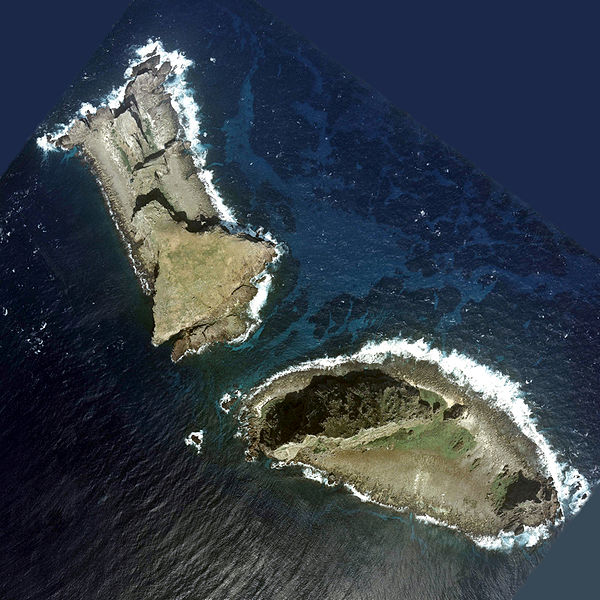
National Land Image Information, Ministry of Land, Infrastructure, Transportation & Tourism, Japan

National Land Image Information, Ministry of Land, Infrastructure, Transportation & Tourism, Japan

1.) Ever heard of the Senkakus? What about Diaoyus? If not, you should look them up. When you’ve been wearing a gas mask for the 33rd day straight, you may want to know about the chunks of rock in the East China Sea that we tripped into nuclear winter over. Simmering tensions between Japan and China have been flaring up over these islands of late. So you’re probably wondering who lives there who’s so important that it’s worth wandering through a minefield that could trigger World War III. If you answered, “absolutely no one,” give yourself a prize.  They’re uninhabited. It’s not the islands themselves that anyone gives a rat’s as about, it’s the ramification they have for underwater drilling rights.

The reader may accuse me of hyperbole. (Shh! Dont tell anyone, but– of course– that’s what I do.) After all, China has a boldly stated “No First Use” policy. That is, they claim they will not use nukes in a first strike. Given that Japan isn’t a nuclear weapons state (NWS), there doesn’t seem to be much risk. Except that a.) Japan lives under the U.S. nuclear umbrella;  b.) Japan is the non-NWS that could develop nuclear weapons in the shortest time imaginable — they have the material, infrastructure, and technical know-how (okay, Germany is in the same bag); and c.) see #2

KimJongUn3

2.) North Korea conducted its third nuclear test. This presents a risk because: a.) it provides an incentive for Japan to build its own nukes (particularly if faith in the US umbrella wanes.) b.) [and more importantly] Kim Jong Un has too many yes-men, and no one to slap him in his chubby face and say, “are you smoking powdered unicorn horn?” In other words, he doesn’t have a good idea of what he can get away with before the world unleashes a crate of whoop-ass on his sad country. So he wanders in the minefield.

3.) Europe is getting depressed. Fat and happy Europeans are productive and polite. Downtrodden Europeans have been known to swallow some pretty despicable narratives, and– in doing so– drag the world into war. At the moment this seems really far-fetched. These political movements are at best in the political fringe of countries on Europe’s fringe, right? Maybe so. Time will tell.

4.) If America’s economy is crash-landed, everyone is going to be hit by the debris. This will be depressing, see #3 and then multiply globally. Times like these  echo Churchill’s comment, “Democracy is the worst form of government, except for all those other forms that have been tried from time to time.” Any person, company, or government that sees the train coming in the distance but can’t find its way off the tracks can’t be expected to thrive for long.

5.) India and Pakistan, enough said…